Cardiovascular & Metabolic Health
Heart Health Supplements:
What Works, What Doesn't and What Could Harm
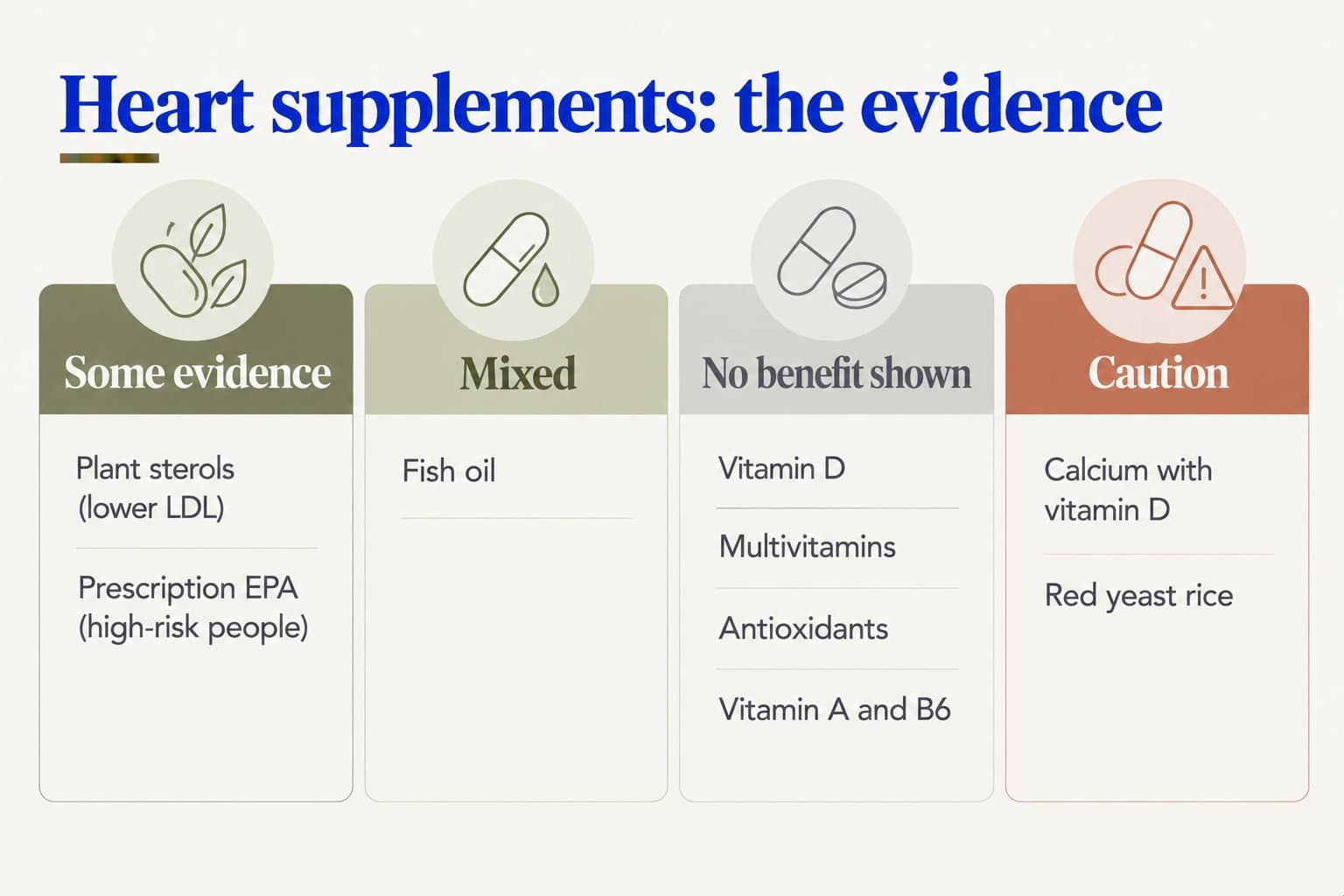
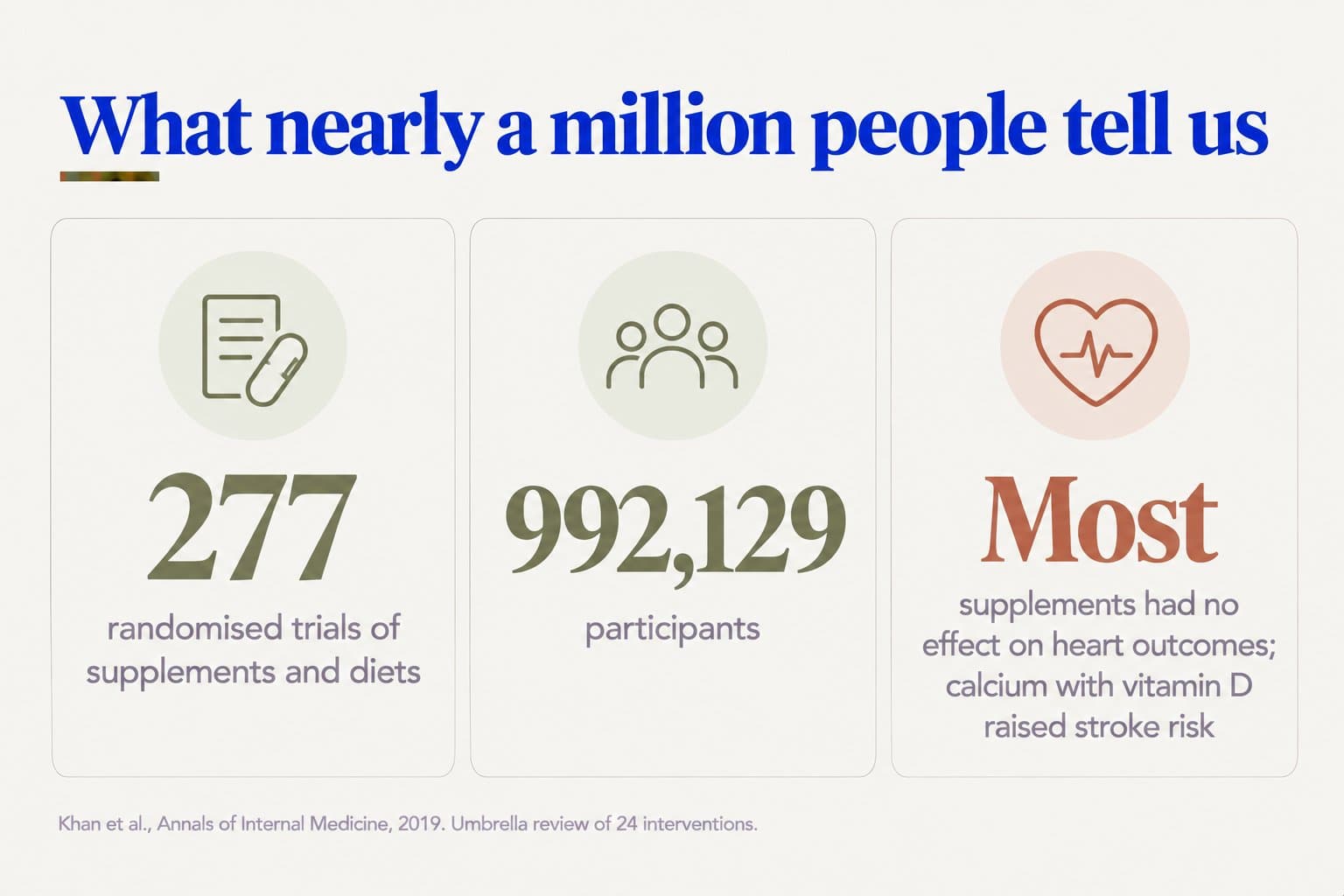
Supplements marketed for heart health are hugely popular, from fish oil and vitamin D to coenzyme Q10, red yeast rice and multivitamins. But when they've been tested in large randomised trials, most haven't prevented heart attacks, strokes or deaths. A review of 277 trials involving nearly a million people found that most supplements, including multivitamins, antioxidants and vitamins A and B6, had no meaningful effect on cardiovascular outcomes, while calcium combined with vitamin D was linked to a higher risk of stroke. In the large VITAL trial, neither fish oil nor vitamin D reduced major cardiovascular events in healthy adults, and fish oil supplements have been linked to a higher risk of atrial fibrillation, especially at higher doses. A few products have some evidence: plant sterols lower LDL cholesterol modestly, and a prescription form of purified EPA reduced events in high-risk people with high triglycerides. Red yeast rice works only because it contains a natural statin, and contaminated products have caused kidney failure and deaths. This article sets out the evidence, so you can spend your money and attention where they matter.
Key numbers
| Finding | Detail |
|---|---|
| Supplements and cardiovascular outcomes (277 trials, 992,129 people, 24 interventions) | Most had no significant effect; calcium plus vitamin D increased stroke risk |
| Fish oil 1 g and vitamin D 2,000 IU daily (VITAL, 25,871 healthy adults, 5.3 years) | Neither reduced major cardiovascular events |
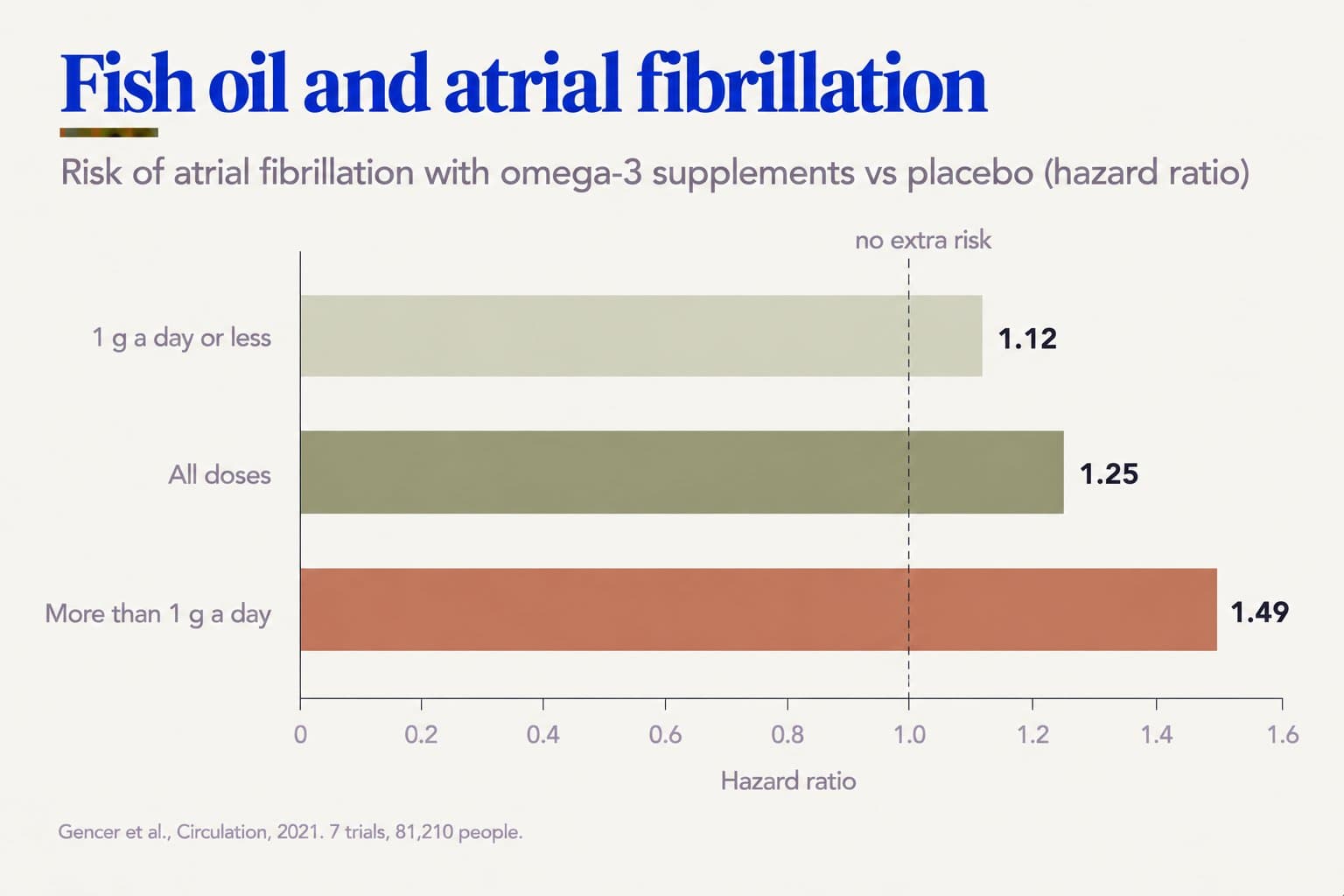
| Fish oil supplements and atrial fibrillation (7 trials, 81,210 people) | 25% higher risk overall; 49% higher at doses above 1 g a day |
| Prescription purified EPA 4 g daily in high-risk people with high triglycerides (REDUCE-IT, 8,179 people) | Cardiovascular events 17.2% vs 22.0% on placebo; more atrial fibrillation (5.3% vs 3.9%) |
| Plant sterols about 2 g a day | Lower LDL cholesterol by about 8-10% |
Why supplements often disappoint
Many supplements became popular because observational studies found that people with higher levels of a nutrient, such as vitamin D or antioxidants, had less heart disease. But people who have high levels of these nutrients, or who take supplements, also tend to be healthier in many other ways. When randomised trials test the supplement itself, the benefit usually disappears. Nutrients from food often come with fibre, other nutrients and healthier eating patterns that a pill can't replicate.
Supplements are also regulated less strictly than medicines, so their content, dose and purity can vary.
Evidence strength
Moderate: plant sterols and stanols lower LDL cholesterol. Plant sterols and stanols, found naturally in small amounts in vegetable oils, nuts and grains, and added to some spreads, yogurts and drinks, reduce cholesterol absorption from the gut. About 2 g a day lowers LDL cholesterol by about 8-10%. They haven't been tested in trials measuring heart attacks and strokes, so they're best seen as an add-on to diet and, where needed, medicines, not a replacement (see LDL, ApoB and Lipoprotein(a)).
Mixed: fish oil (omega-3 fatty acids). The evidence depends on the dose, the product and who takes it.
- Over-the-counter fish oil for prevention: in VITAL, 25,871 healthy adults took 1 g of fish oil or a placebo for a median of 5.3 years. There was no significant reduction in major cardiovascular events. Fewer heart attacks occurred with fish oil (HR 0.72), but this was a secondary finding that the researchers cautioned against over-interpreting. A large review of trials found that omega-3 supplements may modestly lower heart attack and coronary heart disease risk, but the effect is small.
- Prescription purified EPA (icosapent ethyl) in high-risk people: in REDUCE-IT, 8,179 people with heart disease or diabetes plus other risk factors, raised triglycerides and on a statin took 4 g a day of purified EPA or a placebo for a median of 4.9 years. Cardiovascular events fell from 22.0% to 17.2%. However, the placebo was mineral oil, which may have raised risk in the placebo group, and a similar trial of a different high-dose omega-3 product found no benefit. This is a prescription medicine for a specific group, not the same as fish oil capsules.
- A real side effect: a 2021 analysis of 7 trials with 81,210 people found omega-3 supplements increased the risk of atrial fibrillation by 25% overall, by 12% at doses of 1 g a day or less, and by 49% at doses above 1 g a day (see Atrial Fibrillation).
Eating oily fish once or twice a week remains a sensible part of a heart-healthy diet.
Not supported: vitamin D, multivitamins and antioxidants. In VITAL, vitamin D 2,000 IU a day didn't reduce cardiovascular events or cancer in healthy adults. An umbrella review of 277 trials with 992,129 participants found that multivitamins, antioxidants, vitamin A, vitamin B6 and iron had no significant effect on death or cardiovascular outcomes. Correcting a genuine deficiency is worthwhile for other reasons, such as bone health, but these supplements don't prevent heart disease.
Uncertain: coenzyme Q10, garlic, magnesium and others. Coenzyme Q10 is often taken for statin-related muscle aches or for "heart energy", but trials for muscle symptoms are small and inconsistent, and there's no evidence it prevents heart disease. The same applies to most other popular heart supplements, which have small or short studies at best.
Possible harm: calcium with vitamin D. In the same umbrella review, calcium combined with vitamin D was linked to a higher risk of stroke. Getting calcium from food is preferable, and calcium supplements should be taken only when there's a clear reason.
Caution: red yeast rice. Red yeast rice lowers cholesterol because it contains monacolin K, which is chemically identical to the prescription statin lovastatin. It therefore carries statin side effects, but with no guarantee of dose or purity. In 2024, red yeast rice supplements made by a Japanese company were linked to at least five deaths and over 100 hospitalisations from kidney damage, probably due to a toxic contaminant produced during fermentation (see Kidney Health and Cardiometabolic Risk). If you need a statin, a regulated prescription statin is safer and more predictable (see Statins: What the Evidence Shows About Benefits and Side Effects).
Safety tips
- Tell your doctor about all supplements, as some interact with medicines, such as fish oil and blood thinners, or St John's wort with many drugs.
- Beware of claims to "cleanse arteries", "reverse plaque" or replace medicines.
- Choose products with independent quality testing if you do take supplements.
- Don't stop prescribed medicines in favour of supplements.
Recommendations by situation
| Situation | What the evidence supports |
|---|---|
| Healthy, wanting to prevent heart disease | Focus on diet, activity, sleep, not smoking and knowing your numbers; supplements add little |
| Borderline high LDL, prefer a food-based approach | Plant sterol-enriched foods (about 2 g a day) plus soluble fibre can lower LDL modestly |
| High LDL or high cardiovascular risk | Proven medicines such as statins are far more effective than supplements |
| High triglycerides on a statin, with heart disease or diabetes | Ask your doctor whether prescription EPA is appropriate; over-the-counter fish oil is not equivalent |
| Atrial fibrillation or high risk of it | Avoid high-dose fish oil supplements |
| Low vitamin D or calcium intake | Correct deficiencies for bone health, preferably calcium from food; don't expect heart benefits |
| Considering red yeast rice | Discuss a prescription statin instead |
Practical notes
Most heart supplements haven't prevented heart attacks or strokes in large trials, and some carry risks: fish oil can increase atrial fibrillation, calcium with vitamin D may raise stroke risk, and red yeast rice is an unregulated statin with a history of contamination. Plant sterols can modestly lower LDL, and a prescription form of purified EPA helps some high-risk people. For almost everyone, the biggest gains come from the fundamentals: a diet rich in vegetables, pulses, whole grains, nuts and fish, regular exercise, not smoking, and controlling blood pressure, cholesterol and blood sugar, with proven medicines where needed. Ways to lower LDL cholesterol are covered in Lowering LDL Cholesterol.
- Khan SU, et al. Effects of nutritional supplements and dietary interventions on cardiovascular outcomes: an umbrella review and evidence map. Annals of Internal Medicine, 2019;171(3):190-198.
- Manson JE, et al. Marine n-3 fatty acids and prevention of cardiovascular disease and cancer (VITAL). New England Journal of Medicine, 2019;380(1):23-32.
- Manson JE, et al. Vitamin D supplements and prevention of cancer and cardiovascular disease (VITAL). New England Journal of Medicine, 2019;380(1):33-44.
- Gencer B, et al. Effect of long-term marine omega-3 fatty acids supplementation on the risk of atrial fibrillation in randomized controlled trials of cardiovascular outcomes: a systematic review and meta-analysis. Circulation, 2021;144(25):1981-1990.
- Bhatt DL, et al. Cardiovascular risk reduction with icosapent ethyl for hypertriglyceridemia (REDUCE-IT). New England Journal of Medicine, 2019;380(1):11-22.
- Cleveland Clinic. Phytosterols (sterols and stanols).
Free longevity assessment
Which supplements are you taking
for your heart, and why?
Take the free Aevum Protocol assessment to see how your cardiovascular & metabolic health and 6 other longevity domains are performing — and get a personalised 90-day plan.
Take the free assessmentKeep reading
Related articles
Cardiovascular & Metabolic Health
Statins: What the Evidence Shows About Benefits and Side Effects
Cardiovascular & Metabolic Health
Lowering LDL Cholesterol: A Practical Guide to Diet, Lifestyle and Medicines
Cardiovascular & Metabolic Health