Cardiovascular & Metabolic Health
Statins:
What the Evidence Shows About Benefits and Side Effects
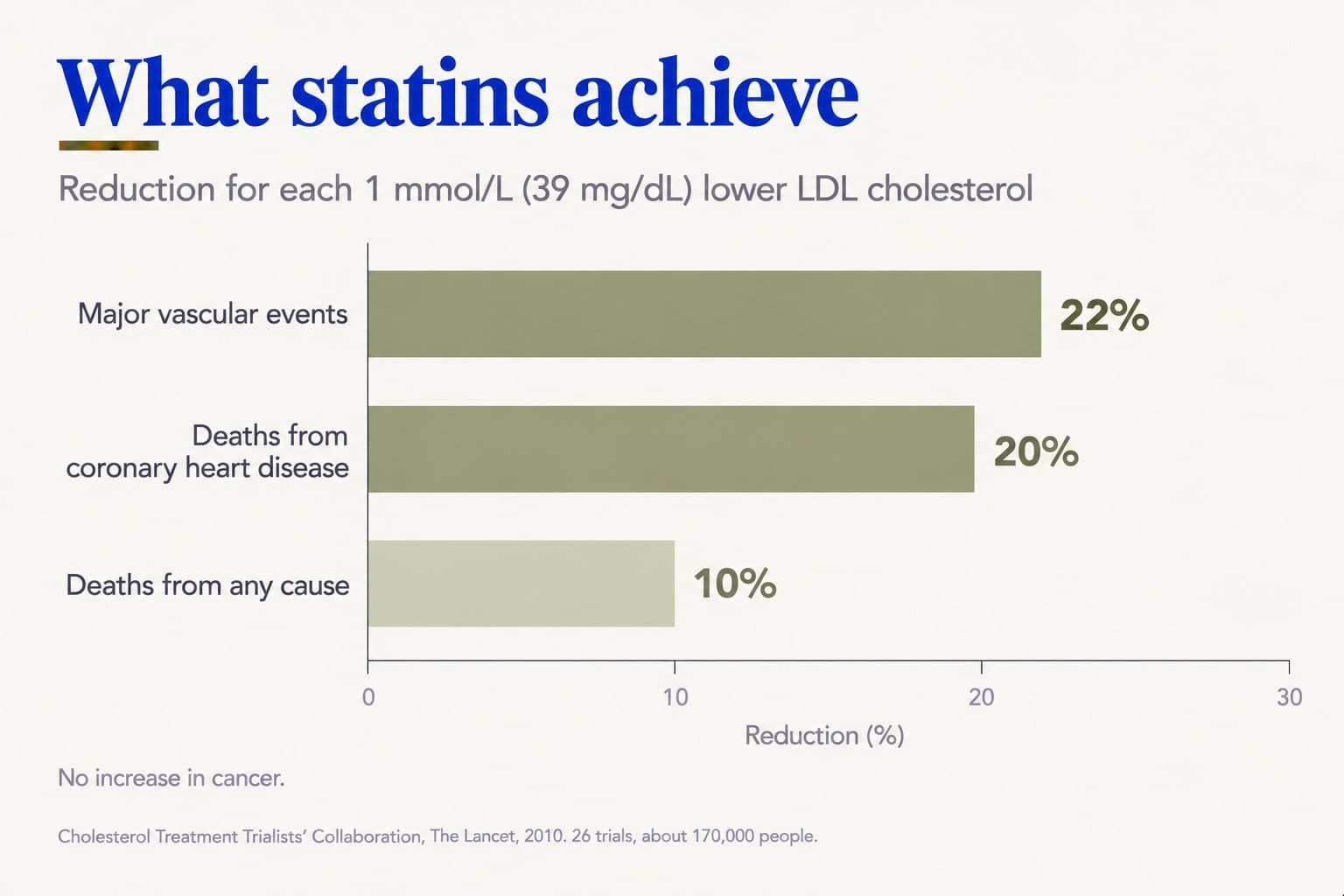
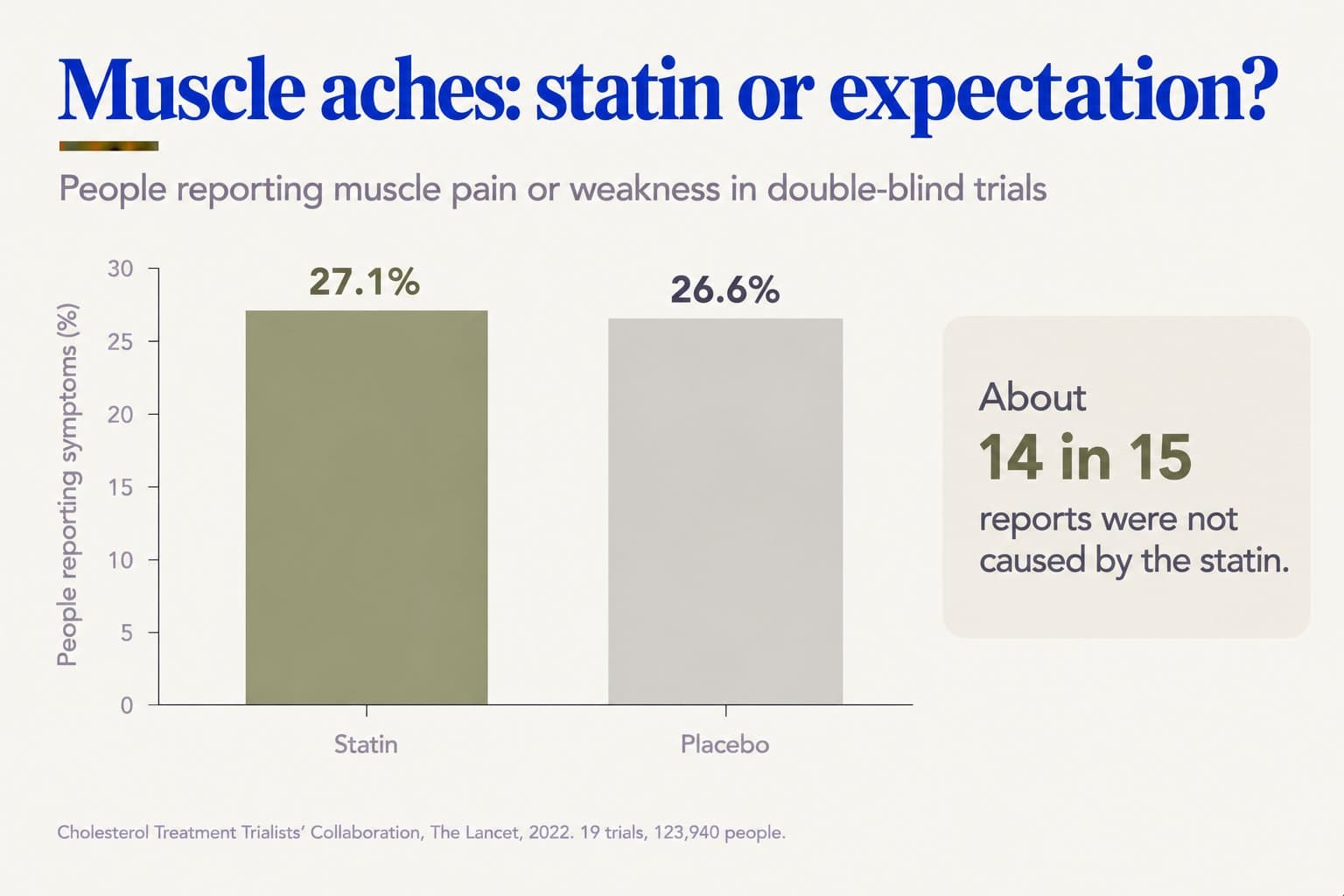
Statins are among the most studied medicines in the world, and also among the most debated. They lower LDL cholesterol by reducing how much cholesterol the liver makes, and the evidence that this prevents heart attacks and strokes is very strong. Across 26 trials with about 170,000 people, each 1 mmol/L (about 39 mg/dL) reduction in LDL cut major vascular events by about a fifth and deaths from any cause by 10%, with no increase in cancer. The benefit applies even to people at low risk, although the absolute gain is smaller. Muscle aches are the side effect people worry about most, but in trials comparing statins with placebo, muscle symptoms were reported almost as often on placebo (26.6%) as on statins (27.1%): about 14 in 15 reports weren't caused by the statin. Statins do slightly increase the chance of a diabetes diagnosis, mostly in people whose blood sugar is already close to the threshold. This article sets out what's well established, what's uncertain and what isn't supported.
Key numbers
| Finding | Detail |
|---|---|
| Benefit per 1 mmol/L lower LDL (26 trials, about 170,000 people) | 22% fewer major vascular events; 10% fewer deaths from any cause; no increase in cancer |
| Benefit in people at low risk (5-year risk under 10%) | About 11 fewer major vascular events per 1,000 treated for 5 years, per 1 mmol/L lower LDL |
| Muscle symptoms, statin vs placebo (19 double-blind trials) | Reported by 27.1% on statins vs 26.6% on placebo; about 14 in 15 reports not caused by the statin |
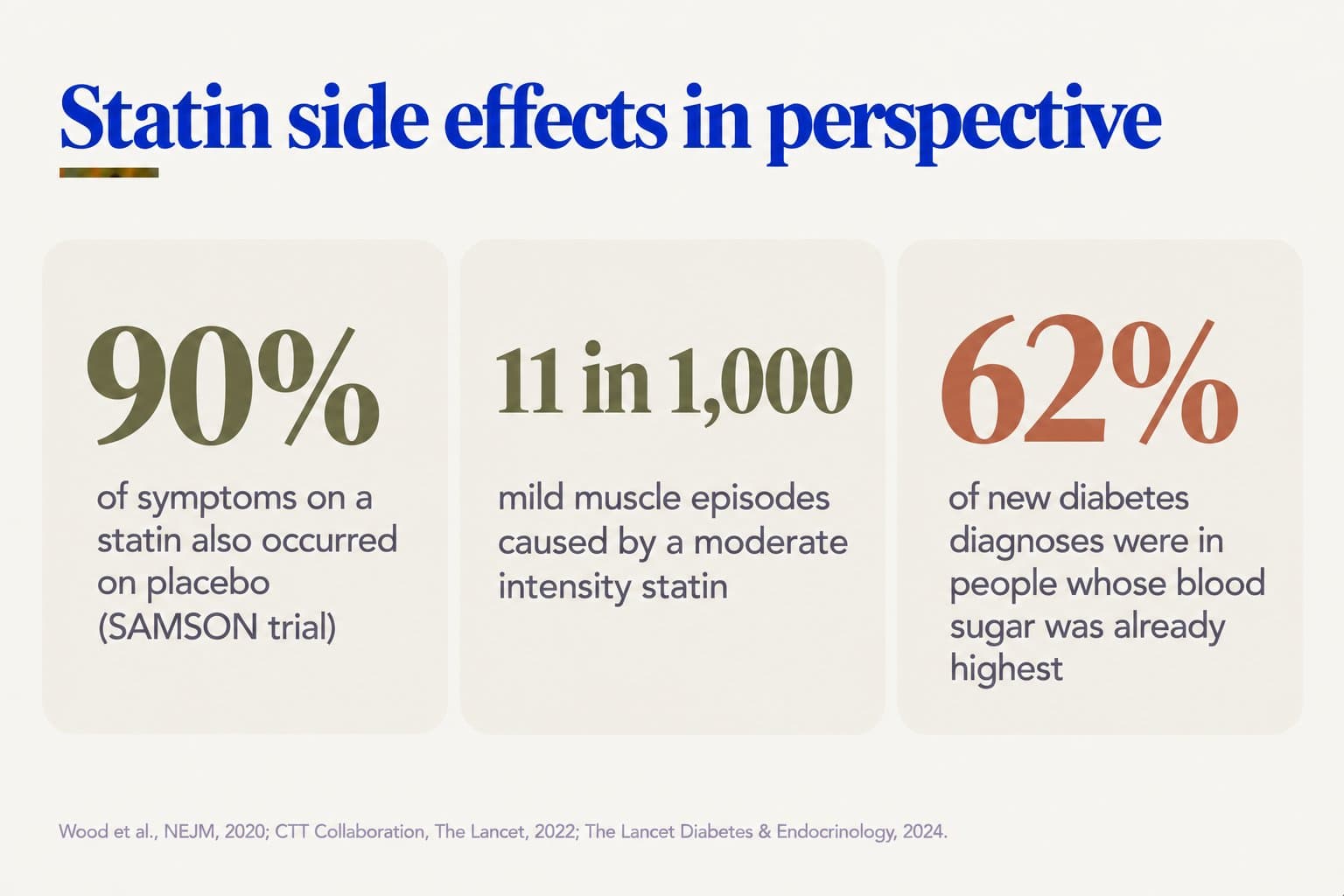
| Symptoms in people who'd stopped statins (SAMSON, 60 people) | 90% of symptoms on a statin also occurred on placebo |
| New diabetes diagnoses (23 trials, 154,664 people) | 10% higher with low or moderate intensity statins, 36% higher with high intensity; mostly in people already near the threshold |
How statins work
Statins block an enzyme the liver uses to make cholesterol. In response, the liver pulls more LDL particles out of the blood, lowering LDL cholesterol by roughly 30% to over 50% depending on the drug and dose. Because atherosclerosis is driven by the number of LDL and other ApoB particles in the blood over time, lowering them slows plaque growth and stabilises existing plaques (see How Atherosclerosis Develops and LDL, ApoB and Lipoprotein(a)). Statins also lower inflammation modestly (see Inflammation and Heart Disease).
| Intensity | Typical LDL reduction | Examples (daily dose) |
|---|---|---|
| High | 50% or more | Atorvastatin 40-80 mg, rosuvastatin 20-40 mg |
| Moderate | 30-49% | Atorvastatin 10-20 mg, rosuvastatin 5-10 mg, simvastatin 20-40 mg |
| Low | Under 30% | Simvastatin 10 mg, pravastatin 10-20 mg |
Evidence strength
Strong: statins prevent heart attacks, strokes and cardiovascular deaths. The Cholesterol Treatment Trialists' Collaboration analysed individual data from 26 randomised trials with about 170,000 participants. Each 1 mmol/L reduction in LDL cholesterol reduced major vascular events (heart attacks, strokes and procedures to unblock arteries) by 22%, deaths from coronary heart disease by 20% and deaths from any cause by 10%. The proportional benefit was similar across all types of patients studied, and the more LDL was lowered, the greater the benefit.
Strong: benefit depends on your baseline risk. The proportional reduction in events is similar whether your risk is high or low, but the absolute benefit depends on how likely you were to have an event in the first place. In people with a 5-year risk under 10%, each 1 mmol/L lower LDL prevented about 11 major vascular events per 1,000 people treated for 5 years. People with existing heart disease, diabetes or very high LDL gain much more. This is why decisions are based on your overall risk rather than LDL alone (see Cardiovascular Risk Scores and Heart Age). In younger people, 10-year risk can be low even when lifetime risk is high, which is part of the conversation.
Strong: most muscle symptoms aren't caused by statins. In 2022, the same collaboration analysed 19 double-blind trials with 123,940 people. Muscle pain or weakness was reported by 27.1% of people taking a statin and 26.6% of those taking a placebo. Overall, about 14 in 15 reports among people on statins weren't caused by the statin. Most of the small excess occurred in the first year; after that, low or moderate intensity statins caused no increase. For every 1,000 people taking a moderate intensity statin, the treatment caused about 11 episodes of muscle symptoms, generally mild.
The SAMSON trial tested this directly in 60 people who'd stopped statins because of side effects. Each took a statin, a placebo or nothing in random order, month by month, without knowing which. Ninety percent of the symptoms they experienced on the statin also occurred on placebo, a "nocebo" effect driven by expecting side effects. After seeing their results, about half successfully restarted their statin.
Moderate-to-strong: a small increase in diabetes diagnoses. A 2024 analysis of 23 trials with 154,664 people found statins increased new diabetes diagnoses by 10% with low or moderate intensity treatment and by 36% with high intensity treatment. The average rise in HbA1c was very small (0.06-0.08%), and 62% of new diagnoses were in people whose blood sugar was already in the top quarter at the start. In other words, statins tip some people who were close to diabetes over the threshold slightly sooner. For people at raised cardiovascular risk, the benefits far outweigh this effect, and people with diabetes are among those who benefit most from statins (see Diabetes and Heart Disease).
Not supported: statins cause cancer. In the 26-trial analysis, cancer incidence was identical on statins and control (rate ratio 1.00), even at very low LDL levels.
Not supported: statins commonly cause memory loss or liver failure. Randomised trials haven't shown that statins harm memory or cause dementia. Mild rises in liver enzymes can occur, but serious liver injury is very rare, and routine liver monitoring isn't needed for most people.
Real but rare side effects
- Severe muscle damage (rhabdomyolysis): very rare, with dark urine and severe muscle pain or weakness. It's more likely at high doses, with kidney disease, hypothyroidism, or with interacting medicines.
- Drug interactions: some statins, particularly simvastatin and atorvastatin, interact with certain antibiotics, antifungals, some heart medicines and large amounts of grapefruit juice. Tell your doctor and pharmacist about all your medicines.
- Pregnancy: statins are generally stopped before planned pregnancy and during breastfeeding.
Recommendations by situation
| Situation | What the evidence supports |
|---|---|
| Existing heart disease, stroke or peripheral artery disease | A high intensity statin is recommended for almost everyone, aiming for large LDL reductions |
| Diabetes, aged 40 or over | A statin is recommended for most people |
| Very high LDL (190 mg/dL, 4.9 mmol/L, or more) or familial high cholesterol | A statin is recommended regardless of calculated risk; check family members too |
| Intermediate 10-year risk | Discuss with your doctor; risk-enhancing factors such as South Asian ancestry, family history, high Lp(a) or a coronary calcium scan can help decide |
| Low 10-year risk but high lifetime risk | Lifestyle first; discuss earlier treatment if LDL stays high |
| Muscle aches on a statin | Don't stop on your own; talk to your doctor. Options include a short break and rechallenge, a lower dose, a different statin or alternate-day dosing; most people can continue |
| Worried about diabetes | Keep up activity and weight management; the heart benefit usually outweighs the small risk |
Practical notes
Statins are one of the best-proven ways to prevent heart attacks and strokes, with benefits proportional to how much LDL is lowered and how high your risk is. Most muscle aches experienced on statins aren't caused by them, and serious side effects are rare. Statins slightly raise the chance of a diabetes diagnosis, mainly in people already close to it, but for people at raised risk the benefit is much larger. The right decision depends on your overall cardiovascular risk, so discuss it with your doctor and keep up the lifestyle changes that lower LDL and risk too. Ways to lower LDL, with and without medicines, are covered in Lowering LDL Cholesterol.
- Cholesterol Treatment Trialists' (CTT) Collaboration. Efficacy and safety of more intensive lowering of LDL cholesterol: a meta-analysis of data from 170,000 participants in 26 randomised trials. The Lancet, 2010;376(9753):1670-1681.
- Cholesterol Treatment Trialists' (CTT) Collaborators. The effects of lowering LDL cholesterol with statin therapy in people at low risk of vascular disease: meta-analysis of individual data from 27 randomised trials. The Lancet, 2012;380(9841):581-590.
- Cholesterol Treatment Trialists' Collaboration. Effect of statin therapy on muscle symptoms: an individual participant data meta-analysis of large-scale, randomised, double-blind trials. The Lancet, 2022;400(10355):832-845.
- Wood FA, et al. N-of-1 trial of a statin, placebo, or no treatment to assess side effects. New England Journal of Medicine, 2020;383(22):2182-2184.
- Cholesterol Treatment Trialists' Collaboration. Effects of statin therapy on diagnoses of new-onset diabetes and worsening glycaemia in large-scale randomised blinded statin trials: an individual participant data meta-analysis. The Lancet Diabetes & Endocrinology, 2024;12(5):306-319.
Free longevity assessment
Have you been told you need a statin,
or stopped one because of side effects?
Take the free Aevum Protocol assessment to see how your cardiovascular & metabolic health and 6 other longevity domains are performing — and get a personalised 90-day plan.
Take the free assessmentKeep reading
Related articles
Cardiovascular & Metabolic Health
LDL, ApoB and Lipoprotein(a): Understanding Cholesterol Beyond the Basic Test
Cardiovascular & Metabolic Health
Lowering LDL Cholesterol: A Practical Guide to Diet, Lifestyle and Medicines
Cardiovascular & Metabolic Health