Cardiovascular & Metabolic Health
Inflammation and Heart Disease:
The Hidden Driver Beyond Cholesterol
Cholesterol isn't the whole story of heart disease. Atherosclerosis is also an inflammatory process: immune cells in the artery wall react to trapped cholesterol, and this inflammation helps plaques grow and rupture. A simple blood test, high-sensitivity C-reactive protein (hsCRP), measures low-grade inflammation in the body. In a combined analysis of 54 studies and 160,309 people, higher CRP was linked to heart disease risk about as strongly as cholesterol or blood pressure. And in more than 31,000 people already taking statins, high hsCRP predicted future heart attacks, strokes and deaths more strongly than LDL cholesterol. Trials have now shown that treating inflammation directly can reduce heart attacks and strokes: a targeted antibody cut events by 15%, and low-dose colchicine, an old gout medicine, by 31%. For most people, though, the best ways to lower inflammation are the everyday ones: losing abdominal fat, not smoking, exercising, sleeping well and treating conditions such as gum disease. This article explains the role of inflammation and what you can do about it.
Key numbers
| Finding | Detail |
|---|---|
| CRP and heart disease risk (54 studies, 160,309 people) | Each standard deviation higher: 37% higher risk of coronary heart disease, similar to cholesterol (28%) and blood pressure (35%) |
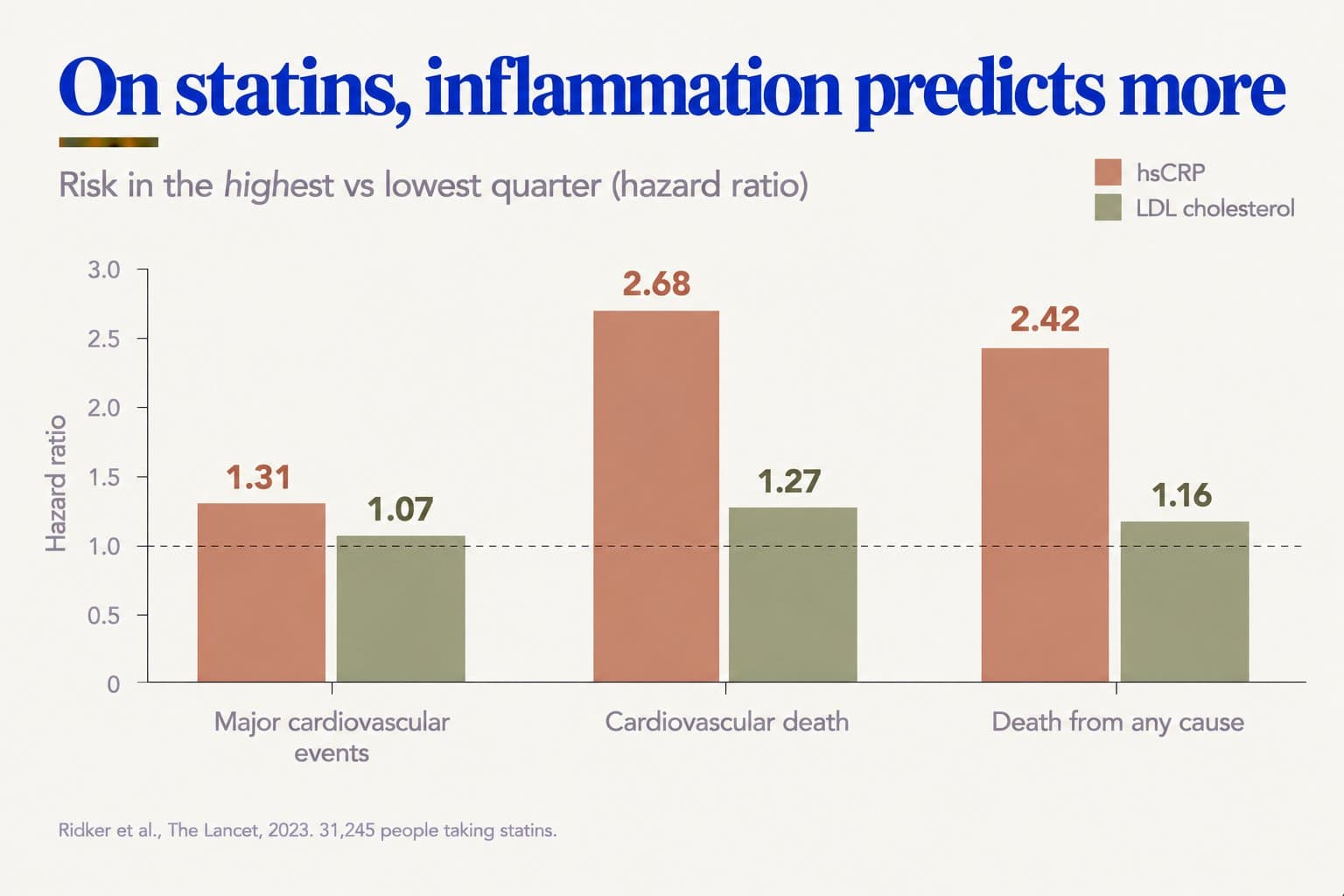
| High vs low hsCRP in statin-treated patients (31,245 people) | 2.7 times the risk of cardiovascular death, vs 1.3 times for high vs low LDL |
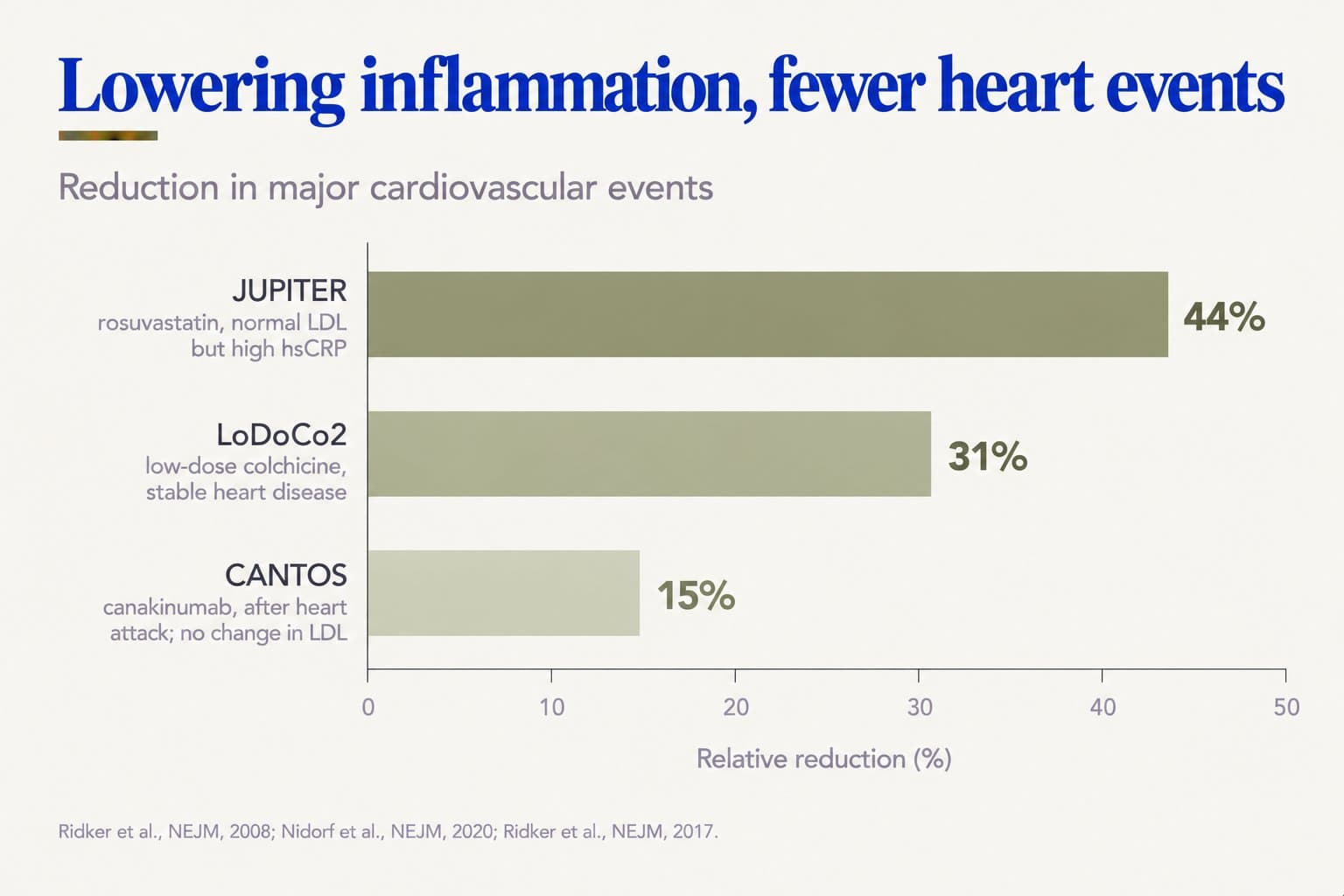
| Anti-inflammatory antibody after heart attack (CANTOS, 10,061 people) | 15% fewer heart attacks, strokes and cardiovascular deaths, with no change in LDL |
| Low-dose colchicine in stable heart disease (LoDoCo2, 5,522 people) | Events reduced from 9.6% to 6.8%, a 31% reduction |
| Statin in people with normal LDL but high hsCRP (JUPITER, 17,802 people) | 44% fewer major cardiovascular events |
How inflammation drives heart disease
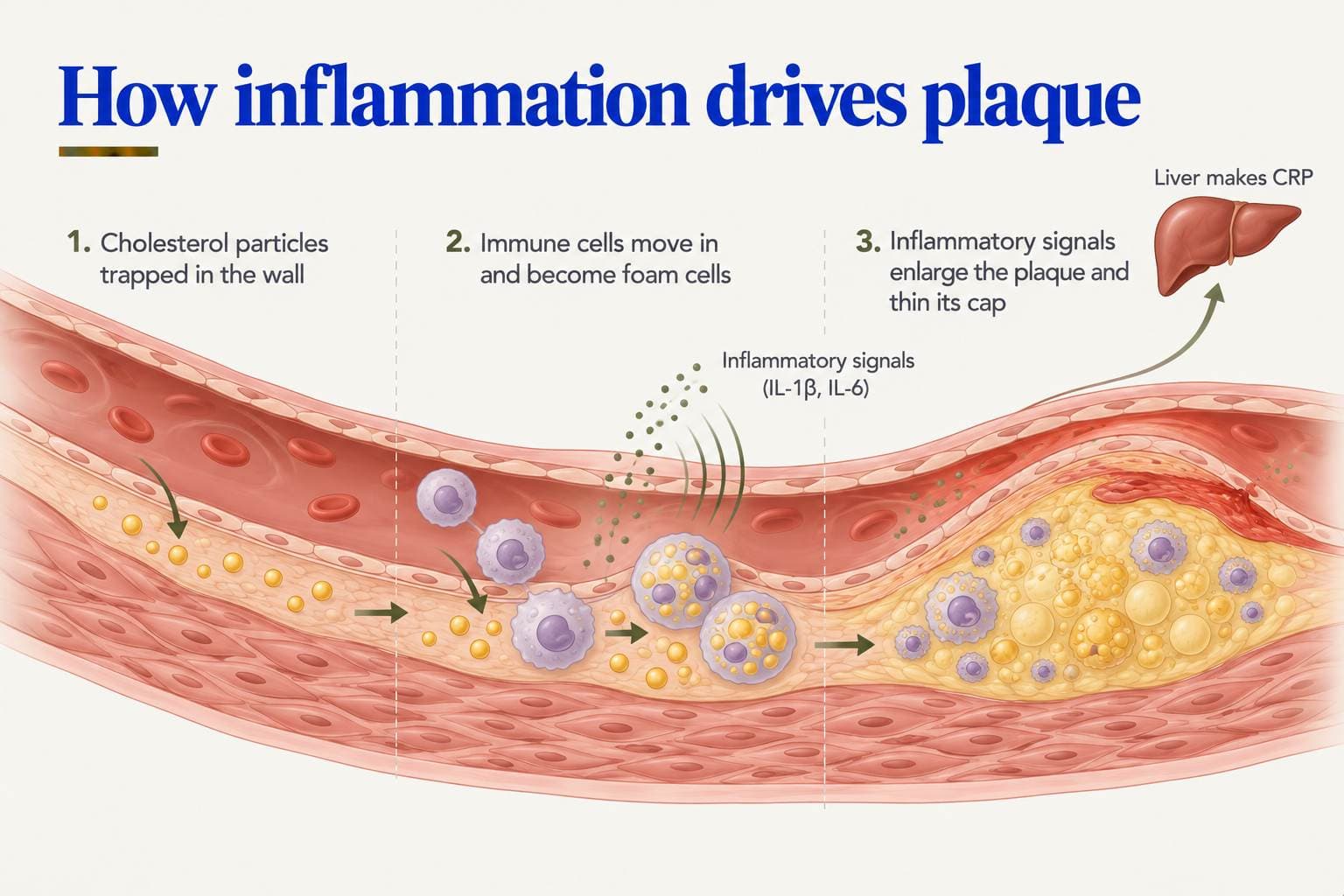
When LDL and other ApoB-containing particles become trapped in the artery wall, the body treats them as a threat (see How Atherosclerosis Develops). Immune cells move in and engulf them, becoming "foam cells", and release chemical signals such as interleukin-1β and interleukin-6. These signals attract more immune cells, cause the liver to produce C-reactive protein, and keep the process going. Over time, inflammation:
- Helps plaques grow by drawing in more immune cells and cholesterol.
- Weakens the plaque's fibrous cap, making it more likely to rupture and trigger a clot, which causes most heart attacks.
- Makes blood more likely to clot.
This is why two people with the same LDL cholesterol can have different risks, and why inflammation is sometimes called the "residual risk" that remains after cholesterol is controlled.
Measuring inflammation: hsCRP
C-reactive protein is made by the liver in response to inflammation. A high-sensitivity test detects the low levels relevant to cardiovascular risk. Commonly used bands are:
| hsCRP level | Cardiovascular risk category |
|---|---|
| Under 1 mg/L | Lower |
| 1-3 mg/L | Average |
| Above 3 mg/L | Higher |
CRP rises sharply with infections, injuries and flares of inflammatory disease, so a result above 10 mg/L usually reflects something acute and should be repeated once you're well. Two measurements a couple of weeks apart give a more reliable picture. CRP is a marker of inflammation rather than a cause of heart disease itself, so the aim is to address the sources of inflammation, not just the number.
What drives chronic inflammation
| Factor | Effect | Modifiable? | Evidence strength |
|---|---|---|---|
| Abdominal and visceral fat | Releases inflammatory signals; a major source of raised CRP | Yes | Strong |
| Smoking | Raises inflammation and damages artery walls | Yes | Strong |
| Physical inactivity | Linked to higher CRP; exercise lowers it | Yes | Strong |
| Insulin resistance, diabetes and fatty liver | Closely linked to chronic inflammation | Yes | Strong |
| Autoimmune diseases (rheumatoid arthritis, lupus, psoriasis) | Raise cardiovascular risk | Partly, with treatment | Strong |
| Gum disease (periodontitis) | Linked to higher inflammation and heart risk | Yes | Moderate |
| Poor or short sleep, chronic stress | Linked to higher inflammatory markers | Yes | Moderate |
| Chronic kidney disease | Raises inflammation and heart risk | Partly | Strong |
| Chronic infections such as HIV | Raise inflammation and heart risk | Partly, with treatment | Moderate |
What the research shows
CRP predicts risk as strongly as cholesterol. The Emerging Risk Factors Collaboration pooled 54 long-term studies of 160,309 people without heart disease. After adjusting for conventional risk factors, each standard deviation higher CRP was linked to a 37% higher risk of coronary heart disease, a 27% higher risk of ischaemic stroke and a 55% higher risk of vascular death. For comparison, the same step up in non-HDL cholesterol was linked to a 28% higher risk of coronary heart disease, and in systolic blood pressure to a 35% higher risk. CRP was also linked to deaths from other causes, including some cancers and lung disease, which reflects its role as a general marker of inflammation.
In people on statins, inflammation predicts more than cholesterol. A 2023 analysis in The Lancet studied 31,245 people with or at high risk of heart disease who were already taking statins, from three large trials. Comparing the highest with the lowest quarter of hsCRP, the risk of cardiovascular death was 2.68 times higher and of death from any cause 2.42 times higher. For LDL cholesterol, the equivalent figures were 1.27 and 1.16. The authors concluded that once LDL is lowered with a statin, residual inflammation is a stronger predictor of future events.
Treating inflammation reduces heart attacks and strokes.
- CANTOS (2017): 10,061 people who'd had a heart attack and had hsCRP of 2 mg/L or more received canakinumab, an antibody that blocks interleukin-1β, or a placebo. At the 150 mg dose, hsCRP fell by about half and heart attacks, strokes and cardiovascular deaths were reduced by 15%, with no change in LDL cholesterol. This was the first proof that targeting inflammation alone prevents cardiovascular events. However, fatal infections were more common with canakinumab, and it isn't used for heart disease.
- LoDoCo2 (2020): 5,522 people with stable coronary disease took colchicine 0.5 mg daily or a placebo for about 2.4 years. Heart attacks, strokes, cardiovascular deaths and urgent procedures occurred in 6.8% of the colchicine group compared with 9.6% on placebo, a 31% reduction. There was a non-significant trend towards more non-cardiovascular deaths (1.9% vs 1.3%). Low-dose colchicine is now approved in some countries for people with established heart disease, although results after an acute heart attack have been mixed.
- JUPITER (2008): 17,802 people with normal LDL cholesterol (under 130 mg/dL) but hsCRP of 2 mg/L or more took rosuvastatin or a placebo. The trial was stopped early after about 2 years because major cardiovascular events were 44% lower. Statins lower both LDL and CRP, and this showed that people with raised inflammation can benefit even when their cholesterol looks normal.
What you can actually change
1. Reduce abdominal fat. Visceral fat is one of the main sources of chronic inflammation, and losing it lowers CRP (see What Metabolic Health Really Means).
2. Exercise regularly. Regular aerobic and strength exercise lowers inflammatory markers over time (see Zone 2 Training).
3. Stop smoking. Smoking is a major and reversible driver of vascular inflammation.
4. Eat an anti-inflammatory pattern. Emphasise vegetables, fruit, pulses, whole grains, nuts, olive oil and fish, and limit refined carbohydrates, sugary drinks and processed meat.
5. Look after your gums. Brush and floss daily and see a dentist regularly; treat bleeding gums.
6. Sleep well and manage stress. Short or poor sleep and chronic stress raise inflammatory markers (see Sleep and Cardiovascular Health).
7. Treat inflammatory conditions and cardiovascular risk together. If you have an autoimmune disease, kidney disease or diabetes, keep it well controlled and have your heart risk assessed (see Kidney Health and Cardiometabolic Risk).
Recommendations
- Consider an hsCRP test if your cardiovascular risk is borderline or intermediate: a level persistently above 2-3 mg/L can tip the balance towards treatment.
- Repeat a high result when you're well, and ignore readings taken during an infection.
- If you have heart disease and persistently high hsCRP despite a statin, ask your cardiologist whether low-dose colchicine is appropriate.
- Don't rely on supplements marketed as "anti-inflammatory" to protect your heart; lifestyle changes and proven medicines have far stronger evidence.
Practical notes
Inflammation is a key driver of atherosclerosis alongside cholesterol. Raised hsCRP signals higher risk, even in people with normal cholesterol or those already on statins, and trials have shown that reducing inflammation can prevent heart attacks and strokes. The most powerful anti-inflammatory steps are everyday ones: losing abdominal fat, exercising, not smoking, eating well, sleeping enough and looking after your gums, alongside controlling cholesterol and blood pressure.
- Emerging Risk Factors Collaboration. C-reactive protein concentration and risk of coronary heart disease, stroke, and mortality: an individual participant meta-analysis. The Lancet, 2010;375(9709):132-140.
- Ridker PM, et al. Inflammation and cholesterol as predictors of cardiovascular events among patients receiving statin therapy: a collaborative analysis of three randomised trials. The Lancet, 2023;401(10384):1293-1301.
- Ridker PM, et al. Antiinflammatory therapy with canakinumab for atherosclerotic disease (CANTOS). New England Journal of Medicine, 2017;377(12):1119-1131.
- Nidorf SM, et al. Colchicine in patients with chronic coronary disease (LoDoCo2). New England Journal of Medicine, 2020;383(19):1838-1847.
- Ridker PM, et al. Rosuvastatin to prevent vascular events in men and women with elevated C-reactive protein (JUPITER). New England Journal of Medicine, 2008;359(21):2195-2207.
- Pearson TA, et al. Markers of inflammation and cardiovascular disease: application to clinical and public health practice. A statement for healthcare professionals from the CDC and the AHA. Circulation, 2003;107(3):499-511.
Free longevity assessment
Have you ever had your
hsCRP measured?
Take the free Aevum Protocol assessment to see how your cardiovascular & metabolic health and 6 other longevity domains are performing — and get a personalised 90-day plan.
Take the free assessmentKeep reading
Related articles
Cardiovascular & Metabolic Health
How Atherosclerosis Develops: The Decades-Long Process Behind Heart Attacks and Strokes
Cardiovascular & Metabolic Health
Statins: What the Evidence Shows About Benefits and Side Effects
Cardiovascular & Metabolic Health