Sleep & Recovery
Sleep and Cardiovascular Health: Blood
Pressure, Inflammation, and Heart Disease Risk
Our Sleep Architecture article introduced the idea that blood pressure normally drops during deep sleep, and our Sleep Duration article covered the U-shaped relationship between sleep duration and cardiovascular disease risk. This article goes deeper into the cardiovascular picture specifically — what actually happens to blood pressure and inflammation when sleep falls short, and why sleep apnea in particular represents one of the strongest, most consequential sleep-heart connections in medicine.
Quick Summary
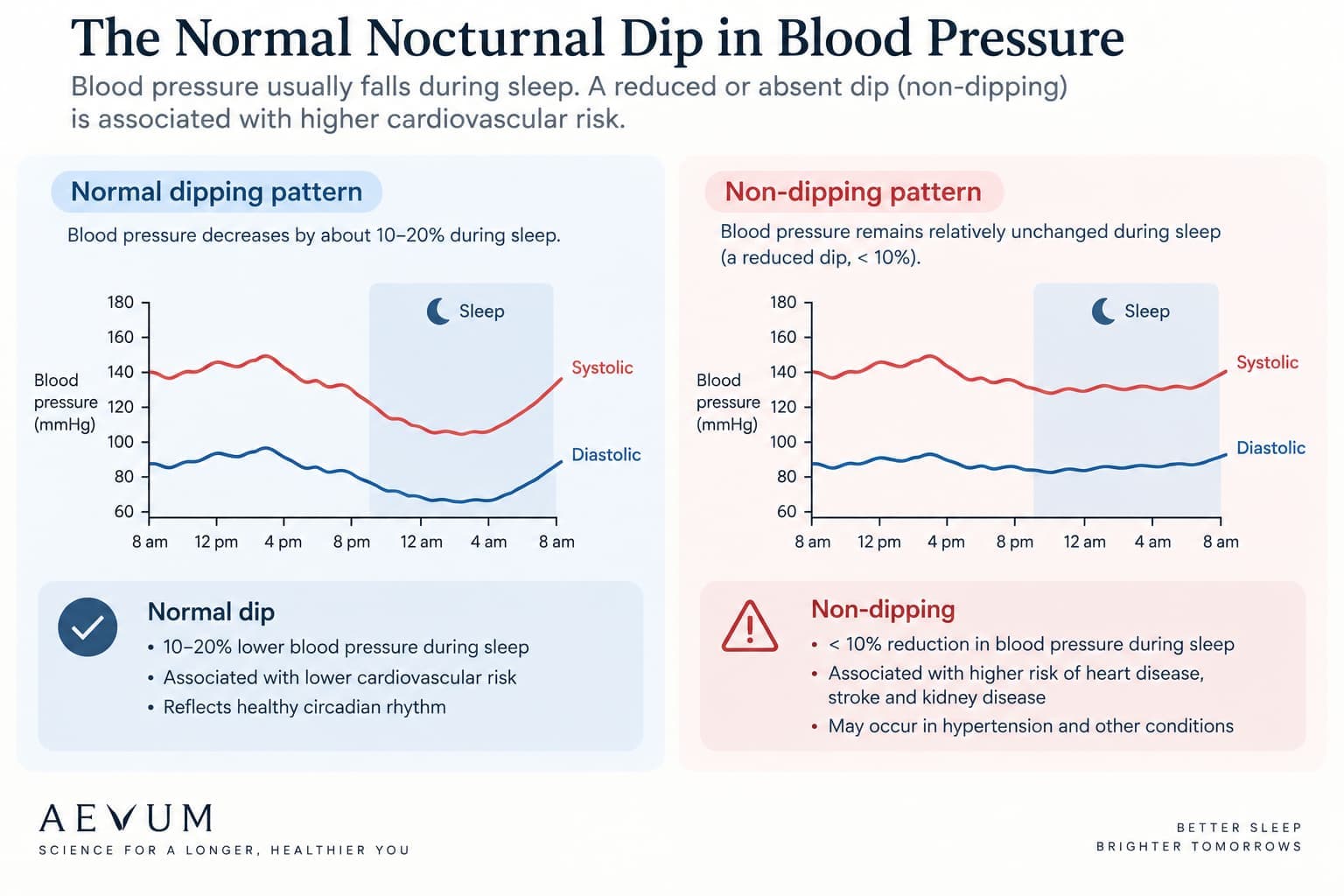
- →Blood pressure normally drops significantly during deep sleep — a pattern called nocturnal "dipping." People whose blood pressure fails to dip properly show measurably higher cardiovascular risk, independent of their daytime blood pressure readings
- →A classic experiment found that both total and partial sleep deprivation directly raised CRP, a key inflammatory marker that independently predicts cardiovascular disease risk — alongside measurable increases in blood pressure and heart rate
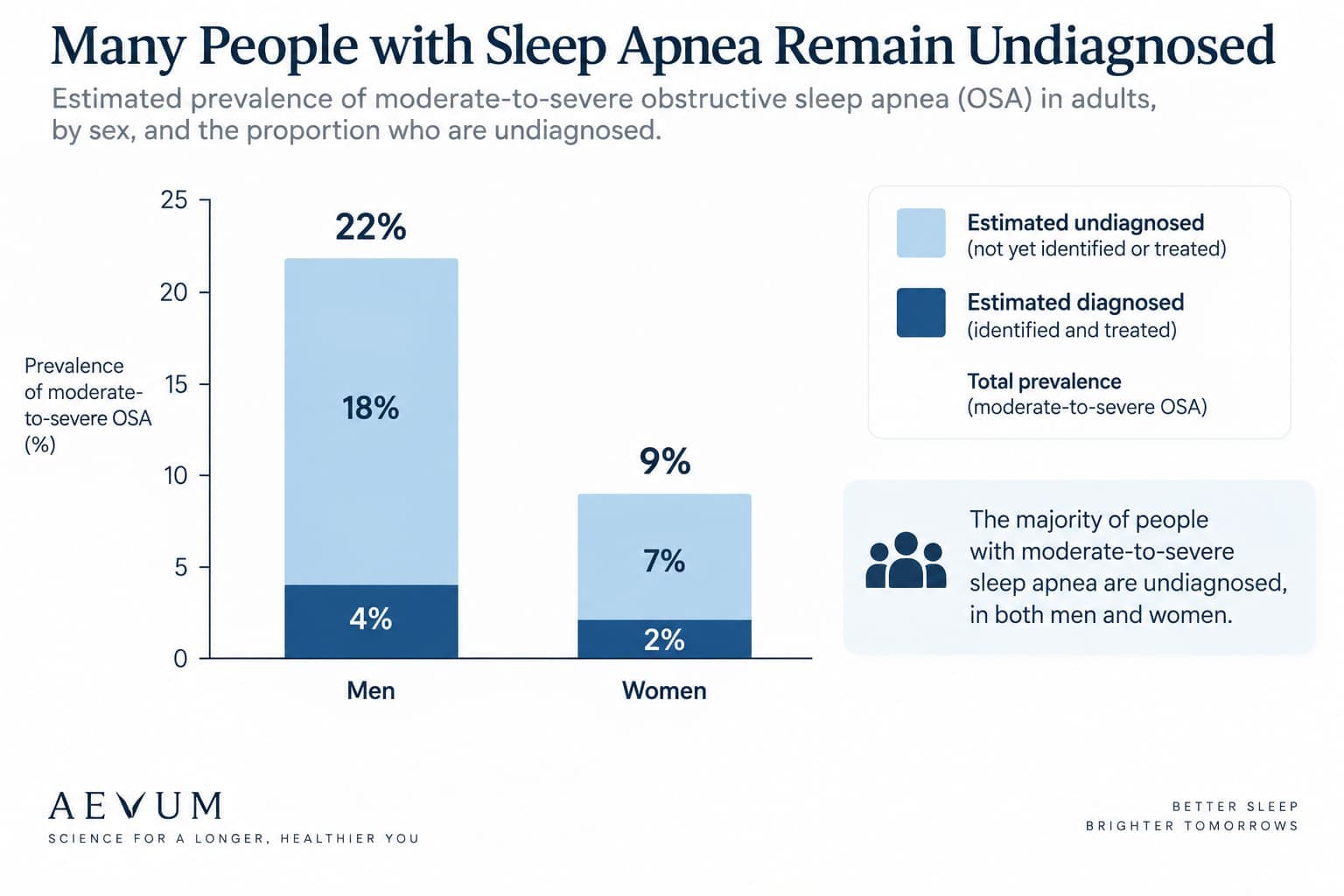
- →Sleep apnea is far more common than most people assume — the landmark Wisconsin Sleep Cohort study found moderate-to-severe obstructive sleep apnea in roughly 13% of men and 6% of women overall, rising to 17% of men and 9% of women aged 50–70, with the large majority of cases going undiagnosed. Loud snoring plus daytime sleepiness is worth raising with a doctor, not dismissing
- →Sleep apnea is an independent risk factor for stroke, atrial fibrillation, hypertension, and heart failure — not simply a marker of poor sleep quality, but a genuine, separately-treatable driver of cardiovascular disease
- →The relationship between OSA and atrial fibrillation runs in both directions — each condition appears to worsen the other, making them a particularly important pair to screen for together rather than in isolation
Key numbers at a glance
| Measure | Figure |
|---|---|
| Normal nocturnal blood pressure drop | ~10–20% |
| Moderate-to-severe OSA prevalence, ages 30–70 (Wisconsin Sleep Cohort) | ~13% men, ~6% women |
| Moderate-to-severe OSA prevalence, ages 50–70 (same study) | ~17% men, ~9% women |
| OSA cases estimated to be undiagnosed | Large majority |
| Nights of partial sleep restriction needed to raise CRP/IL-6 | 3+ consecutive nights |
| Lowest-stroke-risk sleep duration | ~6–7 hours |
How it works: nocturnal blood pressure dipping
As introduced in our Sleep Architecture article, blood pressure normally falls by roughly 10–20% during nighttime sleep compared to daytime levels, concentrated particularly during deep sleep. This isn't incidental — it reflects the parasympathetic ("rest and digest") nervous system taking over from the sympathetic ("fight or flight") system that dominates during waking hours.
People whose blood pressure fails to drop properly at night — termed "non-dippers" in the clinical literature — show measurably elevated cardiovascular risk compared to normal dippers, even when their daytime blood pressure readings look identical. This matters practically: a standard daytime blood pressure check can look entirely normal while missing a genuinely important risk pattern that only shows up overnight, which is part of why 24-hour ambulatory blood pressure monitoring is considered more informative than a single office reading for some patients.
What the research shows
Sleep loss directly raises blood pressure and inflammation. Beyond the dipping pattern, sleep loss appears to directly and rapidly disturb cardiovascular markers, based on controlled experimental research rather than just population observation. A landmark study measured C-reactive protein (CRP) — a well-established inflammatory marker that independently predicts cardiovascular disease risk — under two conditions: total sleep deprivation for 88 continuous hours, and partial sleep deprivation (roughly 4.2 hours a night) sustained for 10 consecutive nights. Both conditions produced significant, measurable increases in CRP, alongside increases in systolic blood pressure and heart rate, while a well-rested control group showed no such changes. A broader meta-analysis of experimental sleep restriction studies has since confirmed that multiple nights of partial sleep deprivation reliably raises inflammatory markers including CRP and IL-6, though interestingly a single night alone doesn't appear sufficient — the effect seems to require several consecutive nights of insufficient sleep to become measurable. This gives the epidemiological sleep-cardiovascular link a plausible, demonstrated mechanism: it's not simply that unhealthy people happen to sleep poorly — sleep loss itself appears to directly trigger the kind of inflammatory and blood pressure changes known to drive cardiovascular disease over time.
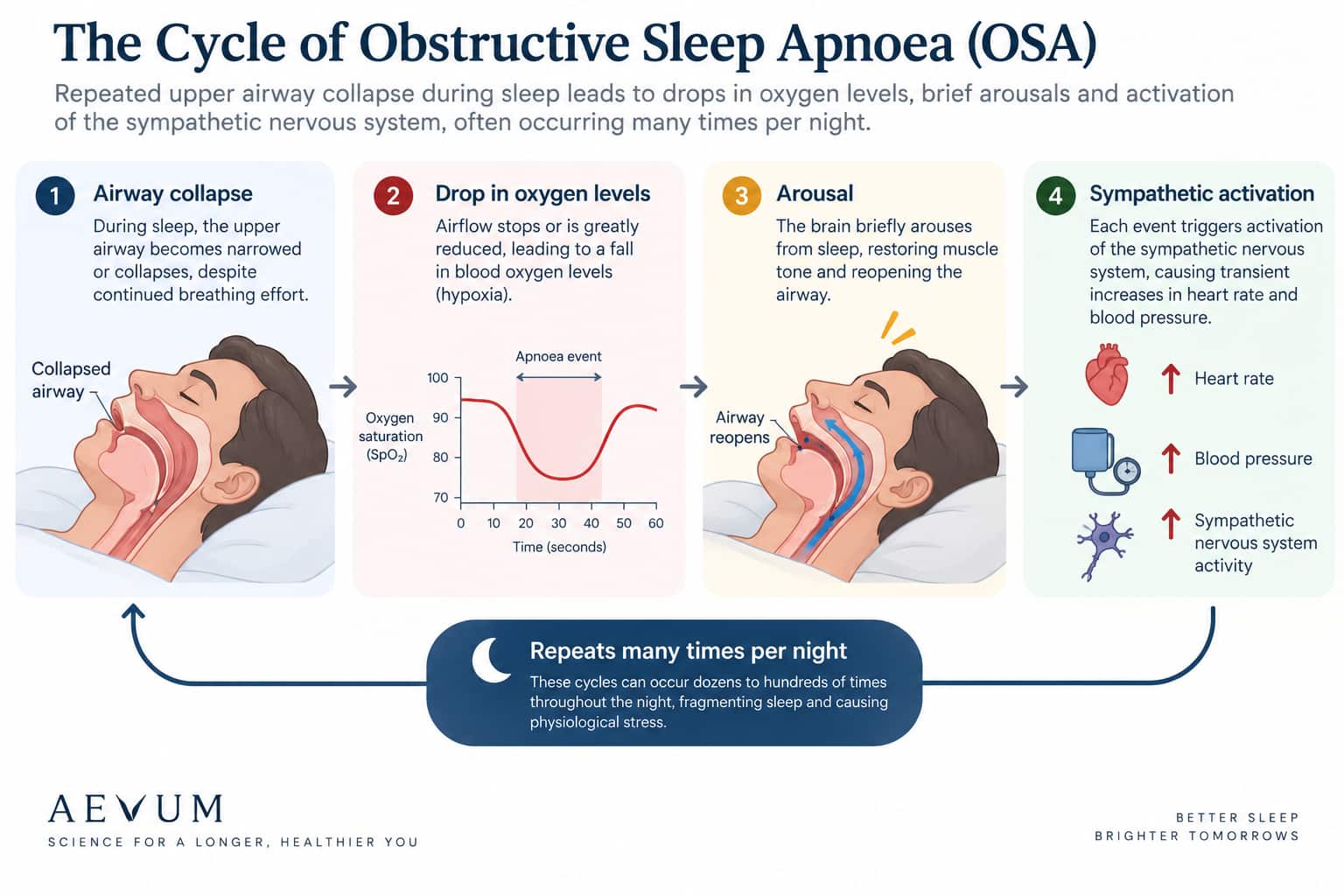
Sleep apnea: the strongest sleep-heart connection. This deserves particular attention. Obstructive sleep apnea (OSA) involves repeated collapse of the airway during sleep, causing brief interruptions in breathing and repeated drops in blood oxygen.
The most authoritative, most-cited large community study on this question — the Wisconsin Sleep Cohort study — found moderate-to-severe OSA in roughly 13% of men and 6% of women overall (ages 30–70), rising to 17% of men and 9% of women specifically in the 50–70 age group. Some smaller or differently-designed studies have reported figures as high as 50% using looser diagnostic criteria, but that upper figure is an outlier rather than the well-replicated finding — moderate-to-severe OSA affects roughly 1 in 6 to 1 in 8 men overall, not half. It remains substantially underdiagnosed in the general population regardless of which figure is used.
OSA is considered an independent risk factor for hypertension, ischemic heart disease, heart failure, atrial fibrillation, and stroke — not merely a marker of poor sleep quality, but a mechanistically distinct driver of cardiovascular disease in its own right. The repeated cycles of low oxygen and reoxygenation that occur with each apnea event trigger oxidative stress, systemic inflammation, and damage to the blood vessel lining (endothelial dysfunction), while also driving chronic activation of the sympathetic nervous system — a combination that plausibly explains its broad connection to multiple cardiovascular conditions simultaneously, rather than just one.
Stroke risk specifically. Stroke risk connects to sleep through more than one pathway covered in this article series. Our Sleep Duration article covered the U-shaped relationship between total sleep duration and stroke risk, with the lowest risk generally found around 6–7 hours. Separately, OSA is considered an independent stroke risk factor, holding even after accounting for other established risks like hypertension, diabetes, and atrial fibrillation — meaning sleep apnea isn't just riding alongside these other risk factors, but appears to contribute risk on its own, through the mechanisms described above.
Atrial fibrillation: a two-way relationship. Atrial fibrillation (AF), the most common cardiac arrhythmia, has a genuinely bidirectional relationship with OSA — each condition appears to worsen the other. The repeated pressure changes and oxygen fluctuations from sleep apnea can promote structural changes in the heart's upper chambers that predispose to AF, while AF itself can worsen sleep quality and breathing stability. This mutual relationship is part of why cardiologists increasingly consider screening for one condition when the other is present, rather than treating them as unrelated diagnoses that happen to co-occur.
Recommendations by population group
- 1Anyone with hypertension, particularly if it's difficult to control
Both non-dipping patterns and undiagnosed sleep apnea are worth discussing with a doctor, given how significantly each can affect blood pressure independent of daytime readings and medication.
- 2Loud snorers, or anyone with observed breathing pauses during sleep or excessive daytime sleepiness
These are classic signs of possible sleep apnea, and given its strong independent link to stroke, heart failure, and arrhythmia, this combination of symptoms is worth raising with a doctor rather than dismissing as simply "heavy sleeping."
- 3Anyone with atrial fibrillation
Given the bidirectional relationship described above, screening for OSA is increasingly considered a relevant part of a comprehensive approach to managing AF, not a separate, unrelated concern.
- 4Anyone with a stroke history or significant stroke risk factors
OSA screening is particularly relevant here, given its status as an independent contributor to stroke risk on top of more commonly discussed factors like hypertension and diabetes.
- 5General / longevity-focused
Given how directly and quickly sleep loss appears to raise inflammatory markers and blood pressure in controlled experiments, cardiovascular health is one of the clearer, more mechanistically-understood reasons sleep deserves the same deliberate attention as diet and exercise in a longevity strategy.
Practical notes
- →A normal daytime blood pressure reading doesn't rule out a problematic nighttime pattern — non-dipping is a genuine, separate risk factor worth knowing about, particularly for anyone with borderline or difficult-to-control blood pressure
- →Sleep loss raises cardiovascular risk markers directly and relatively quickly — the CRP findings show this isn't a slow, decades-long process alone, but something detectable within days of insufficient sleep
- →Sleep apnea is dramatically underdiagnosed relative to how common it actually is — the gap between prevalence and diagnosis is one of the more significant, addressable gaps in preventive cardiovascular care
- →OSA's cardiovascular risk is independent of other risk factors, not just a side effect of associated obesity or poor overall health — it deserves to be screened for and treated in its own right
- →Snoring plus daytime sleepiness is a combination worth taking seriously, not dismissing — it's one of the more accessible, low-cost signals pointing toward a condition with real cardiovascular stakes
Sleep's relationship with cardiovascular health runs through multiple, mechanistically distinct pathways — nighttime blood pressure regulation, direct inflammatory effects of sleep loss, and the particularly significant, often-undiagnosed contribution of sleep apnea. For how sleep duration, architecture, and metabolic health all connect to this picture, see our Sleep Duration, Sleep Architecture, and Sleep and Metabolic Health articles. If you'd like a clearer picture of your own cardiovascular and sleep health, our Longevity Doctors offer a free longevity assessment as a starting point.
How does your sleep
score on your longevity assessment?
Take the free Aevum Protocol assessment to see how your sleep & recovery and 6 other longevity domains are performing — and get a personalised 90-day plan.
Take the Free Assessment →