Sleep & Recovery
Sleep and Metabolic Health: Appetite,
Insulin, and Diabetes Risk
Our Sleep Architecture article covered a striking finding: suppressing deep sleep alone, with total sleep time unchanged, meaningfully worsened insulin sensitivity within days. This article widens that lens to the fuller metabolic picture — what sleep loss does to appetite hormones, how quickly insulin resistance actually develops, and what the long-term diabetes risk data shows.
Quick Summary
- →Just two nights of restricted sleep measurably shifts the hormones that control hunger — a landmark study found leptin (which signals fullness) dropped 18% and ghrelin (which signals hunger) rose 28%, alongside a 24% increase in subjective hunger and a 23% increase in appetite, plus a specific increase in cravings for high-calorie, high-carbohydrate foods
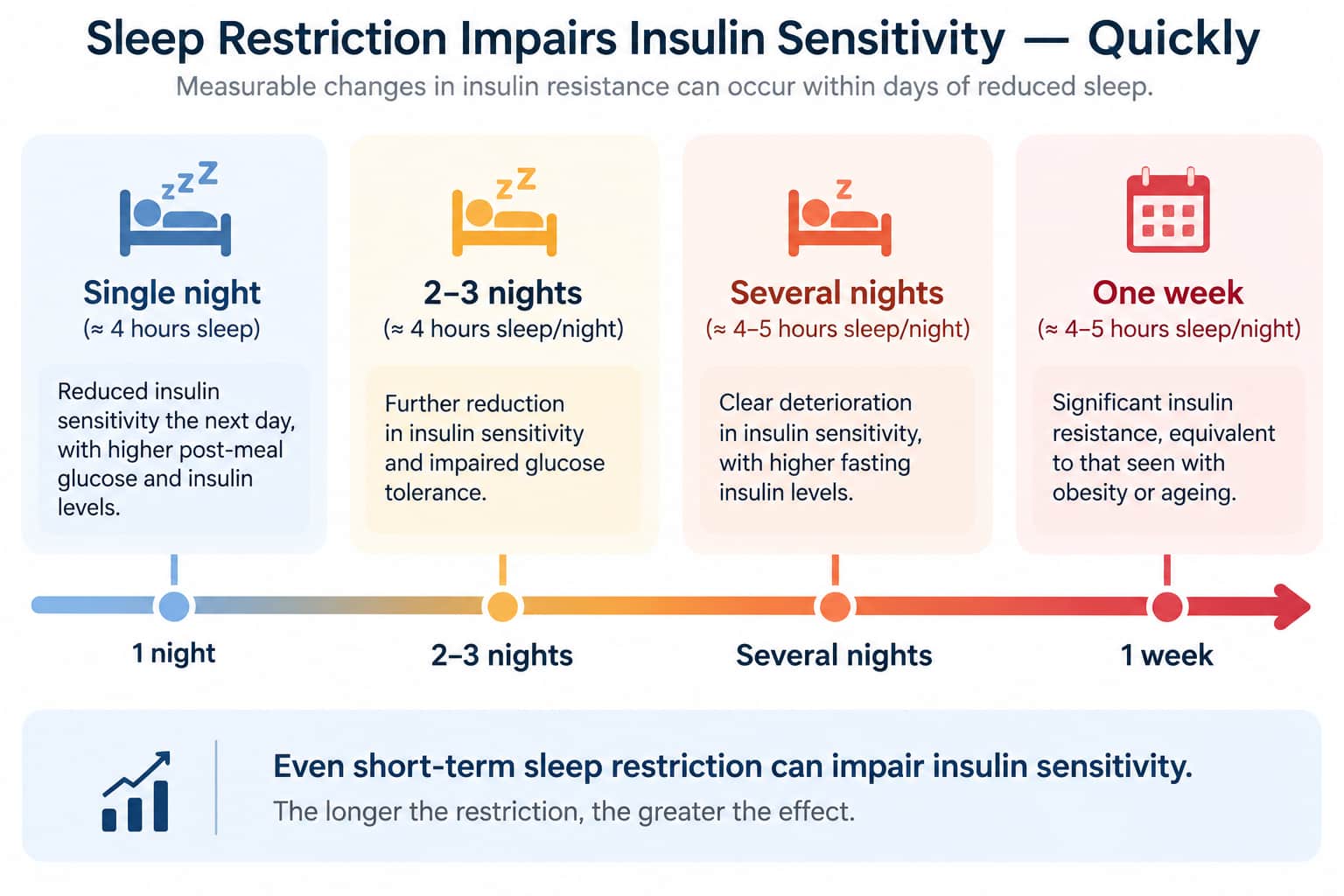
- →Insulin resistance from sleep loss can appear astonishingly fast — one study found measurable glucose intolerance after just a single night of partial sleep restriction. Practically, treating a poor night's sleep as a cue to be more deliberate about food choices the next day has a real physiological basis
- →A meta-analysis of over 447,000 people found that sleeping under 6 hours a night, compared to 7, was associated with roughly a 30% higher risk of developing type 2 diabetes — and this association held even after excluding people with pre-existing illness, addressing a common concern that the link is just reverse causation
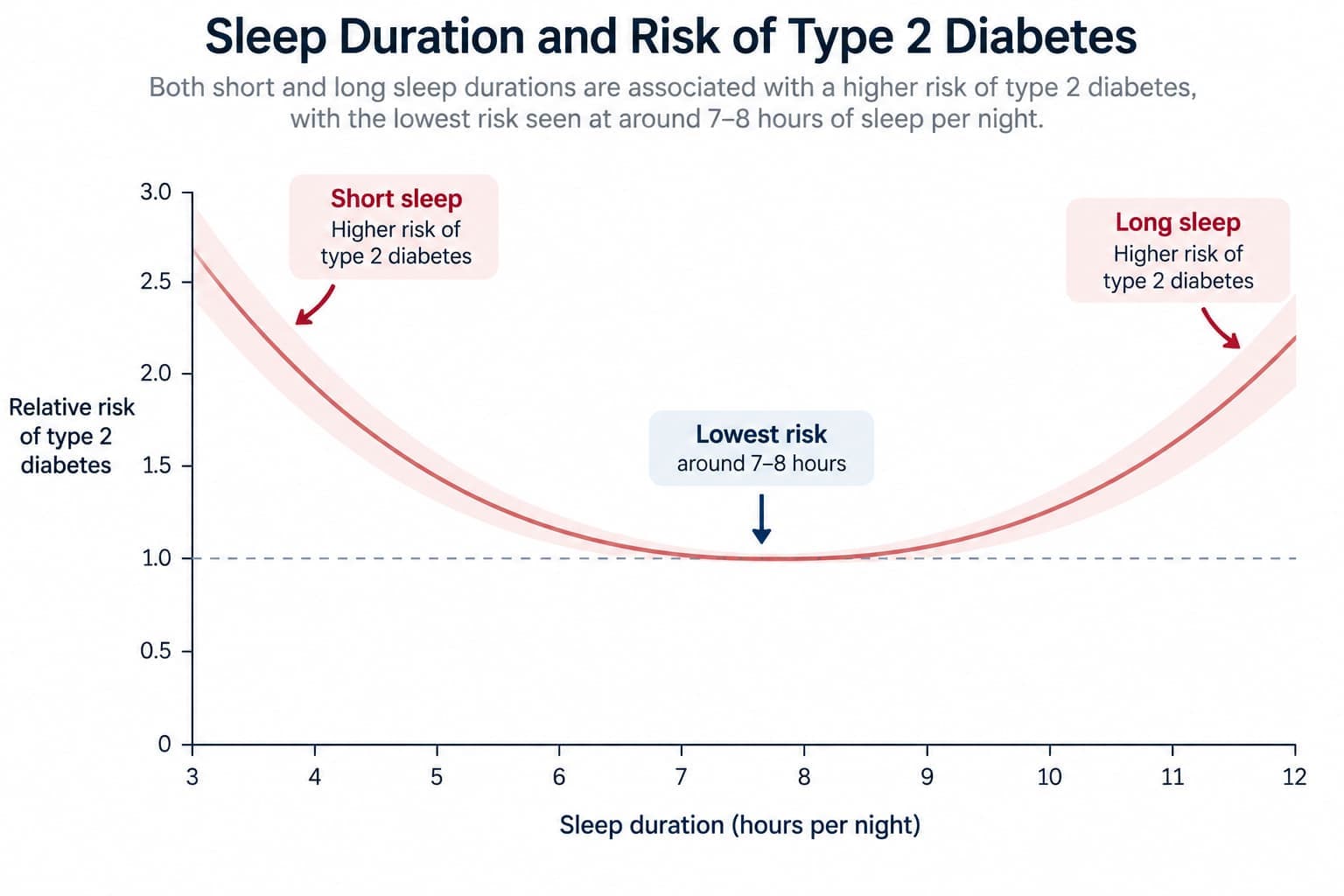
- →Like the mortality curve covered in our Sleep Duration article, diabetes risk follows a U-shape too — both short and long sleep are associated with elevated risk, not just short sleep alone
- →Sleep loss raises evening cortisol levels, adding a stress-hormone dimension to the metabolic disruption that compounds the direct effects on insulin and appetite hormones
Key numbers at a glance
| Measure | Figure |
|---|---|
| Leptin drop after 2 nights at 4h sleep | ~18% |
| Ghrelin rise after 2 nights at 4h sleep | ~28% |
| Subjective hunger increase after 2 nights at 4h sleep | ~24% |
| Subjective appetite increase after 2 nights at 4h sleep | ~23% |
| Fastest documented onset of measurable insulin resistance | 1 night |
| Type 2 diabetes risk, <6h vs. 7h sleep (447,000-person meta-analysis) | ~30% higher |
How it works: the appetite hormones
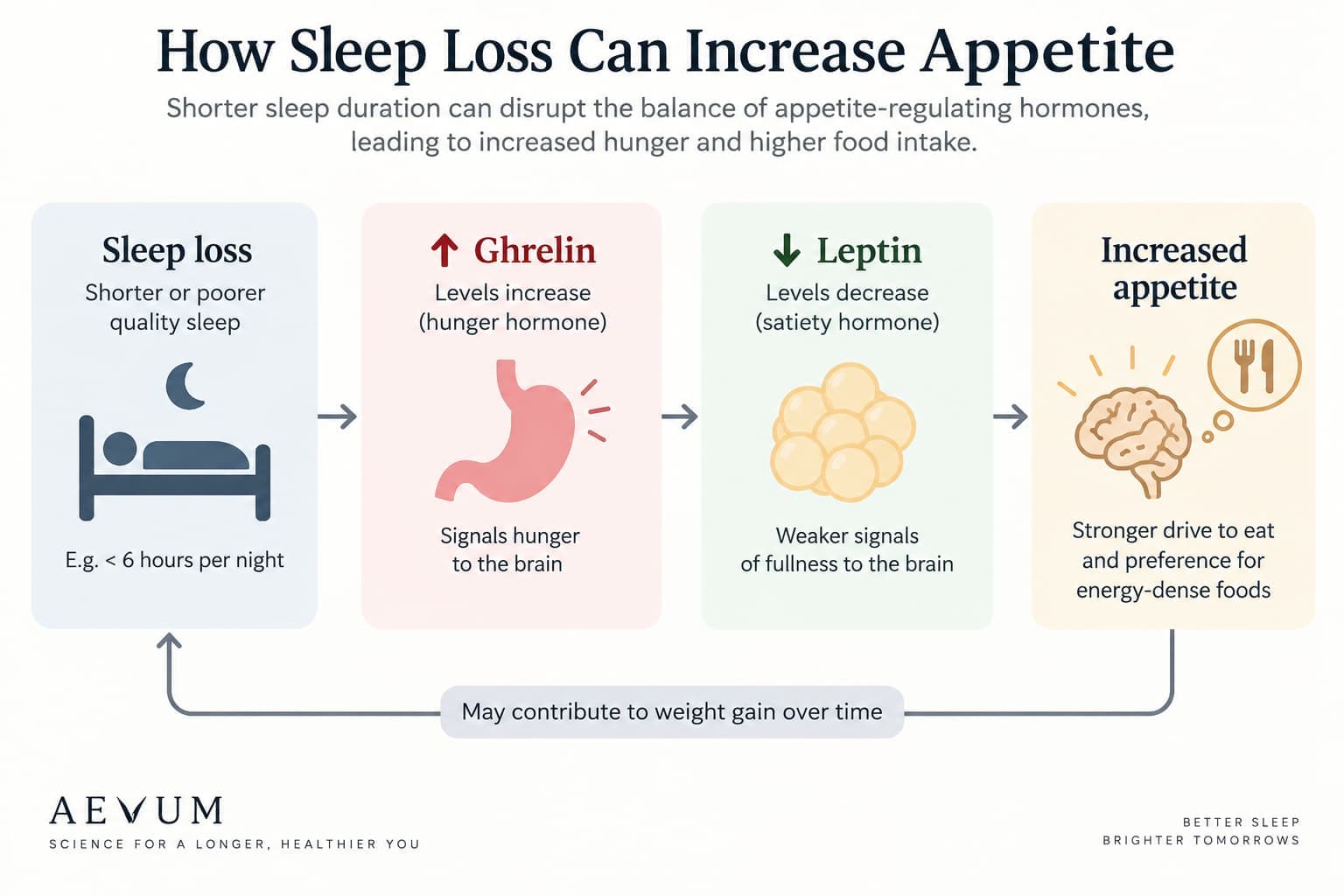
Two hormones are central to how the body regulates hunger and fullness: leptin, released by fat tissue, which signals satiety and suppresses appetite, and ghrelin, released mainly by the stomach, which stimulates hunger. Sleep loss disrupts both, and the effect appears surprisingly quickly.
A landmark study restricted healthy young men to just 4 hours of sleep for two consecutive nights and compared their hormone levels to a period of fully rested sleep. Leptin dropped by 18%, ghrelin rose by 28%, subjective hunger rose by 24%, and appetite rose by 23% — with a specific, disproportionate increase in cravings for high-calorie, high-carbohydrate foods rather than a general increase across all food types. This wasn't a subtle shift: it's a substantial hormonal push toward eating more, and eating less healthily, driven purely by two nights of shortened sleep.
This helps explain a pattern seen repeatedly in behavioural research: people who are sleep-deprived don't just have more opportunity to eat by being awake longer — they experience genuinely stronger hunger signals and a measurable shift in food preference toward energy-dense options, making sleep loss a real, biologically-driven contributor to overeating rather than simply a matter of willpower.
Sleep loss also raises cortisol, the body's primary stress hormone, particularly in the evening hours following a night of insufficient sleep. Elevated cortisol independently promotes insulin resistance and encourages fat storage, particularly around the abdomen — meaning sleep loss appears to disrupt metabolic health through at least two separable pathways working together: direct effects on insulin sensitivity, and an added stress-hormone layer that compounds the problem further.
What the research shows
How quickly insulin resistance develops. Our Sleep Architecture article covered a study showing that suppressing deep sleep specifically, over three nights, reduced insulin sensitivity by roughly 25%. The broader sleep-restriction literature shows this isn't an isolated finding tied only to deep sleep — and the timeline is, if anything, even more striking. One study found that a single night of partial sleep deprivation was enough to induce measurable insulin resistance across multiple metabolic pathways in otherwise healthy people. Other studies restricting sleep to around 5 hours a night for a week found significant reductions in insulin sensitivity by the end of that period. Taken together, this body of research shows the link between sleep and metabolic health isn't a slow-building, years-long process requiring chronic severe deprivation — the body's ability to regulate blood sugar can measurably decline after remarkably little sleep loss.
Type 2 diabetes risk: the epidemiological picture. The short-term hormonal and insulin findings above are backed by large-scale, long-term population data. A meta-analysis pooling over 447,000 participants across multiple prospective studies found that sleeping less than 6 hours a night, compared to a 7-hour reference, was associated with roughly a 30% higher risk of developing type 2 diabetes. A separate, large Australian study (the 45 and Up Study, following nearly 242,000 adults) addressed a natural objection to this kind of finding — that people who sleep poorly might simply already be less healthy, making the sleep-diabetes link a case of reverse causation rather than a real effect. After excluding participants with pre-existing illness at the start of the study and adjusting for baseline health, short sleep remained significantly associated with future diabetes risk (though its association with cardiovascular disease specifically became non-significant once this adjustment was made) — a meaningful piece of evidence that the diabetes link isn't simply explained away by underlying poor health.
As with the mortality data covered in our Sleep Duration article, this relationship follows a U-shape, not a straight line — long sleep duration (9+ hours) is also associated with elevated diabetes risk in several meta-analyses, not just short sleep.
Recommendations by population group
- 1Anyone managing weight or trying to lose it
Given the direct hormonal evidence above, treating sleep as a genuine variable in weight management — not a separate, unrelated habit — is worth taking seriously; a calorie-controlled diet is working against a real, biologically-driven headwind if sleep is consistently insufficient.
- 2People with prediabetes or a family history of type 2 diabetes
Short sleep is a modifiable risk factor sitting alongside diet and exercise, not a minor addition — worth discussing directly with a doctor rather than treating as separate from other diabetes prevention efforts.
- 3Shift workers
Circadian misalignment, covered in more depth in our Circadian Rhythm article, compounds the direct effects of shortened sleep on metabolic health, making this population a particularly high-risk group for the outcomes covered in this article.
- 4Anyone in a demanding period of reduced sleep (new parents, high-workload periods)
Awareness that increased hunger and cravings during these periods have a genuine physiological basis, not just a willpower lapse, can be useful context — though it doesn't remove the need to manage intake, it explains why it feels harder than usual.
- 5General / longevity-focused
Given how quickly measurable metabolic disruption appears — within a single night in some studies — sleep deserves to be treated as an active daily input to metabolic health, comparable in immediacy to diet, rather than a slower-acting background factor.
Practical notes
- →The appetite hormone shift from sleep loss is fast and substantial — measurable after just two nights of restriction, not a slow accumulation over weeks
- →Insulin resistance can appear after remarkably little sleep loss — some research shows effects after a single night, a genuinely fast timeline worth knowing
- →The type 2 diabetes risk data has been tested against the "it's just reverse causation" objection, and the association held up — this is a more robust finding than a simple correlation
- →Sleep affects metabolic health through more than one pathway simultaneously — appetite hormones, direct insulin effects, and cortisol all contribute, rather than there being one single mechanism
- →Both too little and too much sleep carry elevated diabetes risk, following the same U-shaped pattern covered for mortality in our Sleep Duration article
Sleep's connection to metabolic health goes well beyond simply having "more time to eat" when tired — it operates through fast, measurable hormonal and insulin pathways that can shift within a single night. For the related picture on how sleep stages, total duration, and circadian timing all factor into this, see our Sleep Architecture, Sleep Duration, and Circadian Rhythm articles, and for more on blood sugar and diet specifically, our Rice and Fibre articles. If you'd like a clearer picture of your own metabolic health, our Longevity Doctors offer a free longevity assessment as a starting point.
How does your sleep
score on your longevity assessment?
Take the free Aevum Protocol assessment to see how your sleep & recovery and 6 other longevity domains are performing — and get a personalised 90-day plan.
Take the Free Assessment →