Cardiovascular & Metabolic Health
Atrial Fibrillation:
The Common Heart Rhythm Problem Linked to Stroke, and How to Lower Your Risk
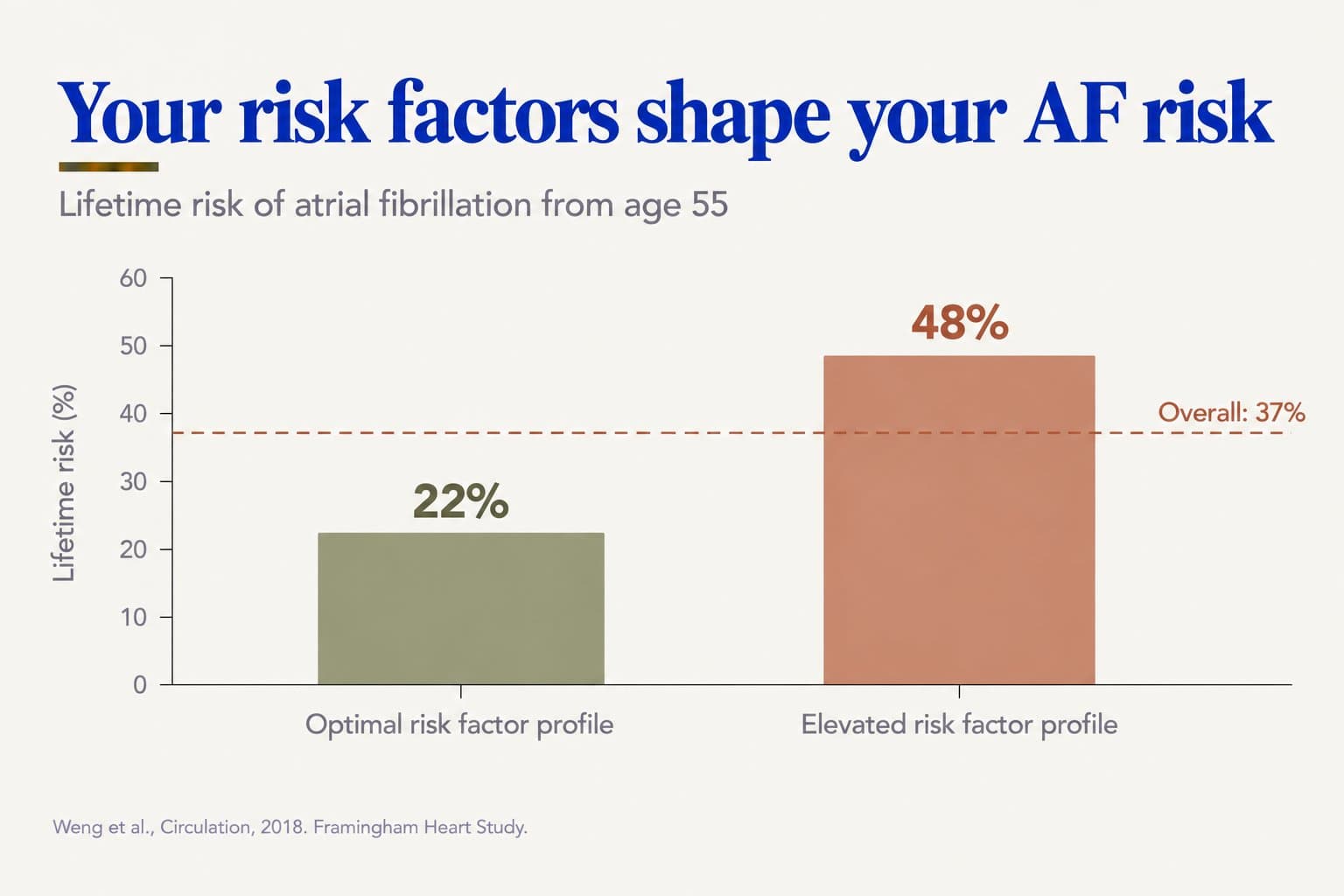
Atrial fibrillation (AF) is the most common heart rhythm disorder. Instead of beating in a regular, coordinated way, the upper chambers of the heart quiver chaotically, making the pulse irregular and often fast. It becomes much more common with age: in a large US study, about 37% of people aged 55 developed it at some point in their remaining lifetime. Some people feel palpitations, breathlessness or fatigue, but many have no symptoms at all. AF matters because blood can pool and clot in the heart, and these clots can travel to the brain, making AF a major cause of stroke. It also raises the risk of heart failure and dementia. The encouraging news is that AF is closely tied to modifiable risk factors. People with an optimal risk profile had a lifetime risk of about 22%, compared with 48% for those with a poor one. In trials, cutting out alcohol reduced AF recurrence, and losing 10% or more of body weight gave a six-fold greater chance of staying free of AF. This article explains what AF is, why it matters and what you can do.
Key numbers
| Finding | Detail |
|---|---|
| Lifetime risk of AF from age 55 (Framingham Heart Study) | About 37% overall |
| By risk factor profile (same study) | About 22% with an optimal profile vs 48% with an elevated one |
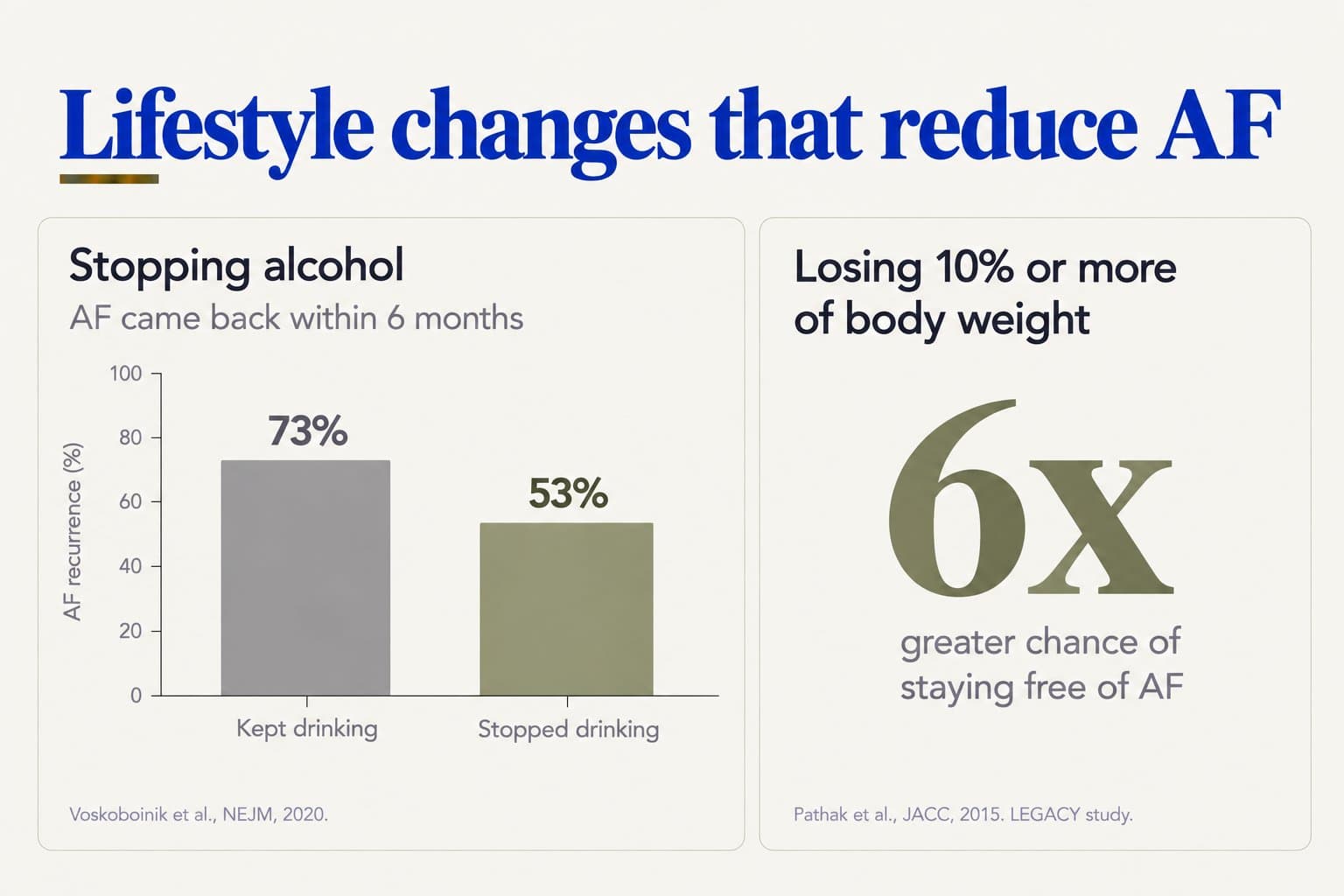
| Alcohol abstinence in regular drinkers with AF (140 people, 6 months) | AF returned in 53% of those who stopped drinking vs 73% of those who continued |
| Weight loss of 10% or more (355 people with AF and excess weight, about 4 years) | Six times greater chance of staying free of AF |
| Smartwatch screening (Apple Heart Study, 419,297 people) | 0.5% received an irregular pulse alert; 34% of those who wore an ECG patch afterwards showed AF |
What atrial fibrillation is
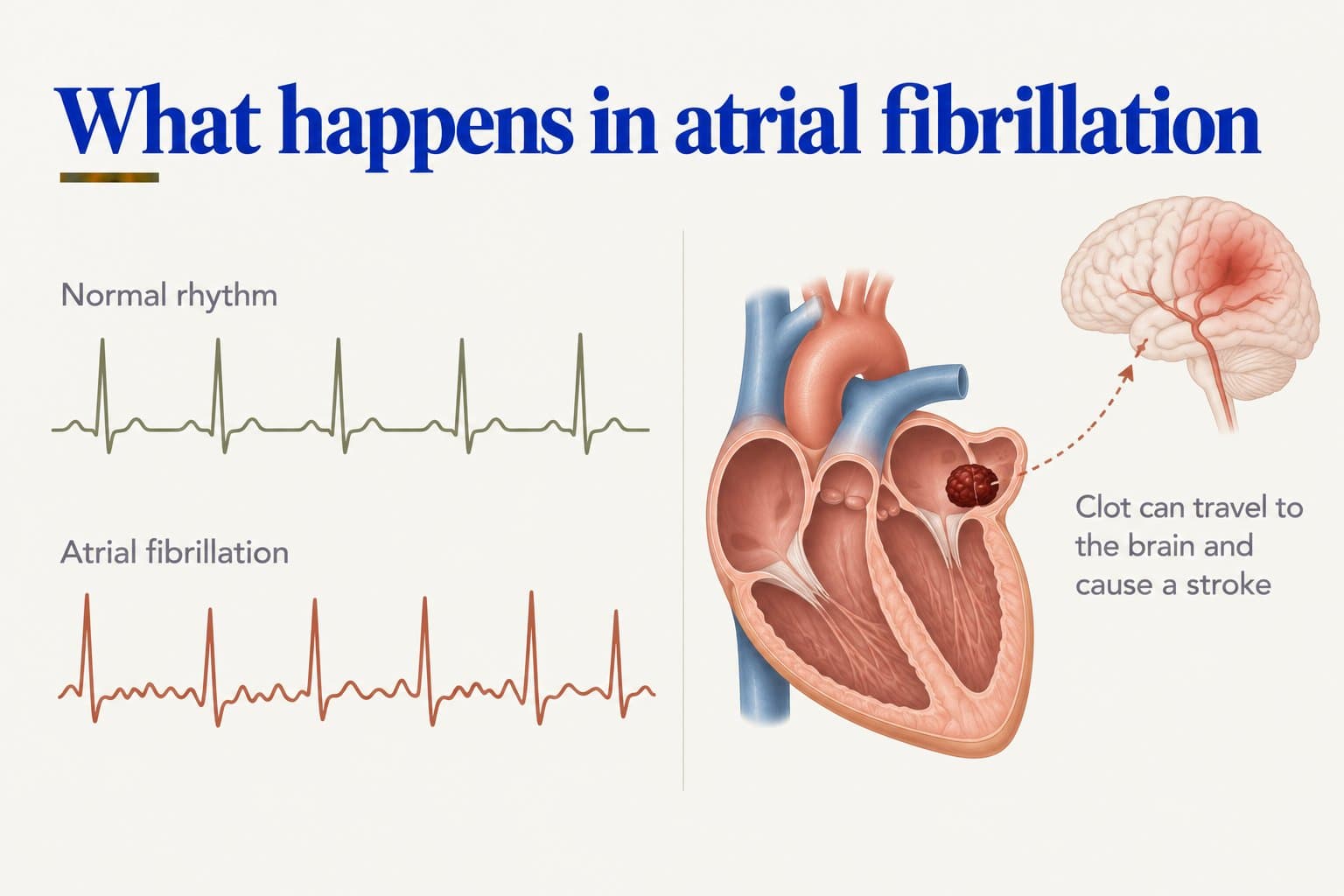
Normally, each heartbeat starts with an electrical signal from a natural pacemaker in the upper right chamber (atrium), which spreads in an orderly way through the heart. In AF, chaotic electrical activity takes over the atria, which quiver rather than contract. The lower chambers (ventricles) receive irregular signals and beat irregularly, often fast.
AF can be:
- Paroxysmal: comes and goes, stopping on its own, usually within a week.
- Persistent: lasts longer than a week, or needs treatment to stop.
- Permanent: present all the time, with treatment focused on controlling heart rate and preventing stroke.
AF tends to progress over time, especially if the underlying risk factors aren't addressed.
Why it matters
- Stroke: because the atria aren't contracting properly, blood can pool and form clots, particularly in a small pouch called the left atrial appendage. A clot that travels to the brain causes a stroke, and strokes caused by AF tend to be severe.
- Heart failure: a persistently fast, irregular rhythm can weaken the heart muscle, and heart failure can in turn trigger AF.
- Dementia: AF is linked to cognitive decline, partly through small "silent" strokes (see Vascular Health and the Brain).
- Quality of life: palpitations, breathlessness, fatigue and reduced exercise capacity.
What raises AF risk
| Factor | Effect | Modifiable? | Evidence strength |
|---|---|---|---|
| Age | Risk rises steeply after 60 | No | Strong |
| High blood pressure | One of the most important contributors | Yes | Strong |
| Excess weight | Stretches and inflames the atria; weight loss reduces AF | Yes | Strong |
| Alcohol | Regular drinking raises risk; stopping reduces recurrence | Yes | Strong |
| Sleep apnoea | Strongly linked to AF | Yes, treatable | Moderate |
| Diabetes | Raises risk | Yes | Moderate |
| Heart disease and heart failure | Raise risk | Partly | Strong |
| Overactive thyroid | Can trigger AF | Yes, treatable | Strong |
| Very high levels of endurance exercise | Linked to higher risk in some athletes | Yes | Moderate |
| Genetics and family history | Raise risk | No | Moderate |
What the research shows
Your risk factors shape your lifetime risk. A 2018 analysis of the Framingham Heart Study estimated the lifetime risk of AF from age 55 at about 37%. Risk varied widely with risk factors such as blood pressure, weight, alcohol, smoking and diabetes: people with an optimal profile had a lifetime risk of about 22%, compared with about 48% for those with an elevated one. Genetic predisposition also played a role, but modifiable risk factors made a large difference at every level of genetic risk.
Cutting alcohol reduces AF. In a 2020 trial in the New England Journal of Medicine, 140 regular drinkers with AF, averaging about 17 drinks a week, were randomly assigned to stop drinking or to continue as usual. Over six months, the abstinence group cut their intake to about 2 drinks a week. AF returned in 53% of the abstinence group compared with 73% of the control group, and those who stopped drinking had a longer time before recurrence and less time in AF overall.
Weight loss can keep AF away. In the LEGACY study, 355 people with symptomatic AF and a BMI of 27 or more were followed for about four years in a structured weight management programme. Those who lost 10% or more of their body weight had a six-fold greater probability of staying free of AF than those who lost less. Weight going up and down by more than 5% partly offset the benefit.
Treating AF to prevent stroke. Blood thinners (anticoagulants) greatly reduce the risk of stroke in people with AF and are recommended for most people whose stroke risk, calculated with a simple score such as CHA₂DS₂-VASc, is raised. Aspirin isn't an effective substitute. Other treatments control heart rate or restore normal rhythm, including medicines and catheter ablation.
Smartwatches can detect AF, but not perfectly. In the Apple Heart Study, 419,297 people used a smartwatch app that looked for irregular pulses. About 0.5% received an alert, and among those who then wore an ECG patch, 34% had AF recorded. When an alert and the patch recorded at the same time, the alert was correct 84% of the time. Smartwatches can help pick up AF, but an alert needs confirming with an ECG, and a normal watch reading doesn't rule it out.
What you can actually change
1. Control your blood pressure. High blood pressure is one of the most important drivers of AF (see Hypertension and Longevity).
2. Lose excess weight, and keep it off. Aim for 10% weight loss if you're overweight, and avoid big swings.
3. Cut back on alcohol. If you have AF, stopping or sharply reducing alcohol lowers the chance of it coming back.
4. Get checked for sleep apnoea. Loud snoring, pauses in breathing and daytime sleepiness are warning signs; treatment helps (see Sleep and Cardiovascular Health).
5. Stay active, sensibly. Regular moderate exercise lowers AF risk and improves symptoms. Very high volumes of intense endurance training may raise risk in some people.
6. Know your pulse. Check your pulse at the wrist occasionally, especially after 65. An irregular pulse, or an irregular rhythm alert from a smartwatch, should be checked with an ECG.
Recommendations
- See a doctor promptly if you notice palpitations, an irregular pulse, unexplained breathlessness or fatigue.
- Seek emergency care for chest pain, fainting, or signs of stroke: face drooping, arm weakness or speech difficulty.
- If you have AF, ask about your stroke risk score and whether you need an anticoagulant.
- Treat AF as a lifestyle condition too: weight, alcohol, blood pressure, sleep apnoea and fitness all affect how often it happens and how it progresses.
Practical notes
Atrial fibrillation is common, especially with age, and often silent, but it's a major cause of stroke and is linked to heart failure and dementia. Much of the risk is modifiable: blood pressure, weight, alcohol, sleep apnoea and fitness all matter, and addressing them reduces both the chance of developing AF and of it coming back. If you have AF, anticoagulants are the key to preventing stroke. Checking your pulse and acting on irregularities can catch it early.
- Weng LC, et al. Genetic predisposition, clinical risk factor burden, and lifetime risk of atrial fibrillation. Circulation, 2018;137(10):1027-1038.
- Voskoboinik A, et al. Alcohol abstinence in drinkers with atrial fibrillation. New England Journal of Medicine, 2020;382(1):20-28.
- Pathak RK, et al. Long-term effect of goal-directed weight management in an atrial fibrillation cohort: a long-term follow-up study (LEGACY). Journal of the American College of Cardiology, 2015;65(20):2159-2169.
- Perez MV, et al. Large-scale assessment of a smartwatch to identify atrial fibrillation. New England Journal of Medicine, 2019;381(20):1909-1917.
Free longevity assessment
Have you ever noticed an
irregular pulse?
Take the free Aevum Protocol assessment to see how your cardiovascular & metabolic health and 6 other longevity domains are performing — and get a personalised 90-day plan.
Take the free assessmentKeep reading
Related articles
Cardiovascular & Metabolic Health
Hypertension and Longevity: Why High Blood Pressure Matters and What Lowering It Achieves
Cognitive Longevity
Vascular Health and the Brain: Why What's Good for Your Heart Is Good for Your Mind
Sleep & Recovery