Nutrition & Metabolism
Fresh Milk vs Powdered Milk: A Guide to
Types, Nutrition & Recommendations
Sri Lanka is one of the few markets where fresh milk and powdered milk genuinely compete for the same spot in the fridge or pantry — for decades, powdered milk was the default due to limited cold-chain infrastructure, while fresh milk has grown steadily as local dairy production and UHT packaging have expanded. Neither is automatically the "better" choice; the right one depends on what you're using it for, your health profile, and even your budget. This guide breaks down both categories, then gives practical recommendations for specific situations — strength training, diabetes, childhood nutrition, pregnancy, older age, and more.
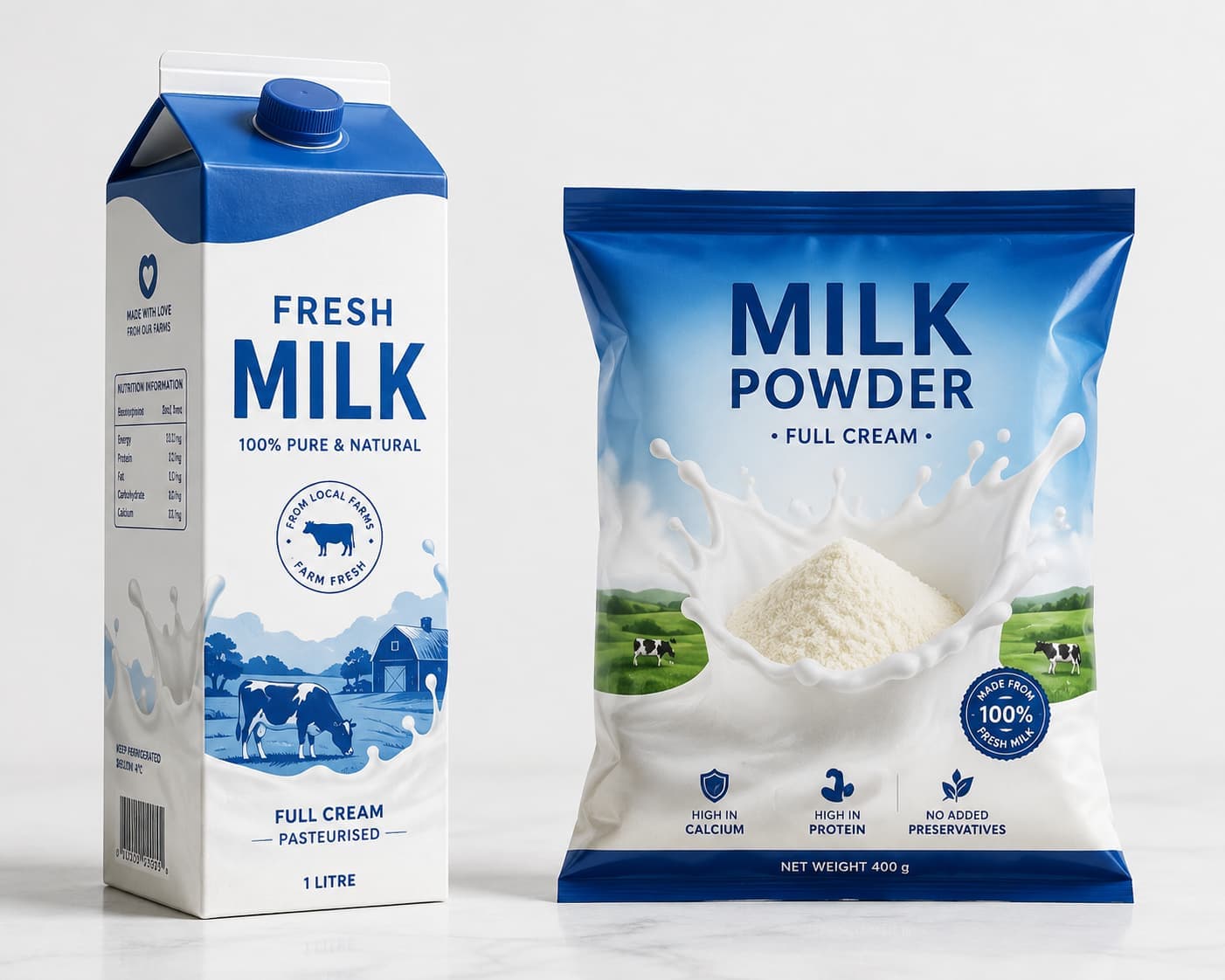
What's the actual difference?
Fresh milk in the Sri Lankan market is almost entirely UHT (Ultra High Temperature) processed rather than the short-shelf-life pasteurized milk common in countries with dense refrigerated distribution. UHT milk is heated briefly to a very high temperature, then aseptically packed, giving it months of shelf life without refrigeration until opened — this is what makes fresh milk logistically viable across the island.
Powdered milk is made by removing nearly all the water from milk through spray-drying, leaving a fine powder that's reconstituted with water before drinking. It's shelf-stable for well over a year without refrigeration even after opening, provided it's kept dry. Both start from the same raw material — cow's milk — the difference is entirely in processing and water content, not necessarily nutritional quality.
Part 1: Fresh milk
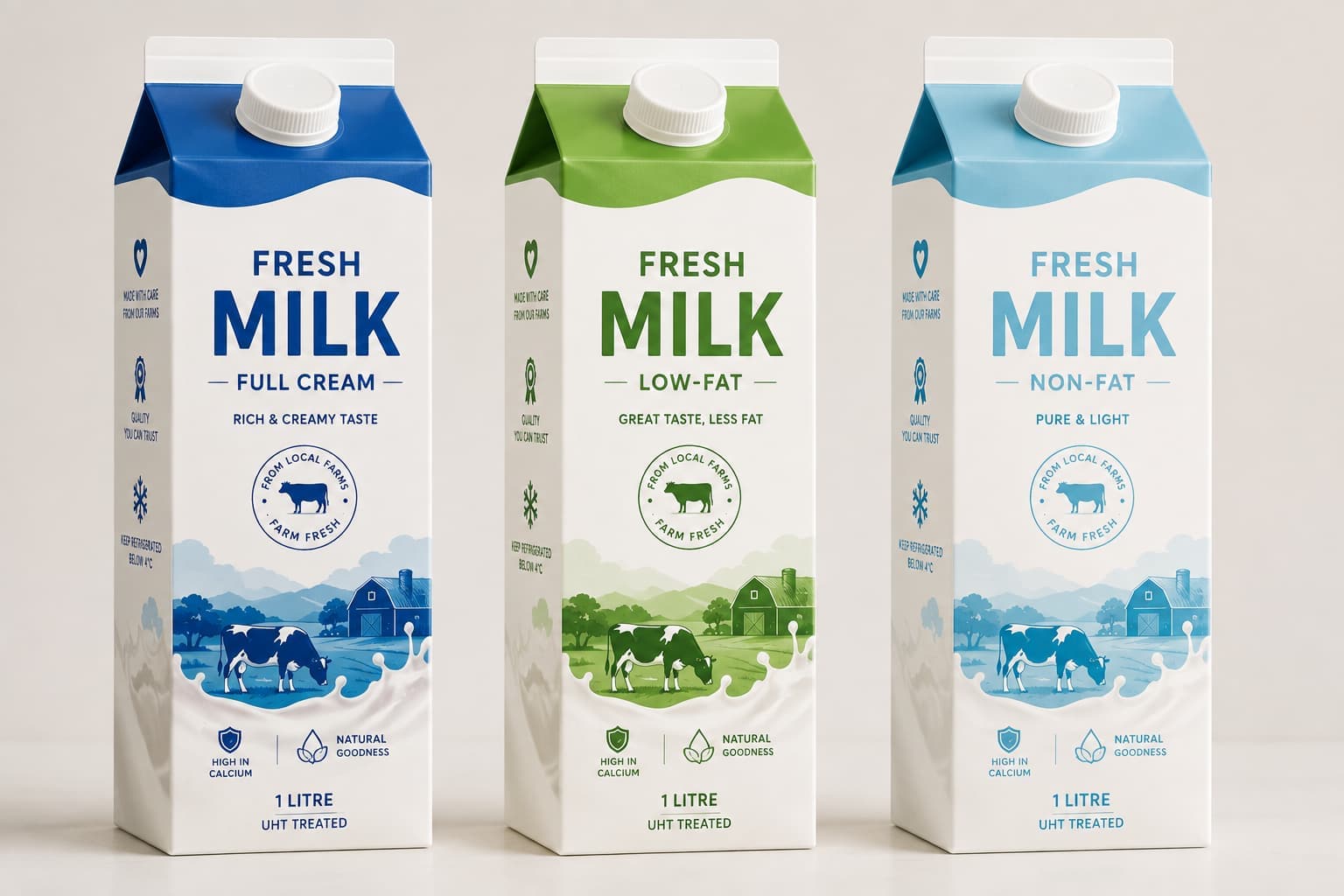
- 1Full cream / whole milk (~3.5–4% fat)
The unmodified fat content of whole milk, richest taste and mouthfeel.
- 2Low-fat / lite milk (~1.5% fat)
Partially skimmed, retains most protein and calcium with less fat and fewer calories.
- 3Non-fat / skimmed milk (<0.1% fat)
Virtually all fat removed, protein and calcium content preserved.
- 4Flavoured milk
Full cream or low-fat milk with added sugar and flavouring (chocolate, vanilla, etc.) — nutritionally closer to a dessert drink than a plain dairy product.
Nutrition profile of fresh milk (per 100ml)
| Type | Calories | Protein | Fat | Carbs (lactose) | Calcium |
|---|---|---|---|---|---|
| Full cream | ~61 kcal | 3.2g | 3.5g | 4.8g | ~120mg |
| Low-fat | ~47 kcal | 3.4g | 1.5g | 4.8g | ~120mg |
| Non-fat/skimmed | ~35 kcal | 3.4g | <0.1g | 5.0g | ~125mg |
Protein and calcium stay largely consistent across all three — it's calories and fat that scale down as fat content drops.
UHT vs. short-shelf-life pasteurized milk
Until recently, almost all fresh milk sold in Sri Lanka was UHT. That's started to change — short-shelf-life pasteurized milk, sold refrigerated with a shelf life of roughly 5–10 days, has become increasingly common on supermarket shelves as cold-chain distribution in urban areas has improved.
- 1UHT milk
Heated to around 135–150°C for a few seconds, then aseptically packed. This destroys essentially all microorganisms, which is why it doesn't need refrigeration until opened.
- 2Pasteurized (short-shelf-life) milk
Heated to a lower temperature, typically around 72–75°C for about 15 seconds — enough to kill harmful bacteria but not all microorganisms, which is why it still requires continuous refrigeration and has a much shorter shelf life.
Which is better? For nutrition, the difference is small but real: the higher heat used in UHT processing causes marginally more loss of certain heat-sensitive nutrients (some B vitamins, a small amount of protein structure change) compared to pasteurization's gentler heat. Taste is where the difference is more noticeable — pasteurized milk is generally considered closer to the taste of fresh raw milk, while UHT milk has a slightly "cooked" flavour from the higher heat.
In practical terms: if you have reliable refrigeration and buy milk frequently, pasteurized short-shelf-life milk is a marginally better choice for taste and nutrient retention. If convenience, shelf stability, or inconsistent refrigeration (e.g. stocking up, travel, rural areas) matters more, UHT remains the more practical option — and the nutritional gap between the two is small enough that it shouldn't be a major deciding factor on its own.
Part 2: Powdered milk
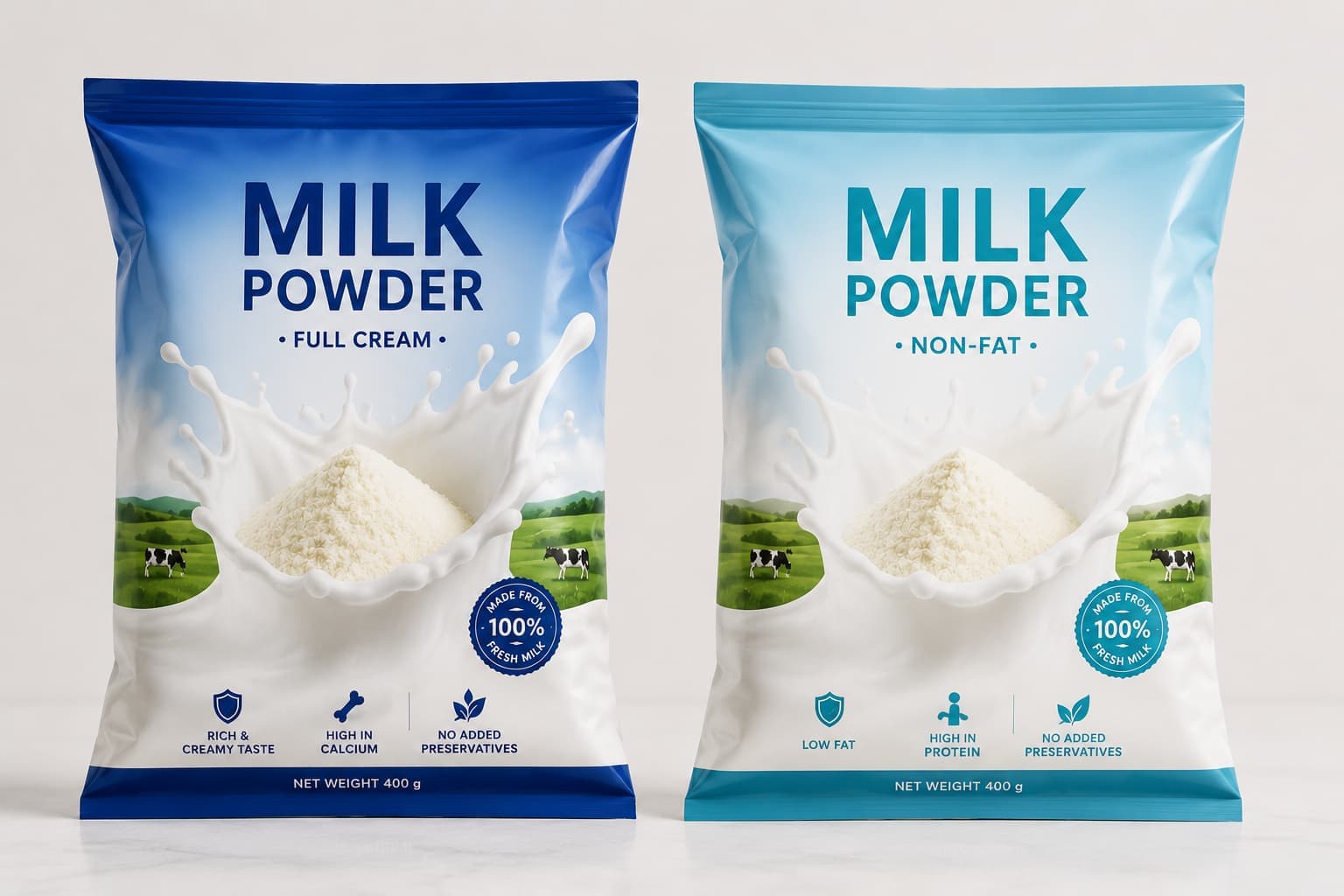
- 1Full cream / whole milk powder (~26–28% fat by dry weight)
The most common form locally, reconstitutes into something close to full cream fresh milk.
- 2Non-fat / skimmed milk powder (<1% fat)
Fat removed before drying, higher relative protein and calcium by weight.
- 3Instant vs. regular milk powder
Instant powder is agglomerated (clumped into larger granules) so it dissolves in water without lumping; regular powder needs more vigorous mixing, often in warm water.
- 4Fortified / growing-up milk powders
Additional iron, DHA, and vitamins added, marketed specifically for children.
Nutrition profile of powdered milk
| Per 100g powder (dry) | Per 100ml reconstituted | |
|---|---|---|
| Full cream milk powder | ~496 kcal, 26g protein, 26–28g fat, 38g carbs, ~900mg calcium | ~65 kcal, 3.4g protein, 3.5g fat, 5g carbs, ~120mg calcium |
| Non-fat/skim milk powder | ~362 kcal, 36g protein, <1g fat, 52g carbs, ~1300mg calcium | ~36 kcal, 3.6g protein, <0.1g fat, 5.2g carbs, ~130mg calcium |
Reconstituted correctly, powdered milk's nutrition profile lands close to its fresh milk equivalent — the meaningful differences are in processing effects, not the basic protein/fat/calcium numbers.
Milk powder ingredient lists sometimes include vegetable fat blended in alongside or instead of milk fat (labelled as "filled milk powder" rather than "full cream milk powder"). This isn't necessarily unsafe, but it does change the fat profile and isn't equivalent to whole milk nutritionally — check the ingredients list for "whole milk powder" or "100% milk fat" versus a blend that lists vegetable oil.
Fresh vs. powdered: compare & contrast
| Factor | Fresh (UHT) Milk | Powdered Milk |
|---|---|---|
| Protein & calcium | Preserved well | Preserved well |
| Heat-sensitive vitamins (B12, some B vitamins) | Minimal loss | Some loss during spray-drying, often offset by fortification |
| Shelf life (unopened) | Months (UHT), no refrigeration | 12–18+ months, no refrigeration needed |
| Shelf life (after opening) | Refrigerate, use within about a week | Airtight, dry storage, lasts weeks to months |
| Cost per litre (reconstituted) | Generally higher | Generally lower |
| Convenience | Ready to drink | Requires mixing, water quality matters |
| Taste | Closer to traditional "milk" taste | Slightly different mouthfeel, varies by brand |
Neither format is nutritionally inferior when reconstituted correctly — the meaningful trade-offs are cost, convenience, and shelf-life logistics rather than health value. In a country where refrigerated distribution to rural areas is still uneven, powdered milk's shelf stability is part of why it has remained the dominant format for decades, even as fresh milk continues to grow in urban markets.
Recommendations by population group
- 1Resistance training / athletes
Protein needs are higher, and total calorie intake often needs to increase too — full cream milk (fresh or reconstituted powder) is a reasonable, low-cost way to add both. Milk's combination of fast-digesting whey and slow-digesting casein protein makes it a genuinely useful post-workout or bedtime option, not just a taste preference.
- 2Diabetics
Plain milk (unflavoured, no added sugar) has a low glycaemic impact on its own due to its protein and fat content, but portion and pairing matter more than the fresh-vs-powder choice. Non-fat or low-fat variants reduce saturated fat and calorie load, which matters more for those also managing weight or cardiovascular risk. Avoid flavoured or "instant drinking chocolate" milk powders, which carry meaningful added sugar.
- 3Children
Full cream milk is generally recommended over low-fat for children under 2, since dietary fat supports early brain development and children need more calories relative to their stomach capacity. Fortified/growing-up milk powders (with added iron and DHA) can help fill common gaps in a toddler's diet, but shouldn't fully replace solid food iron sources.
- 4Pregnancy
Calcium, protein, and vitamin D needs increase during pregnancy, and both fresh UHT and reconstituted powdered milk are safe, pasteurised options. The one hard rule: avoid unpasteurised raw milk entirely during pregnancy due to listeria risk — this isn't a concern with any of the UHT or powdered products discussed here, since both processes are effectively pasteurising.
- 5Older age
Protein needs actually increase with age to help counter natural muscle loss (sarcopenia), and calcium/vitamin D remain important for bone density. Fortified milk powders can be a practical way to boost protein and micronutrient intake without needing to eat more volume of food. Lactose intolerance also becomes more common with age — if milk causes digestive discomfort, a lactose-free milk product or a smaller portion taken with food is worth trying before ruling out dairy entirely.
- 6General population / weight management
Low-fat or non-fat milk (fresh or reconstituted powder) reduces calorie density while keeping protein and calcium intact — a straightforward swap for anyone watching overall calorie intake without needing to give up dairy.
- 7Breastfeeding mothers
Calcium and protein needs remain elevated postpartum, similar to pregnancy. Full cream or low-fat milk both work well depending on overall calorie needs — breastfeeding itself increases calorie requirements, so this isn't usually the moment to restrict fat intake unless there's a separate medical reason to.
- 8Teenagers / adolescents
Peak bone mass is built during adolescence, making calcium and vitamin D intake particularly important during this window — low intake now has effects that show up decades later as osteoporosis risk. Full cream or low-fat milk both work; the priority is consistency of intake rather than fat content, given the generally higher calorie needs of this age group.
- 9High cholesterol / cardiovascular risk
Saturated fat intake is one of several factors relevant to LDL cholesterol, and full cream dairy is a meaningful contributor if consumed in large volumes daily. Switching to low-fat or non-fat milk is a simple, low-effort change that reduces saturated fat without needing to cut dairy entirely — particularly relevant for anyone already managing elevated LDL or a family history of cardiovascular disease.
- 10Lactose intolerance
Some degree of lactose intolerance is common, particularly in South Asian populations. Symptoms are dose-dependent for many people, meaning a small serving with food may be tolerated even if a full glass isn't. Lactose-free milk (available in both fresh and powdered form from some brands) removes the lactose issue while keeping the same protein and calcium profile, and is worth trying before eliminating dairy altogether.
Practical notes
- →Check reconstitution ratios — under-diluting milk powder concentrates calories and fat beyond what's intended; over-diluting waters down protein and calcium. Follow the brand's stated ratio rather than eyeballing it
- →Read past "milk powder" to the ingredients list — confirm whether it's whole milk powder or a vegetable-fat "filled" blend, especially if buying an unfamiliar or heavily discounted brand
- →Watch for added sugar in flavoured and "drinking chocolate" variants — these are a different nutritional category from plain milk, closer to a dessert drink
- →Store opened milk powder in a genuinely airtight container — humidity is the main cause of clumping and spoilage in tropical conditions
- →UHT fresh milk must still be refrigerated after opening, even though the unopened carton doesn't need refrigeration — this trips people up more often than expected
Both fresh and powdered milk have a legitimate place in a longevity-focused diet — the right choice comes down to your specific needs, budget, and how you actually use it day to day, not which format is "healthier" in the abstract. If you'd like personalised guidance on where dairy fits into your nutrition plan, our Longevity Doctors offer a free longevity assessment as a starting point.
Curious where dairy fits
into your own nutrition plan?
Take the free Aevum Protocol assessment to see how your nutrition & metabolism and 6 other longevity domains are performing — and get a personalised 90-day plan.
Take the Free Assessment →