Nutrition & Metabolism
Nutrition by Life Stage:
What to Prioritise From Childhood to Your 70s and Beyond
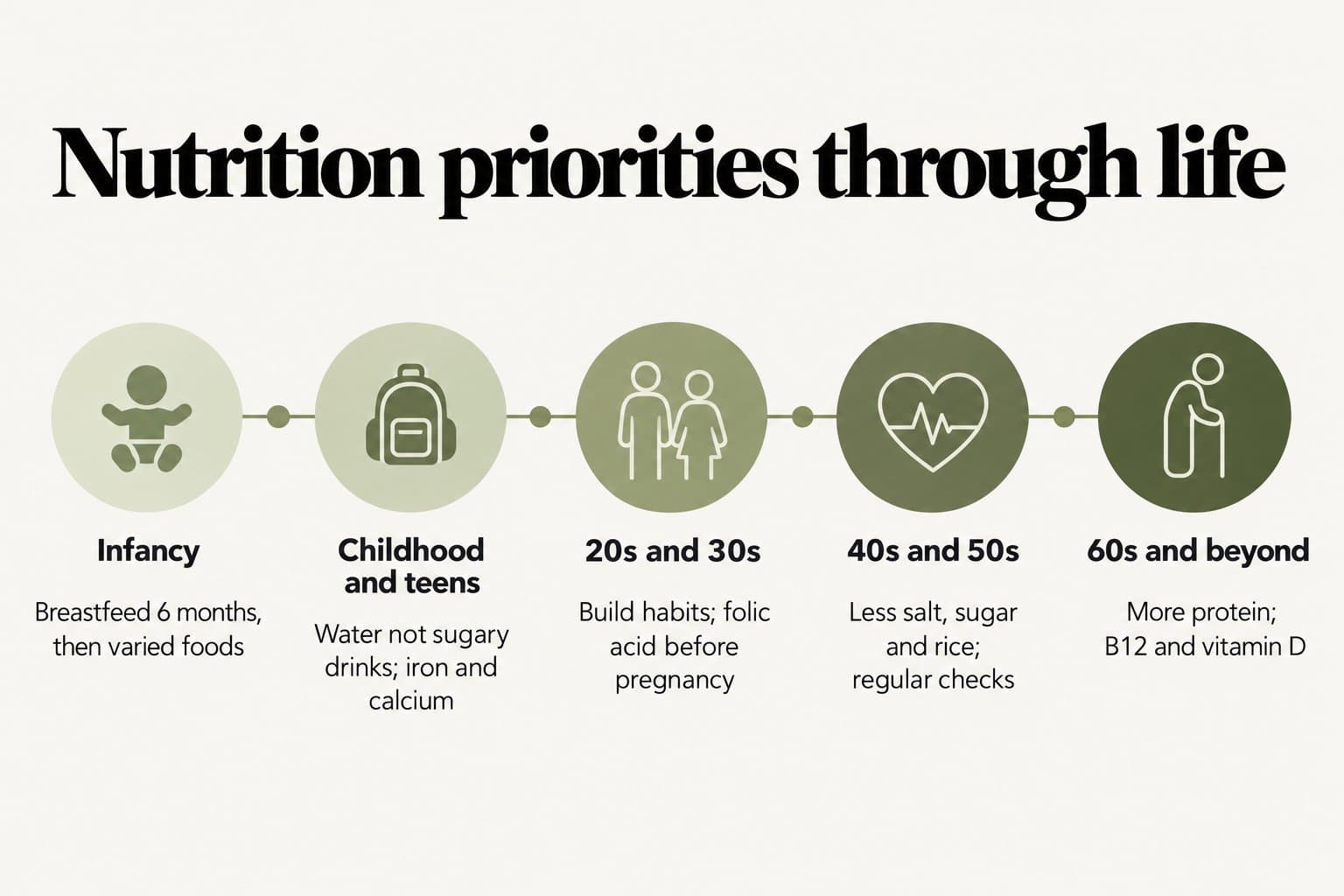
The basics of a healthy diet stay the same throughout life: plenty of vegetables, fruit, legumes and whole grains, fish more often than red meat, little sugar and salt, and few ultra-processed foods. What changes are the priorities. In infancy, the World Health Organization recommends breastfeeding exclusively for the first 6 months, then adding nutritious complementary foods while breastfeeding continues to 2 years or beyond, yet only about 47% of infants worldwide are exclusively breastfed. Childhood and the teenage years are when lifelong food habits form, so limiting sugary drinks and snacks matters. In the 20s and 30s, the focus is on building healthy routines and, for women who may become pregnant, starting folic acid. In the 40s and 50s, weight, blood sugar, blood pressure and cholesterol become the main targets. From the 60s onwards, the priority shifts from eating less to eating enough, especially protein: an expert group recommends at least 1.0-1.2 g of protein per kg of body weight a day for healthy adults over 65, more than the standard adult recommendation, to protect muscle. Vitamin B12 and vitamin D also need more attention with age. This guide sets out what to focus on at each stage.
Key numbers
| Finding | Detail |
|---|---|
| Exclusive breastfeeding (WHO) | Recommended for the first 6 months; only about 47% of infants under 6 months are exclusively breastfed worldwide |
| Complementary foods (WHO) | From 6 months, alongside breastfeeding to 2 years or beyond |
| Free sugar (WHO, all ages) | Less than 10% of energy, ideally less than 5% |
| Protein for adults over 65 (PROT-AGE) | At least 1.0-1.2 g per kg a day if healthy; 1.2-1.5 g per kg with acute or chronic illness |
| Vitamin D (Endocrine Society, 2024) | Supplementation suggested for children, pregnant women, adults over 75 and people with prediabetes |
Infancy and early childhood (0-5 years)
What the evidence shows. The WHO recommends starting breastfeeding within an hour of birth, breastfeeding exclusively for the first 6 months, and then introducing safe, nutritious complementary foods at 6 months while continuing to breastfeed to 2 years or beyond. Babies aged 6-8 months need complementary foods 2-3 times a day, and those aged 9-23 months 3-4 times a day, with extra snacks as needed. Globally, fewer than a third of children aged 6-23 months eat a diverse enough diet, and the WHO estimates that optimal breastfeeding could prevent nearly 400,000 child deaths each year.
Priorities
- Breastfeed exclusively for 6 months if possible, with support from health staff when it's difficult.
- Introduce varied foods from 6 months: mashed rice with dhal, vegetables, fish, eggs and fruit, gradually increasing texture.
- Avoid sugary drinks, sweets and salty snacks, and don't add sugar to tea for young children.
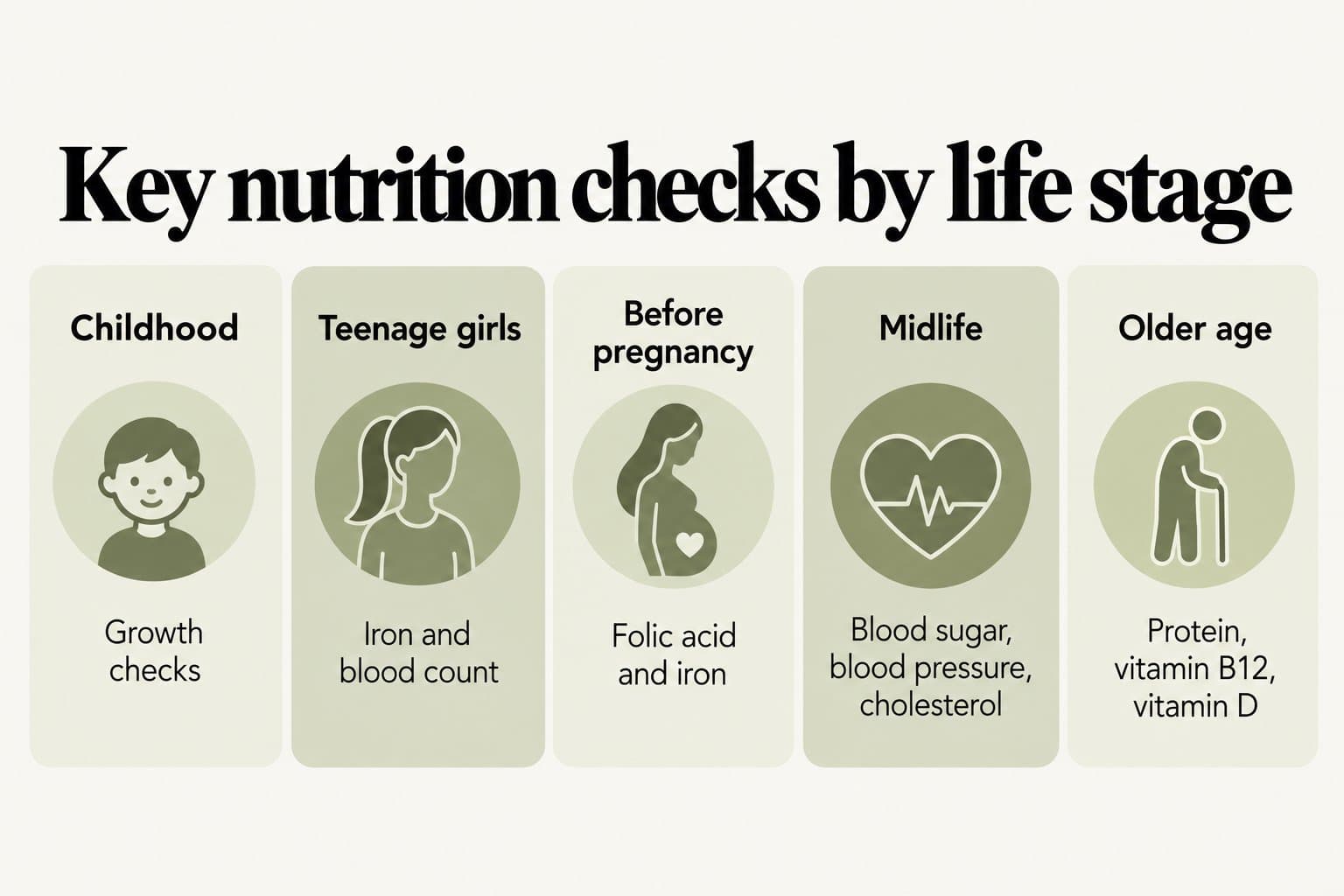
- Follow growth checks and the child health record, including vitamin A and deworming as advised locally.
Childhood and the teenage years (6-19 years)
What the evidence shows. Food preferences and habits formed in childhood often continue into adult life. The WHO's sugar guideline applies to children as well as adults: free sugars should be less than 10% of energy, and ideally less than 5%. Sugary drinks, sweetened tea, biscuits and packaged snacks are the main sources (see Sugar and Refined Carbohydrates and Ultra-Processed Foods). Teenage girls have higher iron needs once periods start, and growth spurts increase the need for protein, calcium and overall energy.
Priorities
- Make water the default drink; keep soft drinks and sweet tea for occasional treats.
- Eat breakfast and pack home-cooked meals rather than buying short eats every day.
- Include iron-rich foods (fish, eggs, meat, dhal, leafy greens) with vitamin C-rich fruit, especially for girls.
- Include dairy or other calcium sources, such as curd, milk, small fish eaten with the bones and green leaves.
- Avoid crash diets and seek help early if eating becomes restrictive or distressing.
Your 20s and 30s
What the evidence shows. Young adulthood is when weight often starts to creep up, alcohol and convenience foods become more common, and many people plan families. Women who could become pregnant are advised to take folic acid (400 micrograms a day) before conception and in early pregnancy (see Preconception Health Guide). Patterns set now, such as how much rice fills the plate, how much sugar goes in tea and how much alcohol is drunk, shape health for decades.
Priorities
- Build the habits: half a plate of vegetables, whole grains, daily legumes and fish at least twice a week (see Building a Longevity Plate).
- Watch alcohol: less is better for long-term health (see Alcohol and Longevity).
- Planning pregnancy: start folic acid, check iron and review medicines.
- Vegan or vegetarian: take vitamin B12.
Your 40s and 50s
What the evidence shows. Midlife is when the effects of diet show up as raised blood sugar, blood pressure, cholesterol and fatty liver. In Sri Lanka, around one in four adults has diabetes. For women, menopause brings changes in body fat, cholesterol and bone health. This is the stage where reducing salt, refined carbohydrates and excess calories gives large returns (see Insulin Resistance, Fatty Liver Disease (MASLD) and Lowering Blood Pressure Without Medication).
Priorities
- Reduce rice portions and refined carbohydrates; aim for at least 25-29 g of fibre a day.
- Cut salt towards the WHO limit of 5 g a day.
- Avoid habitual overeating and keep a healthy waist size (see Calorie Restriction and Fasting).
- Have regular checks of blood sugar, blood pressure and cholesterol.
- Keep protein and strength training up to protect muscle before it starts to decline.
Your 60s, 70s and beyond
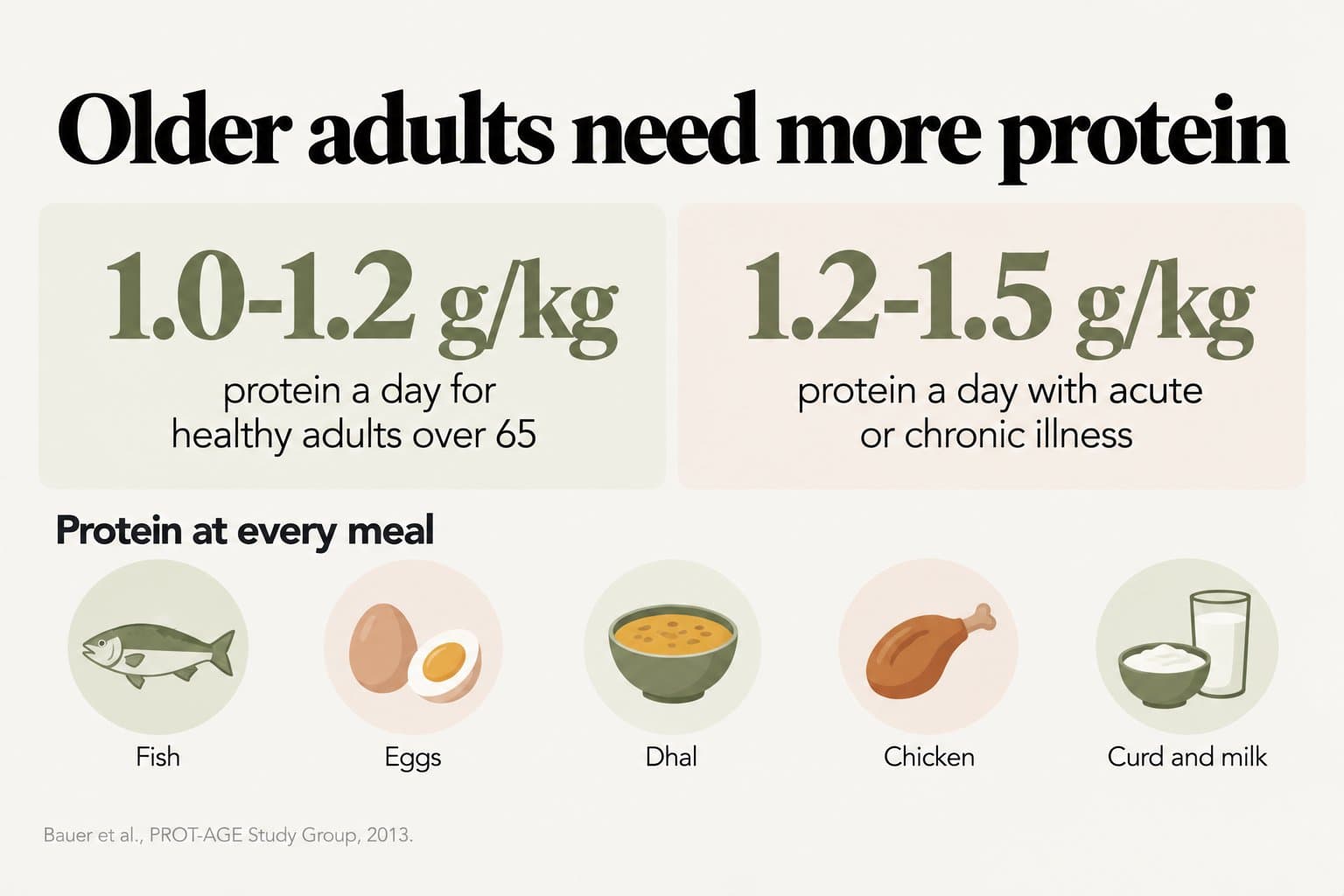
What the evidence shows. With age, appetite and muscle mass tend to fall, and the risk of frailty rises. Here the advice changes: being underweight and losing muscle become bigger risks than being slightly overweight. The PROT-AGE expert group, set up by the European Union Geriatric Medicine Society, concluded that older adults need more protein than younger adults. It recommends at least 1.0-1.2 g of protein per kg of body weight a day for healthy adults over 65, 1.2-1.5 g per kg for those with acute or chronic illness, and even more for those with severe illness or malnutrition, with the exception of people with severe kidney disease who aren't on dialysis. Combined with resistance exercise, adequate protein helps preserve muscle strength and independence (see Protein in the Sri Lankan Diet).
Vitamin B12 absorption also falls with age, and metformin increases the risk of deficiency, so periodic testing is worthwhile. The Endocrine Society suggests vitamin D supplementation for adults over 75 (see Nutrient Blood Tests).
Priorities
- Eat protein at every meal: fish, eggs, dhal, chicken, curd and milk.
- Don't restrict calories unless advised; unintentional weight loss needs medical review.
- Check vitamin B12, especially if taking metformin or acid-reducing medicines.
- Consider vitamin D after 75, or earlier if advised.
- Drink regularly, as thirst decreases with age.
- Make meals easy to eat: softer textures, smaller frequent meals and eating with others when appetite is poor.
Recommendations by scenario
| Scenario | What to do |
|---|---|
| New parent | Breastfeed exclusively for 6 months if possible; start varied home-made foods at 6 months |
| Fussy child | Offer new foods repeatedly, eat together and avoid using sweets as rewards |
| Teenage girl with heavy periods or tiredness | Check ferritin and blood count; include iron-rich foods |
| Planning pregnancy | Start folic acid 400 micrograms a day; review diet, weight and alcohol |
| Midlife weight gain | Reduce rice portions, sugar and alcohol; add vegetables and strength training |
| Prediabetes or high blood pressure | Focus on fibre, less salt and refined carbohydrates; regular checks |
| Older adult losing weight | Prioritise protein and energy; see a doctor about the cause |
| Older adult on metformin | Check vitamin B12 periodically |
| Caring for an older parent | Offer protein at every meal, encourage fluids and share meals |
Practical notes
Good nutrition across life rests on the same foundation: a varied, mostly plant-based diet with legumes, whole grains, fish and plenty of vegetables, and little sugar, salt and processed food (see Eating Patterns for Longevity). The priorities shift with age: establishing breastfeeding and healthy foods in infancy, protecting habits in childhood, preparing for pregnancy in young adulthood, preventing metabolic disease in midlife, and protecting muscle with enough protein in older age. Small changes at any stage add up, and it's never too late to start (see also Reproductive Health by Life Stage).
- World Health Organization. Infant and young child feeding. Fact sheet.
- World Health Organization. Guideline: sugars intake for adults and children. 2015.
- Bauer J, et al. Evidence-based recommendations for optimal dietary protein intake in older people: a position paper from the PROT-AGE Study Group. Journal of the American Medical Directors Association, 2013;14(8):542-559.
- Demay MB, et al. Vitamin D for the prevention of disease: an Endocrine Society clinical practice guideline. Journal of Clinical Endocrinology & Metabolism, 2024;109(8):1907-1947.
- Reynolds A, et al. Carbohydrate quality and human health: a series of systematic reviews and meta-analyses. The Lancet, 2019;393(10170):434-445.
- National Institute of Diabetes and Digestive and Kidney Diseases. Metformin and vitamin B12 deficiency: where do we stand? (Diabetes Prevention Program Outcomes Study).
Free longevity assessment
What should your nutrition
focus on at your stage of life?
Take the free Aevum Protocol assessment to see how your nutrition & metabolism and 6 other longevity domains are performing — and get a personalised 90-day plan.
Take the free assessmentKeep reading
Related articles
Nutrition & Metabolism
Eating Patterns for Longevity: What the Mediterranean Diet and Other Healthy Patterns Have in Common
Nutrition & Metabolism
Protein in the Sri Lankan Diet: Sources, Quality, Requirements & How to Close the Gap
Reproductive & Sexual Health