Nutrition & Metabolism
Calorie Restriction and Fasting:
What Human Studies Actually Show About Eating Less and Ageing
Eating less without malnutrition, known as calorie restriction, extends lifespan in many animals, and it has inspired a wave of fasting trends: intermittent fasting, alternate-day fasting, "fasting-mimicking" diets and multi-day fasts. Human evidence is more modest but real. In CALERIE, the first long-term randomised trial of calorie restriction in healthy, non-obese adults, participants aimed to eat 25% less but achieved about 12% over two years. They lost about 10% of their body weight and improved blood pressure, LDL cholesterol, insulin sensitivity and inflammation, and a later analysis found their pace of biological ageing slowed by 2-3%. However, fasting isn't magic. In a one-year trial, alternate-day fasting produced similar weight loss to simply eating less every day, but more people dropped out. In monkeys, long-term calorie restriction reduced age-related disease, although effects on lifespan differed between studies. For most people, the benefits come from eating somewhat less and maintaining a healthy weight, in whatever pattern they can sustain. This article explains what's known about calorie restriction and the main fasting approaches.
Key numbers
| Finding | Detail |
|---|---|
| CALERIE trial (218 healthy adults under 50, 2 years) | Aimed for 25% fewer calories, achieved about 12%; about 10% weight loss with better blood pressure, LDL, insulin sensitivity and inflammation |
| Biological ageing in CALERIE (DunedinPACE) | Pace of ageing slowed by 2-3%; other epigenetic clocks unchanged |
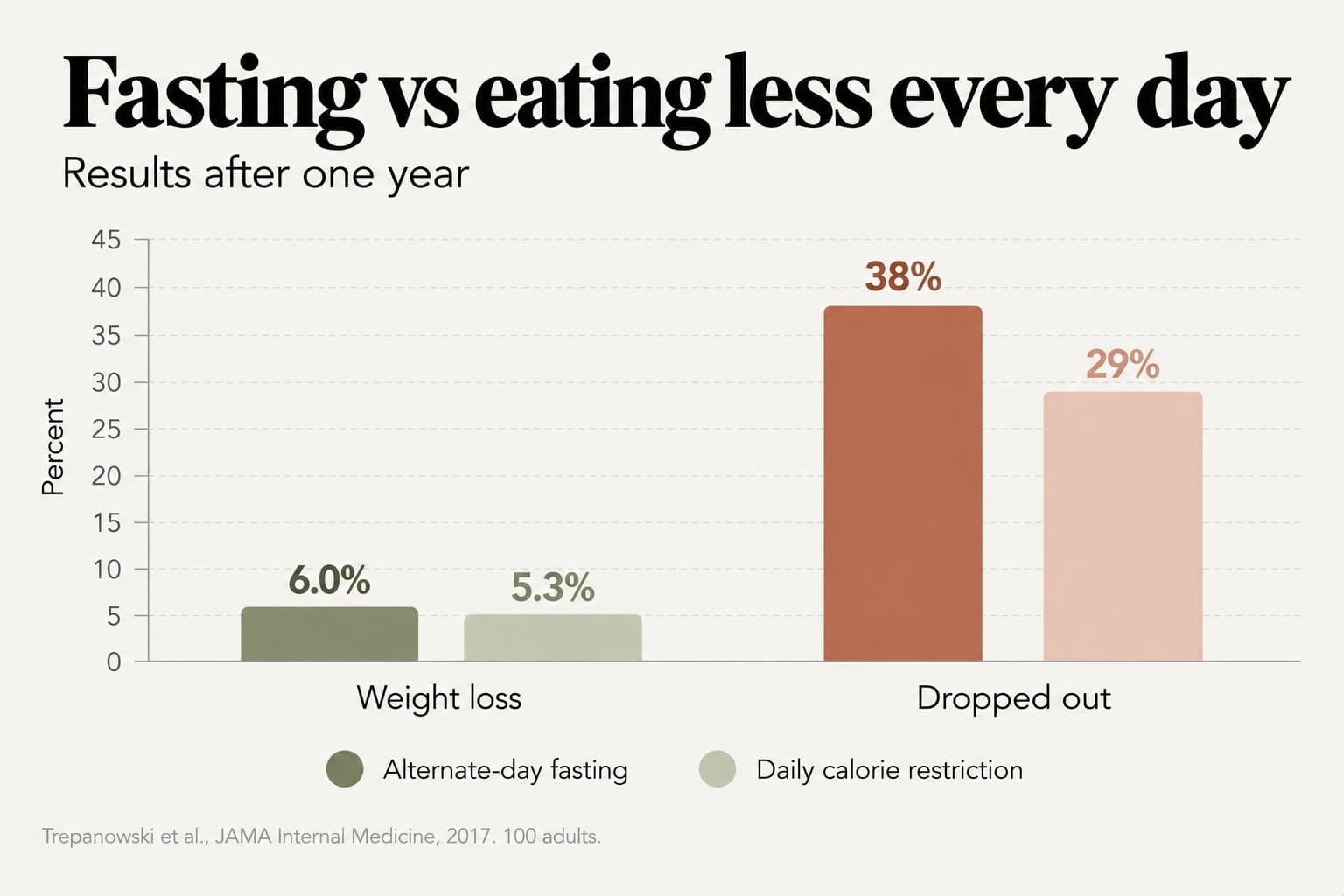
| Alternate-day fasting vs daily calorie restriction (100 adults, 1 year) | Similar weight loss (6.0% vs 5.3%); dropout 38% vs 29% |
| Fasting-mimicking diet (100 adults, 5 days a month for 3 months) | 2.6 kg weight loss; systolic blood pressure down 4.5 mm Hg; no significant change in glucose, cholesterol or CRP |
| Monkey studies (NIA and Wisconsin) | Both found fewer age-related diseases with calorie restriction |
What calorie restriction and fasting mean
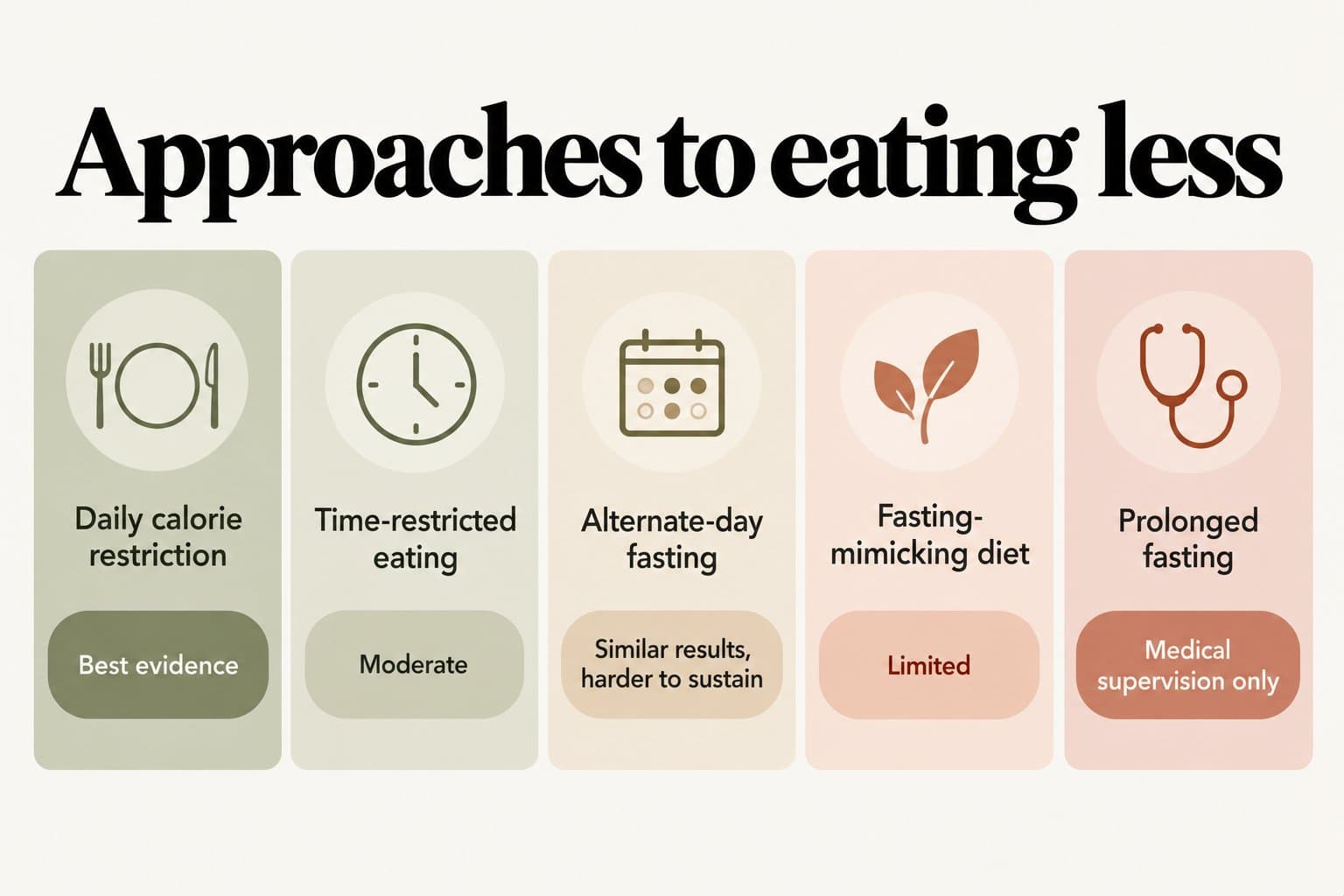
- Calorie restriction (CR): eating consistently less than you would freely choose, typically 10-30% fewer calories, while getting all essential nutrients.
- Time-restricted eating: eating within a daily window, such as 8-10 hours (see Eating Windows and Longevity).
- Alternate-day fasting: alternating days of little or no food with normal eating days.
- 5:2 diet: two low-calorie days a week.
- Fasting-mimicking diet: a few days a month of a low-calorie, low-protein plant-based diet.
- Prolonged fasting: water-only or very low-calorie fasting for several days, which carries risks and needs medical supervision.
In animals, calorie restriction lowers insulin and growth-factor signalling, increases cellular repair processes such as autophagy and reduces inflammation. Whether these translate into longer human lives is still unknown.
Evidence strength
Moderate: modest calorie restriction improves cardiometabolic health in non-obese adults. The CALERIE trial, funded by the US National Institute on Aging, randomly assigned 218 healthy adults under 50, of normal weight or slightly overweight, to calorie restriction or their usual diet for two years. The target was a 25% reduction, but participants achieved about 12% on average. Even so, they lost about 10% of their body weight, mostly fat, and had lower LDL cholesterol, triglycerides and blood pressure, better insulin sensitivity and glucose control, and markedly lower inflammation. The researchers concluded that "modest calorie restriction may reduce the risk of heart disease and diabetes even in healthy adults who are not obese".
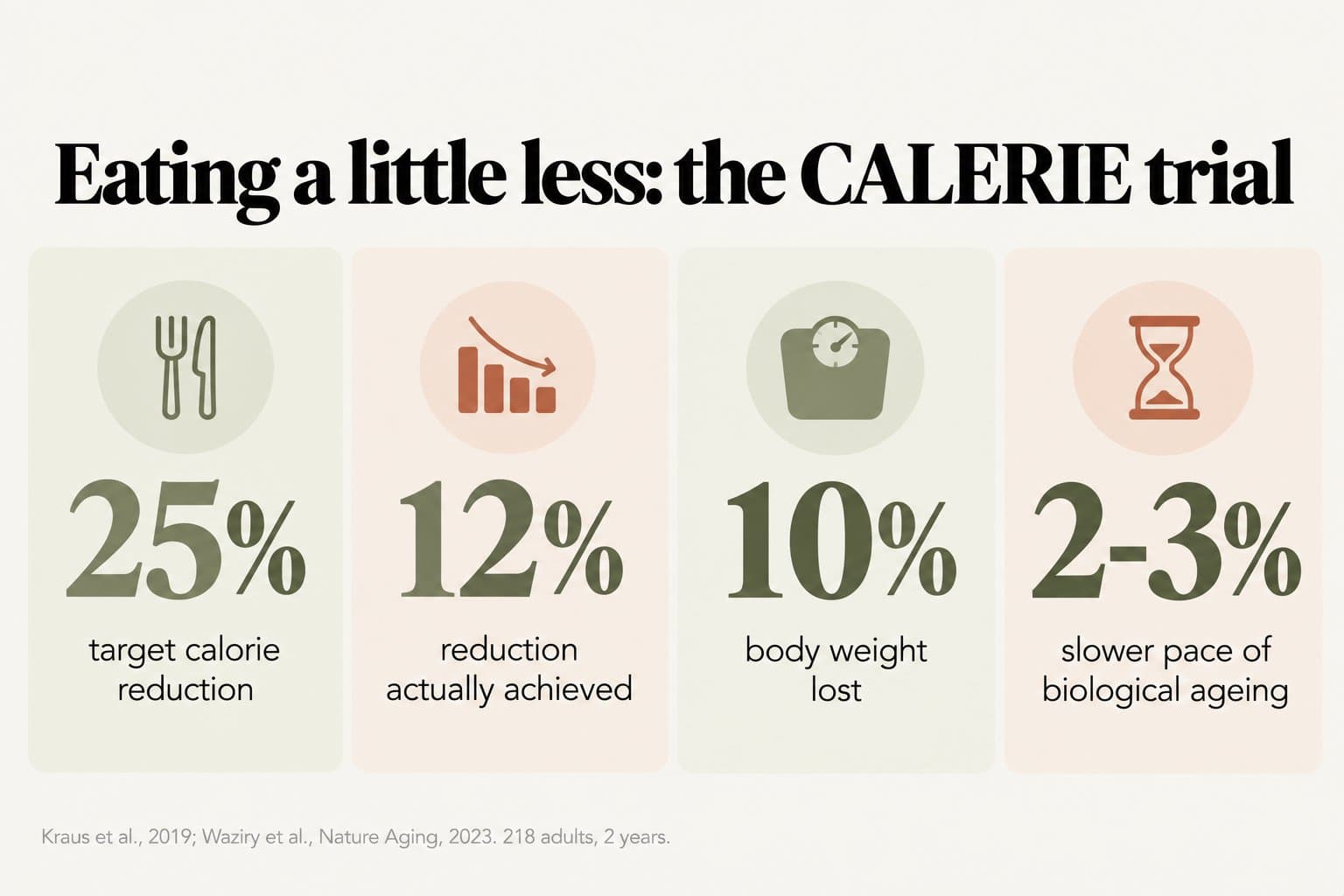
Limited: calorie restriction may slow biological ageing. A 2023 analysis of CALERIE blood samples, published in Nature Aging, found that calorie restriction slowed participants' pace of ageing by 2-3% as measured by DunedinPACE, an epigenetic measure of how fast the body is ageing. The researchers estimated that this could translate into a 10-15% lower risk of death, an estimate based on other studies. However, two other epigenetic "clocks" showed no change, and the study couldn't show effects on actual disease or lifespan.
Moderate: in monkeys, calorie restriction reduces age-related disease. Two long-term rhesus monkey studies, at the US National Institute on Aging (NIA) and the University of Wisconsin, initially seemed to disagree about lifespan. A 2017 joint analysis concluded that both found fewer age-related diseases with calorie restriction, and the differences in survival were partly explained by diet: the Wisconsin control monkeys ate a high-sucrose purified diet, while the NIA monkeys ate a more natural diet, and the age at which restriction started differed.
Moderate: fasting schedules work mainly by reducing calories. A one-year trial in JAMA Internal Medicine randomly assigned 100 adults with obesity to alternate-day fasting, daily calorie restriction or no change. Weight loss was similar with both approaches: 6.0% with alternate-day fasting and 5.3% with daily restriction at one year, compared with controls. But 38% of the alternate-day fasting group dropped out, compared with 29% for daily restriction, and their LDL cholesterol was higher. The authors concluded that alternate-day fasting may be less sustainable for most people.
Limited: fasting-mimicking diets. In a 2017 trial in Science Translational Medicine, 100 healthy adults followed a fasting-mimicking diet for five consecutive days a month (about 1,100 calories on day one and 700 on days two to five) for three months, or ate normally. The diet group lost an average of 2.6 kg, their systolic blood pressure fell by 4.5 mm Hg and a growth factor, IGF-1, decreased, with larger benefits in those starting with obesity or higher blood pressure. There were no significant changes in fasting glucose, cholesterol or CRP. The diet products were supplied by a company in which some researchers held equity, and longer, independent trials are needed.
Important limitations and risks.
- Long-term human evidence on lifespan doesn't exist, and animal results may not apply to people.
- Sustaining calorie restriction is hard: CALERIE participants achieved only about half their target.
- Too much restriction can cause harm, including muscle and bone loss, low energy, menstrual problems, feeling cold and poorer immunity.
- Fasting isn't safe for everyone: see the table below.
Recommendations by situation
| Situation | What the evidence supports |
|---|---|
| Overweight or obese | Any approach you can sustain that reduces calories; daily restriction and intermittent fasting give similar results |
| Healthy weight, interested in longevity | Avoid overeating and keep a stable healthy weight; extreme restriction isn't recommended |
| Prefer a daily eating window | Time-restricted eating can help some people eat less |
| Taking insulin or other glucose-lowering medicines | Don't fast without medical advice because of the risk of low blood sugar |
| Pregnant or breastfeeding | Don't follow calorie restriction or fasting regimens |
| History of an eating disorder | Avoid fasting and restrictive diets; seek specialist support |
| Older adult or at risk of frailty | Focus on adequate protein and strength training rather than restriction |
| Considering a multi-day fast | Only with medical supervision |
| Religious fasting | Plan meals to include enough protein, fluids and nutrients; seek advice if you have a medical condition |
Practical notes
Calorie restriction is the most consistent anti-ageing intervention in animals, and in people, modest restriction improves heart and metabolic health and may slightly slow measures of biological ageing. Fasting schedules mainly work by helping people eat less; they aren't superior to daily calorie reduction, and some are harder to stick with. For most people, the practical lesson is to avoid habitual overeating, keep a healthy weight, eat a high-quality diet and choose an eating pattern you can maintain for life (see Eating Patterns for Longevity). Older adults should prioritise protein and strength rather than eating less (see Protein in the Sri Lankan Diet).
- Kraus WE, et al. 2 years of calorie restriction and cardiometabolic risk (CALERIE): exploratory outcomes of a multicentre, phase 2, randomised controlled trial. The Lancet Diabetes & Endocrinology, 2019;7(9):673-683.
- Waziry R, et al. Effect of long-term caloric restriction on DNA methylation measures of biological aging in healthy adults from the CALERIE trial. Nature Aging, 2023;3(3):248-257.
- Mattison JA, et al. Caloric restriction improves health and survival of rhesus monkeys. Nature Communications, 2017;8:14063.
- Trepanowski JF, et al. Effect of alternate-day fasting on weight loss, weight maintenance, and cardioprotection among metabolically healthy obese adults: a randomized clinical trial. JAMA Internal Medicine, 2017;177(7):930-938.
- Wei M, et al. Fasting-mimicking diet and markers/risk factors for aging, diabetes, cancer, and cardiovascular disease. Science Translational Medicine, 2017;9(377):eaai8700.
Free longevity assessment
Could you keep up
the way you eat for life?
Take the free Aevum Protocol assessment to see how your nutrition & metabolism and 6 other longevity domains are performing — and get a personalised 90-day plan.
Take the free assessmentKeep reading
Related articles
Nutrition & Metabolism
Eating windows and longevity: what time-restricted eating does to your biology
Nutrition & Metabolism
Eating Patterns for Longevity: What the Mediterranean Diet and Other Healthy Patterns Have in Common
Nutrition & Metabolism