Nutrition & Metabolism
Nutrient Blood Tests:
Which Are Worth Doing and Which Are Hype
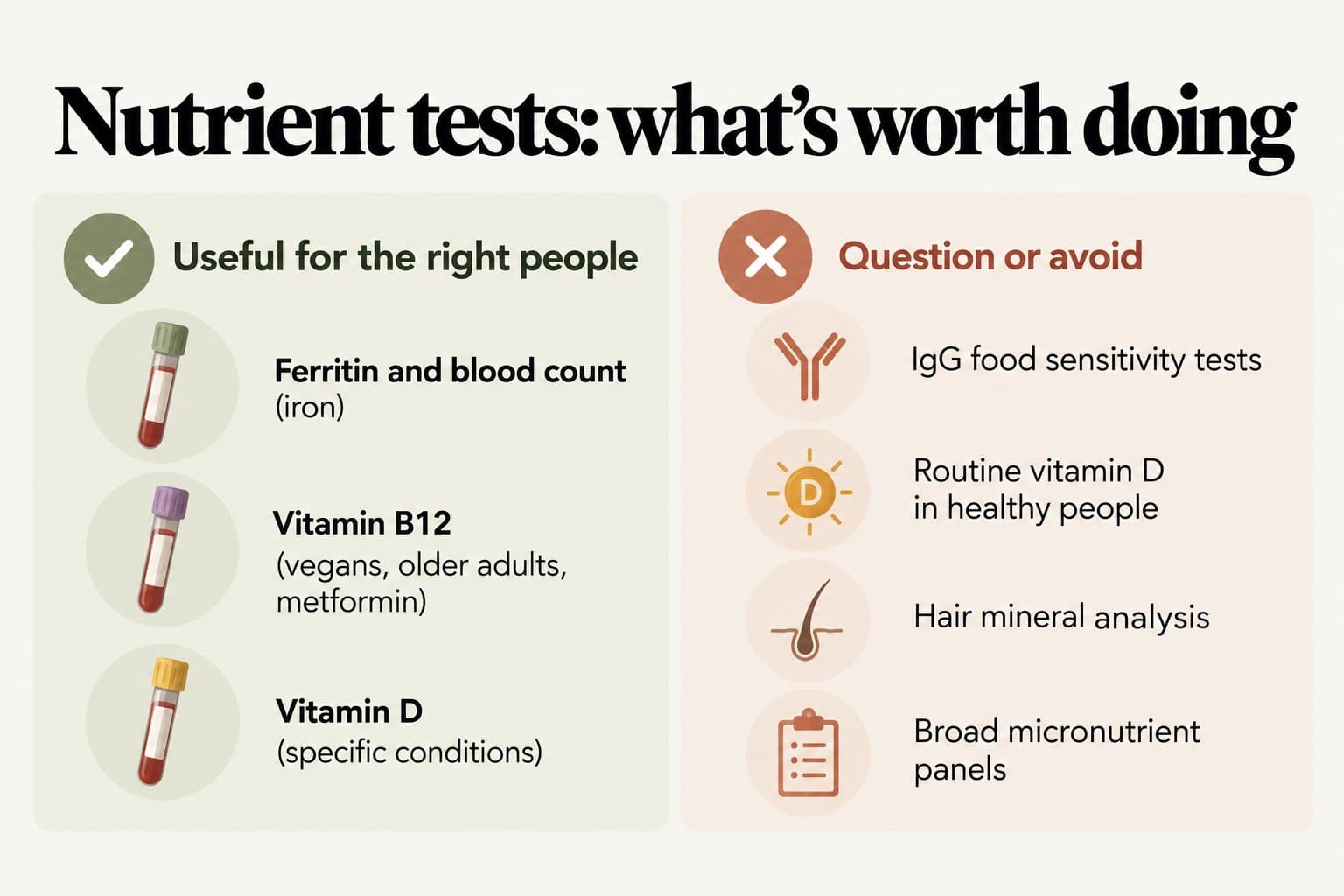
Testing your nutrient levels can sound like the smartest way to personalise your diet and supplements, and a growing number of "micronutrient panels", food sensitivity tests and wellness packages promise exactly that. Some tests are genuinely useful. Ferritin is the best routine test for iron stores, and the World Health Organization uses it to diagnose iron deficiency. Vitamin B12 is worth checking in people at risk, such as vegans, older adults and people taking metformin, which led to biochemical B12 deficiency in about 5% of users after 5 years and 9% after longer use in a major US study. Other tests are less helpful than marketed. The Endocrine Society now advises against routine vitamin D testing in healthy people, because no blood level has been proven to prevent disease. And allergy societies agree that IgG "food sensitivity" tests have no diagnostic value: IgG reflects foods you eat, not foods that harm you. Newer tests such as the omega-3 index are linked to health outcomes but aren't yet proven to guide treatment. This article explains which tests are worth doing, for whom, and which to avoid.
Key numbers
| Finding | Detail |
|---|---|
| Ferritin and iron deficiency (WHO) | Best marker of iron stores; with infection or inflammation, below 70 µg/L in adults may indicate deficiency |
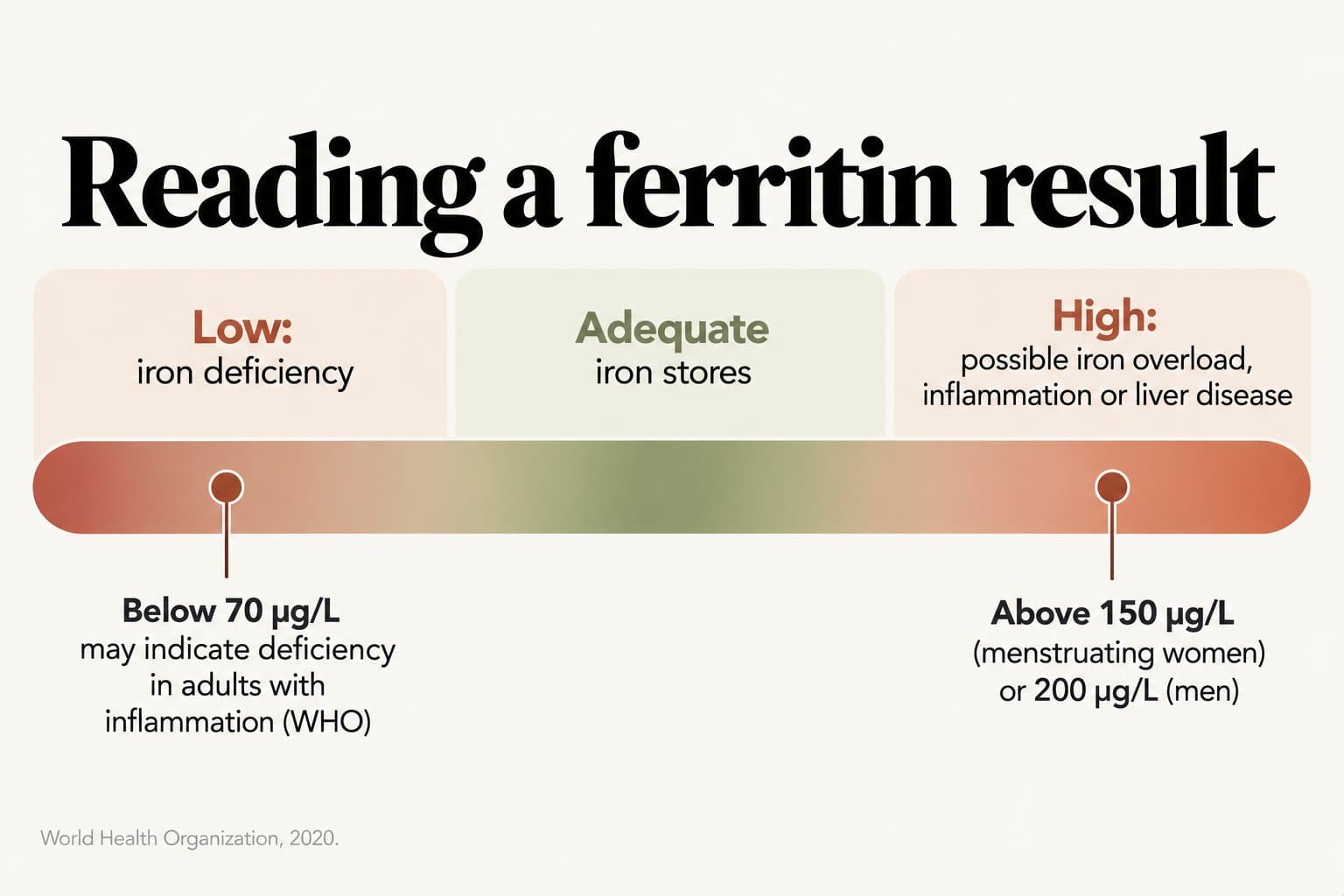
| Iron overload risk (WHO) | Ferritin above 150 µg/L in menstruating women and 200 µg/L in men and non-menstruating women |
| Metformin and B12 deficiency (Diabetes Prevention Program Outcomes Study) | About 5% after 5 years; about 9% after longer use |
| Routine vitamin D testing (Endocrine Society, 2024) | Not recommended in healthy people; no proven target level for disease prevention |
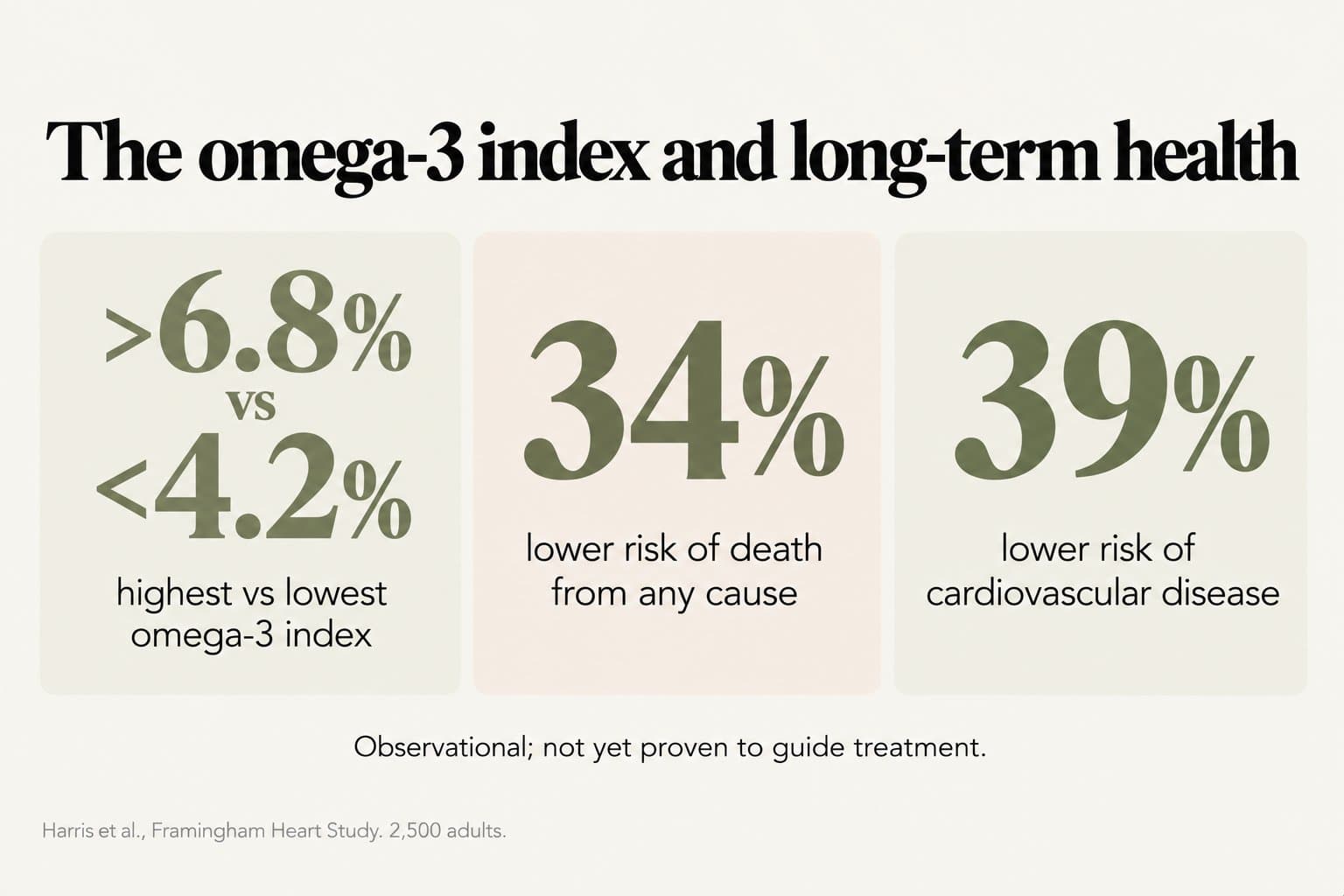
| Omega-3 index and death (2,500 adults, Framingham) | 34% lower risk of death in the highest vs lowest group |
Why testing isn't always better
A test is only useful if the result changes what you do and if acting on it improves health. Many nutrient tests fail that standard: blood levels may not reflect what's in the body's tissues, "optimal" ranges are often unproven, results vary between laboratories, and a borderline result can lead to unnecessary supplements, worry or further testing. The best approach is targeted testing based on symptoms, diet, medicines and medical history.
Evidence strength
Strong: ferritin is the key test for iron status. Iron deficiency is one of the most common nutritional problems worldwide, especially in women with heavy periods, pregnant women, children, vegetarians and people with gut problems. The WHO's 2020 guideline states that ferritin "is a good marker of iron stores and should be used to diagnose iron deficiency in otherwise apparently healthy individuals". Ferritin also rises with infection and inflammation, which can hide deficiency, so in these situations, WHO suggests that a ferritin below 70 µg/L in adults (30 µg/L in children) may indicate deficiency. High ferritin can signal iron overload: above 150 µg/L in menstruating women and 200 µg/L in men and non-menstruating women in healthy people, but also inflammation, liver disease or excess alcohol. A full blood count shows whether deficiency has progressed to anaemia (see Minerals in the Sri Lankan Diet and Fibroids and Heavy Periods).
Strong: vitamin B12 testing in people at risk. Vitamin B12 deficiency can cause anaemia, nerve damage, memory problems and fatigue, and it's easily treated. Testing is worthwhile in:
- Vegans and some vegetarians, because B12 comes almost entirely from animal foods.
- Older adults, who absorb B12 less well.
- People taking metformin: in the Diabetes Prevention Program Outcomes Study, biochemical B12 deficiency affected about 5% of metformin users after 5 years and 9% after longer use, and the American Diabetes Association recommends periodic B12 testing.
- People taking acid-reducing medicines long term, or with gut conditions or previous stomach surgery.
Borderline B12 results may need further testing, such as methylmalonic acid or homocysteine (see B Vitamins, Homocysteine, and Brain Aging).
Strong: IgG "food sensitivity" tests don't work. IgG food panels claim to identify foods causing bloating, fatigue or weight gain. But IgG antibodies to foods are a normal response to eating them and may reflect tolerance rather than intolerance. Major allergy organisations agree: the American Academy of Allergy, Asthma and Immunology states that such tests "should not be used for the evaluation of food allergy", and the European Academy of Allergy and Clinical Immunology states that IgG measurements "cannot be correlated with any clinical symptoms or disease". These tests can lead to unnecessarily restrictive diets.
Moderate: vitamin D testing is useful for some, not for everyone. The Endocrine Society's 2024 guideline recommends against routine vitamin D testing in healthy adults, because no blood level has been proven to prevent disease. It suggests that most healthy adults under 75 don't need doses above standard recommended intakes, while children, pregnant women, adults over 75 and people with prediabetes may benefit from supplementation. Testing remains reasonable when there's a specific reason, such as osteoporosis, malabsorption, chronic kidney or liver disease, symptoms of deficiency or very limited sun exposure.
Moderate: the omega-3 index is linked to outcomes, but not proven to guide treatment. The omega-3 index measures the percentage of omega-3 fats (EPA and DHA) in red blood cell membranes. In the Framingham Heart Study, 2,500 adults with an average age of 66 were followed for about 7 years. Those in the highest group (above 6.8%) had a 34% lower risk of death from any cause and a 39% lower risk of cardiovascular disease than those in the lowest group (below 4.2%). This is observational, and large trials of omega-3 supplements in the general population haven't shown clear benefits, so a low index is best treated as a prompt to eat more oily fish (see Meat, Fish and Eggs and Longevity Supplements).
Limited: broad "micronutrient panels" and hair analysis. Large panels measuring dozens of vitamins and minerals are often marketed directly to consumers. Many nutrients, such as magnesium, zinc and some vitamins, are poorly reflected by a single blood test, reference ranges vary, and results rarely change management in healthy people. Hair mineral analysis is not a reliable measure of nutrient status. Targeted testing based on clinical need is more useful than broad screening.
Important limitations.
- Results vary with recent meals, time of day, illness and supplements: for example, biotin supplements can interfere with some laboratory tests.
- Normal ranges differ between laboratories.
- A single result should be interpreted in context, with symptoms, diet and other tests.
Recommendations by situation
| Situation | What the evidence supports |
|---|---|
| Healthy adult with a varied diet | Routine nutrient panels aren't needed; focus on standard checks such as blood count, glucose and lipids |
| Tiredness, heavy periods, pregnancy or vegetarian diet | Check ferritin and full blood count |
| Vegan, over 65, on metformin or acid-reducing medicines | Check vitamin B12 periodically |
| Osteoporosis, malabsorption, kidney or liver disease | Check vitamin D |
| Considering IgG food sensitivity testing | Not recommended; see a doctor or dietitian about symptoms |
| Want to track omega-3 status | Optional; use it as a prompt to eat more oily fish |
| Taking supplements | Tell the lab and your doctor; some, such as biotin, affect results |
Practical notes
Nutrient testing is most useful when it's targeted: ferritin for iron, B12 for people at risk, and vitamin D for specific conditions. Routine vitamin D testing in healthy people, broad micronutrient panels, hair analysis and IgG food sensitivity tests add cost and confusion without proven benefit. Discuss testing with your doctor, choose tests that would change what you do, and focus on the dietary patterns that support long-term health (see Eating Patterns for Longevity).
- World Health Organization. WHO guideline on use of ferritin concentrations to assess iron status in individuals and populations. 2020.
- National Institute of Diabetes and Digestive and Kidney Diseases. Metformin and vitamin B12 deficiency: where do we stand? (Diabetes Prevention Program Outcomes Study).
- Demay MB, et al. Vitamin D for the prevention of disease: an Endocrine Society clinical practice guideline. Journal of Clinical Endocrinology & Metabolism, 2024;109(8):1907-1947.
- Association for Diagnostics & Laboratory Medicine. What is the clinical utility of food-specific IgG testing? 2022.
- Harris WS, et al. Erythrocyte long-chain omega-3 fatty acid levels are inversely associated with mortality and with incident cardiovascular disease: the Framingham Heart Study. Journal of Clinical Lipidology, 2018;12(3):718-727.
Free longevity assessment
Would your last nutrient test
change what you actually do?
Take the free Aevum Protocol assessment to see how your nutrition & metabolism and 6 other longevity domains are performing — and get a personalised 90-day plan.
Take the free assessmentKeep reading