Nutrition & Metabolism
Longevity Supplements:
NMN, Resveratrol, Metformin, Rapamycin and Multivitamins Under the Microscope
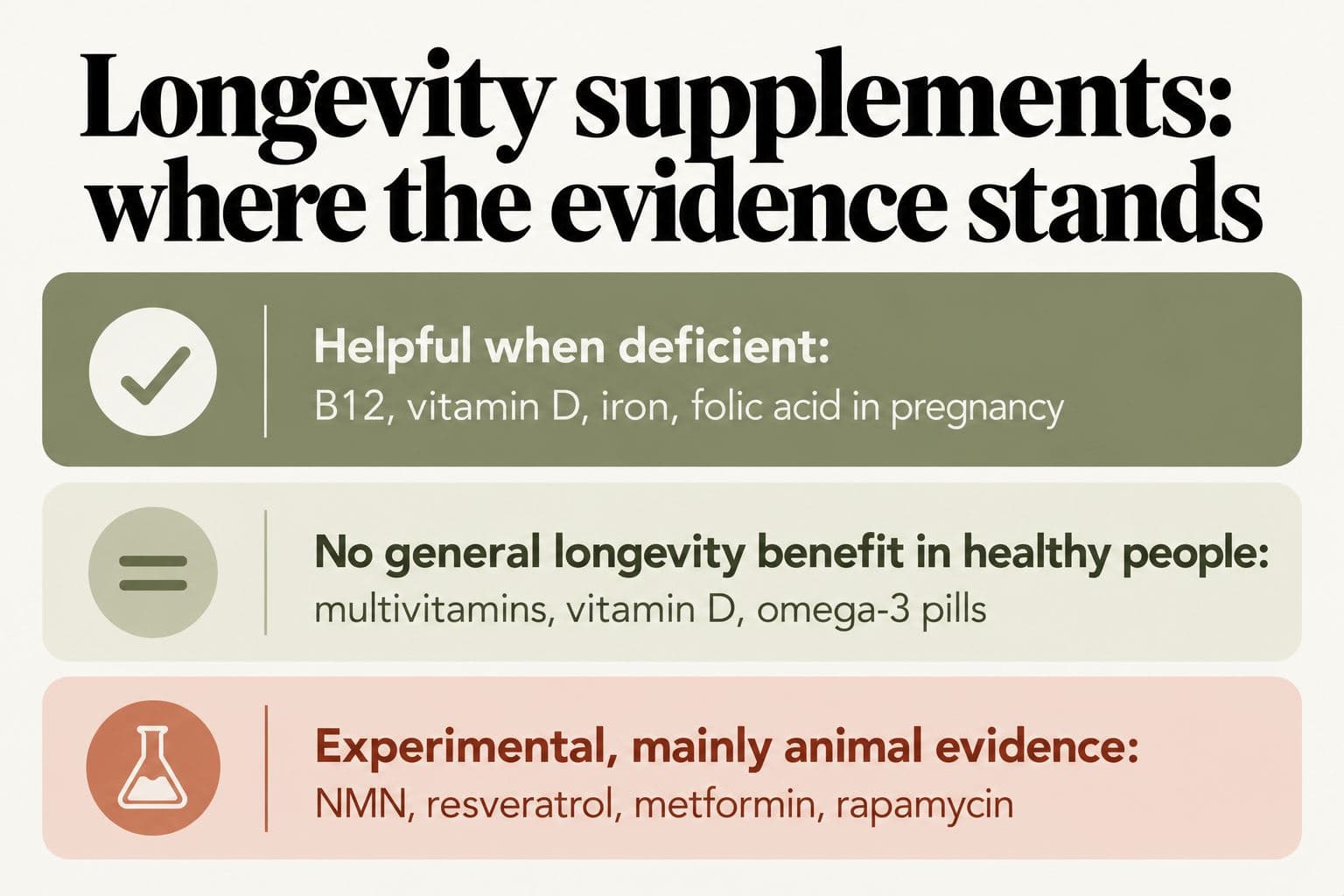
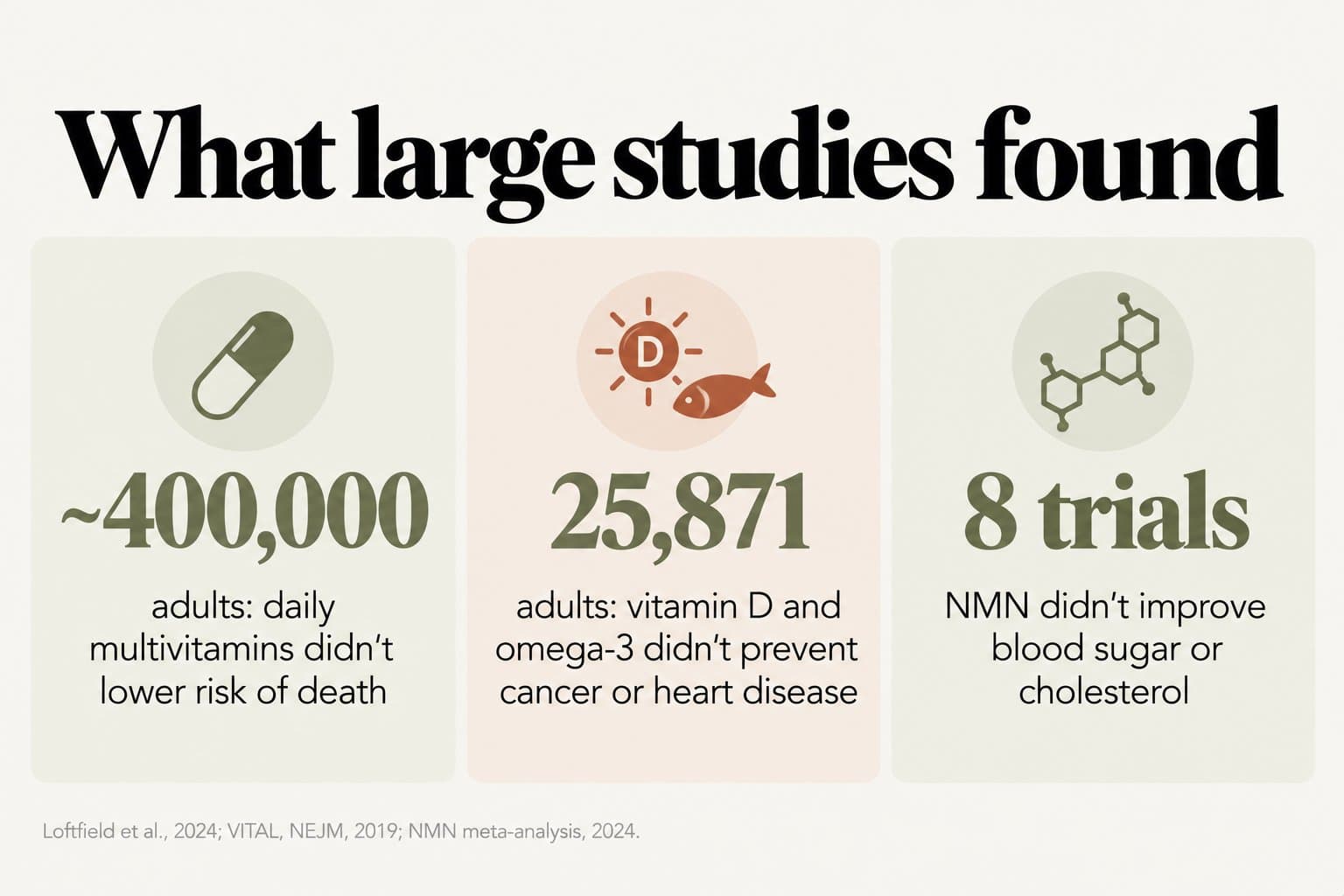
Supplements promising to slow ageing are a fast-growing market, from NAD+ boosters such as NMN to resveratrol, and drugs such as metformin and rapamycin taken "off-label" for longevity. Some are backed by exciting animal research, but human evidence lags far behind. Everyday supplements don't fare much better. In a study of nearly 400,000 healthy US adults followed for more than 20 years, taking a daily multivitamin wasn't linked to a lower risk of death. In the VITAL trial of 25,871 adults, vitamin D and omega-3 supplements didn't reduce cancer or major cardiovascular events. For the newer "longevity" compounds: NMN raised NAD+ levels but didn't improve blood sugar or cholesterol in a review of eight trials; resveratrol in the diet wasn't linked to longer life; metformin blunted muscle gains from strength training in older adults; and rapamycin extended lifespan by 9-14% in mice but carries real side effects and lacks long-term human evidence. Supplements still matter when you have a genuine deficiency. This article explains what the evidence shows and how to decide.
Key numbers
| Finding | Detail |
|---|---|
| Daily multivitamins and death (nearly 400,000 healthy adults, 20+ years) | No lower risk of death |
| Vitamin D and omega-3 (VITAL trial, 25,871 adults, 5.3 years) | No reduction in cancer or major cardiovascular events |
| NMN (8 randomised trials, 342 adults) | No significant benefit for blood sugar, insulin or cholesterol |
| Metformin and strength training (109 older adults, 14 weeks) | Smaller gains in muscle mass than placebo |
| Rapamycin in mice (Interventions Testing Program) | 9-14% longer lifespan when started in mid-life |
Why animal results often don't translate
Many longevity compounds target pathways that regulate ageing in yeast, worms and mice, such as NAD+ metabolism, mTOR, AMPK and sirtuins. But mice live in controlled conditions, are often given high doses, and can respond differently from humans. A compound that extends lifespan in animals may have no effect, or cause harm, in people. Most human studies so far measure biomarkers over weeks or months rather than disease or lifespan.
Evidence strength
Strong: multivitamins don't extend life in healthy people. A 2024 National Cancer Institute analysis, published in JAMA Network Open, followed nearly 400,000 healthy US adults for more than 20 years. People who took a daily multivitamin didn't have a lower risk of death from any cause, cancer, heart disease or stroke, after accounting for factors such as education and diet quality. The results don't apply to people with nutritional deficiencies.
Strong: vitamin D and omega-3 supplements don't prevent cancer or heart disease in the general population. The VITAL trial randomly assigned 25,871 adults (men 50 and over, women 55 and over) without cancer or cardiovascular disease to vitamin D (2,000 IU a day), omega-3 fatty acids (1 g a day), both, or placebo. After a median of 5.3 years, neither supplement reduced major cardiovascular events or new cancers. A lower rate of heart attacks with omega-3 was a secondary finding that experts cautioned against over-interpreting. Eating fish is a different matter (see Meat, Fish and Eggs).
Moderate: supplements help when there's a genuine deficiency or specific need. Supplements are valuable when they correct a proven deficiency or meet a specific need, for example vitamin B12 in vegans and older adults with poor absorption, vitamin D when blood levels are low, iron for iron-deficiency anaemia, and folic acid before and during early pregnancy. Testing first is better than guessing (see Vitamins in the Sri Lankan Diet and Minerals in the Sri Lankan Diet). Which tests are worth doing is covered in Nutrient Blood Tests.
Limited: NMN and other NAD+ boosters. NAD+ is a molecule involved in energy metabolism and DNA repair, and its levels fall with age. Supplements such as nicotinamide mononucleotide (NMN) and nicotinamide riboside (NR) raise NAD+ levels in the blood. But a 2024 meta-analysis of eight randomised trials, with 342 mostly middle-aged and older adults taking 250-2,000 mg of NMN a day for up to 12 weeks, found no significant improvements in fasting glucose, insulin, HbA1c, cholesterol or BMI. Long-term effects are unknown.
Limited: resveratrol. Resveratrol, found in red grapes and red wine, extended lifespan in some animal studies. But in the Invecchiare in Chianti study of older Italians, levels of resveratrol from the diet weren't associated with lower risk of death, heart disease, cancer or inflammation. The researchers noted there are no data on the long-term safety of high-dose supplements, especially in older people taking several medicines.
Limited: metformin. Metformin, an inexpensive diabetes medicine, has attracted interest because of observational studies in people with diabetes and effects in animals. A large trial designed to test it as an anti-ageing drug in people without diabetes has been proposed but hasn't reported results. Meanwhile, in the MASTERS trial, 109 healthy adults with an average age of 69 did 14 weeks of strength training while taking metformin (1,700 mg a day) or placebo. The placebo group gained more lean and thigh muscle, suggesting metformin may blunt the muscle-building response to exercise, an important consideration given the role of muscle in healthy ageing.
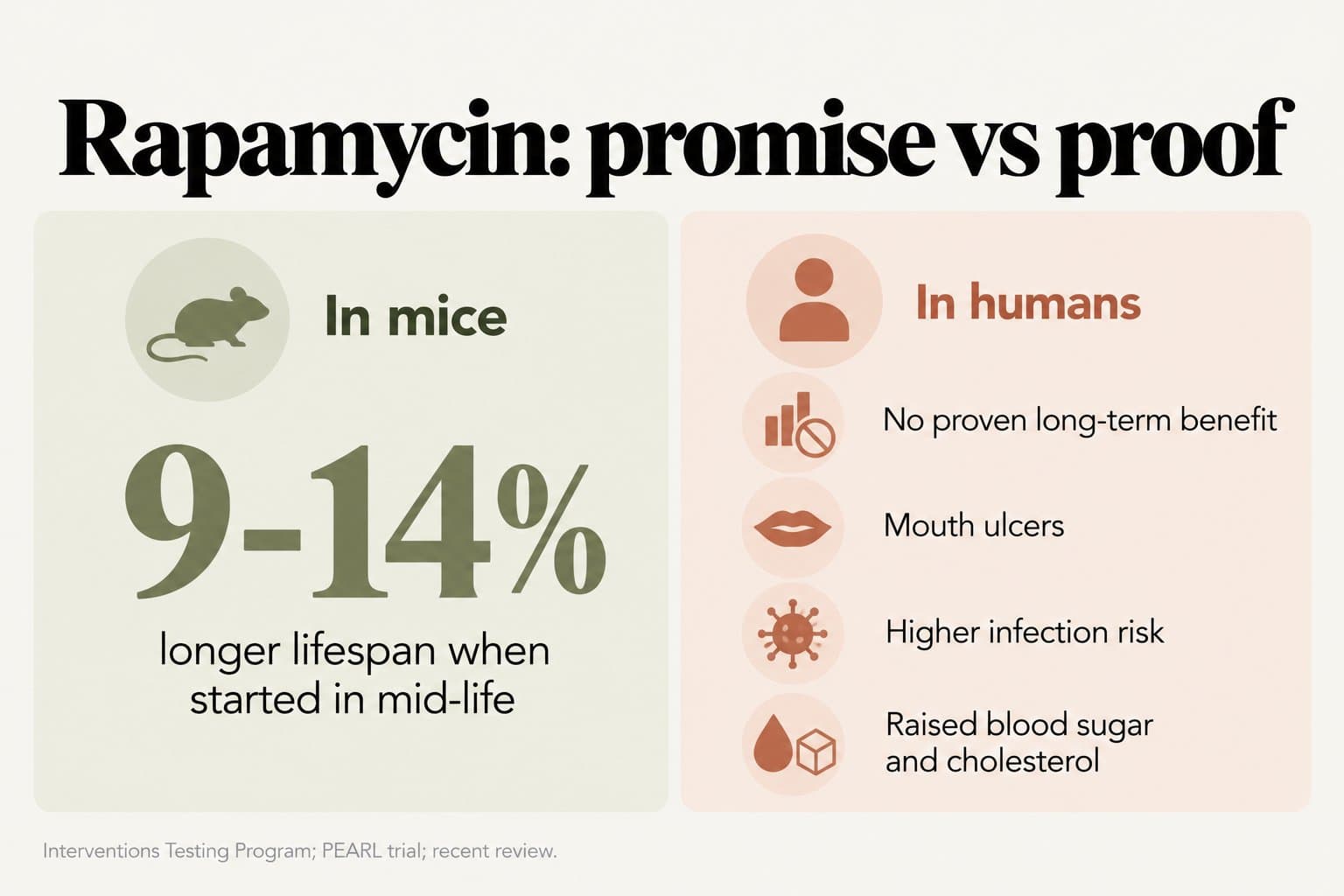
Limited: rapamycin. Rapamycin blocks mTOR, a central growth-signalling pathway. In the US National Institute on Aging's Interventions Testing Program, rapamycin started in mid-life extended mouse lifespan by 9-14%. In people, the PEARL trial of low-dose, intermittent rapamycin found it was well tolerated over one year with "modest changes" in ageing biomarkers, but long-term benefits haven't been shown. Known side effects include mouth ulcers, slower wound healing, higher infection risk, raised blood sugar and cholesterol, and menstrual changes. A recent review concluded that "caution is warranted", particularly in otherwise healthy people.
Important limitations.
- Supplements are less tightly regulated than medicines: contents, purity and dose may differ from the label.
- Interactions: supplements can interact with medicines, for example affecting blood thinners or diabetes treatment.
- Off-label longevity drugs carry the risks of prescription medicines without proven benefits.
- Money and attention spent on supplements may be better spent on diet, exercise, sleep and proven medical care.
Recommendations by situation
| Situation | What the evidence supports |
|---|---|
| Healthy adult with a varied diet | A multivitamin isn't needed for longevity |
| Proven deficiency (B12, vitamin D, iron) | Supplement as advised, then re-check levels |
| Vegan or vegetarian | Take vitamin B12; check iron and vitamin D |
| Planning pregnancy | Take folic acid 400 micrograms daily |
| Considering NMN, NR or resveratrol | Human evidence of benefit is lacking; discuss with your doctor |
| Considering metformin for longevity without diabetes | Not recommended outside trials; may blunt exercise gains |
| Considering rapamycin | Experimental; only within research or under specialist supervision |
| Taking several supplements and medicines | Ask your doctor or pharmacist to check for interactions |
If you're planning a pregnancy, see Preconception Health Guide.
Practical notes
Despite the hype, no supplement or drug has been shown to extend healthy human lifespan. Multivitamins, vitamin D and omega-3 supplements don't prevent chronic disease in well-nourished people, and newer longevity compounds have promising animal data but little human evidence and some real risks. Supplements are most useful for correcting proven deficiencies. The interventions with the strongest evidence for a longer, healthier life remain a high-quality diet, regular exercise, good sleep, not smoking and managing blood pressure, cholesterol and blood sugar (see Eating Patterns for Longevity).
- Loftfield E, et al. Multivitamin use and mortality risk in 3 prospective US cohorts. JAMA Network Open, 2024;7(6):e2418729.
- Manson JE, et al. Vitamin D supplements and prevention of cancer and cardiovascular disease. New England Journal of Medicine, 2019;380(1):33-44; and Marine n-3 fatty acids and prevention of cardiovascular disease and cancer. NEJM, 2019;380(1):23-32.
- Effects of nicotinamide mononucleotide on glucose and lipid metabolism in adults: a systematic review and meta-analysis of randomised controlled trials. Current Diabetes Reports, 2024.
- Semba RD, et al. Resveratrol levels and all-cause mortality in older community-dwelling adults. JAMA Internal Medicine, 2014;174(7):1077-1084.
- Walton RG, et al. Metformin blunts muscle hypertrophy in response to progressive resistance exercise training in older adults: the MASTERS trial. Aging Cell, 2019;18(6):e13039.
- Rapamycin for longevity: the pros, the cons, and future perspectives. PubMed Central, PMC12226543.
Free longevity assessment
Do you know which of your supplements
you actually need?
Take the free Aevum Protocol assessment to see how your nutrition & metabolism and 6 other longevity domains are performing — and get a personalised 90-day plan.
Take the free assessmentKeep reading