Longevity 101
What Is Longevity Medicine?
A Plain-Language Introduction
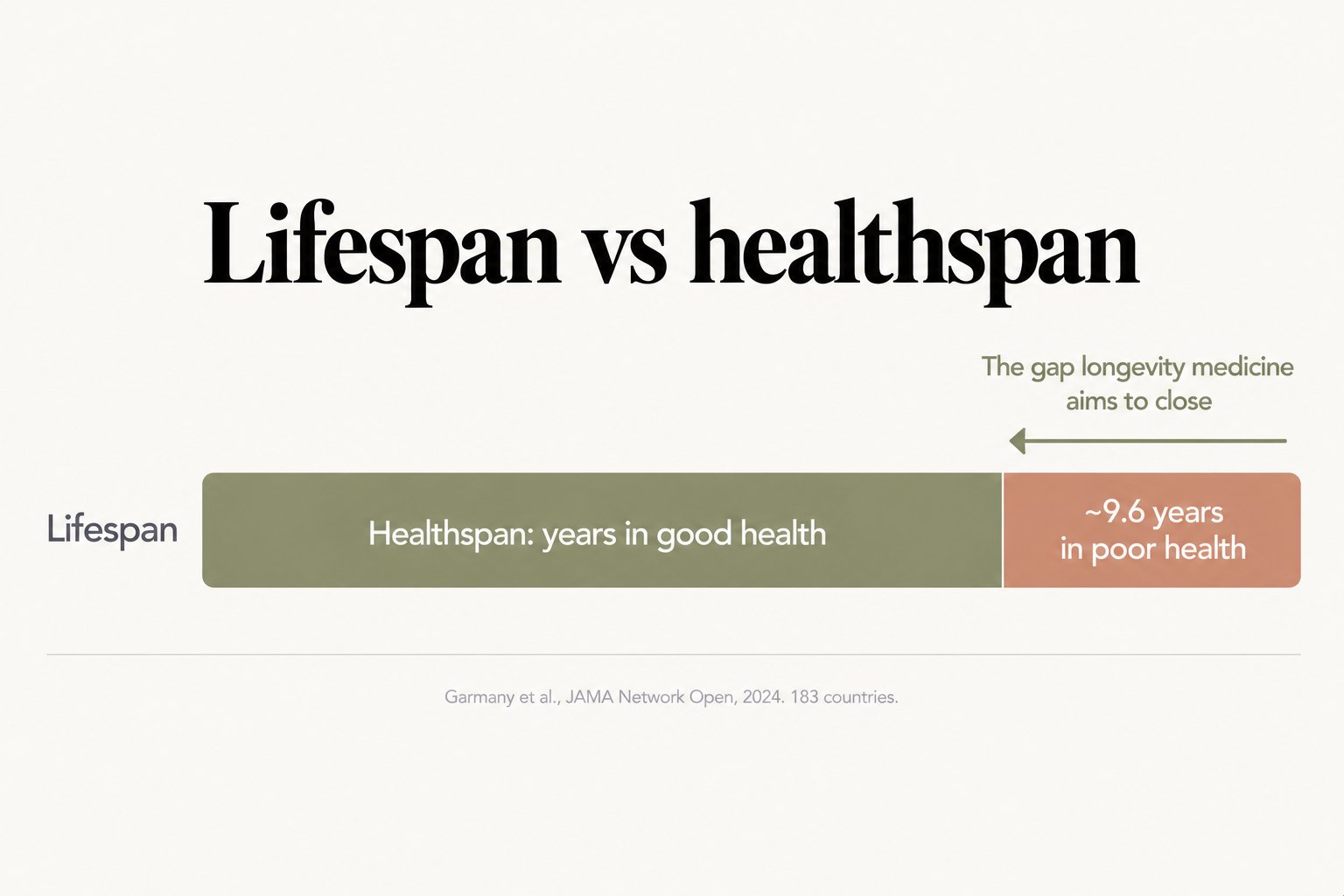
Longevity medicine is about adding healthy years to your life, not just years. Modern medicine has become very good at keeping people alive with chronic disease, but less good at keeping them well: worldwide, people now spend on average 9.6 years of life in poor health, a gap that grew by 13% between 2000 and 2019. Most of that ill health comes from a handful of chronic conditions. Noncommunicable diseases, mainly heart disease, cancer, chronic lung disease and diabetes, killed at least 43 million people in 2021, or 75% of deaths not related to the pandemic, and they're strongly linked to modifiable risk factors such as tobacco, inactivity, alcohol and unhealthy diets. Longevity medicine tries to get ahead of these conditions. It uses detailed assessment to find risks early, focuses on the habits and treatments with the strongest evidence, and tracks progress over time. The potential is large: in a Harvard study, adults who followed five healthy habits had 14 (women) and 12 (men) more years of life expectancy at age 50. This article explains what longevity medicine is, how it differs from a regular check-up, and what it can and can't do.
Key numbers
| Finding | Detail |
|---|---|
| Years lived in poor health (183 countries, 2019) | 9.6 years on average; up 13% since 2000 |
| Noncommunicable diseases (WHO, 2021) | At least 43 million deaths, 75% of non-pandemic deaths; 18 million before age 70 |
| Five healthy habits (Harvard, 123,219 adults) | 14 more years of life expectancy at 50 for women; 12 for men |
| Environment vs genes (nearly 500,000 people) | Lifestyle and environment explain 17% of variation in death risk; genetic predisposition less than 2% |
Lifespan vs healthspan
- Lifespan is how long you live.
- Healthspan is how long you live in good health: active, independent and free of serious disease or disability.
During the 20th century, lifespans rose dramatically. But healthspan hasn't kept pace. A 2024 analysis of 183 countries found that people spend on average 9.6 years at the end of life in poor health, and the authors concluded that "gains in longevity are not matched with equivalent advances in healthy longevity" (see The Limits of Human Lifespan). Closing this gap is the central goal of longevity medicine.
How longevity medicine differs from a regular check-up
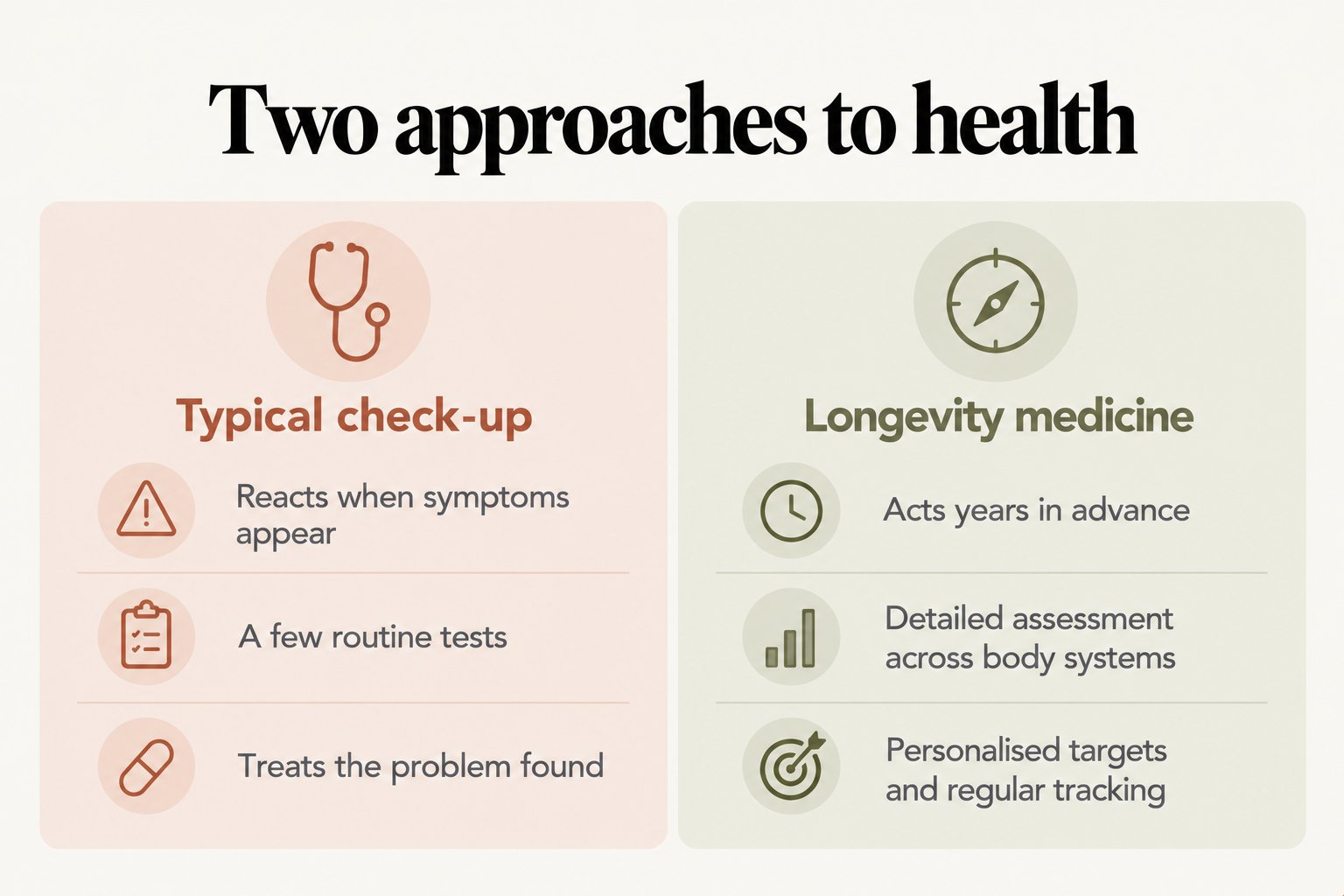
| Typical check-up | Longevity medicine | |
|---|---|---|
| Focus | Diagnose and treat existing disease | Prevent or delay disease and decline |
| Timing | Often when symptoms appear | Years or decades before problems develop |
| Assessment | A few routine tests | Detailed review of risks across body systems, including fitness, sleep, diet and mental wellbeing |
| Plan | Treat the problem found | Personalised priorities with clear targets |
| Follow-up | As needed | Regular tracking and adjustment |
Longevity medicine doesn't replace your regular doctor or standard screening. It builds on them, with more time spent on prevention and on the areas that often get little attention in a short consultation, such as fitness, muscle strength, sleep and stress.
What the research shows
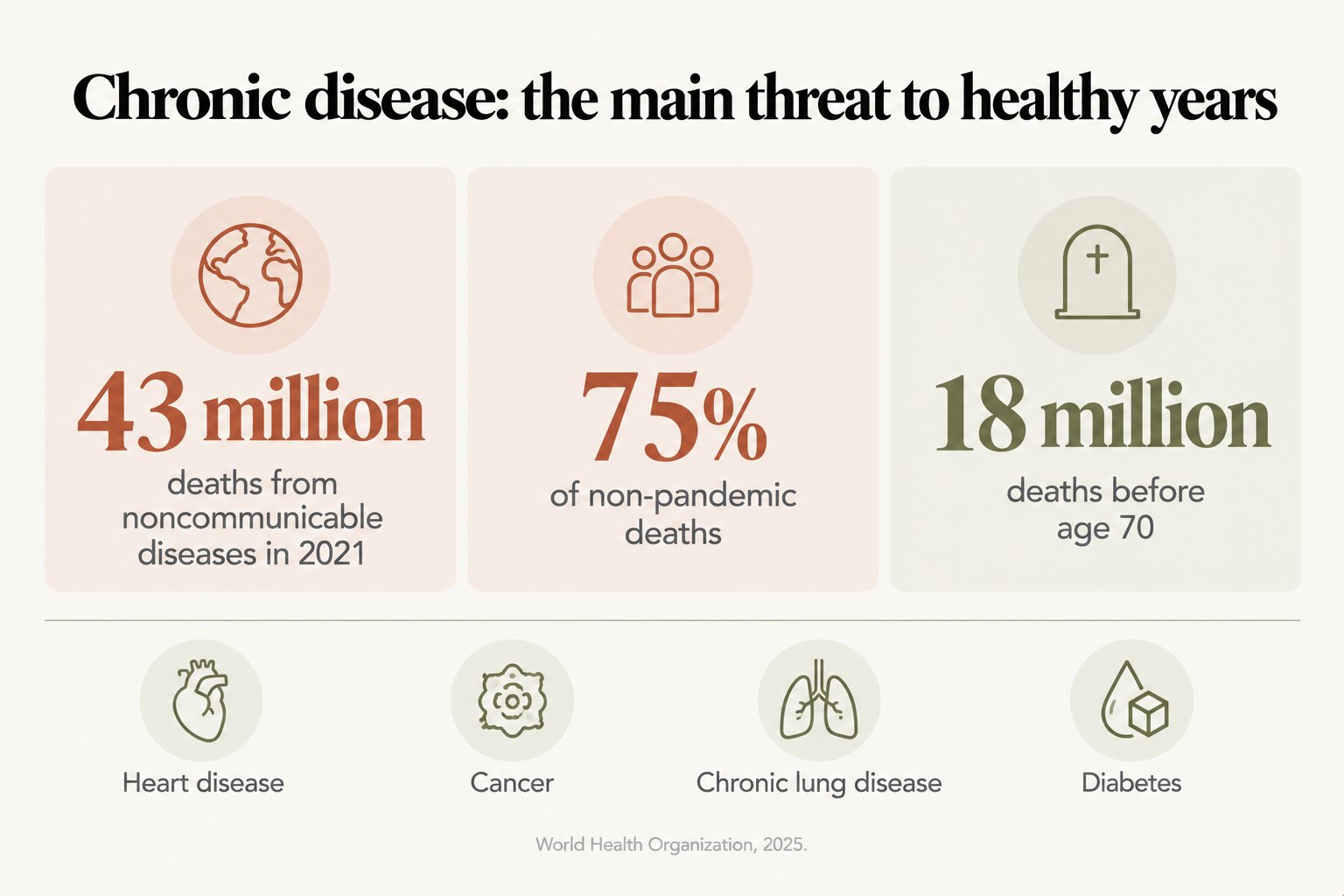
Most chronic disease is linked to modifiable risks. According to the World Health Organization, noncommunicable diseases killed at least 43 million people in 2021, including about 18 million before age 70. Cardiovascular disease accounted for at least 19 million deaths, cancer for 10 million, chronic respiratory disease for 4 million and diabetes for more than 2 million. The WHO lists tobacco use, physical inactivity, harmful use of alcohol, unhealthy diets and air pollution as the main risk factors, most of which can be changed. The major diseases of ageing are covered in The Major Diseases of Ageing.
Habits add years. In a Harvard study that followed 78,865 women for 34 years and 44,354 men for 27 years, people who followed five low-risk habits (not smoking, a healthy weight, regular exercise, a healthy diet and moderate alcohol) had 82% lower risk of cardiovascular death and 65% lower risk of cancer death. At 50, their life expectancy was 14 years longer for women and 12 years longer for men than for people with none of these habits (see From Hallmarks to Habits).
Lifestyle matters more than genes. A 2025 Oxford study of nearly 500,000 people found that environmental and lifestyle factors explained 17% of the variation in risk of death, compared with less than 2% for genetic predisposition (see The Genetics of Longevity).
What longevity medicine draws on. Longevity medicine combines established prevention, such as controlling blood pressure, cholesterol and blood sugar, and screening for cancer, with newer tools, such as fitness testing, body composition and biological age measures (see Biological Age vs Chronological Age). It also follows research into the biology of ageing (see The Hallmarks of Ageing), while separating proven approaches from those that are still experimental. Common misconceptions are covered in Longevity Myths.
Why this matters for longevity
Most people want not just a long life but a good one: the ability to work, travel, play with grandchildren and live independently. Because chronic diseases share many of the same risk factors and develop over decades, the most effective time to act is long before symptoms appear. In Sri Lanka, where the population is ageing faster than anywhere else in South Asia, this is becoming a pressing priority for families and the health system alike (see Ageing and Health in Sri Lanka).
Practical notes
Longevity medicine starts with understanding where you stand today, across all the systems that influence how you age (see The 8 Domains of Longevity). From there, a good plan focuses on a few priorities with the biggest expected benefit, sets realistic targets and tracks progress over time (see What to Expect From a Longevity Doctor). It's never too early, and rarely too late, to start. Our Longevity Doctors can help you take the first step, starting with the free longevity assessment.
- Garmany A, et al. Global healthspan-lifespan gaps among 183 World Health Organization member states. JAMA Network Open, 2024;7(12):e2450241.
- World Health Organization. Noncommunicable diseases. Fact sheet, September 2025.
- Li Y, et al. Impact of healthy lifestyle factors on life expectancies in the US population. Circulation, 2018;138(4):345-355.
- Argentieri MA, et al. Integrating the environmental and genetic architectures of aging and mortality. Nature Medicine, 2025;31(4):1016-1025.
Free longevity assessment
See where you actually stand
Take the free Aevum Protocol assessment to see how your longevity 101 and 6 other longevity domains are performing — and get a personalised 90-day plan.
Take the free assessment