Longevity Science
From Hallmarks to Habits:
How Everyday Choices Act on the Biology of Ageing
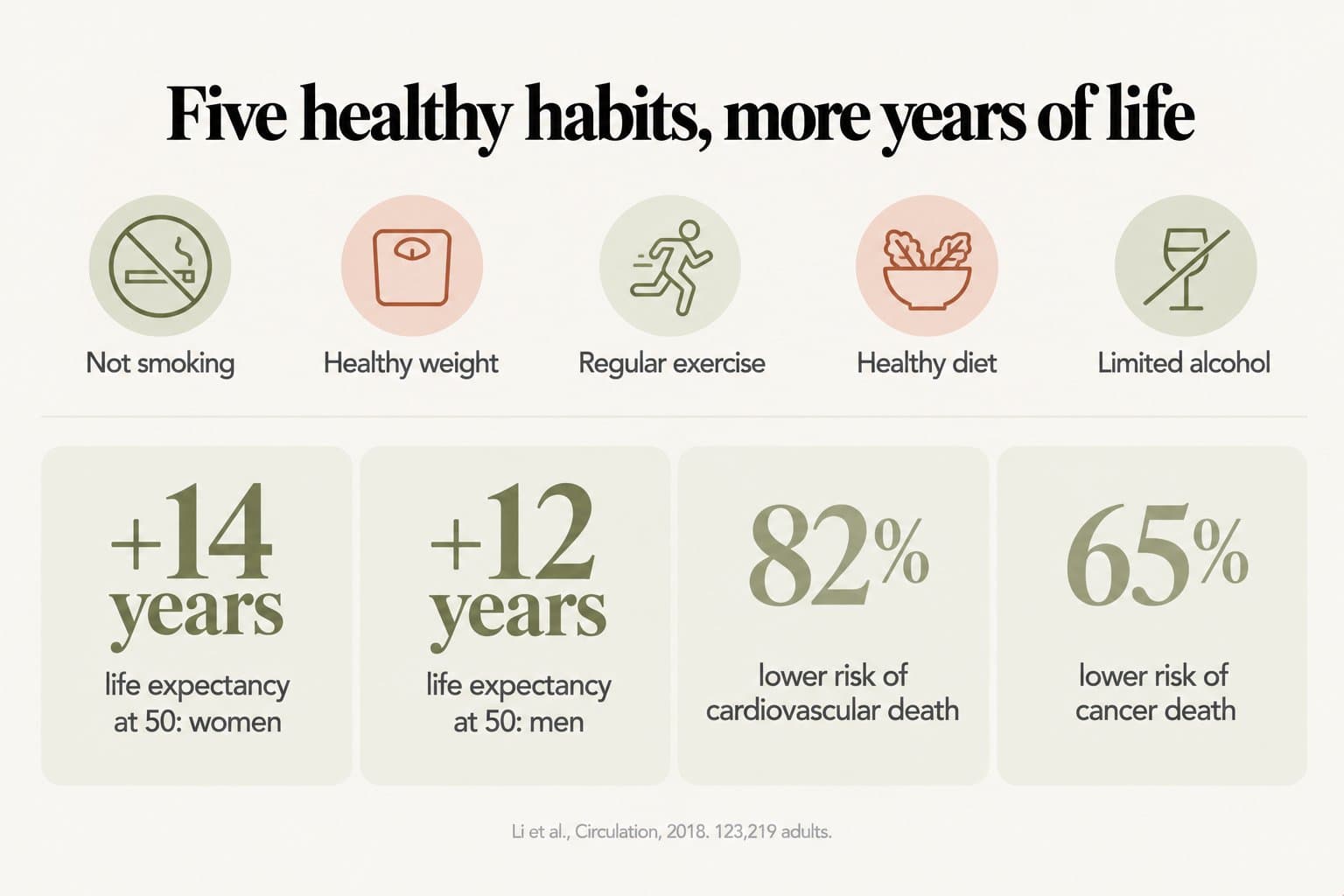
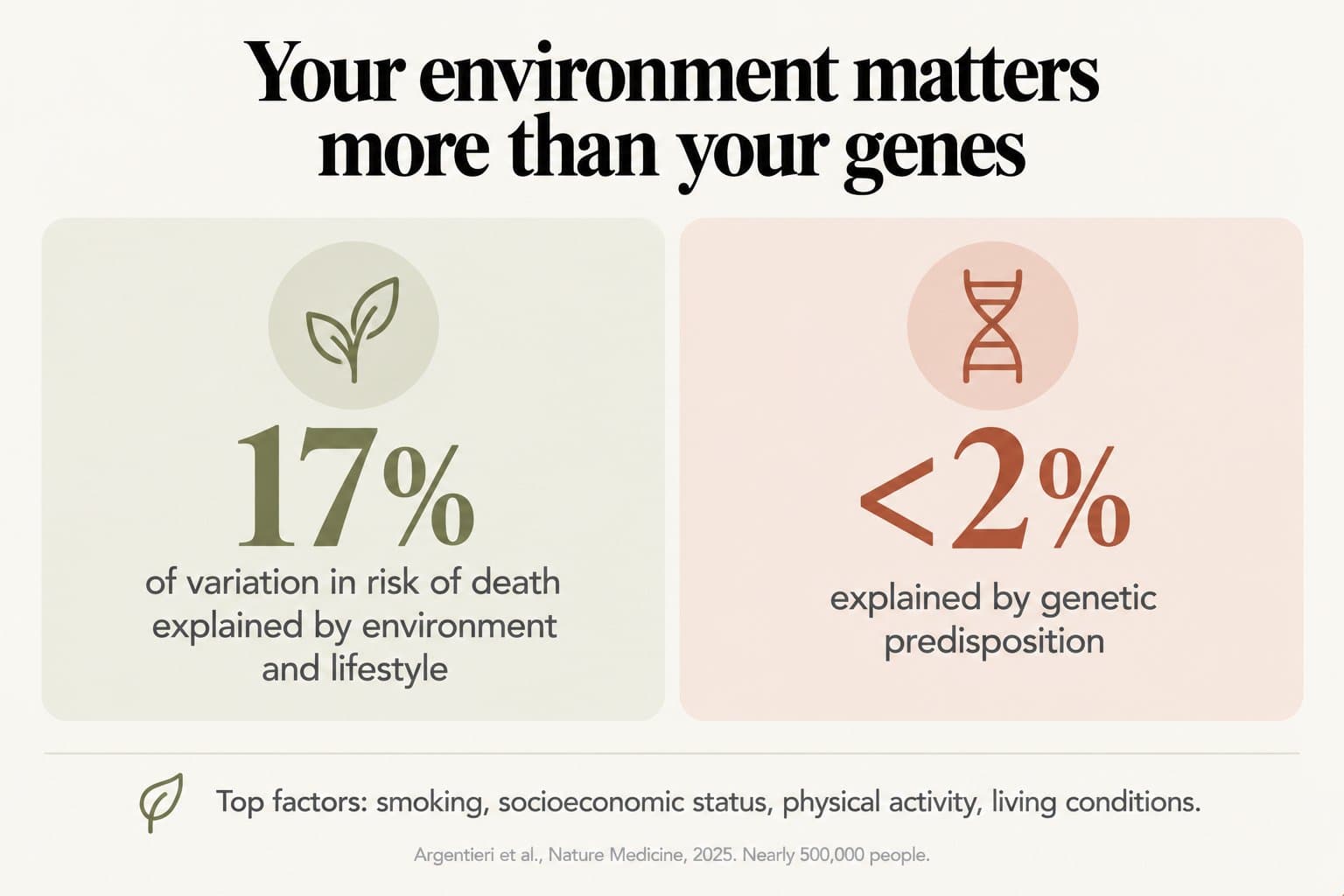
This section has explored the biology of ageing, from the 12 hallmarks to cutting-edge therapies such as cellular reprogramming and senolytics. Most of those therapies are still experimental. The good news is that everyday habits already act on many of the same biological processes, and the evidence for their benefits is far stronger. In a Harvard study of more than 123,000 adults, following five healthy habits (not smoking, a healthy weight, regular exercise, a healthy diet and limited alcohol) was linked to 14 more years of life expectancy at age 50 for women and 12 more for men. A 2025 Oxford study of nearly 500,000 people found that environmental and lifestyle factors explained 17% of the variation in risk of death, compared with less than 2% for genetic predisposition. At the biological level, exercise rebuilds mitochondria, with interval training increasing mitochondrial capacity by 69% in adults aged 65-80; moderate calorie restriction slowed the pace of ageing in a randomised trial; omega-3 slowed epigenetic clocks; and stopping smoking allows many smoking-related epigenetic changes to fade. This article connects the hallmarks of ageing to the habits that influence them, and offers a practical plan.
Key numbers
| Finding | Detail |
|---|---|
| Five healthy habits (Harvard, 123,219 adults) | 14 more years of life expectancy at 50 for women and 12 for men; 82% lower risk of cardiovascular death and 65% lower risk of cancer death |
| Environment vs genes (Oxford, nearly 500,000 people, 2025) | Environment and lifestyle explained 17% of variation in death risk; genetic predisposition less than 2% |
| Interval training and mitochondria | Mitochondrial capacity up 69% in adults aged 65-80 |
| Calorie restriction (CALERIE) | Pace of ageing slowed by 2-3% |
| Cardiorespiratory fitness (122,007 patients) | Elite vs low fitness: 80% lower risk of death |
What the evidence shows
Healthy habits add years. In a 2018 study in Circulation, Harvard researchers followed 78,865 women for 34 years and 44,354 men for 27 years. Those who followed all five low-risk habits, compared with none, were 74% less likely to die during the study, with 82% lower risk of cardiovascular death and 65% lower risk of cancer death. At age 50, their life expectancy was 14 years longer for women and 12 years longer for men. As nutrition professor Frank Hu noted, "adherence to healthy lifestyle habits is very low". (The study counted moderate drinking as low-risk; more recent evidence suggests that less alcohol is better: see Alcohol and Longevity.)
Environment matters more than genes. In a 2025 study in Nature Medicine, Oxford researchers analysed nearly 500,000 UK Biobank participants. Environmental factors, including lifestyle and living conditions, explained 17% of the variation in risk of death, compared with less than 2% for genetic predisposition. Smoking, socioeconomic status, physical activity and living conditions had the greatest impact, and 23 of the 25 key factors were modifiable. As senior author Cornelia van Duijn put it, the research shows "the profound health impact of exposures that can be changed either by individuals or through policies" (see The Genetics of Longevity).
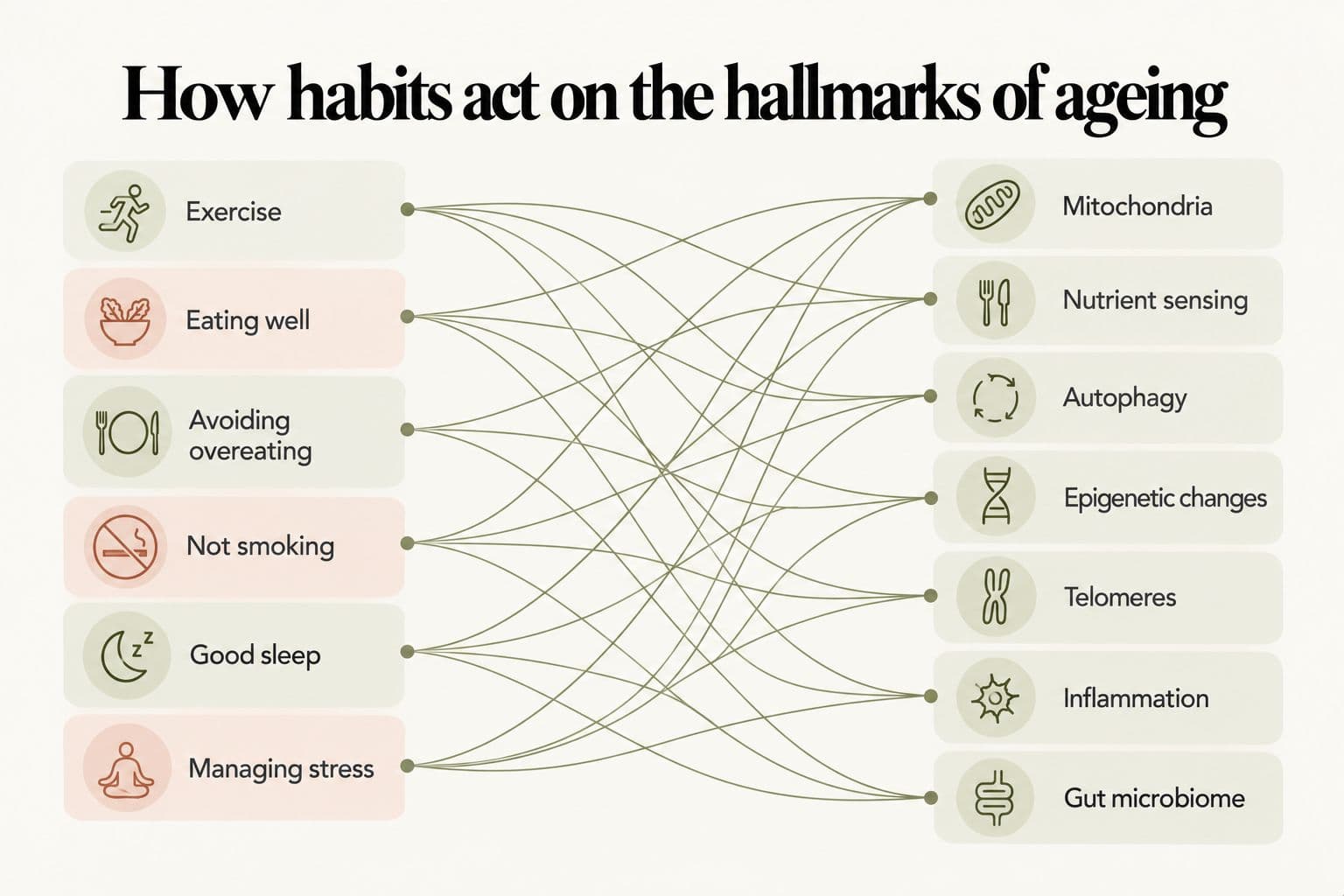
How habits act on the hallmarks. The hallmarks of ageing are interconnected, and so are the effects of healthy habits (see The Hallmarks of Ageing).
- Exercise: in a Mayo Clinic study, interval training increased mitochondrial capacity by 49% in younger and 69% in older adults (see Mitochondria and Ageing). Exercise activates AMPK, a key nutrient-sensing pathway (see Nutrient-Sensing Pathways), and in a study of 122,007 people, elite fitness was linked to 80% lower risk of death than low fitness.
- Eating less and eating well: in the CALERIE trial, eating about 12% fewer calories slowed the pace of ageing by 2-3% (see Calorie Restriction and Fasting). Avoiding constant eating supports autophagy (see Autophagy), and fibre and fermented foods support the gut microbiome (see The Gut Microbiome and Fermented Foods).
- Oily fish and omega-3: in the DO-HEALTH trial, daily omega-3 slowed several epigenetic clocks by about three months over three years in adults aged 70 and over (see Can You Reverse Your Biological Age?).
- Not smoking: smoking alters DNA methylation, and after quitting, many of these changes revert, most rapidly in the first two decades (see Epigenetics and Ageing).
- Managing stress and sleep: chronic caregiving stress was linked to shorter telomeres (see Telomeres and Ageing), and severe stress temporarily raises biological age. Poor sleep is a driver of chronic inflammation (see Inflammaging).
Habits and the hallmarks
| Habit | Hallmarks it acts on | Key evidence in this section |
|---|---|---|
| Regular exercise, including intervals and strength | Mitochondria, nutrient sensing, inflammation | 69% higher mitochondrial capacity in older adults |
| Avoiding overeating; a regular eating window | Nutrient sensing, autophagy | 2-3% slower pace of ageing with calorie restriction |
| Plant-rich, high-fibre diet with fermented foods | Gut microbiome, inflammation | Fermented foods lowered inflammatory proteins |
| Oily fish | Epigenetic changes, inflammation | About 3 months slower epigenetic ageing with omega-3 |
| Not smoking | Genomic instability, epigenetic changes | Smoking-related methylation changes revert after quitting |
| Good sleep and stress management | Inflammation, telomeres | Chronic stress linked to shorter telomeres |
| Limiting alcohol and excess sun | DNA damage, senescence | Fewer drivers of cellular damage |
Recommendations by scenario
| Scenario | What to do |
|---|---|
| Starting from scratch | Pick one habit, such as a daily 30-minute walk, and build from there |
| Already active | Add 1-2 sessions of intervals and 2 of strength training a week |
| Busy schedule | Short bouts of activity, a regular eating window and protecting sleep |
| Smoker | Stopping is the single most powerful change; seek support |
| Over 65 | Prioritise strength, protein and balance; don't restrict calories without advice |
| Interested in experimental therapies | Build the proven foundation first; join trials rather than self-experimenting |
Practical notes
The science of ageing is advancing rapidly, but the most powerful longevity tools available today are not new drugs. Not smoking, regular exercise, a healthy diet, healthy weight, good sleep, managing stress and limiting alcohol act on many hallmarks of ageing at once, and together they're linked to more than a decade of extra life. Start where you are, change one thing at a time, and track simple measures such as blood pressure, waist size, fitness and blood tests. Our Longevity Doctors can help you build a personalised plan based on your health, risks and goals, starting with the free longevity assessment.
- Li Y, et al. Impact of healthy lifestyle factors on life expectancies in the US population. Circulation, 2018;138(4):345-355.
- Argentieri MA, et al. Integrating the environmental and genetic architectures of aging and mortality. Nature Medicine, 2025;31(4):1016-1025.
- Robinson MM, et al. Enhanced protein translation underlies improved metabolic and physical adaptations to different exercise training modes in young and old humans. Cell Metabolism, 2017;25(3):581-592.
- Waziry R, et al. Effect of long-term caloric restriction on DNA methylation measures of biological aging in healthy adults from the CALERIE trial. Nature Aging, 2023;3(3):248-257.
- Bischoff-Ferrari HA, et al. Individual and additive effects of vitamin D, omega-3 and exercise on DNA methylation clocks of biological aging in older adults from the DO-HEALTH trial. Nature Aging, 2025;5(3):376-385.
- Mandsager K, et al. Association of cardiorespiratory fitness with long-term mortality among adults undergoing exercise treadmill testing. JAMA Network Open, 2018;1(6):e183605.
Free longevity assessment
Ready for a personalised
longevity plan?
Take the free Aevum Protocol assessment to see how your longevity science and 6 other longevity domains are performing — and get a personalised 90-day plan.
Take the free assessment