Longevity Science
Inflammaging:
How Chronic Low-Grade Inflammation Drives Ageing
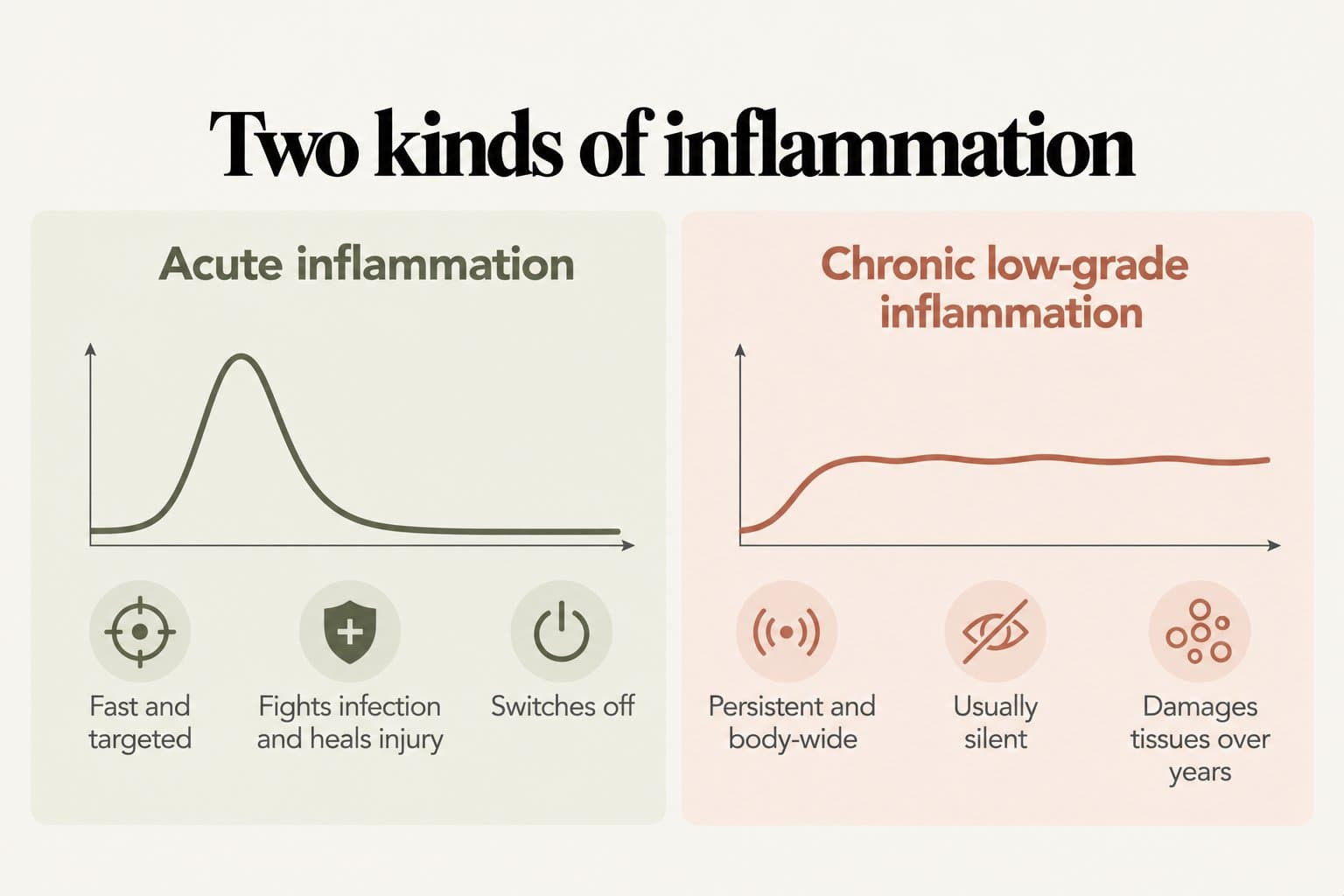
Inflammation is the body's emergency response: it fights infection and repairs injury, then switches off. But with age, many people develop a persistent, low-level inflammation that never fully switches off. Italian scientist Claudio Franceschi called this "inflamm-aging" in 2000, and in 2023 chronic inflammation became one of the 12 hallmarks of ageing. It matters because inflammation-related diseases, including heart disease, stroke, cancer, diabetes, kidney disease, fatty liver disease and neurodegenerative conditions, account for more than 50% of all deaths worldwide. Inflammaging is driven by senescent cells, an ageing immune system, excess body fat, an imbalanced gut microbiome, inactivity, poor diet, stress and poor sleep. A 2025 study added an important twist: it found the typical inflammaging pattern in people from Italy and Singapore, but not in two non-industrialised populations in Bolivia and Malaysia. This suggests inflammaging may be strongly shaped by modern lifestyles rather than an inevitable part of ageing. Researchers are now building "inflammatory clocks" that use immune proteins to predict disease, frailty and heart ageing. This article explains what inflammaging is, what causes it and what you can do about it.
Key numbers
| Finding | Detail |
|---|---|
| Inflammation-related diseases (Furman et al., Nature Medicine, 2019) | More than 50% of all deaths worldwide |
| Hallmarks of ageing (2023) | Chronic inflammation added as a separate hallmark |
| Inflammaging across populations (Franck et al., 2025) | Found in Italy and Singapore; not found in Tsimane (Bolivia) or Orang Asli (Malaysia); 19 cytokines measured |
| Inflammatory ageing clock, iAge (Stanford, 2021) | Developed in 1,001 people aged 8-96; tracks multimorbidity, frailty and cardiovascular ageing |
Acute vs chronic inflammation
Acute inflammation is fast, targeted and short-lived. When you cut your finger or catch an infection, immune cells rush in, release signalling molecules called cytokines, clear the threat and then switch the response off. Redness, swelling, heat and pain are its classic signs.
Chronic low-grade inflammation is different. It's persistent, body-wide and usually silent: there are no obvious symptoms, but blood tests may show slightly raised markers such as C-reactive protein (CRP) or interleukin-6 (IL-6). Over years, this smouldering inflammation damages blood vessels, tissues and organs.
What drives inflammaging
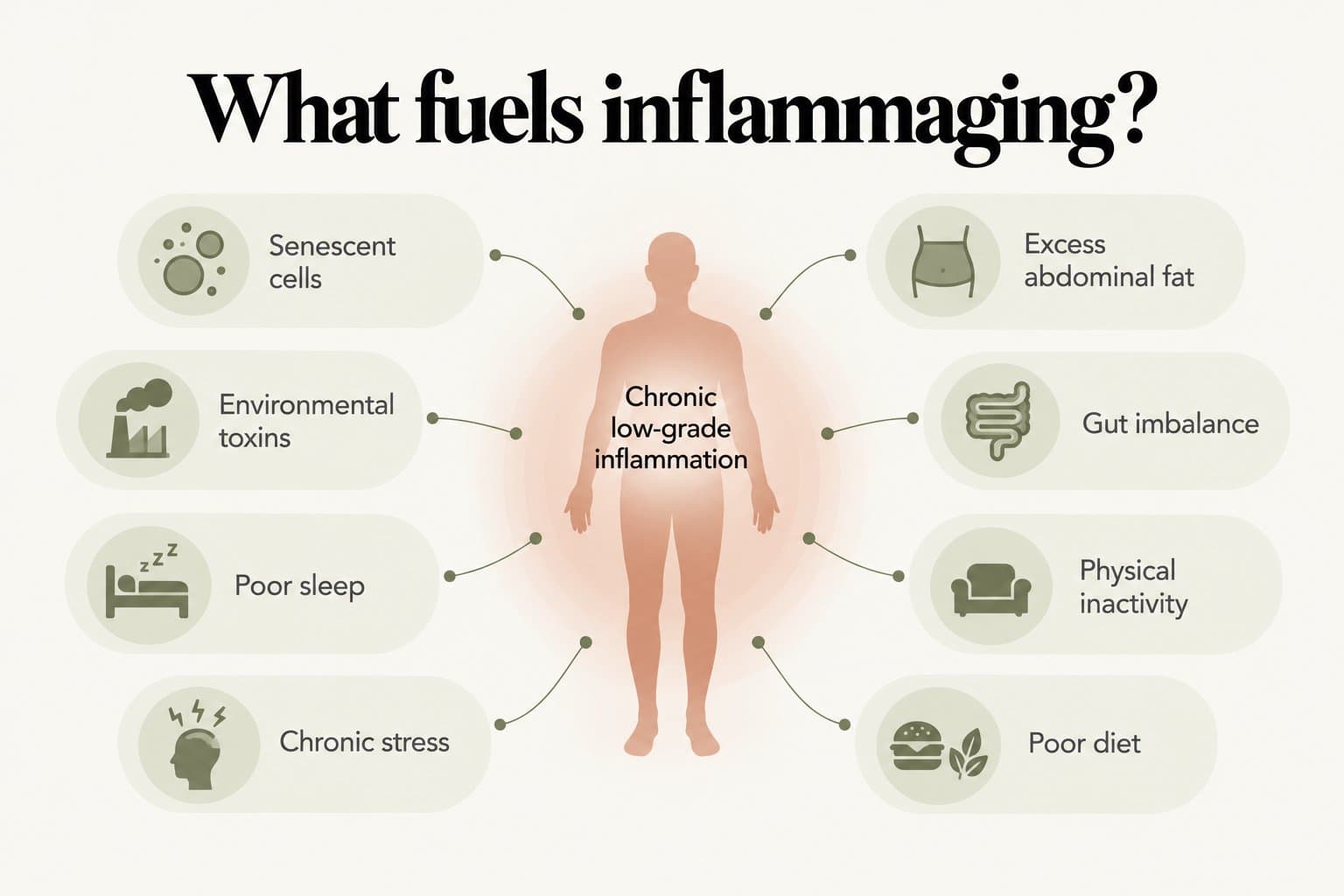
Inflammaging has many sources, which is why it's classed as an "integrative" hallmark that reflects damage elsewhere (see The Hallmarks of Ageing):
- Senescent cells, which release inflammatory signals (see Cellular Senescence).
- An ageing immune system that clears threats less efficiently but stays partly "switched on".
- Excess body fat, especially around the abdomen, which releases inflammatory molecules.
- Gut dysbiosis and a leaky gut barrier (see The Gut Microbiome and Fermented Foods).
- Damaged mitochondria and cellular debris, which the immune system can mistake for danger signals (see Mitochondria and Ageing).
A 2019 review in Nature Medicine by David Furman and colleagues identified the lifestyle and environmental drivers of chronic inflammation: chronic infections, physical inactivity, poor diet, environmental and industrial toxicants, psychological stress, social adversity and disrupted sleep.
What the research shows
Inflammation underlies the leading causes of death. Furman and colleagues estimated that more than 50% of all deaths worldwide are attributable to inflammation-related diseases, "such as ischemic heart disease, stroke, cancer, diabetes mellitus, chronic kidney disease, non-alcoholic fatty liver disease (NAFLD) and autoimmune and neurodegenerative conditions". Trials have shown that blocking specific inflammatory pathways can reduce heart attacks and strokes in high-risk people, supporting a causal role (see Inflammation and Heart Disease).
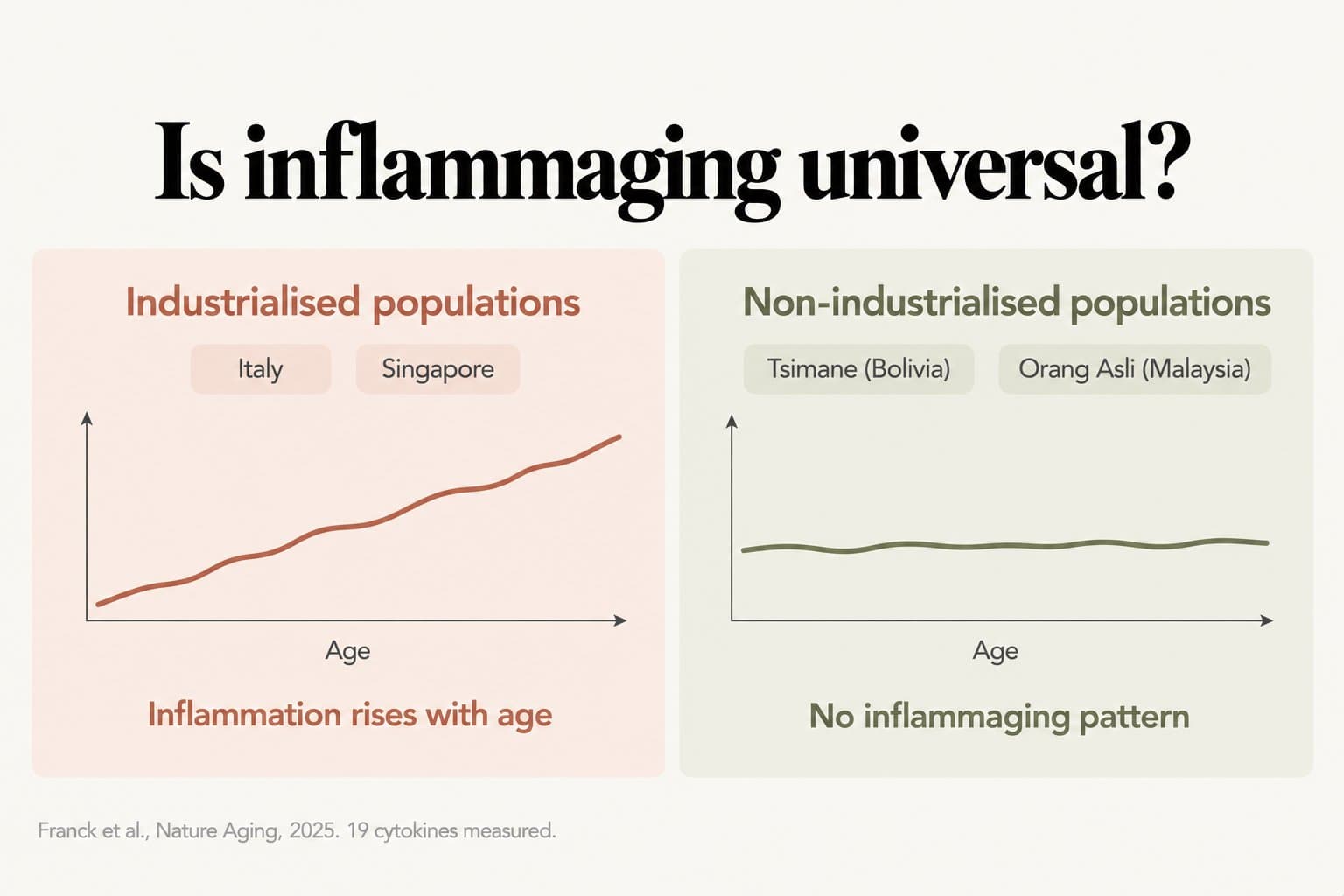
Inflammaging may not be universal. In a 2025 study in Nature Aging, researchers led by Maximilien Franck at the University of Sherbrooke, Canada, measured 19 cytokines in four populations: older adults in Italy and Singapore, and two non-industrialised groups, the Tsimane of the Bolivian Amazon and the Orang Asli of Peninsular Malaysia. In the industrialised populations, inflammation rose with age and was linked to chronic diseases such as stroke, cardiovascular disease and cancer. In the non-industrialised groups, which have high rates of infection but low rates of age-related chronic disease, the same inflammaging pattern wasn't seen. As co-author Michael Gurven put it, the findings reveal "more flexibility in population aging than previously recognized". The results suggest that modern lifestyles, including obesity, inactivity and processed diets, may be key drivers of inflammaging.
Measuring inflammatory age. In 2021, researchers at Stanford University developed an inflammatory ageing clock, iAge, using blood immune proteins from 1,001 people aged 8 to 96. iAge tracked multimorbidity, frailty and cardiovascular ageing, and was linked to exceptional longevity in a separate group of centenarians. The protein CXCL9 was a major contributor, and the researchers suggested it as a potential target to prevent age-related damage to blood vessels. Such clocks remain research tools for now.
Why this matters for longevity
Inflammaging links many hallmarks of ageing to many diseases: senescent cells, faulty mitochondria and gut imbalance fuel it, and it in turn drives heart disease, diabetes, dementia, frailty and cancer. Because it's influenced so strongly by lifestyle, it's also one of the most modifiable parts of ageing. The 2025 population study is a reminder that the way many people age in industrialised societies, with rising inflammation and multiple chronic diseases, isn't biologically inevitable.
Practical notes
The most effective ways to lower chronic inflammation are lifestyle-based. Stay physically active and reduce sitting time, keep a healthy weight and waist size, eat a mostly plant-based, high-fibre diet with plenty of vegetables, fruit, legumes, whole grains, nuts and fish (see Eating Patterns for Longevity), limit ultra-processed foods (see Ultra-Processed Foods), don't smoke, limit alcohol, prioritise sleep (see Sleep Hygiene) and find ways to manage chronic stress. Treat gum disease and other chronic infections, and keep conditions such as diabetes well controlled. A high-sensitivity CRP test can give a rough picture of inflammation, but it should be interpreted by your doctor alongside other risk factors. Our Longevity Doctors can help you assess and reduce your inflammatory risk, starting with the free longevity assessment.
- Franceschi C, et al. Inflamm-aging: an evolutionary perspective on immunosenescence. Annals of the New York Academy of Sciences, 2000;908:244-254.
- Furman D, et al. Chronic inflammation in the etiology of disease across the life span. Nature Medicine, 2019;25(12):1822-1832.
- Franck M, et al. Nonuniversality of inflammaging across human populations. Nature Aging, 2025.
- Sayed N, et al. An inflammatory aging clock (iAge) based on deep learning tracks multimorbidity, immunosenescence, frailty and cardiovascular aging. Nature Aging, 2021;1(7):598-615.
- López-Otín C, et al. Hallmarks of aging: an expanding universe. Cell, 2023;186(2):243-278.
Free longevity assessment
Is silent inflammation
quietly ageing you?
Take the free Aevum Protocol assessment to see how your longevity science and 6 other longevity domains are performing — and get a personalised 90-day plan.
Take the free assessmentKeep reading