Longevity Science
Mitochondria and Ageing:
Why Your Cells' Power Plants Matter for a Long Life
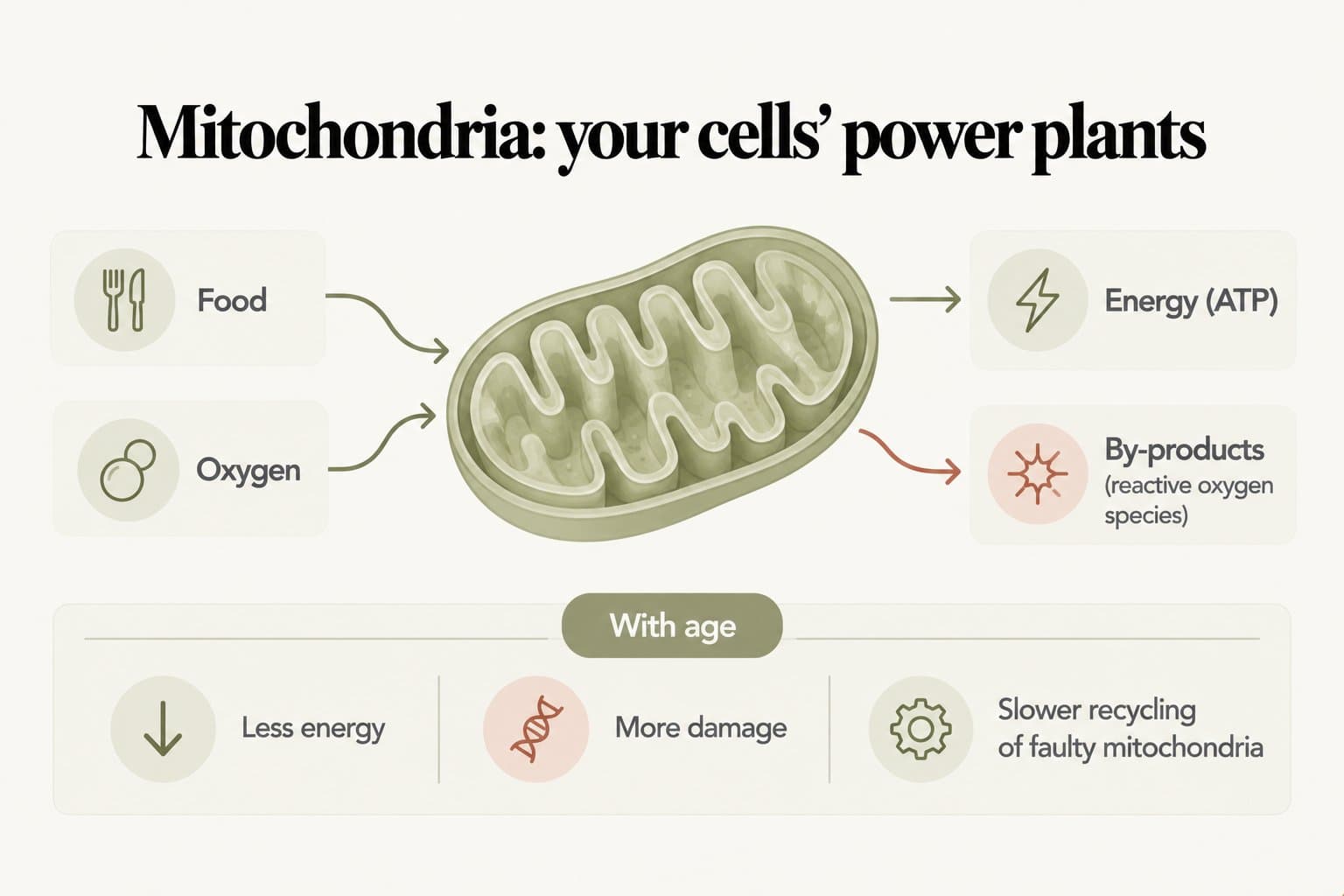
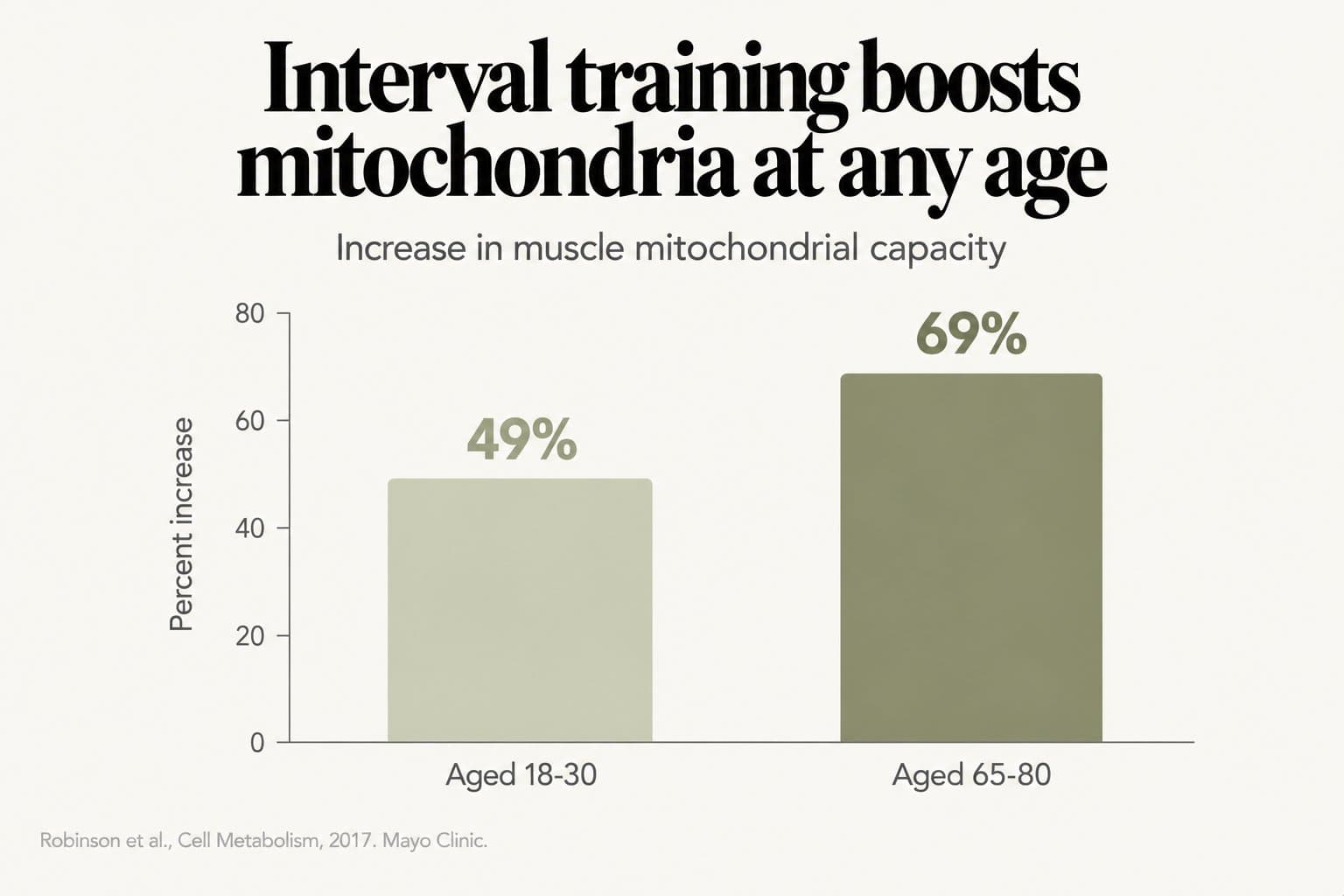
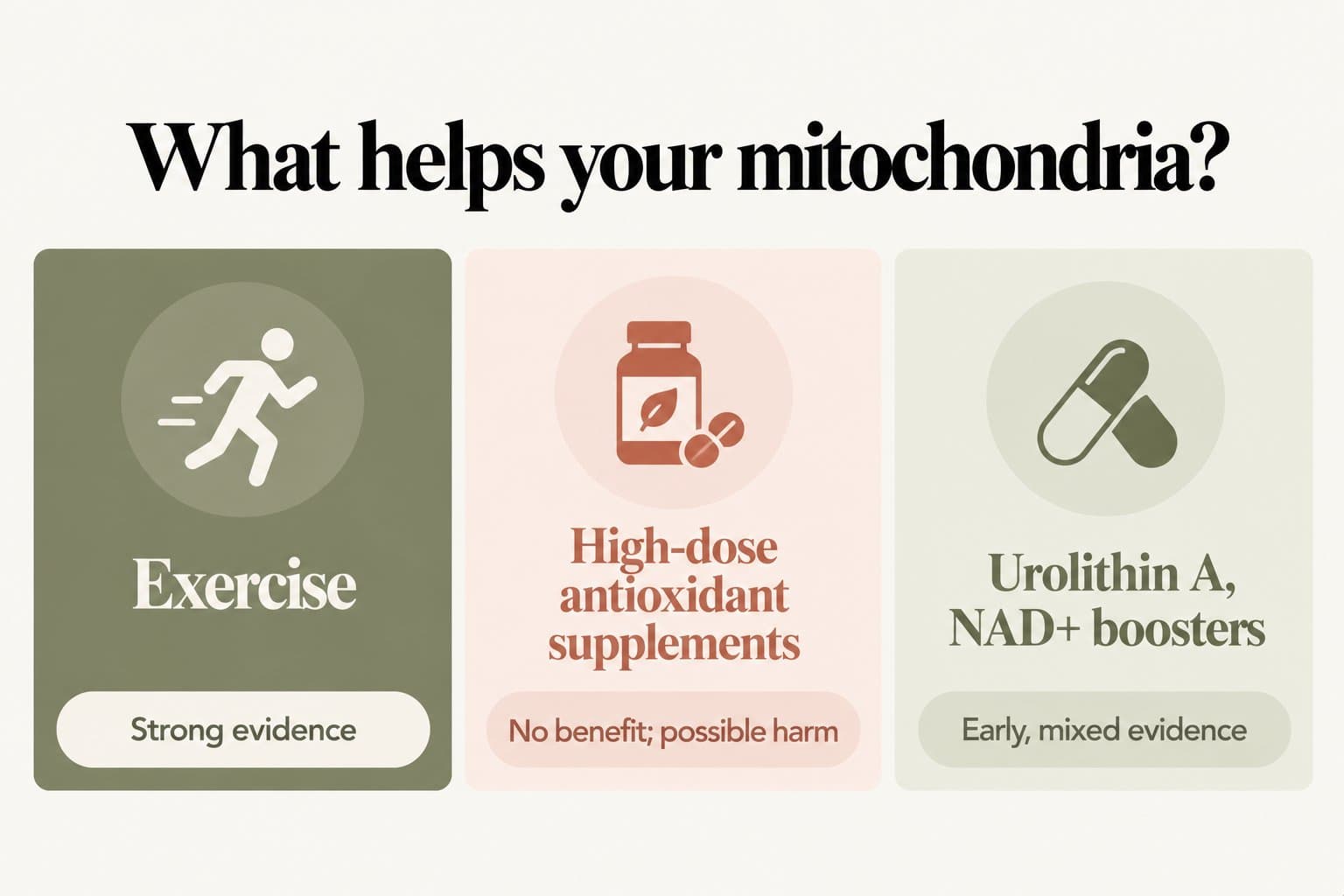
Mitochondria are the power plants of your cells, turning food and oxygen into the energy that powers everything from muscle contraction to thinking. With age, mitochondria become less efficient, produce less energy and generate more damaging by-products, and the systems that recycle faulty mitochondria slow down. Mitochondrial dysfunction is one of the 12 hallmarks of ageing. For decades, the leading idea was that "free radicals" from mitochondria cause ageing, and that antioxidants could slow it. That theory has been substantially revised: a Cochrane review of 78 trials with nearly 300,000 people found no evidence that antioxidant supplements prevent death, and beta-carotene, vitamin E and high-dose vitamin A may slightly increase it. What does reliably improve mitochondria is exercise. In a Mayo Clinic study, high-intensity interval training increased mitochondrial capacity by 49% in younger adults and 69% in adults aged 65-80. Newer compounds, such as urolithin A, that aim to help cells recycle damaged mitochondria are being tested, but results in humans are mixed so far. This article explains how mitochondria age and what the evidence says about keeping them healthy.
Key numbers
| Finding | Detail |
|---|---|
| Interval training and mitochondria (Robinson et al., 2017) | Mitochondrial capacity up 49% in adults aged 18-30 and 69% in adults aged 65-80 |
| Antioxidant supplements (Cochrane, 78 trials, 296,707 people) | No evidence of benefit; beta-carotene, vitamin E and higher-dose vitamin A linked to higher mortality |
| Mitochondrial DNA mutations in mice (Trifunovic et al., 2004) | 3-5 times more mutations led to premature ageing and shorter lifespan |
| Urolithin A (ENERGIZE trial, 66 adults aged 65-90, 4 months) | Main walking outcome not better than placebo; muscle endurance improved at 2 months |
What mitochondria do
Mitochondria are small structures inside almost every cell. They:
- Produce energy: they use oxygen to convert nutrients into ATP, the cell's energy currency. Energy-hungry tissues such as muscle, heart and brain contain especially large numbers.
- Have their own DNA: a small circle of DNA, inherited from your mother, separate from the DNA in the cell's nucleus.
- Generate reactive oxygen species (ROS): by-products of energy production that can damage DNA, proteins and fats, but at low levels also act as useful signals.
- Control cell survival and metabolism: they help regulate cell death, calcium levels and the response to nutrients.
Cells keep mitochondria healthy by constantly building new ones, fusing and dividing them, and recycling damaged ones through a form of autophagy called mitophagy (see Autophagy).
How mitochondria change with age
With age, mitochondria tend to become fewer and less efficient, mutations accumulate in mitochondrial DNA, and mitophagy declines, so damaged mitochondria aren't cleared as effectively. The result is less energy, especially in muscle and brain, and more signals that promote inflammation and cellular senescence (see Cellular Senescence). Mitochondrial dysfunction is one of the "antagonistic" hallmarks: some mitochondrial stress is a useful signal, but chronic dysfunction becomes harmful (see The Hallmarks of Ageing).
What the research shows
Mitochondrial DNA damage can drive ageing in mice. In a 2004 study in Nature, researchers engineered "mutator" mice with a faulty version of the enzyme that copies mitochondrial DNA. These mice had three to five times more mitochondrial DNA mutations and developed premature signs of ageing, including weight loss, hair loss, curvature of the spine, osteoporosis, anaemia, reduced fertility and heart enlargement, and they died younger. This gave "a causative link between mtDNA mutations and ageing phenotypes in mammals".
The free radical theory has been revised. In the 1950s, scientists proposed that ageing results from damage by free radicals, and in the 1970s the theory focused on mitochondria. If that were the whole story, antioxidants should slow ageing. But in humans, antioxidant supplements haven't delivered. A 2012 Cochrane review of 78 randomised trials with 296,707 participants found "no evidence to support antioxidant supplements for primary or secondary prevention". In the highest-quality trials, beta-carotene and vitamin E, and possibly higher doses of vitamin A, slightly increased mortality. One explanation is that low levels of ROS act as signals that trigger the body's own repair and defence systems, so blocking them may do more harm than good.
Exercise rebuilds mitochondria, even in older age. A 2017 study from the Mayo Clinic, published in Cell Metabolism, randomly assigned 72 adults, aged 18-30 or 65-80, to high-intensity interval cycling, strength training or a combination. Interval training increased mitochondrial capacity by 49% in the younger group and 69% in the older group, and improved insulin sensitivity. Strength training was better for building muscle. As lead researcher Sreekumaran Nair advised, "If people have to pick one exercise, I would recommend high-intensity interval training, but I think it would be more beneficial if they could do 3-4 days of interval training and then a couple days of strength training."
Compounds targeting mitochondria: early days. Several compounds aim to boost mitochondrial function. Urolithin A, produced by gut bacteria from compounds in pomegranates and some nuts, is thought to stimulate mitophagy. In the ENERGIZE trial, 66 sedentary adults aged 65-90 took 1,000 mg of urolithin A a day or placebo for 4 months. The main outcome, walking distance in 6 minutes, didn't improve significantly compared with placebo. Muscle endurance improved more than with placebo at 2 months, but the difference was no longer significant at 4 months. The trial was funded by the manufacturer. NAD+ boosters, which target mitochondrial metabolism, also have limited human evidence (see Longevity Supplements).
Why this matters for longevity
Mitochondria sit at the crossroads of energy, metabolism and inflammation, so their decline affects how strong, fit and mentally sharp we feel as we age. The research also offers an important lesson: simple theories of ageing, such as "free radicals cause ageing, so antioxidants will prevent it", can fail when tested in people. The most effective way to keep mitochondria healthy is something the body already responds to: physical activity. Nutrient-sensing pathways, which are closely linked to mitochondrial health, are covered in Nutrient-Sensing Pathways.
Practical notes
Exercise is the best-proven way to support your mitochondria at any age. Combine aerobic exercise, including some higher-intensity intervals if your doctor agrees, with strength training on two or more days a week. Avoid long periods of sitting, and keep a healthy weight. Get antioxidants from food, such as vegetables, fruit, nuts and spices, rather than high-dose supplements, which haven't been shown to help and may cause harm (see Eating Patterns for Longevity). Treat claims about mitochondria-boosting supplements with caution until larger, independent trials report. Our Longevity Doctors can help you design an exercise plan suited to your health and fitness, starting with the free longevity assessment.
- Robinson MM, et al. Enhanced protein translation underlies improved metabolic and physical adaptations to different exercise training modes in young and old humans. Cell Metabolism, 2017;25(3):581-592.
- Bjelakovic G, et al. Antioxidant supplements for prevention of mortality in healthy participants and patients with various diseases. Cochrane Database of Systematic Reviews, 2012;(3):CD007176.
- Trifunovic A, et al. Premature ageing in mice expressing defective mitochondrial DNA polymerase. Nature, 2004;429(6990):417-423.
- Liu S, et al. Effect of urolithin A supplementation on muscle endurance and mitochondrial health in older adults: a randomized clinical trial. JAMA Network Open, 2022;5(1):e2144279.
- López-Otín C, et al. Hallmarks of aging: an expanding universe. Cell, 2023;186(2):243-278.
Free longevity assessment
When did you last push yourself
in a workout?
Take the free Aevum Protocol assessment to see how your longevity science and 6 other longevity domains are performing — and get a personalised 90-day plan.
Take the free assessmentKeep reading