Longevity Science
Nutrient-Sensing Pathways:
How mTOR, Insulin, AMPK and Sirtuins Link Food to Ageing
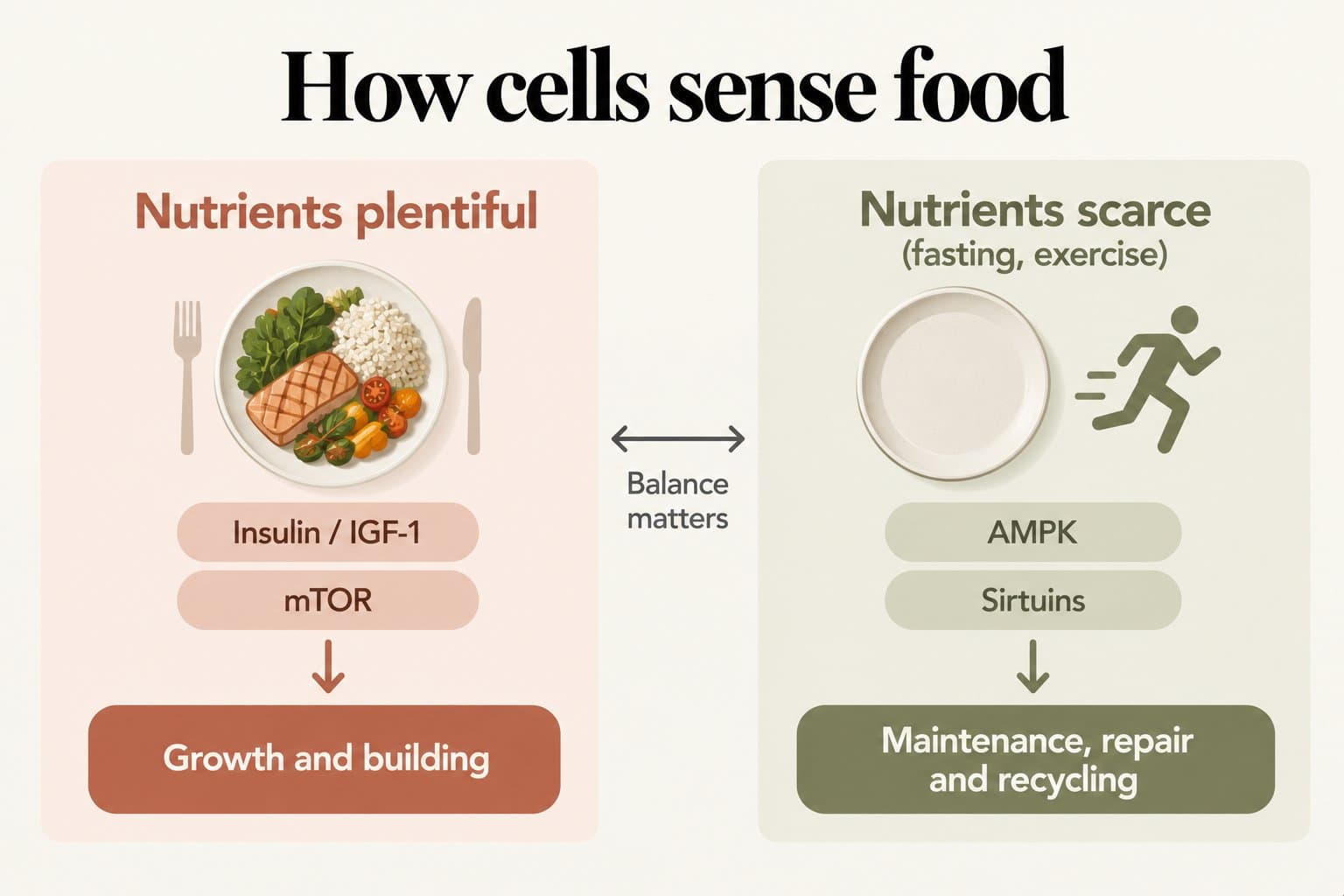
Every cell constantly asks a simple question: is food plentiful or scarce? The answer comes from a network of nutrient-sensing pathways, chiefly insulin/IGF-1, mTOR, AMPK and sirtuins. When nutrients are abundant, insulin/IGF-1 and mTOR signals tell cells to grow and divide. When nutrients are scarce, AMPK and sirtuins switch cells towards maintenance, repair and recycling. These pathways turned out to be among the most powerful levers on ageing ever discovered. In 1993, Cynthia Kenyon showed that a single mutation in an insulin-like signalling gene allowed worms to live more than twice as long. In 2009, the drug rapamycin, which blocks mTOR, became the first drug shown to extend lifespan in mammals, by 14% in female and 9% in male mice, even when started in later life. In people, an Ecuadorian community with Laron syndrome, a genetic condition that blocks growth hormone signalling and lowers IGF-1, has remarkably low rates of diabetes and cancer. Deregulated nutrient sensing is one of the 12 hallmarks of ageing, and these pathways help explain why calorie restriction, fasting and exercise have such broad effects on health. This article explains how the pathways work and what they mean for you.
Key numbers
| Finding | Detail |
|---|---|
| daf-2 mutation in worms (Kenyon et al., 1993) | More than doubled lifespan, then the largest increase reported in any organism |
| Rapamycin in mice (Harrison et al., 2009) | Started at 600 days (about 60 in human terms); lifespan up 14% in females and 9% in males; seen at 3 sites |
| Laron syndrome in Ecuador (99 people, over 2 decades) | No diabetes and only one case of cancer, compared with much higher rates in relatives |
| Calorie restriction in humans (CALERIE) | About 12% fewer calories over 2 years improved cardiometabolic risk factors |
The four main pathways
Insulin and IGF-1: the "plenty" signal. After a meal, insulin helps cells take in glucose. Insulin-like growth factor 1 (IGF-1), produced mainly in the liver in response to growth hormone, drives growth. Together they signal abundance. Chronically high insulin, as in insulin resistance, is linked to type 2 diabetes, heart disease and some cancers (see Insulin Resistance).
mTOR: the growth controller. mTOR (mechanistic target of rapamycin) senses amino acids from protein, as well as insulin and energy levels, and switches on protein building and cell growth. When mTOR is active, autophagy, the cell's recycling system, is switched down. mTOR is essential for building muscle, but constant high activity is thought to speed ageing (see Autophagy).
AMPK: the energy gauge. AMPK is activated when cellular energy is low, for example during exercise or fasting. It switches on energy-producing and repair processes, encourages new mitochondria and dampens mTOR (see Mitochondria and Ageing). The diabetes drug metformin activates AMPK, among other effects.
Sirtuins: the repair enzymes. Sirtuins are enzymes that depend on NAD+, a molecule linked to energy metabolism, and help regulate DNA repair, inflammation and metabolism. They became famous through claims about resveratrol and NAD+ boosters, but human evidence for supplements targeting them is limited (see Longevity Supplements).
Why these pathways affect ageing
From an evolutionary point of view, growth and reproduction are prioritised when food is plentiful, while repair and survival are prioritised when it's scarce. In modern life, with constant access to calorie-dense food, the "plenty" signals can be switched on almost all the time. Over decades, this may favour growth over maintenance, contributing to damage build-up. That's why deregulated nutrient sensing is classed as an "antagonistic" hallmark of ageing: these signals are essential, but become harmful when chronically excessive (see The Hallmarks of Ageing).
What the research shows
Worms: one gene, twice the lifespan. In 1993, Cynthia Kenyon and colleagues at the University of California, San Francisco, reported in Nature that mutations in a gene called daf-2 allowed active, fertile worms to "live more than twice as long as wild type", the largest increase then reported in any organism. The effect required a second gene, daf-16. daf-2 was later found to encode the worm's version of the insulin/IGF-1 receptor. This discovery showed that ageing is regulated by genes, not just the result of random wear and tear.
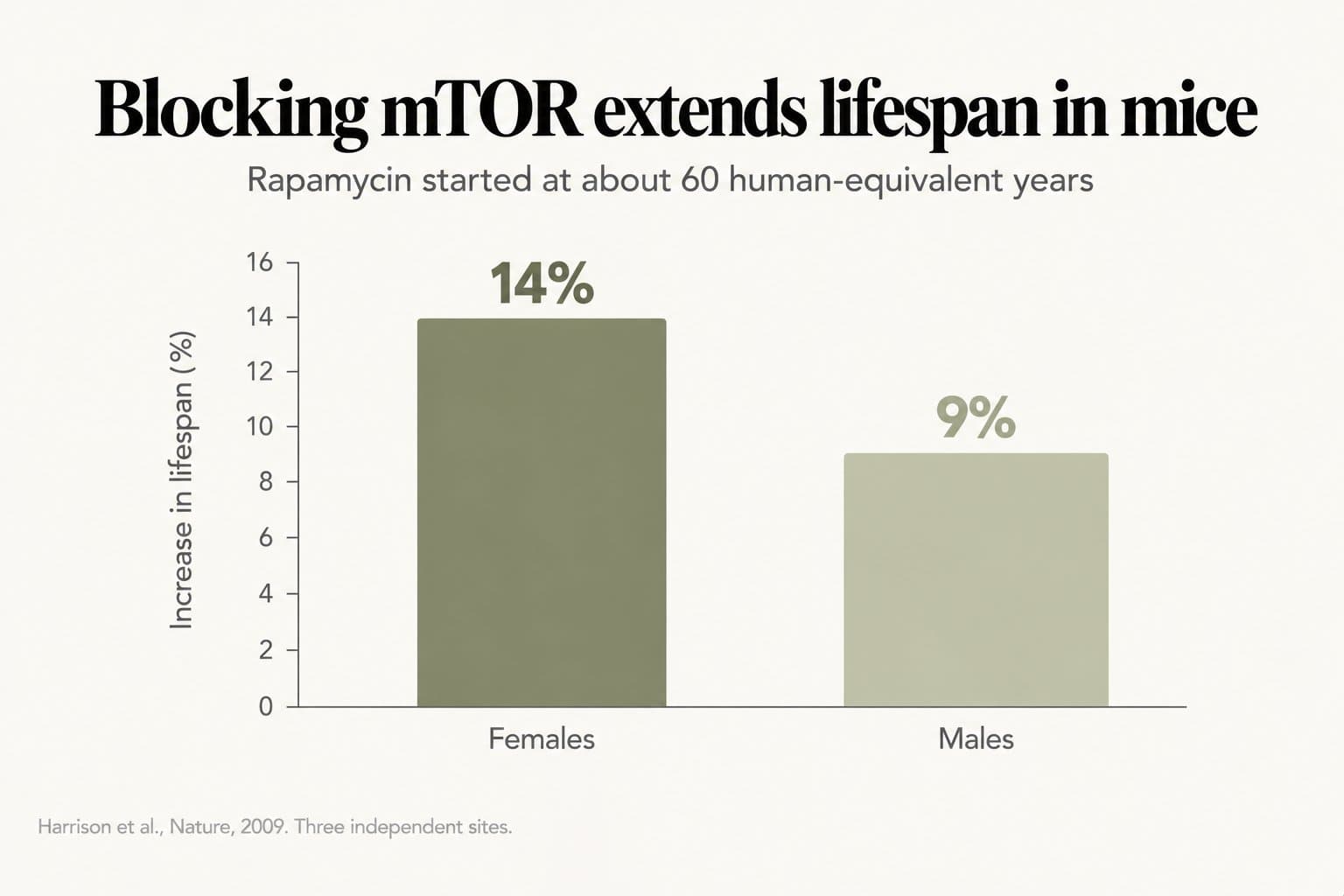
Mice: rapamycin extends lifespan. In 2009, the US National Institute on Aging's Interventions Testing Program reported in Nature that rapamycin, which blocks mTOR, extended lifespan in genetically diverse mice at three independent sites. Even though treatment started at 600 days of age, roughly equivalent to 60 human years, lifespan increased by 14% in females and 9% in males. It was the first evidence that blocking mTOR could extend lifespan in a mammal. Rapamycin has significant side effects in people, and its use for longevity remains experimental.
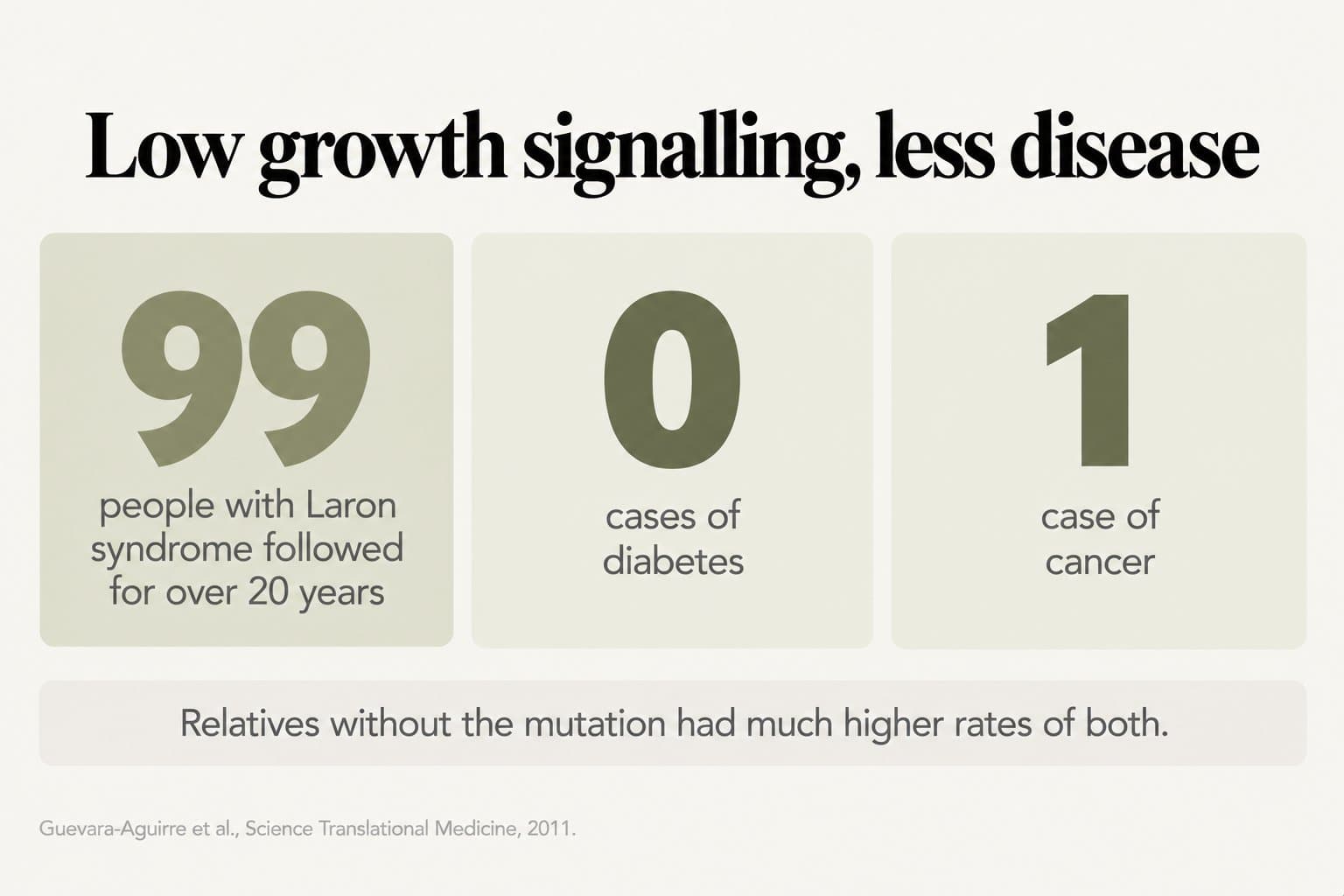
Humans: low growth signalling and protection from disease. In southern Ecuador, a community of people with Laron syndrome carries a mutation in the growth hormone receptor, which leaves them very short with very low IGF-1. In a 2011 study led by Jaime Guevara-Aguirre and Valter Longo, researchers followed 99 people with the condition for more than two decades. None developed diabetes and only one developed cancer, while their relatives had much higher rates of both. As Longo put it: "None of them ever developed diabetes. And only one got cancer." They didn't live longer overall, partly because of deaths from accidents and alcohol, so the findings show protection from disease rather than longer life.
Calorie restriction and exercise act on these pathways. Calorie restriction lowers insulin and growth-factor signalling and dampens mTOR in animals, which is one explanation for its effects on lifespan. In humans, the CALERIE trial found that eating about 12% fewer calories for two years improved blood pressure, LDL cholesterol, insulin sensitivity and inflammation (see Calorie Restriction and Fasting). Exercise activates AMPK and improves insulin sensitivity.
Why this matters for longevity
Nutrient-sensing pathways are among the most promising targets in ageing research because they're conserved from yeast to humans and can be influenced by diet, exercise and drugs. But they also involve trade-offs. mTOR and IGF-1 are needed for muscle growth, wound healing and immune function, and in older adults, low muscle mass is a major risk. Simply suppressing growth signals isn't the goal: the aim is a healthy balance, with periods of "plenty" for building and periods of "scarcity" for repair.
Practical notes
You can influence your nutrient-sensing pathways with everyday habits. Avoid habitual overeating and keep a healthy weight, limit sugar and refined carbohydrates to keep insulin in check (see Sugar and Refined Carbohydrates), consider a regular eating window if it suits you (see Eating Windows and Longevity), and exercise regularly. Older adults shouldn't cut back on protein, which supports muscle (see Protein in the Sri Lankan Diet). Drugs such as rapamycin and metformin that act on these pathways aren't proven longevity treatments and shouldn't be taken for this purpose outside research or specialist care. Our Longevity Doctors can help you find the right balance for your age and health, starting with the free longevity assessment.
- Kenyon C, et al. A C. elegans mutant that lives twice as long as wild type. Nature, 1993;366(6454):461-464.
- Harrison DE, et al. Rapamycin fed late in life extends lifespan in genetically heterogeneous mice. Nature, 2009;460(7253):392-395.
- Guevara-Aguirre J, et al. Growth hormone receptor deficiency is associated with a major reduction in pro-aging signaling, cancer, and diabetes in humans. Science Translational Medicine, 2011;3(70):70ra13.
- Kraus WE, et al. 2 years of calorie restriction and cardiometabolic risk (CALERIE). The Lancet Diabetes & Endocrinology, 2019;7(9):673-683.
- López-Otín C, et al. Hallmarks of aging: an expanding universe. Cell, 2023;186(2):243-278.
Free longevity assessment
Does your body ever get
a break from plenty?
Take the free Aevum Protocol assessment to see how your longevity science and 6 other longevity domains are performing — and get a personalised 90-day plan.
Take the free assessmentKeep reading