Longevity Science
Autophagy:
The Cell's Recycling System and What It Means for Ageing
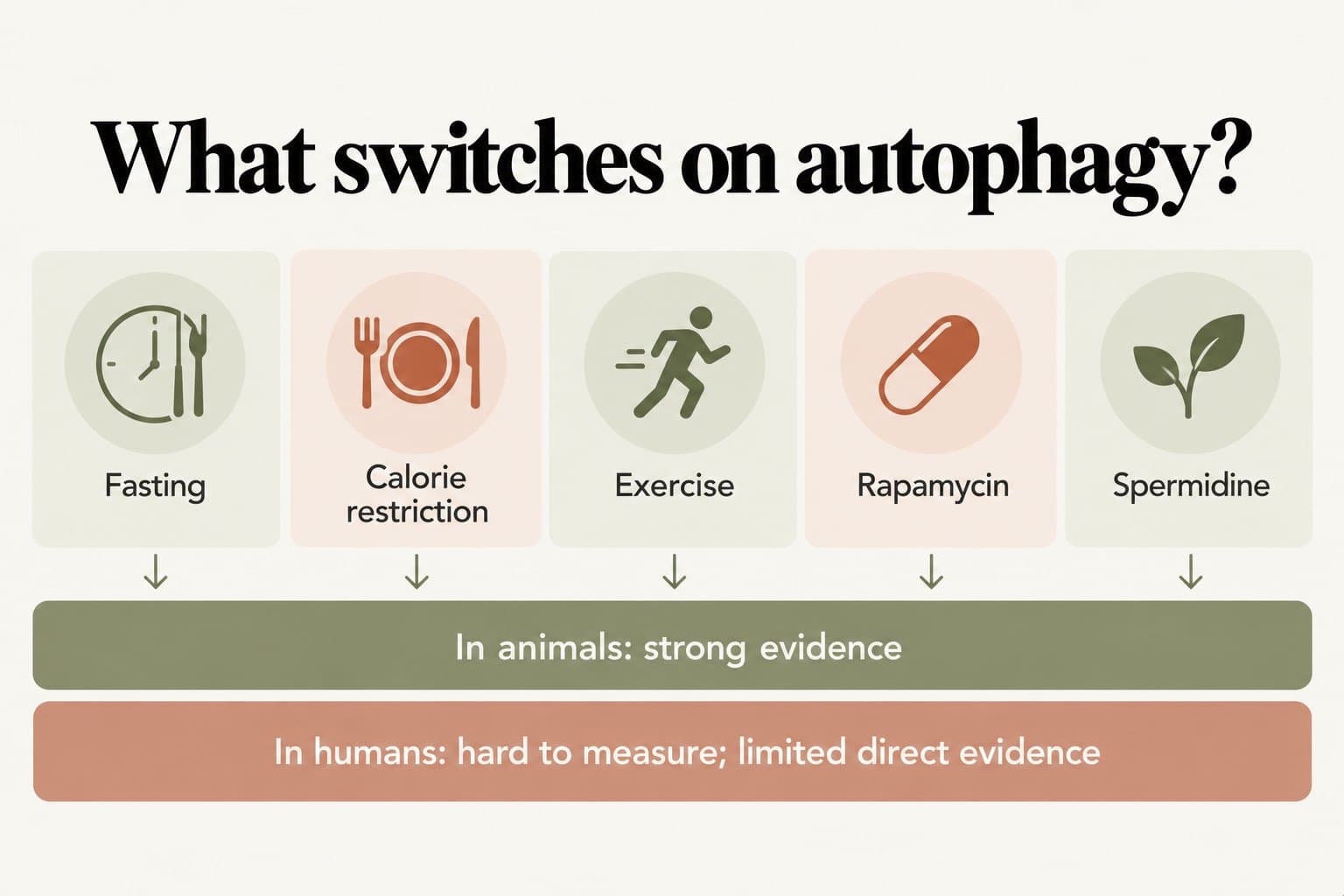
Autophagy, from the Greek for "self-eating", is how your cells clean house. Damaged proteins, worn-out mitochondria and even invading bacteria are wrapped in a membrane, delivered to the cell's "recycling centre" and broken down into building blocks that can be reused. Yoshinori Ohsumi won the 2016 Nobel Prize in Physiology or Medicine for uncovering how this works, identifying 15 genes essential for autophagy in baker's yeast. Autophagy declines with age, and in 2023 "disabled macroautophagy" became one of the 12 hallmarks of ageing in its own right. Disrupted autophagy has been linked to Parkinson's disease, type 2 diabetes and cancer. In animals, boosting autophagy can extend life: mice engineered to make more of a key autophagy protein, Atg5, lived 17% longer on average and were leaner, more insulin-sensitive and fitter. Fasting, calorie restriction and exercise all switch on autophagy in animals. But popular claims that a specific fast, such as 16 or 72 hours, "activates autophagy" in people go well beyond the evidence, because autophagy is very hard to measure in living humans. This article explains what autophagy does, why it matters for ageing and what we actually know about boosting it.
Key numbers
| Finding | Detail |
|---|---|
| Nobel Prize, 2016 | Yoshinori Ohsumi, for discovering the mechanisms of autophagy; 15 essential genes identified in yeast |
| Hallmarks of ageing (2023) | Disabled macroautophagy added as a separate hallmark |
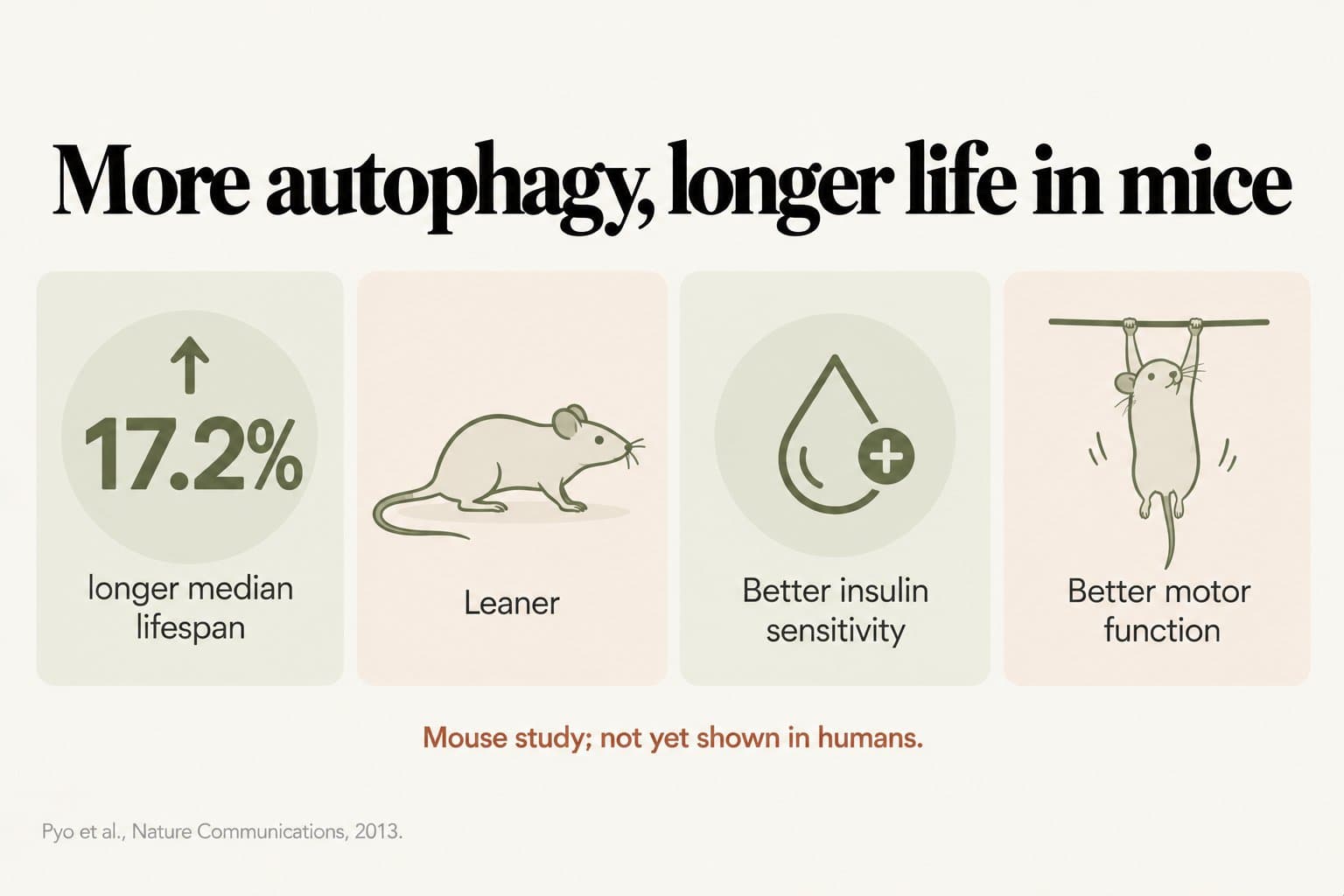
| Boosting autophagy in mice (Pyo et al., 2013) | Extra Atg5 extended median lifespan by 17.2%; leaner, more insulin-sensitive, better motor function |
| Fasting and autophagy in humans | Small studies show changes in autophagy-related markers; required fasting length and health benefits unknown |
How autophagy works
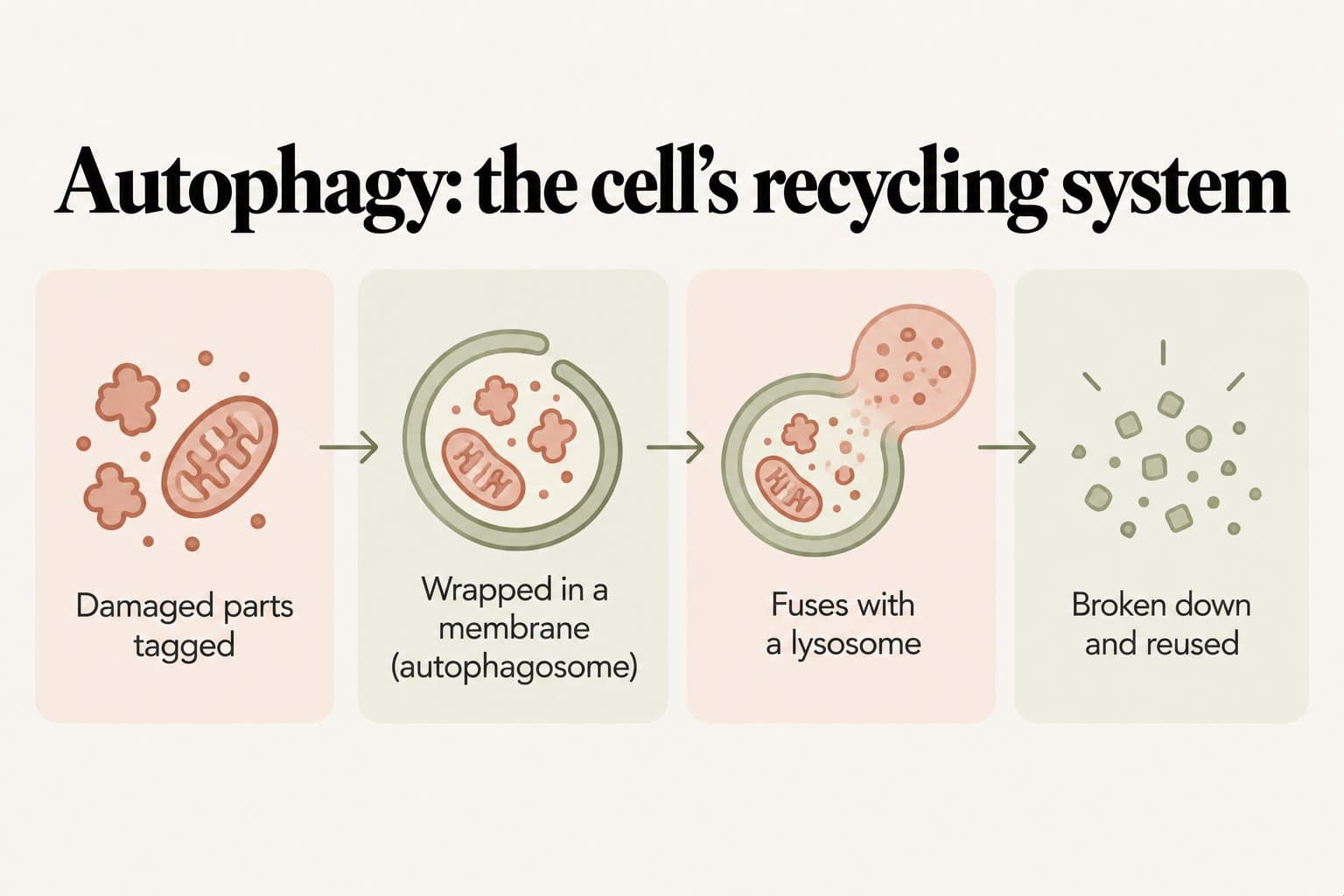
The most important form, macroautophagy, works in a series of steps:
- 1. Tagging: damaged or unneeded cell components, such as clumped proteins or faulty mitochondria, are marked for removal.
- 2. Wrapping: a membrane forms around them, creating a sac called an autophagosome.
- 3. Delivery: the autophagosome fuses with a lysosome, a compartment filled with digestive enzymes.
- 4. Recycling: the contents are broken down into amino acids, fats and sugars that the cell can reuse for energy or building.
When mitochondria are recycled this way, the process is called mitophagy (see Mitochondria and Ageing).
What autophagy does
According to the Nobel Assembly, autophagy:
- Provides energy and building blocks during starvation and stress.
- Eliminates invading bacteria and viruses after infection.
- Supports embryo development and cell specialisation.
- Acts as quality control, removing damaged proteins and organelles.
- Counteracts the effects of ageing.
Autophagy is controlled by the nutrient-sensing pathways. When nutrients are plentiful, mTOR keeps autophagy switched down; when nutrients are scarce or energy is low, mTOR activity falls and AMPK rises, switching autophagy on (see Nutrient-Sensing Pathways).
Autophagy and ageing
With age, autophagy becomes less efficient. Damaged proteins and faulty mitochondria build up, cells experience more stress, and inflammation increases. Disrupted autophagy has been linked to Parkinson's disease, type 2 diabetes, cancer and other age-related conditions. Autophagy was previously considered part of the "loss of proteostasis" hallmark, but in the 2023 update it became a primary hallmark of ageing in its own right (see The Hallmarks of Ageing).
What the research shows
Boosting autophagy extends life in animals. In 2013, researchers reported in Nature Communications that mice engineered to produce more Atg5, a protein essential for forming autophagosomes, had a 17.2% longer median lifespan. The mice were leaner, had better glucose tolerance and insulin sensitivity, and performed better in tests of strength and endurance. Their cells were also more resistant to oxidative damage, an effect that disappeared when autophagy was blocked, showing that autophagy itself was responsible.
Many interventions that extend lifespan in animals, including calorie restriction and the drug rapamycin, increase autophagy, and in several animal models, their benefits depend on it.
Fasting and autophagy in humans: what we don't know. Fasting is one of the strongest triggers of autophagy in animals, which has led to widespread claims that particular fasting schedules "activate autophagy" in people. The reality is more uncertain. Autophagy is a dynamic process inside tissues such as liver, muscle and brain, and there's no simple blood test that measures it in a living person. Small human studies suggest that longer fasts may change autophagy-related markers, but we don't know how long or how often people would need to fast for meaningful effects, or whether those effects improve health or slow ageing. Prolonged fasting also carries risks, including fatigue, muscle loss and electrolyte imbalance, and metabolic changes tend to return to baseline once normal eating resumes (see Calorie Restriction and Fasting).
Spermidine and other compounds. Spermidine, a compound found in foods such as wheat germ, soybeans, mushrooms and aged cheese, induces autophagy in laboratory studies. A long-term population study in Bruneck, Italy, linked higher dietary spermidine intake with lower mortality, but this was observational, and it doesn't prove that spermidine or autophagy was responsible. Rapamycin also induces autophagy but has significant side effects (see Longevity Supplements). Supplements claiming to boost autophagy haven't been shown to improve health in well-designed trials.
Why this matters for longevity
Autophagy is central to how cells stay healthy, and it connects several hallmarks of ageing, including nutrient sensing, mitochondrial health, protein quality control and inflammation. Its decline helps explain why damaged components build up in older cells, and why conditions such as Parkinson's disease become more common with age. Developing safe ways to restore autophagy in people, without the side effects of drugs such as rapamycin, is an active area of research. Until better tools exist to measure autophagy in humans, claims about precisely "switching it on" should be treated with caution.
Practical notes
You don't need extreme fasting to support your cells' recycling system. Avoid constant snacking and habitual overeating, consider a regular overnight fast or eating window if it suits you (see Eating Windows and Longevity), and exercise regularly, which activates AMPK and supports healthy mitochondria. Eat a varied, plant-rich diet that includes legumes, whole grains and mushrooms. Avoid prolonged fasts without medical supervision, especially if you take medicines for diabetes or blood pressure, are pregnant, are underweight or have a history of eating disorders. Our Longevity Doctors can help you choose an eating pattern that fits your health and lifestyle, starting with the free longevity assessment.
- Nobel Assembly at Karolinska Institutet. The Nobel Prize in Physiology or Medicine 2016. Press release.
- López-Otín C, et al. Hallmarks of aging: an expanding universe. Cell, 2023;186(2):243-278.
- Pyo JO, et al. Overexpression of Atg5 in mice activates autophagy and extends lifespan. Nature Communications, 2013;4:2300.
- Kiechl S, et al. Higher spermidine intake is linked to lower mortality: a prospective population-based study. American Journal of Clinical Nutrition, 2018;108(2):371-380.
- Healthy Male (Andrology Australia). Fasting and autophagy: is it actually effective for health and longevity?
Free longevity assessment
Are you snacking
from morning to night?
Take the free Aevum Protocol assessment to see how your longevity science and 6 other longevity domains are performing — and get a personalised 90-day plan.
Take the free assessmentKeep reading
Related articles
Longevity Science
Nutrient-Sensing Pathways: How mTOR, Insulin, AMPK and Sirtuins Link Food to Ageing
Nutrition & Metabolism
Calorie Restriction and Fasting: What Human Studies Actually Show About Eating Less and Ageing
Longevity Science