Longevity Science
Cellular Senescence:
How 'Zombie Cells' Drive Ageing and Inflammation
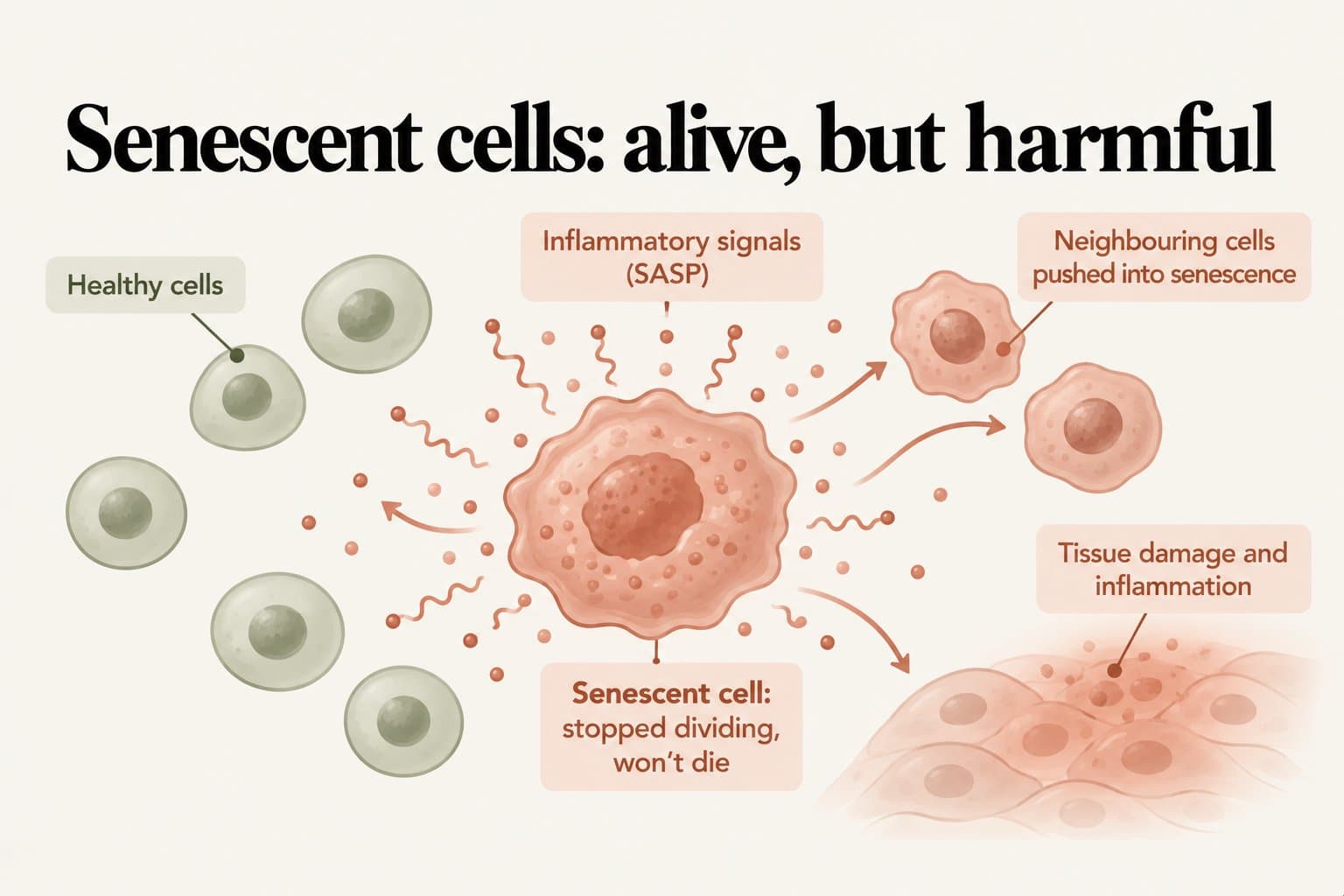
Some of your cells don't die when they're damaged; instead, they stop dividing for good and stay put. These senescent cells, sometimes called "zombie cells", are one of the 12 hallmarks of ageing. Senescence evolved for good reasons: it stops damaged cells from turning into cancer, and short-lived senescent cells help wounds heal. The problem is that with age, senescent cells accumulate, and they release a cocktail of inflammatory signals that damages nearby tissue and can push neighbouring cells into senescence too. Animal studies have made the case that this matters. Transplanting even a small number of senescent cells into young mice impaired their physical function within weeks. In a landmark 2016 study, removing senescent cells from normal ageing mice extended their median lifespan by 17-35% and reduced age-related damage to several organs, without obvious side effects. Researchers found that clearing just 60-70% of these cells could have significant benefits. This has launched a new class of drugs, senolytics, now being tested in humans. This article explains what senescent cells are, why they build up and why they've become one of the most exciting targets in ageing research.
Key numbers
| Finding | Detail |
|---|---|
| The Hayflick limit (1960s) | Human fetal cells divided about 40-60 times before stopping; adult cells about 20 times |
| Removing senescent cells in normal mice (Baker et al., 2016) | Median lifespan extended by 17-35%; less inflammation in fat, muscle and kidney |
| How many need removing (same study) | Clearing 60-70% of senescent cells may have significant benefits |
| Adding senescent cells to young mice (Xu et al., 2018) | Slower walking, weaker muscles and less endurance within 2 weeks |
| Senescence and wound healing (Demaria et al., 2014) | Short-lived senescent cells speed wound closure in mice |
What senescent cells are
In 1961, Leonard Hayflick and Paul Moorhead noticed that human cells grown in the laboratory eventually stopped dividing, even though they were still alive and active. In later experiments, cells from fetuses divided about 40-60 times before stopping, while cells from adults divided only about 20 times. This limit became known as the "Hayflick limit", and the state of permanent arrest became known as cellular senescence.
Cells become senescent when they're under stress or damaged, for example by:
- Critically short telomeres after many divisions (see Telomeres and Ageing)
- DNA damage from radiation, chemicals or chemotherapy
- Activated cancer-causing genes
- Oxidative stress and mitochondrial dysfunction
A senescent cell switches on genes such as p16 and p21 that block division, and it resists the normal signals that would make a damaged cell die. It also changes what it secretes.
The senescence-associated secretory phenotype
Senescent cells release a mixture of inflammatory molecules, growth factors and enzymes that break down the tissue around them. This is called the senescence-associated secretory phenotype, or SASP. In the short term, these signals call in the immune system to clear the senescent cells. But when senescent cells persist, the SASP drives chronic low-grade inflammation, damages tissue structure and can turn neighbouring healthy cells senescent. Chronic inflammation is covered in Inflammaging.
Senescence: friend and foe
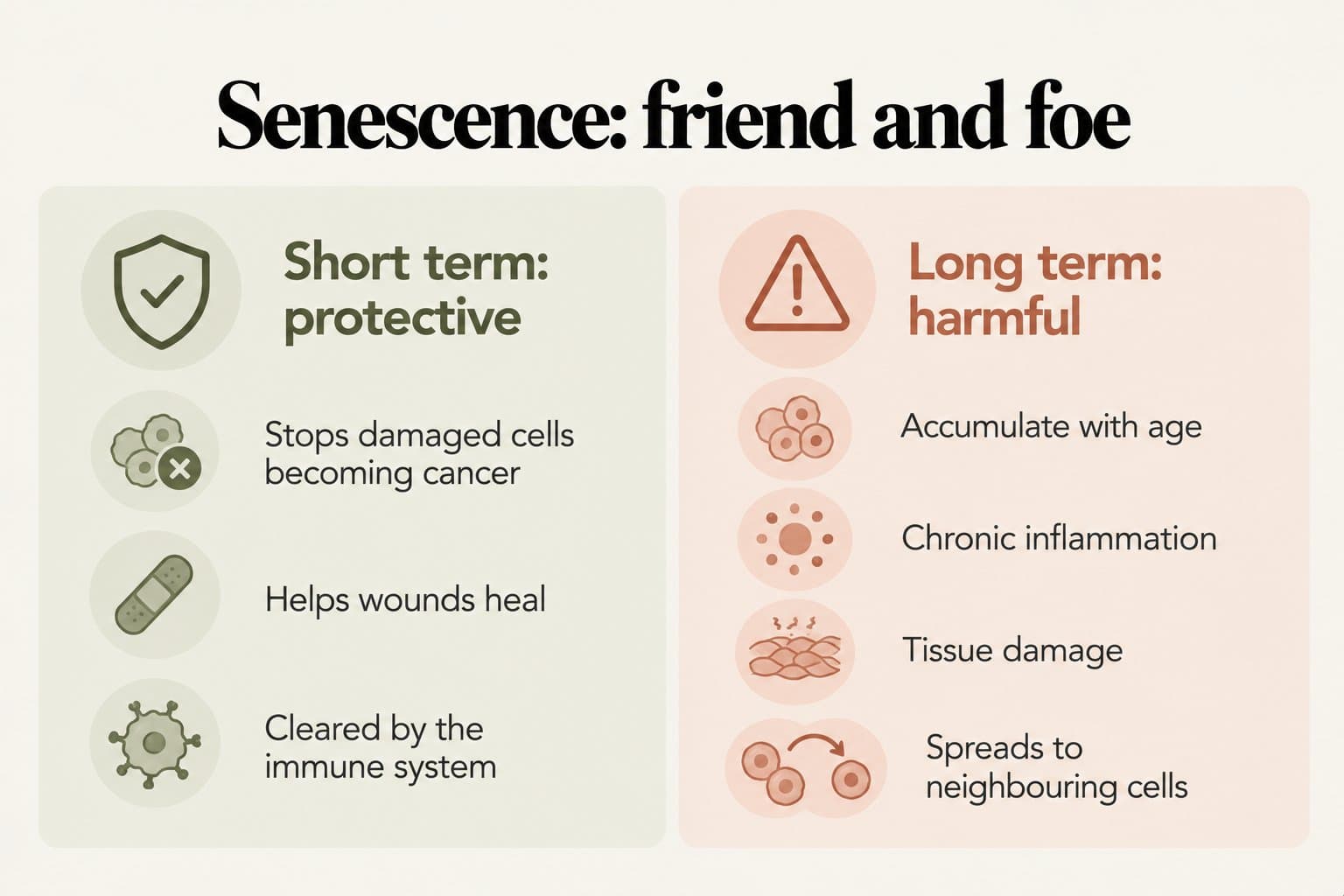
Senescence is an example of a process that's helpful early in life but harmful later, which is why it's classed as an "antagonistic" hallmark (see The Hallmarks of Ageing).
The protective side.
- Cancer prevention: stopping damaged cells from dividing is one of the body's main defences against cancer.
- Wound healing: a 2014 study from the Buck Institute found that senescent cells appear briefly during skin wound healing and speed up wound closure by releasing a growth factor called PDGF-AA. Mice lacking senescent cells healed more slowly. Crucially, these senescent cells were present only temporarily.
The harmful side. With age, the immune system becomes less efficient at clearing senescent cells, and new ones keep forming. Persistent senescent cells have been linked in animal studies to many age-related conditions, including atherosclerosis, osteoarthritis, lung fibrosis, kidney decline and loss of muscle function.
What the research shows
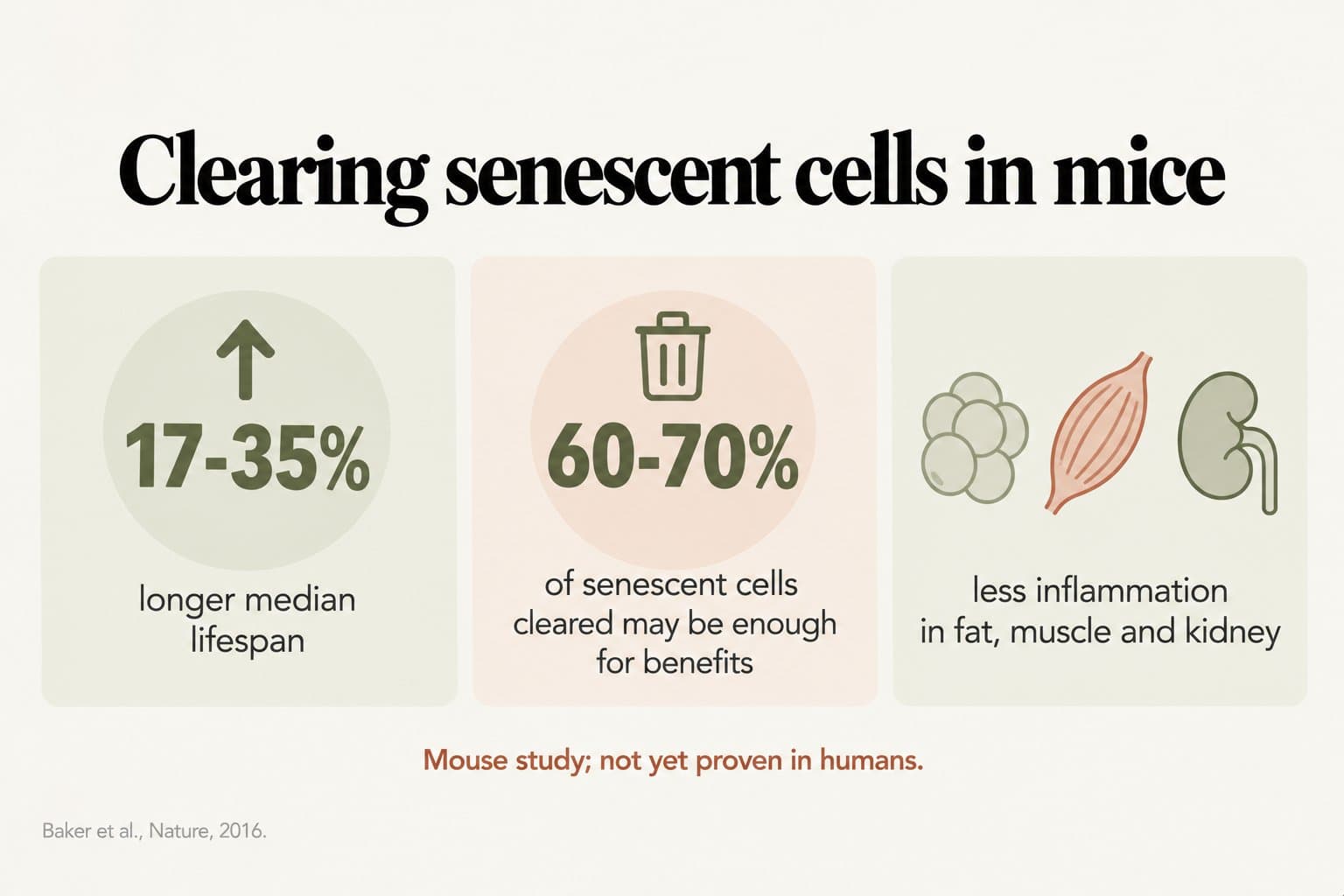
Removing senescent cells extends healthy lifespan in mice. The key evidence came from researchers at the Mayo Clinic. In a 2016 study in Nature, Darren Baker, Jan van Deursen and colleagues engineered mice so that their senescent cells could be destroyed with a drug. When senescent cells were cleared from normal mice starting in middle age, median lifespan increased by 17-35%. The mice had less inflammation in fat, muscle and kidney tissue, less age-related deterioration in several organs, and no observed adverse effects. As van Deursen put it, senescent cells that accumulate with ageing "shorten your life but also the healthy phase of your life". Baker noted that clearing "just 60-70 percent can have significant therapeutic effects".
A small number of senescent cells can cause harm. A 2018 study, also from the Mayo Clinic, showed that transplanting a small number of senescent cells into young, healthy mice was enough to reduce their walking speed, muscle strength and endurance within two weeks, and that senescence appeared to spread to other cells. In very old mice, a combination of drugs that kills senescent cells (dasatinib and quercetin) increased average remaining lifespan by 36%.
From mice to humans. These are animal studies, and the first engineered mouse models can't be used in people. But they inspired the search for drugs that selectively kill senescent cells, called senolytics, and drugs that dampen the SASP, called senomorphics. Early human trials are under way, and senolytics are covered in detail in Senolytics.
Why this matters for longevity
Cellular senescence connects several hallmarks of ageing: DNA damage and short telomeres trigger it, and the inflammation it causes damages tissues, stem cells and the immune system. Because a relatively small number of senescent cells can cause widespread harm, and because removing them improves many organs at once in animals, senescence is one of the most promising targets for treating ageing itself rather than individual diseases. The challenge is to clear harmful senescent cells safely without losing their benefits, such as wound healing and cancer protection.
Practical notes
There's no proven way to measure or clear your senescent cells in routine clinical practice yet, and senolytic drugs aren't approved for this purpose. Be cautious about supplements marketed as senolytics: the human evidence is still very limited (see Longevity Supplements). What you can do is reduce the drivers of cellular damage that push cells into senescence: avoid smoking, limit excess sun exposure and alcohol, stay physically active, keep a healthy weight and eat a high-quality diet (see Eating Patterns for Longevity). Managing inflammation through these habits also helps counter the effects of the SASP (see Inflammation and Heart Disease). Our Longevity Doctors can help you build a plan around the evidence, starting with the free longevity assessment.
- Hayflick L, Moorhead PS. The serial cultivation of human diploid cell strains. Experimental Cell Research, 1961;25:585-621.
- Baker DJ, et al. Naturally occurring p16Ink4a-positive cells shorten healthy lifespan. Nature, 2016;530(7589):184-189.
- Xu M, et al. Senolytics improve physical function and increase lifespan in old age. Nature Medicine, 2018;24(8):1246-1256.
- Demaria M, et al. An essential role for senescent cells in optimal wound healing through secretion of PDGF-AA. Developmental Cell, 2014;31(6):722-733.
- López-Otín C, et al. Hallmarks of aging: an expanding universe. Cell, 2023;186(2):243-278.
Free longevity assessment
Want to reduce the drivers
of cellular damage?
Take the free Aevum Protocol assessment to see how your longevity science and 6 other longevity domains are performing — and get a personalised 90-day plan.
Take the free assessment