Longevity Science
Senolytics:
Can Drugs That Clear 'Zombie Cells' Slow Ageing?
Senolytics are drugs designed to selectively kill senescent cells, the "zombie cells" that stop dividing, refuse to die and release inflammatory signals that damage surrounding tissue. In mice, clearing these cells improves many age-related problems at once: in a landmark 2018 study, the combination of dasatinib and quercetin (D+Q) increased the remaining lifespan of very old mice by 36%. Human trials began in 2019, and the results so far are a mix of encouraging signals and disappointments. In the first human trial, 14 people with lung fibrosis who took D+Q walked on average 21.5 metres further in six minutes, but the study was small and had no placebo group. In 2020, a senolytic injected into arthritic knees failed to reduce pain more than placebo in 183 patients. In 2024, a randomised trial in 60 postmenopausal women found that D+Q didn't improve bone turnover overall, although women with the most senescent cells showed benefits. These results suggest senolytics may help some people more than others, and that measuring senescent cell burden will be key. Senolytics aren't approved for ageing, and supplements marketed as senolytics haven't been proven in people. This article explains how they work and what the trials show.
Key numbers
| Finding | Detail |
|---|---|
| D+Q in very old mice (Xu et al., 2018) | 36% longer average remaining lifespan |
| First human senolytic trial (lung fibrosis, 14 patients, 2019) | 6-minute walk distance up 21.5 metres; no placebo group; lung function unchanged |
| UBX0101 knee injection (183 patients, 2020) | No difference from placebo in knee pain at 12 weeks |
| D+Q and bone (60 postmenopausal women, 2024) | No overall effect on bone resorption; benefits in women with the highest senescent cell burden |
The discovery
Senescent cells accumulate with age and drive inflammation and tissue damage (see Cellular Senescence). In 2016, Mayo Clinic researchers showed that genetically removing them extended healthy lifespan in mice. But that genetic technique can't be used in people, so researchers looked for drugs that could do the same job.
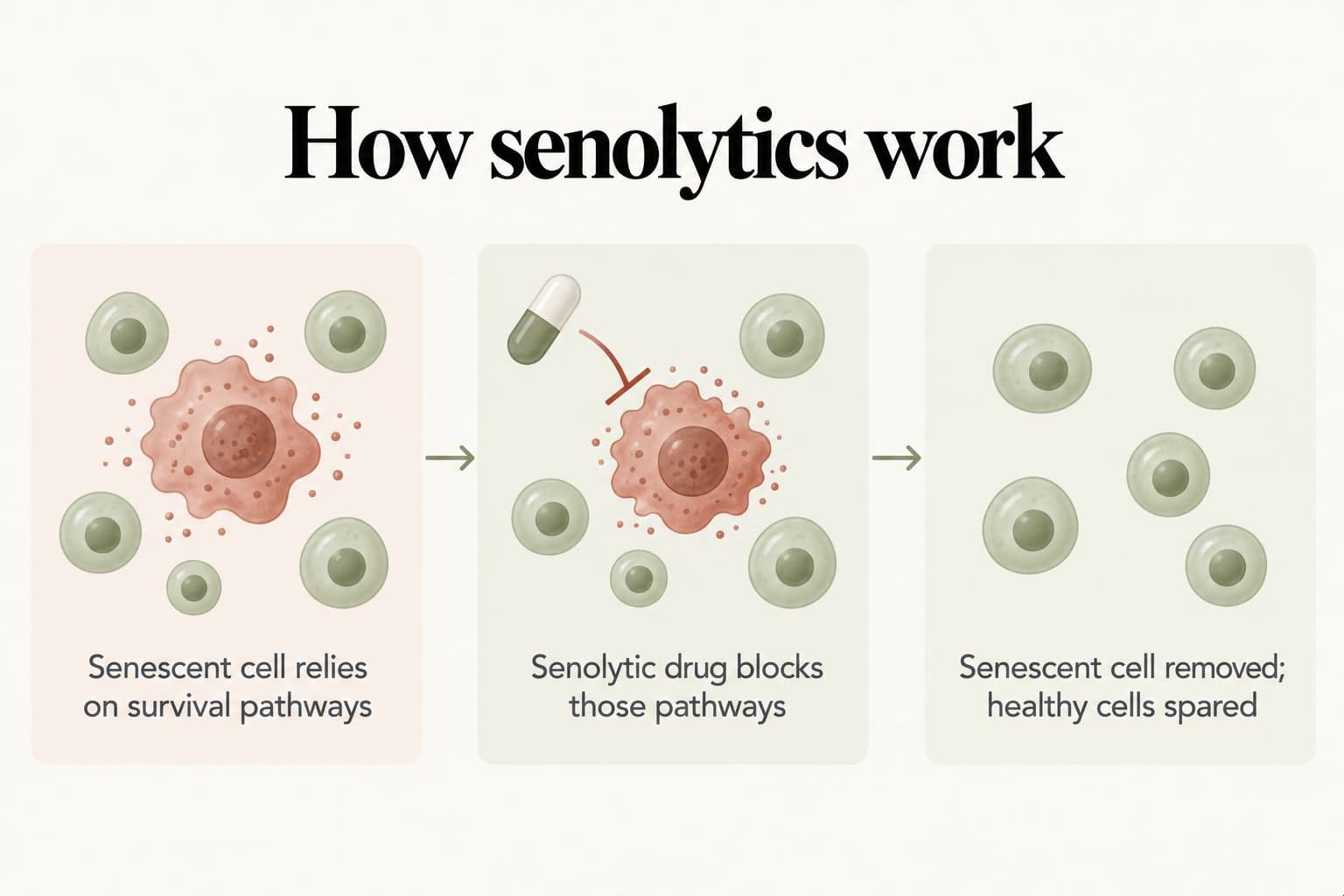
Senescent cells survive partly by switching on "anti-death" pathways that protect them from self-destruction. Senolytic drugs aim to block these pathways, so senescent cells die while healthy cells, which don't depend on them in the same way, are largely spared. Because senescent cells take weeks to re-accumulate, senolytics can be given intermittently, a "hit-and-run" approach that may reduce side effects.
The main candidates
- Dasatinib plus quercetin (D+Q): dasatinib is a cancer drug; quercetin is a plant compound found in foods such as onions and apples. The combination is the most studied senolytic in humans.
- Fisetin: a plant compound found in strawberries, being tested in several human trials.
- Purpose-designed senolytics: drugs developed by biotech companies, often for specific tissues such as the knee or the eye.
What the research shows
Mice: broad benefits. In 2018, Mayo Clinic researchers showed that transplanting senescent cells into young mice impaired their physical function, while treating very old mice with D+Q increased their average remaining lifespan by 36%. Senolytics have improved many conditions in animals, including frailty, lung fibrosis and bone loss.
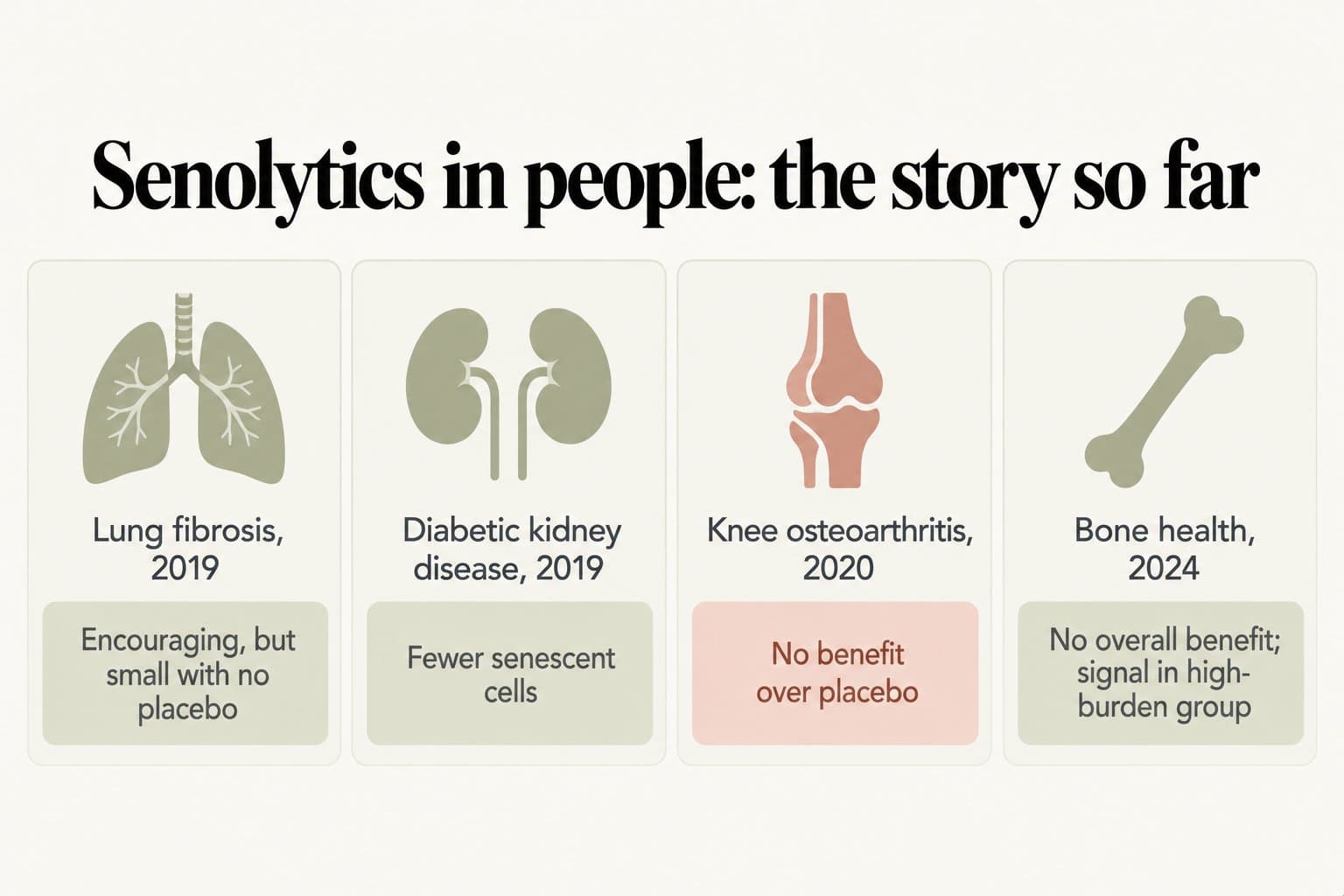
2019: the first human trial. The first human senolytic trial, published in EBioMedicine, gave 14 older adults with idiopathic pulmonary fibrosis, a progressive lung-scarring disease, D+Q three days a week for three weeks. Their six-minute walk distance increased by an average of 21.5 metres, and walking speed and chair-stand performance improved. Lung function and grip strength didn't change. The researchers were cautious: "We should be cautious about whether this finding is true based upon this small study without a placebo control group." In the same year, a Mayo Clinic pilot study in people with diabetic kidney disease found that D+Q reduced senescent cells in fat and skin, the first evidence that the drugs clear senescent cells in humans.
2020: a high-profile failure. UNITY Biotechnology's UBX0101, injected directly into the knee, was tested in a double-blind trial of 183 people with moderate to severe knee osteoarthritis. At 12 weeks, there was "no statistically significant difference" in pain compared with placebo, and the company stopped developing it for osteoarthritis.
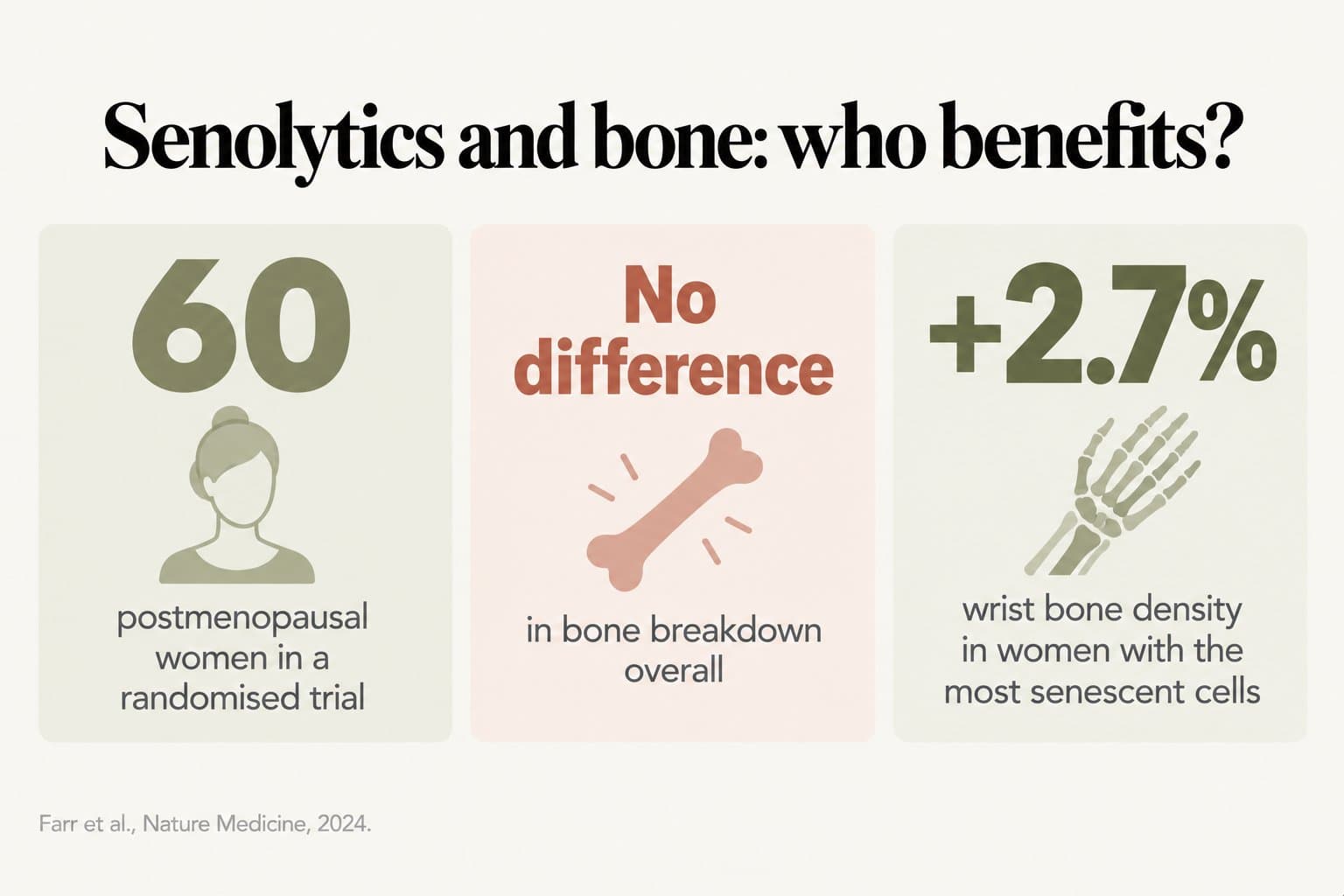
2024: a randomised trial in bone health. In a phase 2 trial published in Nature Medicine, 60 postmenopausal women were randomly assigned to intermittent D+Q or no treatment for 20 weeks. The main outcome, a marker of bone breakdown, didn't differ between groups, and there was no overall effect on bone density. A marker of bone formation rose by 16% early on but returned to baseline. However, women with the highest senescent cell burden showed improved bone markers and a 2.7% increase in bone density at the wrist. There were no serious side effects. The authors concluded that "the underlying senescent cell burden may dictate the clinical response to senolytics".
Where it stands: promise vs risks
| Development | What it showed | Stage | Evidence strength |
|---|---|---|---|
| Senolytics in mice | Longer life and improvement in many age-related conditions | Animal studies | Strong (mice) |
| D+Q in lung fibrosis | Better walking distance and speed | Small pilot, no placebo | Limited |
| D+Q in diabetic kidney disease | Fewer senescent cells in fat and skin | Small pilot | Limited |
| UBX0101 in knee osteoarthritis | No benefit over placebo | Phase 2 randomised trial | Moderate (negative) |
| D+Q and bone in older women | No overall benefit; benefit in high senescent burden | Phase 2 randomised trial | Moderate (mixed) |
Key challenges include identifying which people have enough senescent cells to benefit, measuring senescent cells reliably in humans, ensuring that clearing them doesn't impair their useful roles, such as wound healing, and understanding the long-term safety of repeated treatment.
Why this matters for longevity
Senolytics are one of the clearest attempts to treat ageing biology directly: clear one hallmark, and potentially improve many diseases at once (see The Hallmarks of Ageing). The human results so far are a reminder that dramatic mouse findings don't always translate, and that the right patients, doses and outcomes matter. The 2024 bone trial points towards a more personalised approach: measuring senescent cell burden first and treating those most likely to benefit. Dozens of trials are under way, and the next few years should clarify whether senolytics have a place in medicine.
Practical notes
Senolytic drugs aren't approved for ageing and should only be used in clinical trials. Dasatinib is a prescription cancer drug with real side effects, and the doses of quercetin and fisetin used in trials are much higher than in food. Supplements marketed as senolytics haven't been shown to clear senescent cells or improve health in well-designed human trials (see Longevity Supplements). What you can do is limit the drivers of senescence and inflammation: don't smoke, stay physically active, keep a healthy weight, eat a plant-rich diet and protect your skin from excess sun (see Inflammaging). Our Longevity Doctors can help you understand emerging therapies and what's appropriate for you, starting with the free longevity assessment.
- Xu M, et al. Senolytics improve physical function and increase lifespan in old age. Nature Medicine, 2018;24(8):1246-1256.
- Justice JN, et al. Senolytics in idiopathic pulmonary fibrosis: results from a first-in-human, open-label, pilot study. EBioMedicine, 2019;40:554-563.
- Hickson LJ, et al. Senolytics decrease senescent cells in humans: preliminary report from a clinical trial of dasatinib plus quercetin in individuals with diabetic kidney disease. EBioMedicine, 2019;47:446-456.
- UNITY Biotechnology. 12-week data from UBX0101 phase 2 clinical study in patients with painful osteoarthritis of the knee. August 2020.
- Farr JN, et al. Effects of intermittent senolytic therapy on bone metabolism in postmenopausal women: a phase 2 randomized controlled trial. Nature Medicine, 2024;30(9):2605-2612.
Free longevity assessment
Curious whether an emerging
therapy is right for you?
Take the free Aevum Protocol assessment to see how your longevity science and 6 other longevity domains are performing — and get a personalised 90-day plan.
Take the free assessment