Longevity Science
Targeting Ageing as a Disease:
Geroscience, the TAME Trial and the Regulatory Debate
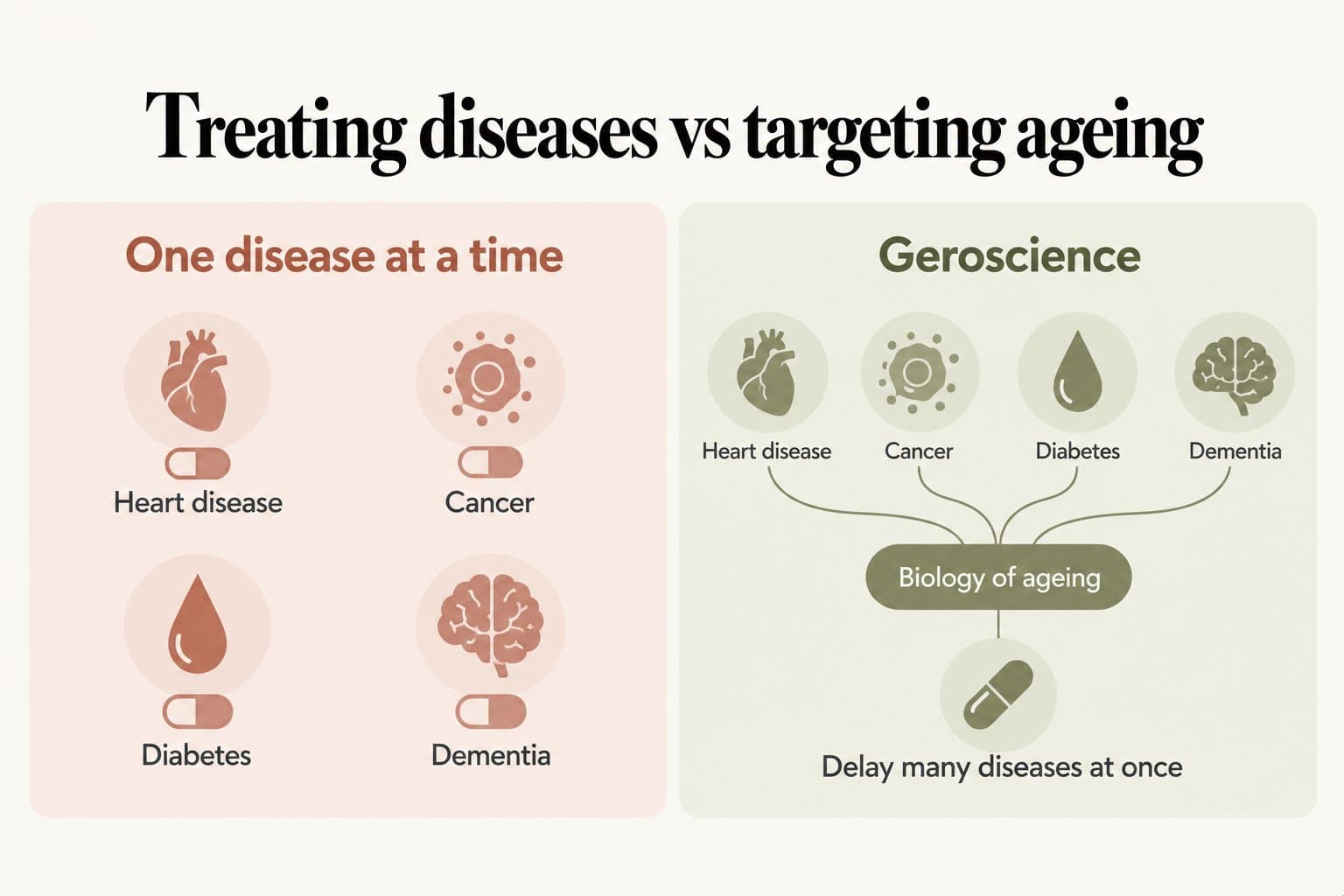
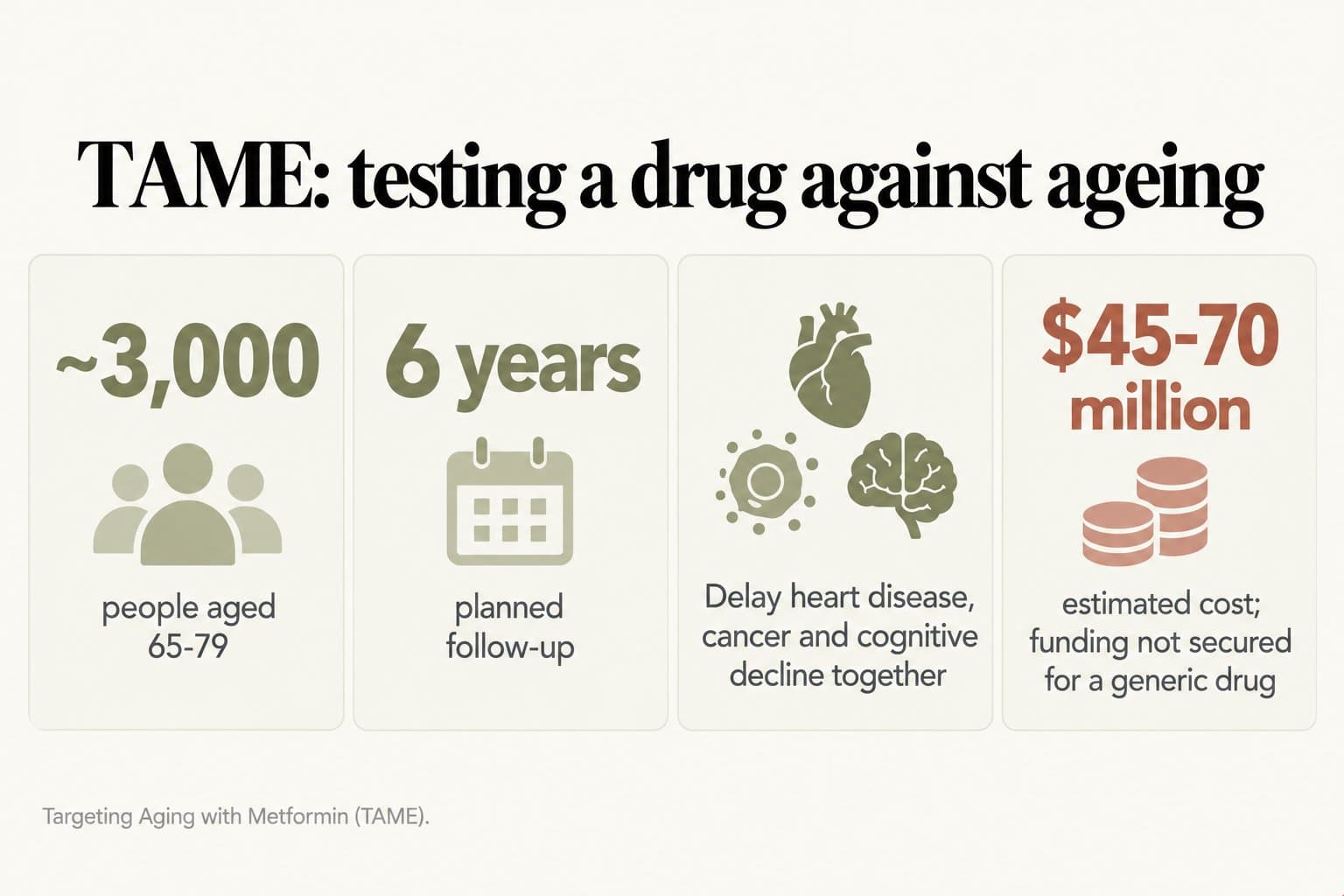
Medicine usually treats one disease at a time: a statin for cholesterol, a pill for blood pressure, chemotherapy for cancer. But as the American Federation for Aging Research puts it, "aging itself is by far the greatest risk factor for most of the chronic diseases and disabilities which affect older adults". Geroscience is the field built on a simple idea: if we can slow the biology of ageing, we could delay many diseases at once. Turning that idea into medicine faces a major obstacle: regulators don't recognise ageing as a condition that drugs can be approved to treat. The TAME trial (Targeting Aging with Metformin) was designed to change that by testing whether the cheap diabetes drug metformin delays heart disease, cancer, dementia and death together in 3,000 people aged 65-79. But because metformin is a generic drug, the trial has struggled to raise the $45-70 million it needs. The language matters too: the World Health Organization added "old age" to its disease classification and then replaced it after criticism, stressing that it isn't classifying ageing as a disease. Meanwhile, the first progress may come in dogs: in 2025, the US FDA accepted that a pill for senior dogs had a "reasonable expectation of effectiveness" for extending lifespan. This article explains the geroscience idea and the obstacles to making it medicine.
Key numbers
| Finding | Detail |
|---|---|
| TAME trial design | About 3,000 people aged 65-79 over 6 years; outcomes include heart disease, cancer and cognitive decline |
| TAME funding | Estimated cost $45-70 million; about $5 million from the US National Institute on Aging |
| WHO disease classification (ICD-11) | "Old age" replaced with "ageing-associated decline in intrinsic capacity"; WHO says it isn't classifying ageing as a disease |
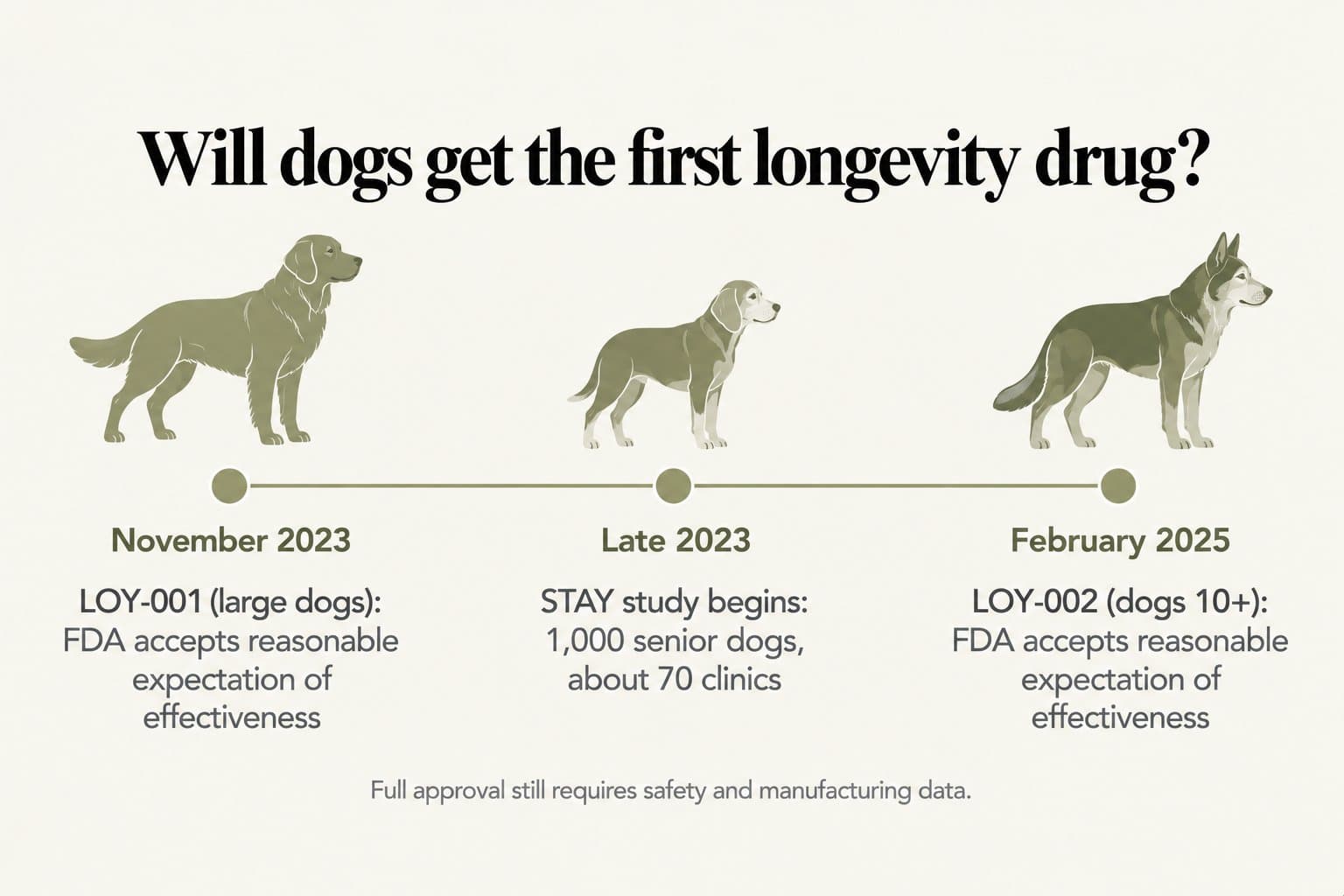
| Dog longevity drug LOY-002 | FDA accepted "reasonable expectation of effectiveness" in February 2025 |
| STAY study in dogs | 1,000 dogs aged 10 and over in about 70 clinics, over 4 years |
The discovery: the geroscience idea
Geroscience aims to "understand how aging enables diseases and to exploit that knowledge to slow the appearance and progression of age-related diseases and disabilities". Its central hypothesis is that, because the same underlying biology, the hallmarks of ageing, drives many chronic diseases, targeting that biology could "delay the onset of multiple diseases at once" (see The Hallmarks of Ageing).
This matters because older adults rarely have just one disease. Treating heart disease alone might add a few years before another condition, such as cancer or dementia, takes hold. Slowing ageing itself could, in theory, compress the period of illness at the end of life.
What the research shows
Animal evidence. Many interventions extend healthy lifespan in animals, including calorie restriction, rapamycin and clearing senescent cells (see Nutrient-Sensing Pathways and Senolytics). In these animals, the treatments delay several age-related diseases together, supporting the geroscience hypothesis.
The TAME trial. TAME, led by Nir Barzilai of the Albert Einstein College of Medicine, was designed as a proof of concept. Rather than measuring one disease, it would test whether metformin delays the onset of a group of age-related conditions, including heart disease, cancer and cognitive decline, in about 3,000 people aged 65-79 over six years. Success could persuade the FDA to accept "ageing" or delaying multiple diseases as a legitimate target for drug development.
Metformin was chosen because it's cheap, has decades of safety data and affects several ageing pathways in animals. But because it's off-patent, no company stands to profit, and funding has been a persistent problem: the trial was estimated to cost $45-70 million, with only about $5 million from the National Institute on Aging. In September 2026, one report described TAME as "the aging trial that never enrolled a patient". Other studies have also raised questions about metformin in healthy older adults, including a trial in which it blunted muscle gains from strength training (see Longevity Supplements).
The language of ageing: WHO's classification. In its latest International Classification of Diseases (ICD-11), the WHO replaced the old term "senility" with "old age", a change criticised by many experts as implying that being old is a disease. After a stakeholder proposal, the term was changed again to "ageing-associated decline in intrinsic capacity". The WHO emphasises that it is "not classifying aging as a disease"; the category exists mainly to help code unclear statements on medical records and death certificates.
Dogs may come first. In the US, Loyal is developing drugs specifically to extend dogs' healthy lifespan. The FDA accepted a "reasonable expectation of effectiveness" for LOY-001, an injection for large dogs, in November 2023, and for LOY-002, a daily pill for dogs aged 10 and over, in February 2025. Full approval still requires safety and manufacturing data. The STAY study, described as the largest veterinary clinical trial in history, is testing LOY-002 against placebo in 1,000 senior dogs across about 70 clinics over four years, measuring both lifespan and quality of life. If approved, it would be the first drug with a lifespan-extension indication for any species.
Where it stands: promise vs risks
| Development | What it showed | Stage | Evidence strength |
|---|---|---|---|
| Geroscience hypothesis | Targeting ageing delays many diseases at once in animals | Well supported in animals | Strong (animals) |
| TAME (metformin) | Designed to test the idea in humans | Planned; funding not secured | None yet |
| Ageing as a regulatory indication | Not recognised by the FDA for human drugs | Debate ongoing | Not applicable |
| WHO classification | "Old age" removed; ageing not classed as a disease | Settled for ICD-11 | Not applicable |
| Dog lifespan drug (LOY-002) | Reasonable expectation of effectiveness accepted | Large placebo-controlled trial under way | Pending |
The challenges include defining measurable outcomes for "slowing ageing" in people, the cost and length of trials that must follow people for years, the lack of commercial incentives for generic drugs, and ethical concerns about labelling a universal human experience as a disease. Biomarkers such as epigenetic and proteomic clocks might eventually serve as earlier endpoints in trials, but they aren't yet accepted for this purpose (see Epigenetic Clocks Explained).
Why this matters for longevity
Geroscience could reshape medicine: from managing diseases one by one to preventing them together by targeting their common root. But the path from animal studies to approved human treatments is long, and it depends as much on regulation, funding and trial design as on biology. The first approved "longevity drug" may well be for dogs, and the lessons from that process could open the door for humans.
Practical notes
There are currently no drugs approved to slow human ageing. Metformin, rapamycin and similar drugs should only be used for their approved indications or within research. Doctors increasingly take a "geroscience-informed" approach in practice, focusing on interventions that reduce the risk of several diseases at once: regular exercise, a healthy diet, not smoking, good sleep, and controlling blood pressure, cholesterol and blood sugar. These are, in effect, today's proven "anti-ageing" treatments (see Eating Patterns for Longevity). Our Longevity Doctors take this whole-person approach, starting with the free longevity assessment.
- Kennedy BK, et al. Geroscience: linking aging to chronic disease. Cell, 2014;159(4):709-713.
- American Federation for Aging Research. Geroscience fact sheet. 2019.
- NPR. A cheap drug may slow down aging. A study will determine if it works (TAME trial).
- World Health Organization. Frequently asked questions: old age in ICD-11.
- dvm360. Second drug for canine healthy lifespan extension receives FDA support. 2025.
Free longevity assessment
Want to lower your risk of
several diseases at once?
Take the free Aevum Protocol assessment to see how your longevity science and 6 other longevity domains are performing — and get a personalised 90-day plan.
Take the free assessmentKeep reading