Longevity Science
Epigenetics and Ageing:
How Your Genes Are Switched On and Off as You Get Older
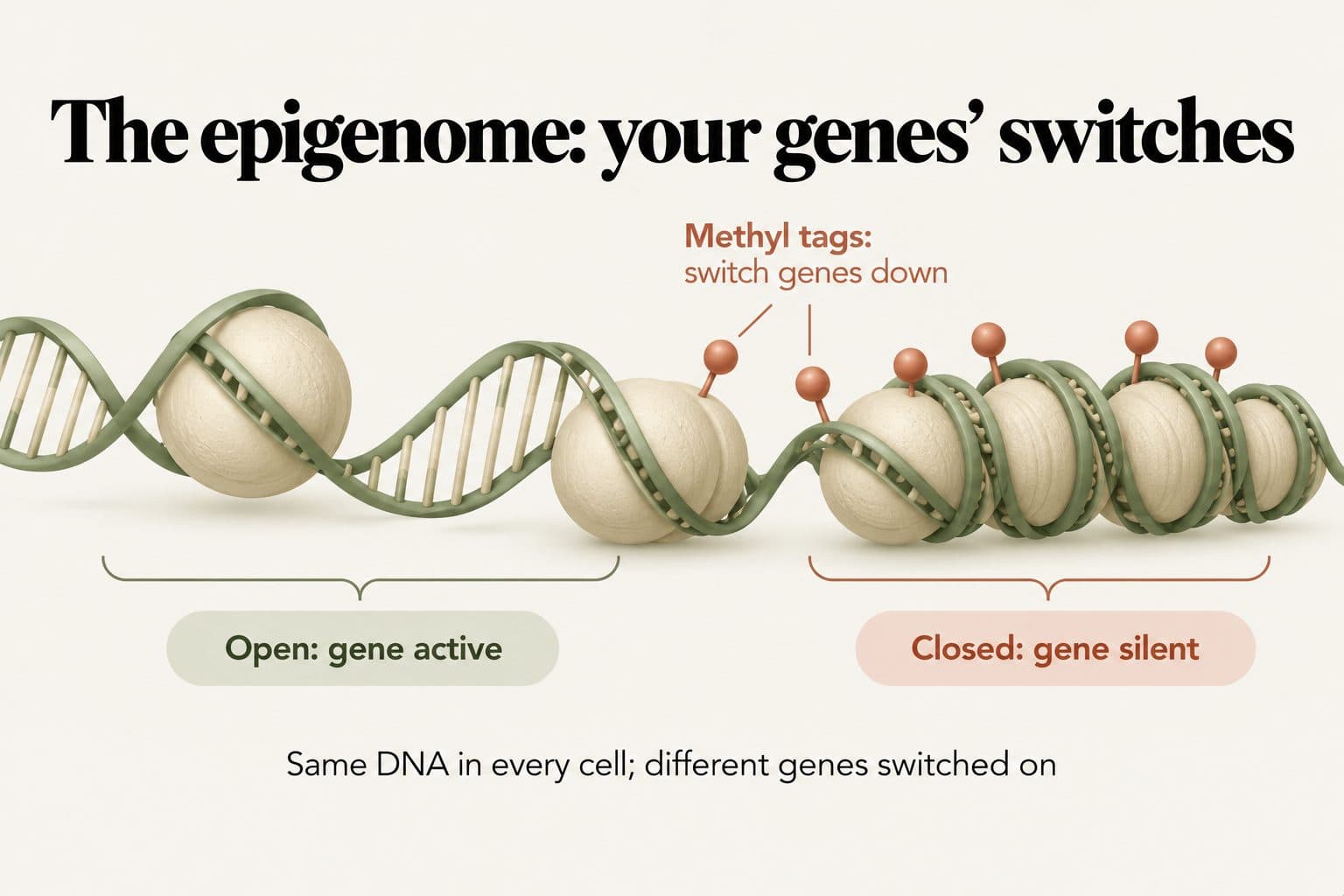
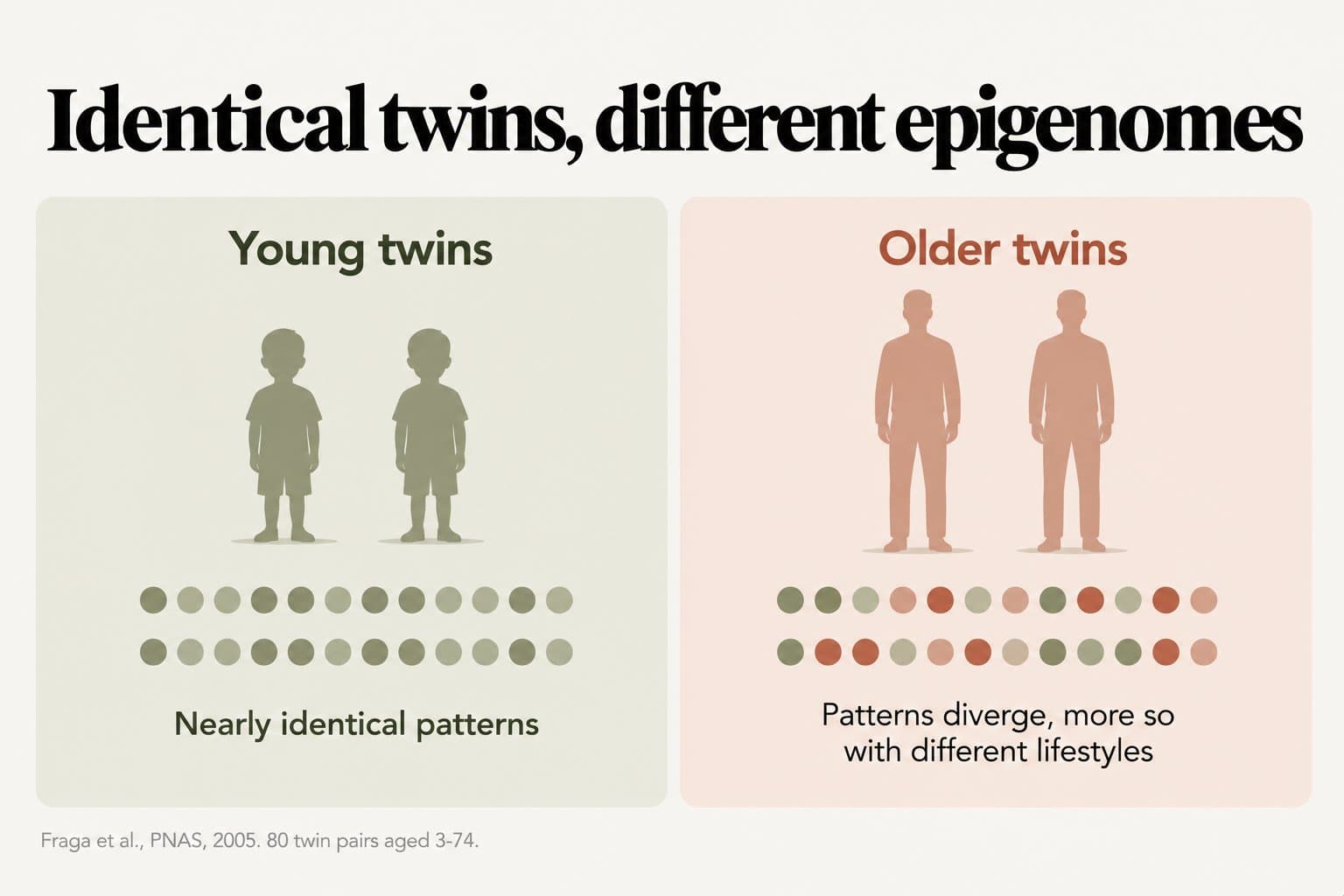
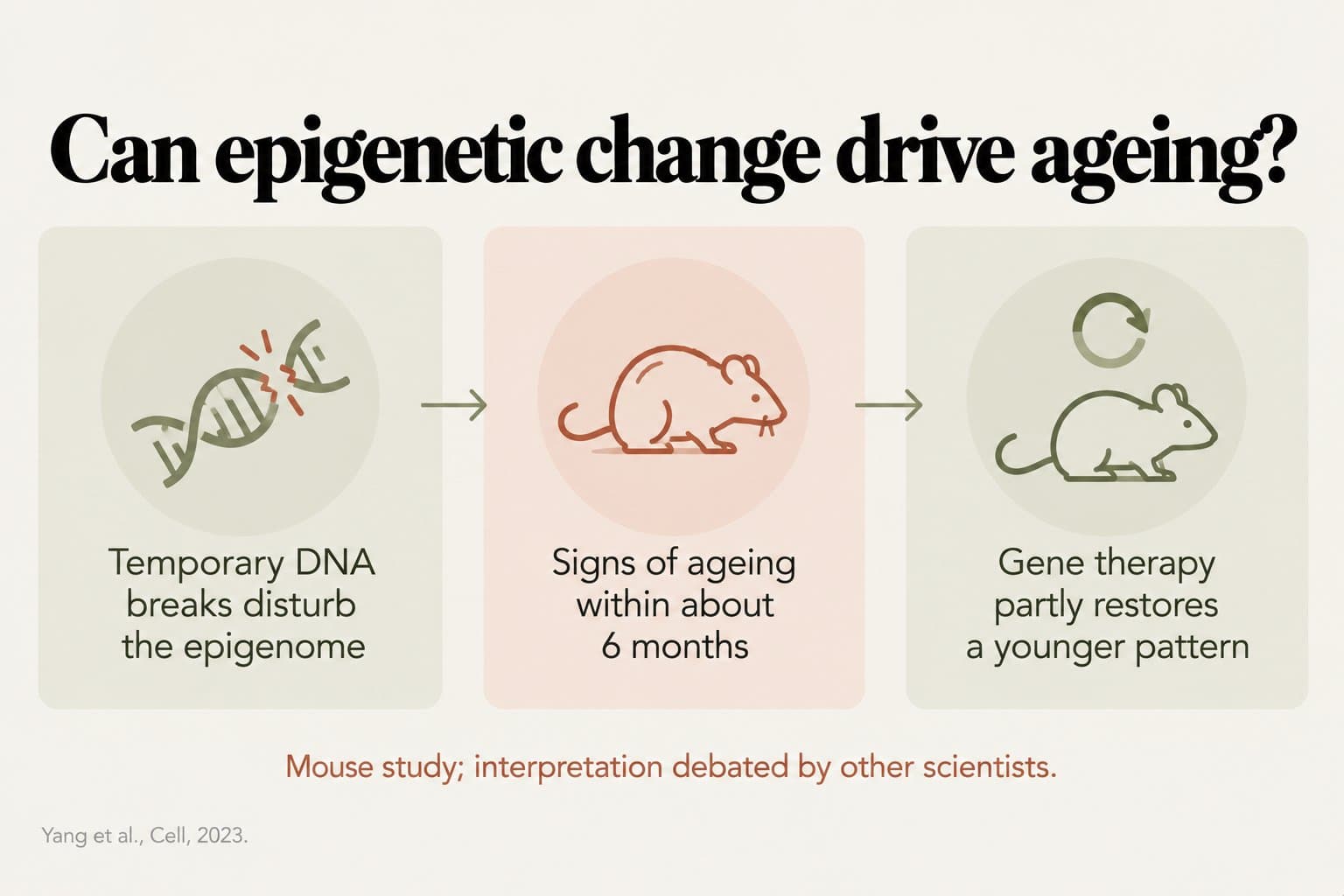
Almost every cell in your body carries the same DNA, yet a skin cell, a liver cell and a neuron behave completely differently. The difference lies in the epigenome: a layer of chemical marks and packaging that controls which genes are switched on or off. Unlike your DNA sequence, the epigenome changes throughout life, and those changes are one of the 12 hallmarks of ageing. Identical twins are born with almost identical epigenomes, but in a study of 80 twin pairs aged 3 to 74, older twins showed much greater epigenetic differences than younger twins, especially when their lifestyles differed. The epigenome also records experience: people exposed to the Dutch Hunger Winter famine around conception had different DNA methylation about 60 years later. Smoking leaves clear marks too, and many of them gradually reverse after quitting. A high-profile 2023 mouse study went further, suggesting that loss of epigenetic information may actually drive ageing, and that it can be partly reset, although other scientists dispute how the results should be interpreted. Epigenetics is the basis of epigenetic clocks and much of today's research into reversing ageing. This article explains what the epigenome is, how it changes with age and what that means for you.
Key numbers
| Finding | Detail |
|---|---|
| Identical twins (Fraga et al., 2005) | 80 twin pairs aged 3-74; older twins had greater epigenetic differences, especially with different lifestyles |
| Dutch Hunger Winter (Heijmans et al., 2008) | 60 people exposed to famine around conception had lower IGF2 methylation than their siblings about 60 years later |
| Smoking and quitting (1,344 adults, 7 years) | Methylation changes reverted most rapidly in the first two decades after quitting; some differences remained after four decades |
| Epigenetic disruption in mice (Yang et al., 2023) | Signs of ageing and loss of cell identity within 6 months; partly reversed with gene therapy |
What the epigenome is
If your DNA is a book of instructions, the epigenome decides which pages are read. It has several layers:
- DNA methylation: small chemical tags called methyl groups attach to DNA, usually switching nearby genes down or off. This is the best-studied epigenetic mark and the basis of epigenetic clocks.
- Histone modifications: DNA is wrapped around proteins called histones. Chemical changes to histones loosen or tighten the wrapping, making genes easier or harder to read.
- Chromatin structure: the overall folding of DNA and histones in the nucleus, which keeps genes that should be silent tucked away.
- Non-coding RNAs: small RNA molecules that fine-tune which genes are active.
Together, these layers give each cell its identity and let it respond to signals such as diet, stress and hormones. Epigenetic alterations are one of the primary hallmarks of ageing (see The Hallmarks of Ageing).
How the epigenome changes with age
Epigenetic drift. With age, the orderly pattern of epigenetic marks gradually becomes noisier: some genes that should be silent switch on, and others that should be active are dimmed. This "epigenetic drift" is partly random and partly shaped by environment.
The clearest evidence comes from identical twins. In a 2005 study in PNAS, researchers compared 80 pairs of identical twins aged 3 to 74. Young twin pairs had very similar epigenetic patterns, but older twin pairs differed much more in DNA methylation and histone marks. Twins who had lived more different lifestyles, or spent less of their lives together, showed the greatest differences, and these differences were linked to differences in gene activity.
Predictable changes: the epigenetic clock. Alongside random drift, DNA methylation changes at certain sites in a remarkably predictable way with age. Scientists use these patterns to build epigenetic clocks that estimate biological age (see How Is Biological Age Actually Calculated?). Epigenetic clocks are covered in more depth in Epigenetic Clocks Explained.
What the research shows
The epigenome records life experience. The Dutch Hunger Winter of 1944-45 created a natural experiment. In a 2008 study, people whose mothers were exposed to the famine around the time of conception had lower methylation of IGF2, a gene involved in growth and metabolism, than their unexposed brothers or sisters, about 60 years later. People exposed only late in pregnancy didn't show this difference, suggesting that very early development is a particularly sensitive window (see Preconception Health Guide).
Smoking leaves marks that fade after quitting. Smoking causes some of the most consistent changes in DNA methylation, for example at the AHRR gene. A German study measured methylation twice, about 7 years apart, in 1,344 adults. Methylation changes linked to smoking reverted after quitting, most rapidly within the first two decades, but some differences persisted in former smokers even four decades after they stopped. Quitting earlier gives the epigenome more time to recover.
Is epigenetic change a cause of ageing? A key question is whether epigenetic changes simply reflect ageing or actually drive it. A 2023 study in Cell from David Sinclair's laboratory at Harvard tested this in mice. Researchers made temporary, quickly repaired cuts in DNA, mostly outside genes, so that they didn't cause mutations. The repair process disturbed the epigenome, and within about 6 months the mice showed signs of ageing and their cells began to lose their identity. Gene therapy with three "reprogramming" factors (Oct4, Sox2 and Klf4) partly restored a younger epigenetic pattern. The authors concluded that "by manipulating the epigenome, aging can be driven forwards and backwards", supporting what Sinclair calls the "information theory of ageing".
Not everyone agrees. In a 2024 letter in Cell, James Timmons and Charles Brenner argued that the DNA cuts may have killed cells, so the changes could reflect cell loss rather than epigenetic ageing, and that the study didn't show restored function in old tissues. The idea is promising but still being tested (see Cellular Reprogramming).
Why this matters for longevity
Epigenetics changes how we think about ageing in two ways. First, it shows that ageing isn't only about genes you're born with: much of the difference between people, even identical twins, builds up through life and is shaped by environment and behaviour. Second, unlike DNA mutations, epigenetic marks are potentially reversible. That's why epigenetics is at the centre of current longevity research, from epigenetic clocks used to measure the effect of interventions to experimental reprogramming therapies. Whether lifestyle changes can meaningfully reverse epigenetic age is covered in Can You Reverse Your Biological Age?.
Practical notes
You can't choose your genes, but your epigenome responds to how you live. The research is clearest for smoking: stopping allows many smoking-related epigenetic changes to fade over time, and the sooner the better. Early life also matters, which is one reason nutrition before and during pregnancy is important. For adults, the habits that support healthy ageing in general, such as not smoking, regular exercise, good sleep, a high-quality diet and limiting alcohol, are the best-supported ways to look after your epigenome too (see Eating Patterns for Longevity). Be cautious about supplements or tests that claim to "reprogram" or "reverse" your epigenetic age: these claims are well ahead of the evidence. Our Longevity Doctors can help you understand what biological age testing can and can't tell you, starting with the free longevity assessment.
- Fraga MF, et al. Epigenetic differences arise during the lifetime of monozygotic twins. Proceedings of the National Academy of Sciences, 2005;102(30):10604-10609.
- Heijmans BT, et al. Persistent epigenetic differences associated with prenatal exposure to famine in humans. Proceedings of the National Academy of Sciences, 2008;105(44):17046-17049.
- Wilson R, et al. The dynamics of smoking-related disturbed methylation: a two time-point study of methylation change in smokers, non-smokers and former smokers. BMC Genomics, 2017;18:805.
- Yang JH, et al. Loss of epigenetic information as a cause of mammalian aging. Cell, 2023;186(2):305-326.
- Timmons JA, Brenner C. The information theory of aging has not been tested. Cell, 2024;187(5):1101-1102.
- López-Otín C, et al. Hallmarks of aging: an expanding universe. Cell, 2023;186(2):243-278.
Free longevity assessment
What is your lifestyle
writing into your epigenome?
Take the free Aevum Protocol assessment to see how your longevity science and 6 other longevity domains are performing — and get a personalised 90-day plan.
Take the free assessment