Longevity Science
Can You Reverse Your Biological Age?
What the Trials Actually Show
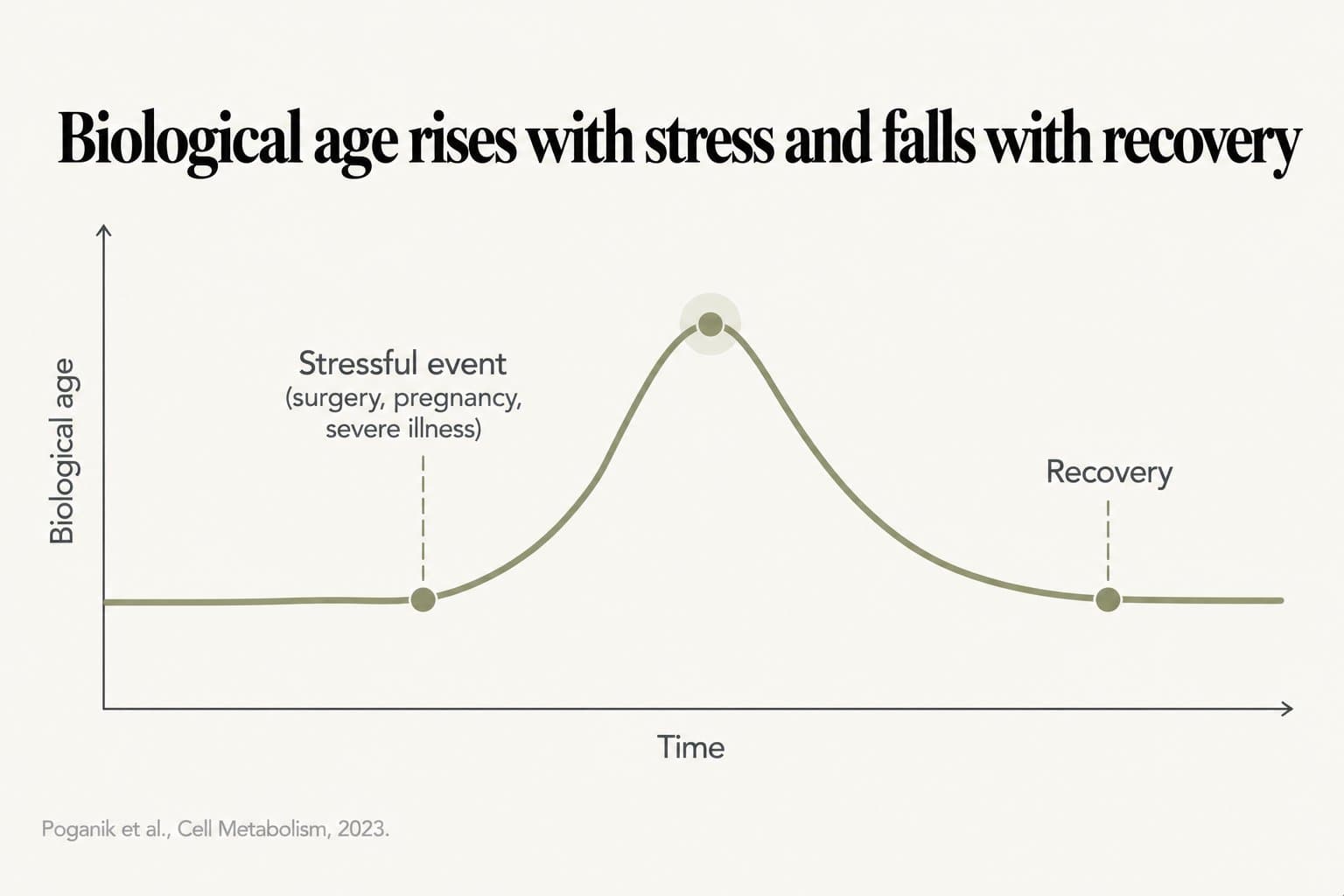
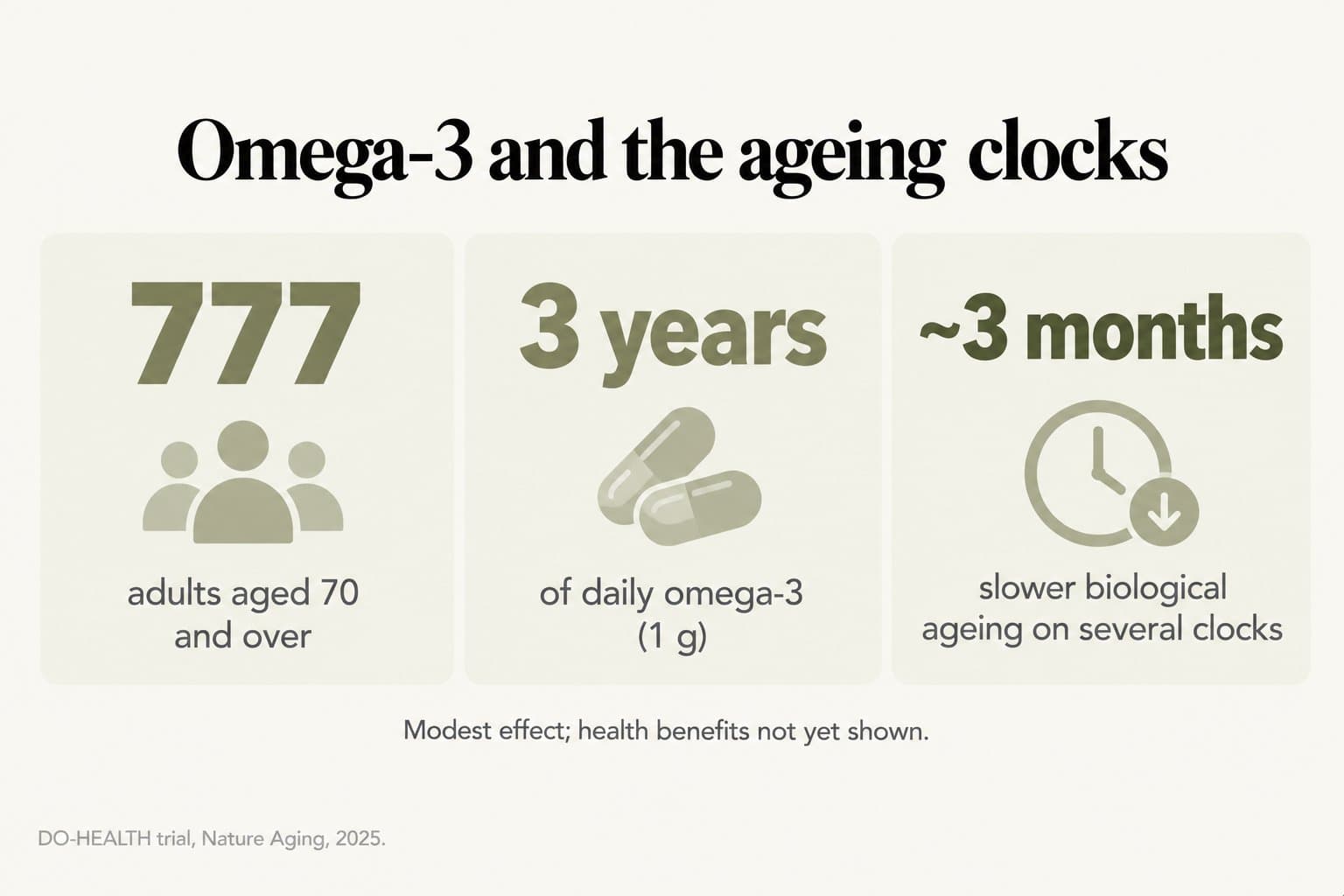
"Reverse your biological age by 3 years in 8 weeks." Headlines like this have made biological age reversal one of the most marketed ideas in longevity. The science is more nuanced. Biological age clocks can certainly change: a 2023 Harvard study showed that biological age rises sharply after emergency surgery, during pregnancy and with severe COVID-19, then falls back as people recover. Several trials have reported lower clock scores after interventions. In a pilot trial of 43 men, an 8-week diet and lifestyle programme was linked to an epigenetic age 3.23 years younger than controls. In the larger DO-HEALTH trial of 777 adults aged 70 and over, daily omega-3 supplements slowed several epigenetic clocks by about three months over three years. In the CALERIE trial, eating about 12% fewer calories slowed the pace of ageing by 2-3%. But most dramatic "reversal" studies are small, short, uncontrolled or funded by companies with an interest, clock scores vary between tests, and no study has yet shown that lowering a clock score extends life or prevents disease. The honest answer: you can probably slow some measures of biological ageing, modestly, with lifestyle; claims of large reversals are not yet proven. This article reviews the evidence.
Key numbers
| Finding | Detail |
|---|---|
| Stress and recovery (Poganik et al., 2023) | Biological age rose after emergency surgery, pregnancy and severe COVID-19, then returned towards baseline with recovery |
| Omega-3 (DO-HEALTH, 777 adults aged 70+, 3 years) | Several epigenetic clocks slowed by about 2.9-3.8 months |
| Calorie restriction (CALERIE, 2 years) | Pace of ageing slowed by 2-3% on DunedinPACE; other clocks unchanged |
| Diet and lifestyle pilot (43 men, 8 weeks) | Epigenetic age 3.23 years lower than controls; 18 men in the final treatment analysis |
| TRIIM (9 men, 1 year, growth hormone + DHEA + metformin) | Average epigenetic age about 1.5 years lower; no control group |
What "reversing" biological age means
Biological age tests, such as epigenetic clocks, estimate how old your body seems based on molecular patterns (see Epigenetic Clocks Explained). "Reversing" biological age usually means that a person's clock score fell after an intervention. That's different from proving that their body is genuinely younger, or that they'll live longer or healthier lives.
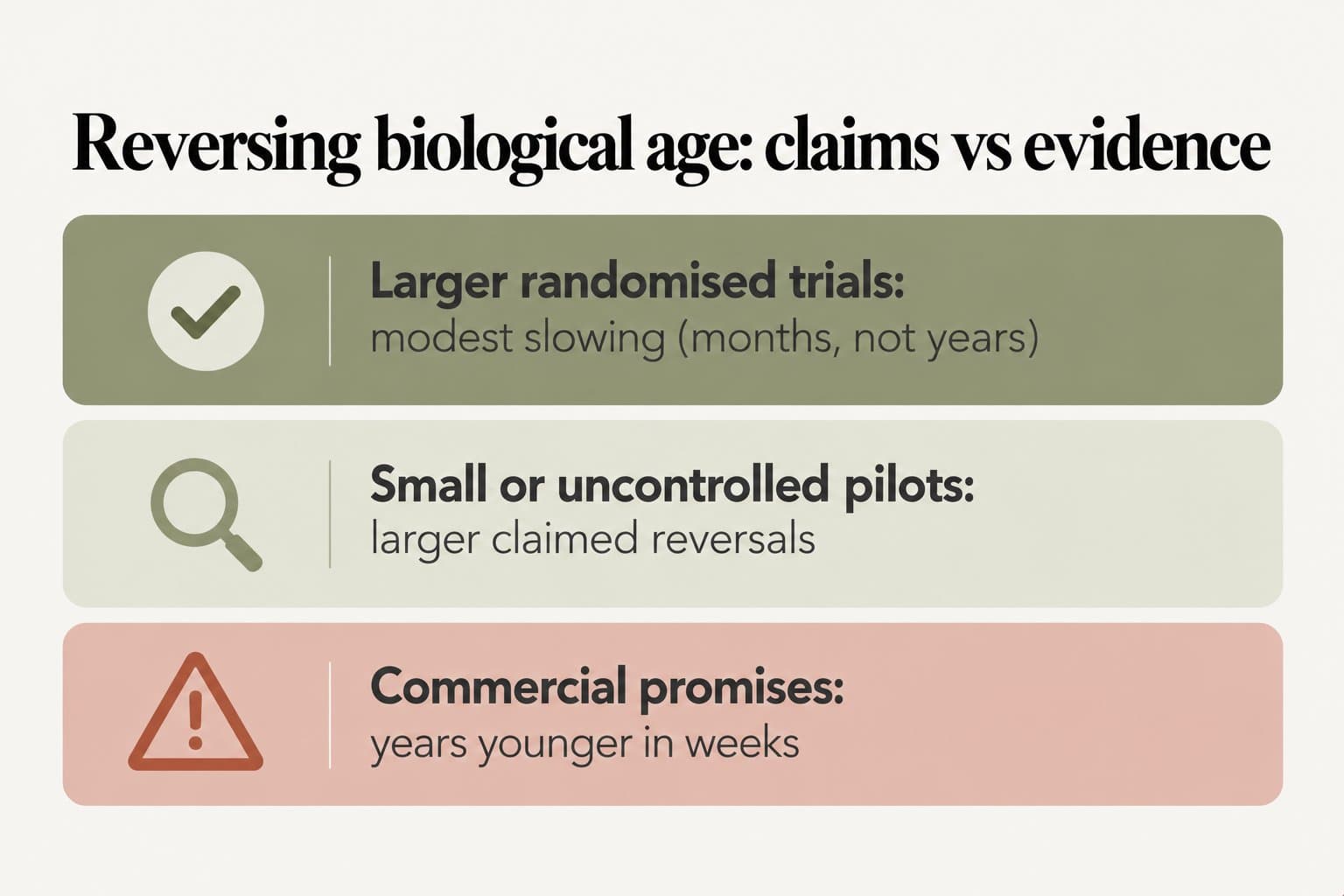
Evidence strength
Strong: biological age scores change, and can rebound after stress. A 2023 study in Cell Metabolism, led by Jesse Poganik and Vadim Gladyshev at Harvard, found that biological age measured by epigenetic clocks rose rapidly after emergency surgery, during pregnancy and in severe COVID-19, then returned towards baseline as people recovered, sometimes within days. In some COVID-19 patients, an anti-inflammatory drug, tocilizumab, was linked to faster recovery. This shows that clock scores are dynamic: a short-term rise or fall may reflect stress and recovery rather than a lasting change in how fast someone is ageing.
Clock scores also vary between tests: early clocks could differ by up to 9 years when the same sample was tested twice. A drop in a single score after an intervention can therefore reflect noise rather than real change.
Moderate: modest slowing in larger randomised trials.
- Omega-3 (DO-HEALTH): in this Swiss trial, 777 adults aged 70 and over received omega-3 (1 g a day), vitamin D (2,000 IU a day), a home exercise programme three times a week, or combinations, for three years. Omega-3 had the strongest effect, slowing several epigenetic clocks by about 2.9-3.8 months over three years, with some additive benefit from combining all three. Independent experts described the trial as "well conducted" but urged caution: the effects were small, the participants relatively healthy and homogeneous, and it's unknown whether the changes translate into better health. As one commented: "There's just too much that we don't know yet."
- Calorie restriction (CALERIE): eating about 12% fewer calories for two years slowed the pace of ageing measured by DunedinPACE by 2-3%, while other clocks didn't change (see Calorie Restriction and Fasting).
Limited: small trials reporting larger reversals.
- Diet and lifestyle pilot: in a 2021 pilot randomised trial, 43 healthy men aged 50-72 followed an 8-week programme of diet, sleep, exercise, relaxation, probiotics and plant nutrients. Their epigenetic age (Horvath clock) was 3.23 years lower than controls at the end. But only 18 men were analysed in the treatment group, the within-group change of 1.96 years didn't reach clear statistical significance, and only men were studied.
- TRIIM: in 2019, nine men aged 51-65 took growth hormone, DHEA and metformin for a year to regrow the thymus gland. Their average epigenetic age fell by about 1.5 years across four clocks. There was no control group, and an independent expert described the study as "not very well controlled".
- Plasma exchange: a 2025 industry-supported trial reported reductions in biological age of 1.32-2.61 years with therapeutic plasma exchange (see Young Blood and Plasma Exchange).
Important limitations.
- No trial has yet shown that lowering a clock score reduces disease or extends life.
- Different clocks give different results, and some trials report only the clocks that improved.
- Small and short studies are vulnerable to chance findings, and many lack proper control groups.
- Conflicts of interest are common, as companies selling tests or treatments often fund the research.
- Short-term stress and illness can temporarily raise scores, so timing of tests matters.
Recommendations by situation
| Situation | What the evidence supports |
|---|---|
| Want to slow biological ageing | Focus on proven habits: exercise, diet, sleep, not smoking, limiting alcohol |
| Considering omega-3 supplements | Modest clock effects in older adults; eating oily fish twice a week is a good first step |
| Offered a programme promising years of "reversal" | Ask for randomised, independent evidence; be sceptical of large claims |
| Taking a biological age test | Use the same test, avoid testing during illness or after surgery, and don't over-interpret one result |
| Recovering from surgery, pregnancy or illness | Expect temporary changes; allow time to recover before testing |
| Considering hormones or off-label drugs for "reversal" | Not recommended outside research; risks may outweigh unproven benefits |
Practical notes
Biological age clocks are useful research tools, and early trials suggest that lifestyle and some supplements can modestly slow them. But big promises of reversing your age by several years are built on small, short or uncontrolled studies, and lower scores haven't yet been shown to mean longer, healthier lives. The interventions with the strongest evidence for healthy ageing remain the familiar ones: regular exercise, a high-quality diet with oily fish (see Meat, Fish and Eggs), good sleep, not smoking and managing blood pressure, cholesterol and blood sugar. How to judge commercial ageing tests is covered in Longevity Testing. Our Longevity Doctors can help you interpret biological age results in context, starting with the free longevity assessment.
- Poganik JR, et al. Biological age is increased by stress and restored upon recovery. Cell Metabolism, 2023;35(5):807-820.
- Bischoff-Ferrari HA, et al. Individual and additive effects of vitamin D, omega-3 and exercise on DNA methylation clocks of biological aging in older adults from the DO-HEALTH trial. Nature Aging, 2025;5(3):376-385.
- Waziry R, et al. Effect of long-term caloric restriction on DNA methylation measures of biological aging in healthy adults from the CALERIE trial. Nature Aging, 2023;3(3):248-257.
- Fitzgerald KN, et al. Potential reversal of epigenetic age using a diet and lifestyle intervention: a pilot randomized clinical trial. Aging, 2021;13(7):9419-9432.
- Fahy GM, et al. Reversal of epigenetic aging and immunosenescent trends in humans. Aging Cell, 2019;18(6):e13028.
Free longevity assessment
Has someone promised to make you
years younger in weeks?
Take the free Aevum Protocol assessment to see how your longevity science and 6 other longevity domains are performing — and get a personalised 90-day plan.
Take the free assessmentKeep reading