Longevity Science
Young Blood and Plasma Exchange:
What Parabiosis Research Means for Human Ageing
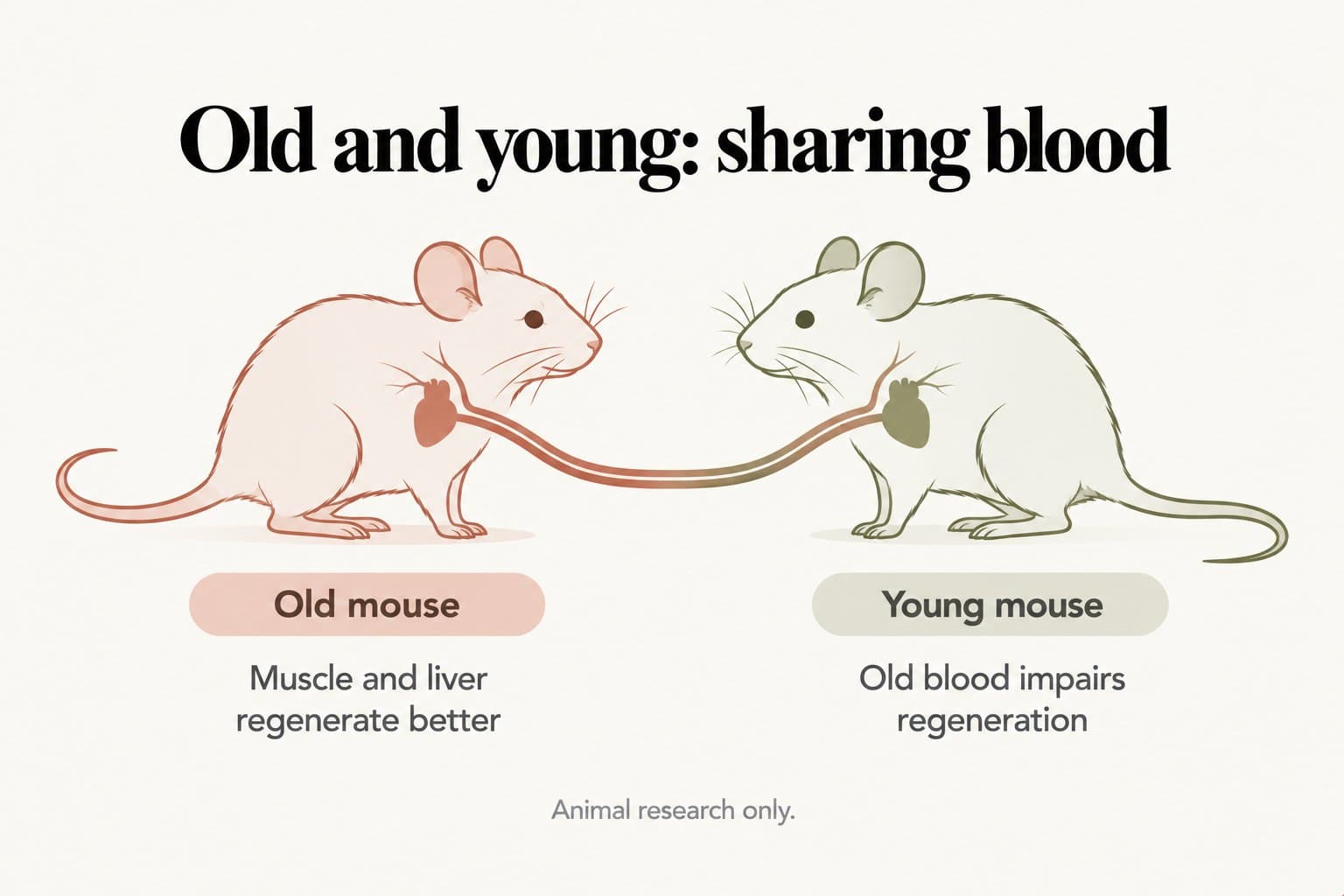
Could something in the blood control how fast we age? Experiments in mice suggest it might. In "heterochronic parabiosis", an old and a young mouse are surgically joined so they share a circulation. In a landmark 2005 study, aged muscle and liver cells exposed to young blood regained much of their youthful ability to regenerate. This sparked a wave of interest, and companies began selling infusions of young people's plasma, until the US Food and Drug Administration warned in 2019 that these treatments had no proven benefit and carried real risks. Later research shifted the story: a 2016 study found that, in many cases, the harmful effects of old blood were more pronounced than the benefits of young blood. That suggested a different approach: removing old plasma rather than adding young plasma. Therapeutic plasma exchange (TPE), a long-established hospital procedure, is now being tested. In the AMBAR trial of 496 people with Alzheimer's disease, plasma exchange with albumin was linked to 61% less decline in those with moderate disease. A small 2025 trial reported that TPE combined with immunoglobulin reduced measures of biological age by about 2.6 years. These results are early, and TPE is invasive and expensive. This article explains what's known and what's still hype.
Key numbers
| Finding | Detail |
|---|---|
| Heterochronic parabiosis (Conboy et al., 2005) | Young blood restored regeneration of aged muscle and liver cells in mice |
| Old vs young blood (Rebo et al., 2016) | Harmful effects of old blood often greater than benefits of young blood |
| FDA warning (2019) | No proven clinical benefit of young plasma infusions; risks include infection, allergic, respiratory and cardiovascular problems |
| AMBAR trial (496 people with Alzheimer's disease, 14 months) | 61% less decline than placebo in moderate Alzheimer's; no difference detectable in mild disease |
| TPE and biological age (Buck Institute, 2025) | Biological age reduced by 2.61 years with TPE plus immunoglobulin and 1.32 years with TPE alone |
The discovery
Parabiosis, surgically joining two animals so they share blood, has been used in research for over a century. In 2005, Irina and Michael Conboy, Thomas Rando and colleagues published a landmark study in Nature using "heterochronic" pairs, an old mouse joined to a young one. In the old mice, muscle stem cells regained their ability to activate and repair muscle, and liver cells divided more, with key molecular signals restored "to levels seen in young animals". The study showed that ageing stem cells "retain proliferative potential even when old", and that factors in the blood strongly influence how well tissues regenerate.
What the research shows
Young blood: from mice to the clinic, too soon. Following the mouse studies, some companies began offering infusions of plasma from young donors. One, Ambrosia, charged $8,000 for a litre of plasma from donors aged 16-25. In February 2019, the FDA warned that such treatments had "not gone through the rigorous testing" required to show benefit, that there was no proof they treated conditions such as dementia, Parkinson's disease or Alzheimer's disease, and that plasma infusions carry risks of infectious, allergic, respiratory and cardiovascular complications. Ambrosia stopped treating patients.
Old blood may matter more than young blood. In 2016, the Conboy laboratory used a technique that exchanged blood between old and young mice without joining them. They found that "in many cases, the inhibitory effects of old blood are more pronounced than the benefits of young". Old blood rapidly impaired muscle, liver and brain cell regeneration in young mice. This suggested that removing harmful factors from old blood might be more important than adding young ones, an idea that pointed towards plasma exchange.
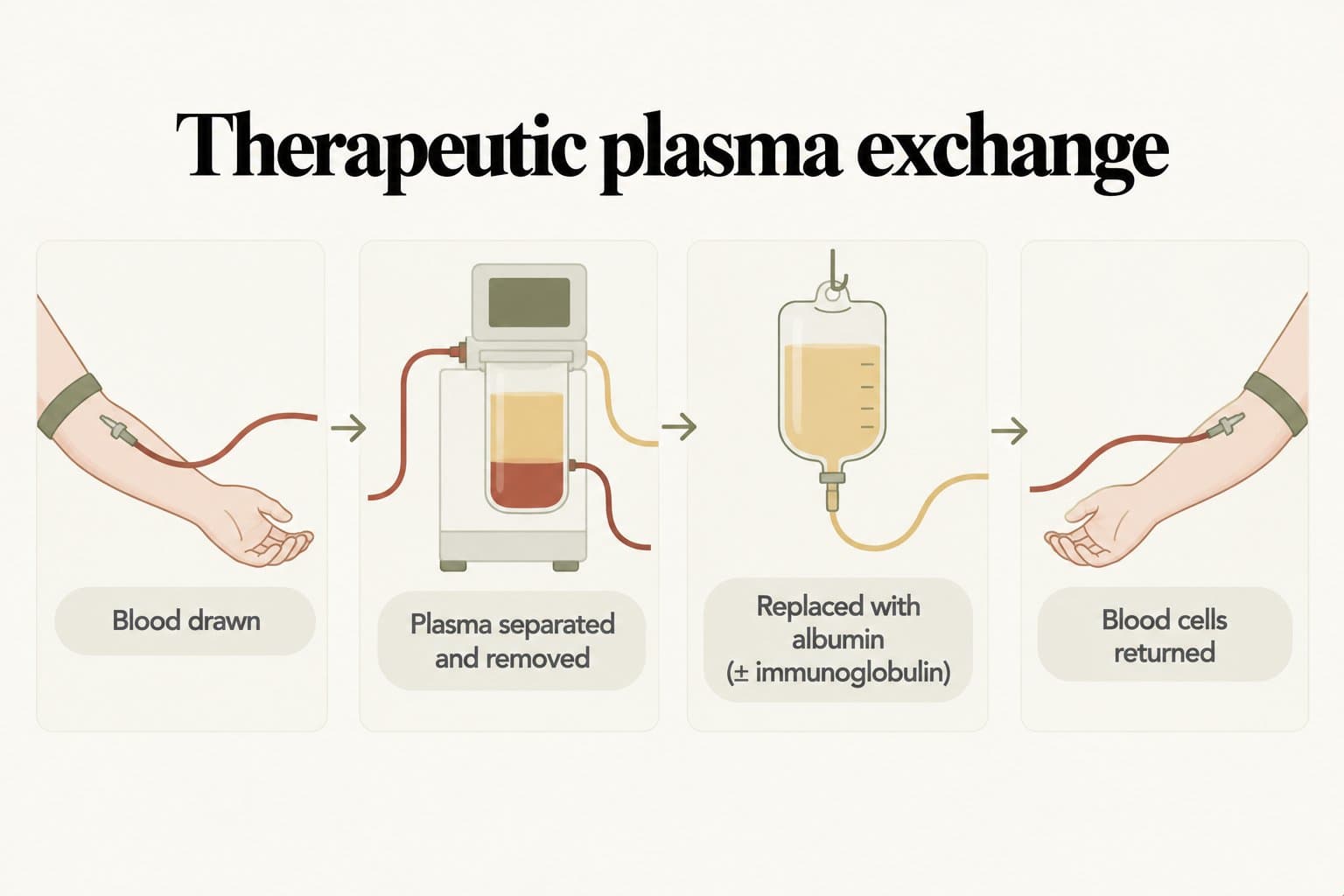
Plasma exchange in Alzheimer's disease. Therapeutic plasma exchange removes a person's plasma, the liquid part of the blood, and replaces it, typically with albumin, a protein that carries many substances in the blood. It's used routinely for some autoimmune and neurological conditions. The AMBAR trial, sponsored by the plasma company Grifols, randomly assigned 496 people aged 55-85 with mild to moderate Alzheimer's disease to plasma exchange with albumin, with or without immunoglobulin, or to placebo for 14 months. In people with moderate Alzheimer's, treatment was linked to 61% less decline than placebo across the main measures of thinking and daily function. In mild Alzheimer's, the placebo group barely declined over the study, so no difference could be detected.
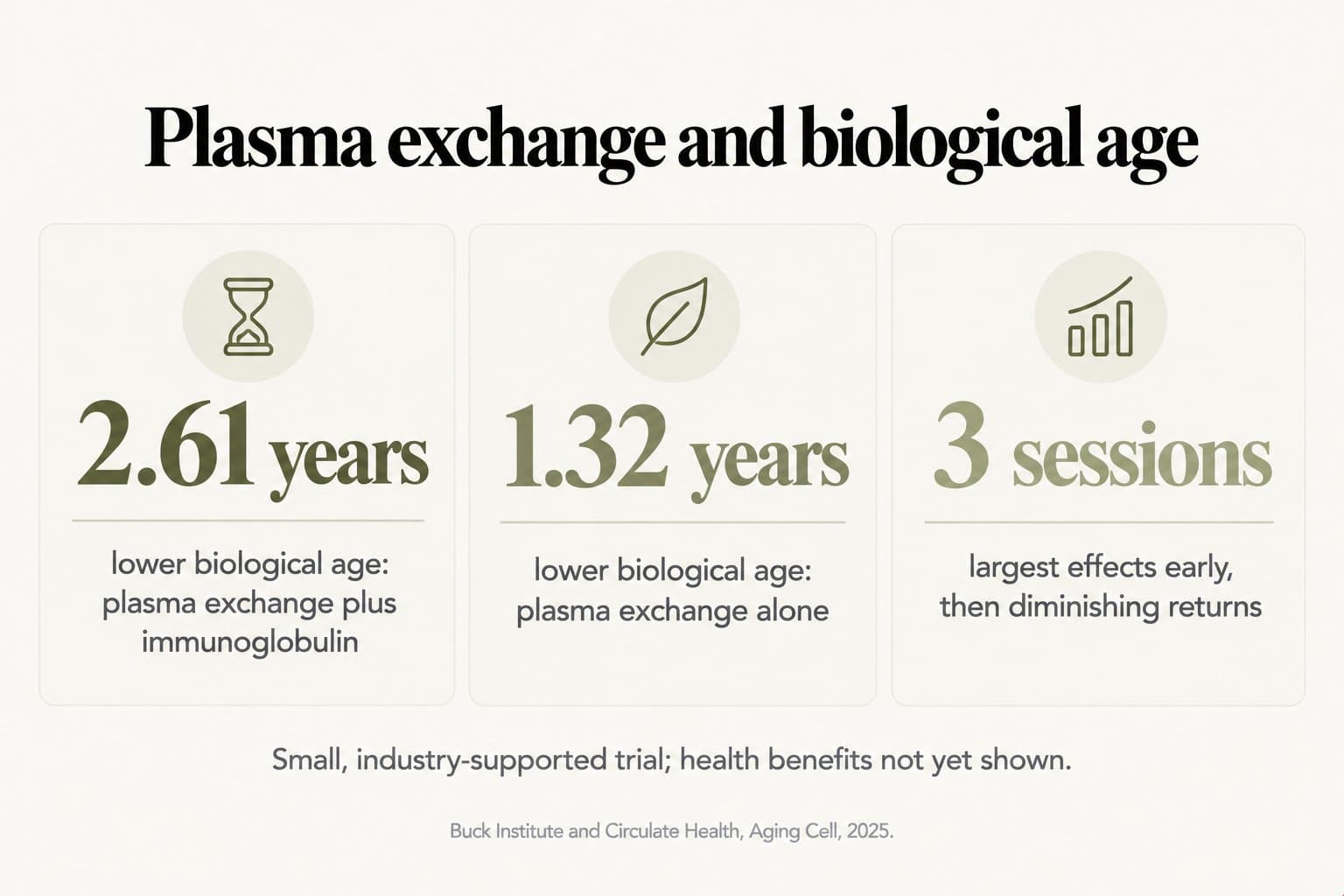
Plasma exchange and biological age. In 2025, researchers at the Buck Institute and the company Circulate Health published a placebo-controlled trial in Aging Cell comparing TPE every two weeks, TPE every two weeks plus intravenous immunoglobulin (IVIG), monthly TPE and a control group. Using a range of molecular measures of biological age, the TPE plus IVIG group showed an average reduction of 2.61 years and TPE alone 1.32 years. Immune cell profiles also became more youthful. The effects were strongest after the first three sessions, with diminishing returns afterwards. The study was supported by Circulate, and several authors had financial interests in the company.
Where it stands: promise vs risks
| Development | What it showed | Stage | Evidence strength |
|---|---|---|---|
| Heterochronic parabiosis | Young blood improves regeneration of old tissues; old blood impairs young tissues | Animal studies | Strong (mice) |
| Young plasma infusions | No proven benefit; FDA warning in 2019 | Unregulated commercial use | None |
| Plasma exchange in Alzheimer's disease (AMBAR) | Less decline in moderate disease | Phase 2b/3 trial, industry-sponsored | Moderate |
| Plasma exchange and biological age | Lower biomarker-based biological age | Small, industry-supported trial | Limited |
| Long-term effects on health and lifespan | Unknown | Not yet studied | None |
TPE requires large intravenous lines or catheters, takes hours, is expensive and can cause low blood pressure, bleeding problems, infections and allergic reactions. Lower biological age scores haven't yet been shown to reduce disease or extend life.
Why this matters for longevity
The blood research changed how scientists think about ageing: tissues aren't just ageing independently, they're influenced by signals circulating through the body. This fits the hallmark of "altered intercellular communication" (see The Hallmarks of Ageing). Scientists are now searching for specific harmful factors in old blood, and protective factors in young blood, that could become more targeted drugs. Plasma exchange is a promising tool for testing these ideas in people, but it's far from a proven anti-ageing treatment, and changes in biological age clocks need to be interpreted cautiously (see Epigenetic Clocks Explained).
Practical notes
Young plasma infusions have no proven benefit and carry real risks, and the FDA has warned against them. Therapeutic plasma exchange is a medical procedure with established uses for specific diseases; offered for anti-ageing, it's experimental and should only be undertaken within research or with full understanding of the costs, risks and limited evidence. Many of the circulating signals of ageing, such as chronic inflammation, are influenced by everyday habits: exercise, a healthy diet, good sleep, healthy weight and not smoking (see Inflammaging). Our Longevity Doctors can help you weigh up emerging therapies against proven ones, starting with the free longevity assessment.
- Conboy IM, et al. Rejuvenation of aged progenitor cells by exposure to a young systemic environment. Nature, 2005;433(7027):760-764.
- Rebo J, et al. A single heterochronic blood exchange reveals rapid inhibition of multiple tissues by old blood. Nature Communications, 2016;7:13363.
- US Food and Drug Administration. Statement cautioning consumers against receiving young donor plasma infusions. February 2019.
- Boada M, et al. A randomized, controlled clinical trial of plasma exchange with albumin replacement for Alzheimer's disease: primary results of the AMBAR Study. Alzheimer's & Dementia, 2020;16(10):1412-1425.
- Fuentealba M, et al. Multi-omics analysis reveals biomarkers that contribute to biological age rejuvenation in response to therapeutic plasma exchange. Aging Cell, 2025;e70103.
Free longevity assessment
Have you been offered a blood
treatment for ageing?
Take the free Aevum Protocol assessment to see how your longevity science and 6 other longevity domains are performing — and get a personalised 90-day plan.
Take the free assessment