Cardiovascular & Metabolic Health
Blood Pressure Explained:
What the Numbers Mean and How to Measure It Properly
Blood pressure is the force of blood against the artery walls, and it's one of the most important numbers for long-term health. High blood pressure usually causes no symptoms, but it steadily damages arteries, the heart, brain and kidneys. The risk starts lower than most people think: in a combined analysis of 61 studies and about one million adults, the risk of dying from heart disease or stroke rose steadily with blood pressure, with no safe threshold down to at least 115/75 mmHg. In middle age, each 20 mmHg higher systolic pressure was linked to more than double the risk of stroke death. High blood pressure is also very common: in Sri Lanka's national survey, 28% of adults had blood pressure of 140/90 or more, and only about half of them had been diagnosed. Getting an accurate reading matters too: talking, a full bladder or an unsupported arm can each add around 10 mmHg. This article explains what the numbers mean, how blood pressure is controlled, the latest categories, and how to measure it properly.
Key numbers
| Finding | Detail |
|---|---|
| Blood pressure and risk (61 studies, about 1 million adults) | Risk of death from heart disease and stroke rises steadily from at least 115/75 mmHg, with no safe threshold |
| Each 20 mmHg higher systolic pressure (ages 40-69) | More than double the risk of stroke death, and about double the risk of death from heart disease |
| High blood pressure in Sri Lanka (national survey, 6,342 adults) | 28.2% at 140/90 or above; 51.3% at 130/80 or above |
| Previously diagnosed (same survey, 140/90 definition) | 53.4%, so nearly half didn't know |
| Intensive treatment (SPRINT trial, 9,361 people at high risk) | Aiming for under 120 vs under 140 systolic cut major cardiovascular events by 25% and deaths by 27% |
| Common measurement errors (US Million Hearts) | Talking, a full bladder or an unsupported arm each add about 10 mmHg |
What the numbers mean
A blood pressure reading has two numbers, measured in millimetres of mercury (mmHg):
- Systolic (top number): the peak pressure in the arteries when the heart contracts.
- Diastolic (bottom number): the pressure between beats, when the heart relaxes.
So 120/80 means a systolic pressure of 120 and a diastolic pressure of 80. After about age 50, systolic pressure becomes the more important predictor of risk, because it tends to keep rising while diastolic pressure levels off or falls.
How blood pressure is controlled
Blood pressure depends on how much blood the heart pumps and how much resistance the blood vessels provide. It's regulated moment to moment by:
- The nervous system: the stress response raises heart rate and tightens blood vessels (see How the Stress Response Works).
- The kidneys: they control the body's salt and water balance, and so the volume of blood.
- Hormones: including the renin-angiotensin-aldosterone system, which tightens vessels and retains salt.
- The blood vessels themselves: healthy, flexible arteries absorb each heartbeat; stiff arteries don't.
Blood pressure tends to rise with age as arteries stiffen, and is pushed up by excess weight, high salt intake, low physical activity, alcohol, poor sleep and sleep apnoea, and chronic stress (see Sleep and Cardiovascular Health).
Blood pressure categories
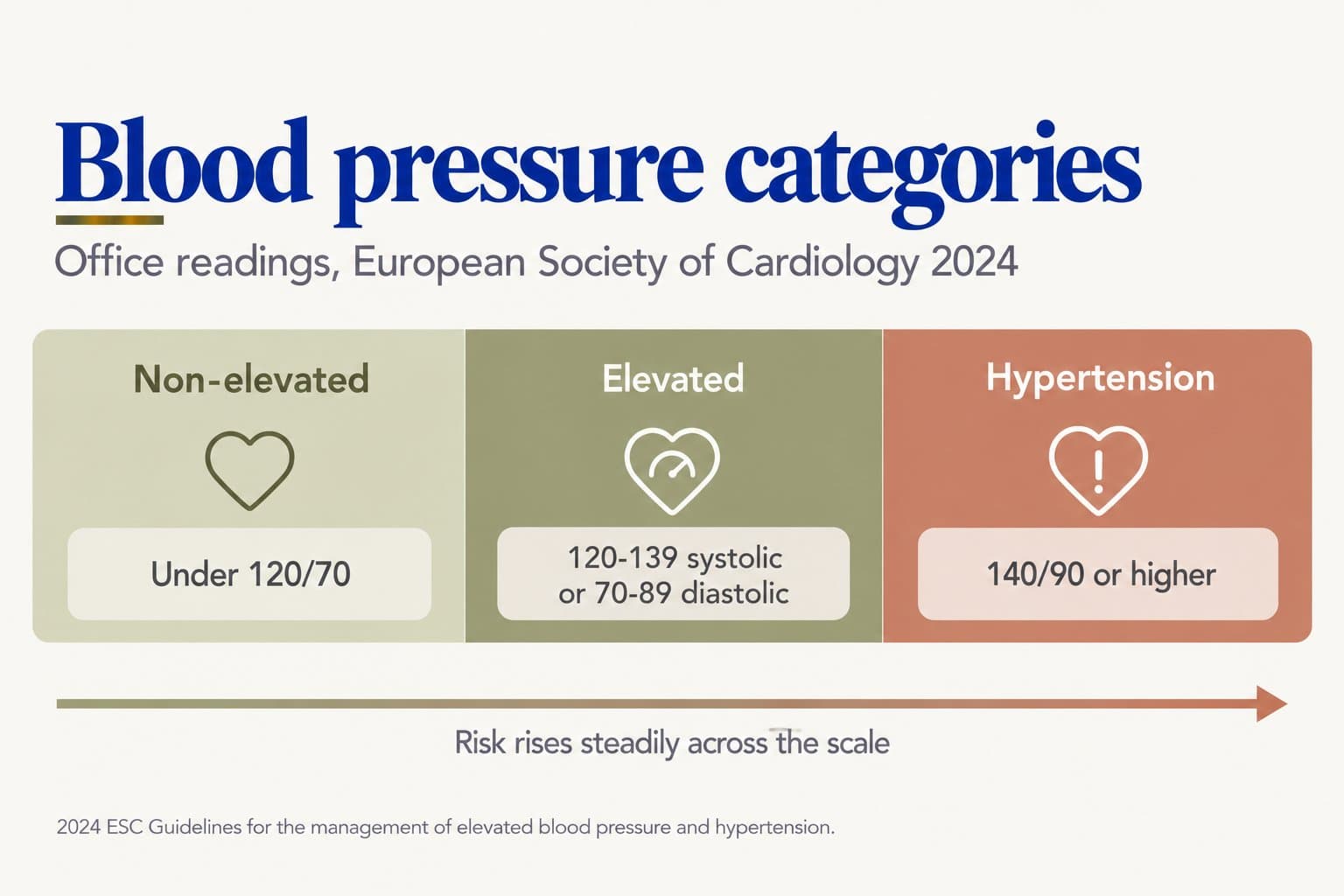
Guidelines differ slightly in how they label blood pressure, but they agree that risk rises steadily and that lower is better for most people.
| Category | European Society of Cardiology (2024) | American guidelines (2017) |
|---|---|---|
| Normal / non-elevated | Under 120/70 | Under 120/80 |
| Elevated | 120-139 systolic or 70-89 diastolic | 120-129 systolic and under 80 diastolic |
| High blood pressure (hypertension) | 140/90 or higher | Stage 1: 130-139 or 80-89; stage 2: 140/90 or higher |
The 2024 European guidelines introduced the "elevated" category to highlight that risk begins rising well below the traditional 140/90 threshold. For people with elevated blood pressure, lifestyle changes come first, and medication is considered based on overall cardiovascular risk. For people being treated, the European guidelines recommend a systolic target of 120-129 mmHg where it can be safely achieved.
What the research shows
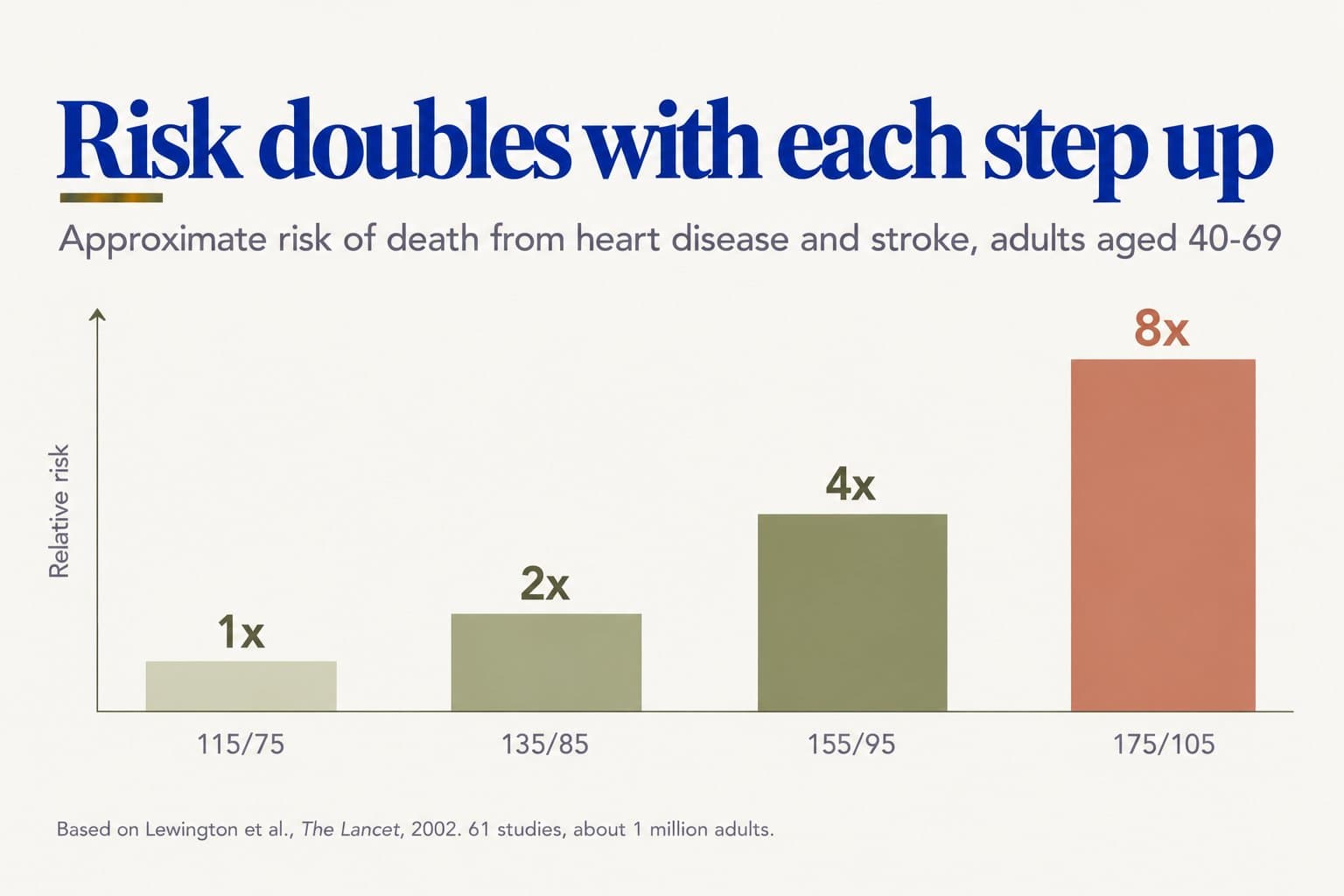
Risk rises steadily from lower levels than expected. The Prospective Studies Collaboration combined individual data from about one million adults in 61 studies. Within each age group, the risk of death from heart disease and stroke rose steadily with usual blood pressure, "without any evidence of a threshold down to at least 115/75 mm Hg". In people aged 40-69, each 20 mmHg higher systolic pressure, or 10 mmHg higher diastolic pressure, was linked to more than double the risk of death from stroke and about double the risk of death from heart disease and other vascular causes. The relative effect was somewhat smaller in people in their 80s, but because their overall risk is higher, the absolute impact was still large.
High blood pressure is common, and often undiagnosed, in Sri Lanka. In the 2018-19 Sri Lanka Health and Ageing Study, which measured blood pressure in 6,342 adults across the country, 28.2% had high blood pressure using the traditional 140/90 threshold, and 51.3% using the American 130/80 threshold. Only 53.4% of those above 140/90 had previously been diagnosed, so nearly half were unaware.
Lower targets can save lives in people at high risk. The SPRINT trial randomly assigned 9,361 people with high blood pressure and high cardiovascular risk, but without diabetes, to a systolic target of under 120 or under 140 mmHg. The trial was stopped early because the intensive group had 25% fewer major cardiovascular events and 27% fewer deaths from any cause. Some specific side effects, such as fainting, electrolyte problems and sudden kidney injury, were more common with intensive treatment, so targets need to be individualised.
Measuring blood pressure properly
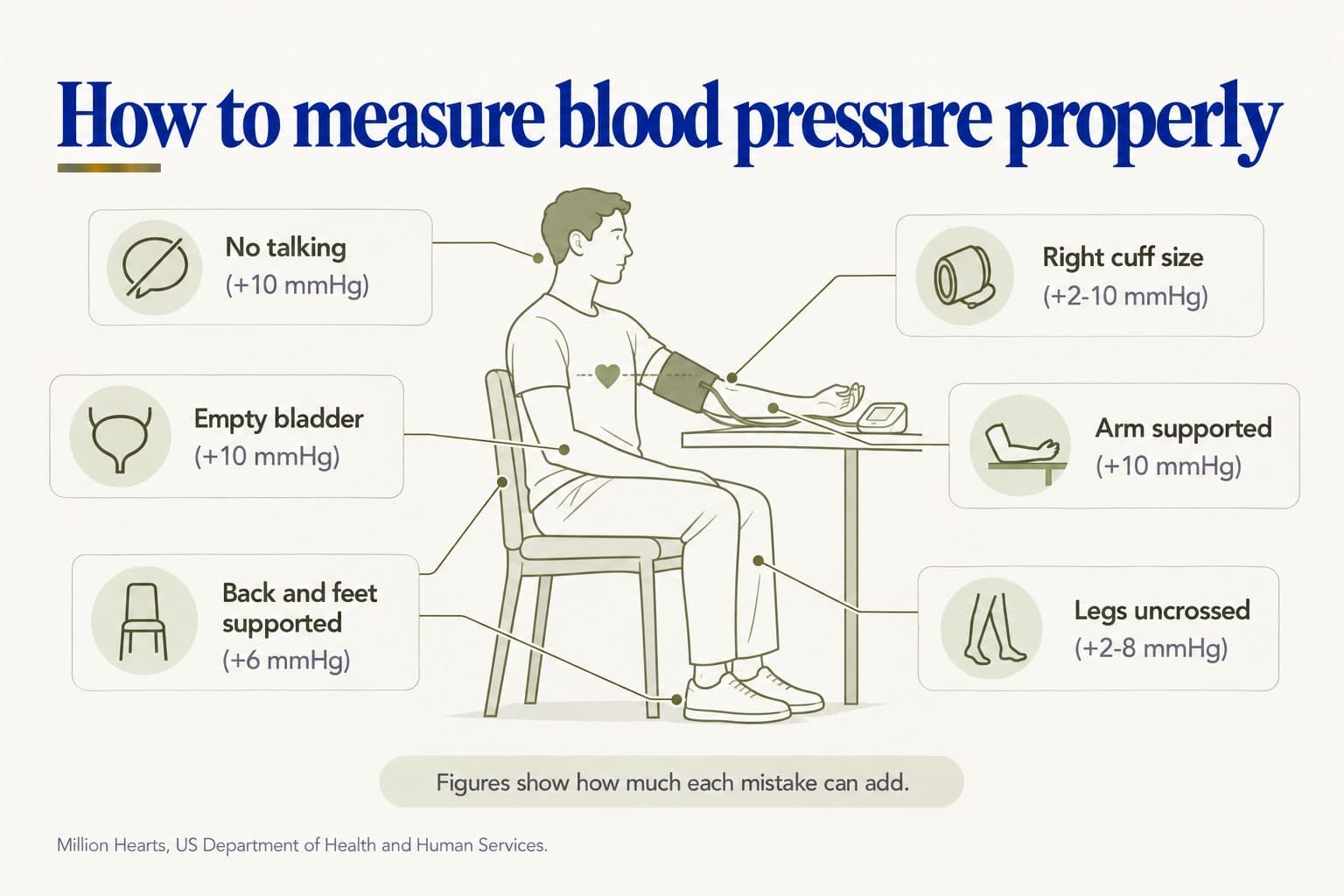
Blood pressure varies from minute to minute and is easily pushed up by how it's measured. The US Million Hearts initiative lists these common errors:
| Error | Effect on the reading |
|---|---|
| Talking or listening actively | Adds about 10 mmHg |
| Arm unsupported | Adds about 10 mmHg |
| Full bladder | Adds about 10 mmHg |
| Back and feet unsupported | Adds about 6 mmHg |
| Legs crossed | Adds 2-8 mmHg |
| Cuff too small | Adds 2-10 mmHg |
| Cuff over clothing | Adds 5-50 mmHg |
Two other patterns matter:
- White-coat hypertension: blood pressure is high in the clinic but normal at home.
- Masked hypertension: blood pressure is normal in the clinic but high at home or during the day.
For this reason, the 2024 European guidelines recommend home or 24-hour ambulatory blood pressure monitoring to confirm a diagnosis where possible. Home monitoring is covered in Home Blood Pressure Monitoring.
Why this matters for longevity
High blood pressure is one of the leading causes of heart attack, stroke, heart failure, kidney disease and vascular dementia worldwide, and it's one of the most treatable (see Vascular Health and the Brain). Because it builds up damage silently, the most important step is simply to know your numbers, measured properly, and to act early when they start to rise. Lifestyle changes such as reducing salt, losing excess weight, exercising, limiting alcohol and managing stress can lower blood pressure meaningfully (see Lowering Blood Pressure Without Medication).
Practical notes
- Check your blood pressure at least once a year from early adulthood, and more often if it's above 120/80 or you have other risk factors.
- Measure properly: sit quietly for 5 minutes, back supported, feet flat, arm supported at heart level, cuff on bare skin, no talking.
- Don't rely on a single reading: high readings should be confirmed on repeat visits or with home monitoring.
- Treat "elevated" as a warning, not a reassurance: risk rises from about 115/75, so acting on 130/85 is worthwhile.
- Prospective Studies Collaboration (Lewington S, et al.). Age-specific relevance of usual blood pressure to vascular mortality: a meta-analysis of individual data for one million adults in 61 prospective studies. The Lancet, 2002;360(9349):1903-1913.
- McEvoy JW, et al. 2024 ESC Guidelines for the management of elevated blood pressure and hypertension. European Heart Journal, 2024;45(38):3912-4018.
- Whelton PK, et al. 2017 ACC/AHA Guideline for the Prevention, Detection, Evaluation, and Management of High Blood Pressure in Adults. Hypertension, 2018;71(6):e13-e115.
- Rannan-Eliya RP, et al. Prevalence and associations of hypertension in Sri Lankan adults: estimates from the SLHAS 2018-19 survey using JNC7 and ACC/AHA 2017 guidelines. Global Heart, 2022;17(1):50.
- SPRINT Research Group. A randomized trial of intensive versus standard blood-pressure control. New England Journal of Medicine, 2015;373(22):2103-2116.
- Million Hearts, US Department of Health and Human Services. 7 Simple Tips to Get an Accurate Blood Pressure Reading.
Free longevity assessment
When did you last have your
blood pressure measured properly?
Take the free Aevum Protocol assessment to see how your cardiovascular & metabolic health and 6 other longevity domains are performing — and get a personalised 90-day plan.
Take the free assessmentKeep reading
Related articles
Cardiovascular & Metabolic Health
How Atherosclerosis Develops: The Decades-Long Process Behind Heart Attacks and Strokes
Cardiovascular & Metabolic Health
Hypertension and Longevity: Why High Blood Pressure Matters and What Lowering It Achieves
Cardiovascular & Metabolic Health