Stress & Mental Wellbeing
A Mental Wellbeing Routine
for Every Life Stage
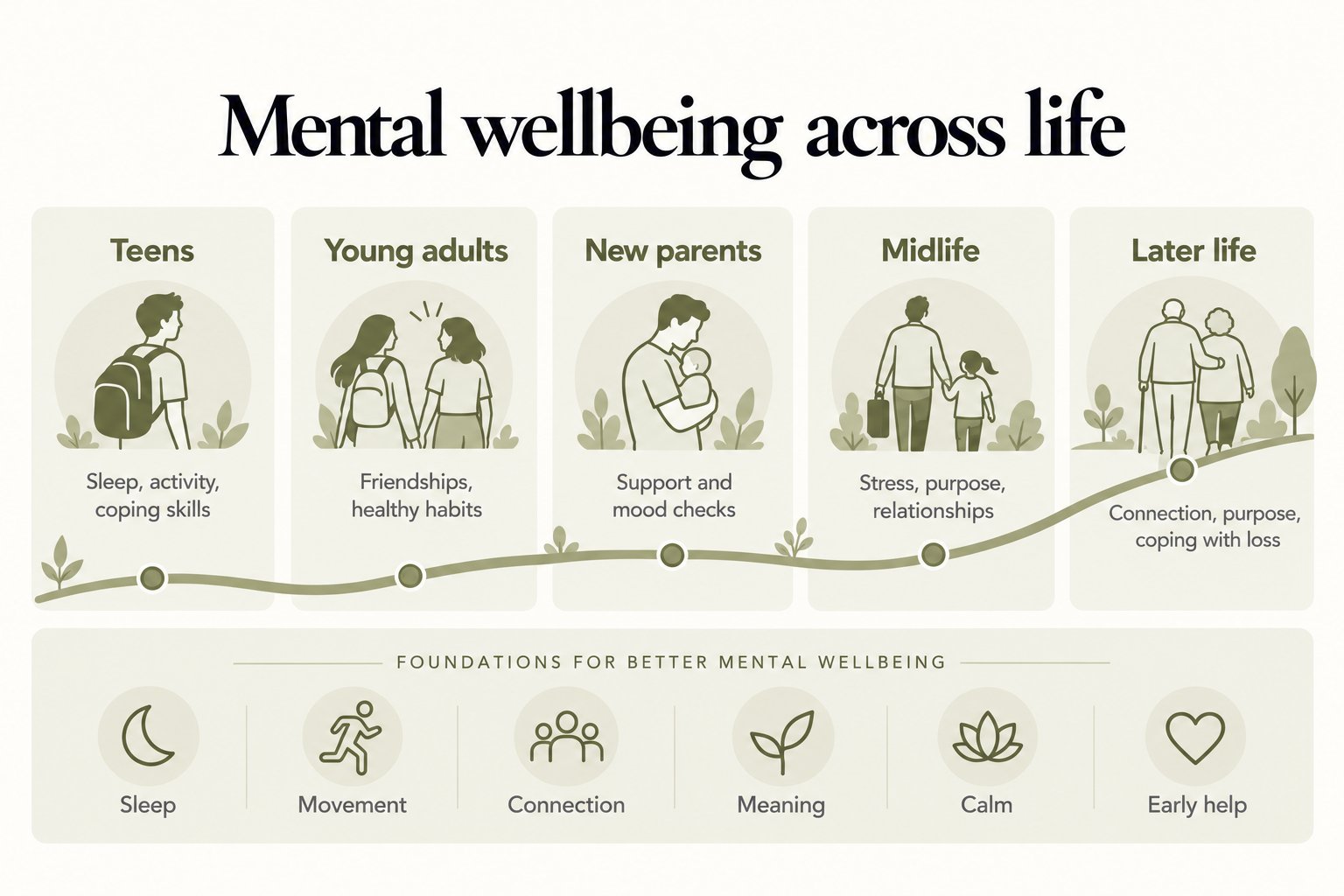
Mental wellbeing isn't just the absence of mental illness; it's feeling well and functioning well, with purpose, connection and the ability to cope with life's stresses. This section has covered the evidence: purpose, optimism and strong relationships are linked to longer, healthier lives; loneliness raises the risk of heart disease, stroke and early death; depression and anxiety affect the body as well as the mind; meditation, exercise, therapy and kindness all help, each in its own way. This final guide brings it together into a practical routine, adapted to each stage of life. The needs change as we age. About 1 in 7 young people aged 10-19 experience a mental health condition, most of which go unrecognised and untreated. Around 10% of pregnant women and 13% of women who've just given birth have a mental disorder, mostly depression. In midlife, work, caring responsibilities and stress peak, while later life brings retirement, loss and a higher risk of isolation. The foundations, though, are the same throughout: sleep, movement, connection, meaning, a regular practice of calm or reflection, and getting help early when it's needed. This guide sets out simple daily and weekly habits, the priorities for each life stage, and when to seek support.
Key numbers
| Finding | Detail |
|---|---|
| Young people aged 10-19 (WHO) | About 1 in 7 have a mental health condition; most unrecognised and untreated |
| Pregnancy and after childbirth (WHO) | About 10% of pregnant women and 13% of new mothers have a mental disorder, mostly depression |
| Adults with depression (WHO) | 5.2% of adults; 5.4% of those aged 70+ |
| Strong social relationships (148 studies) | 50% greater odds of survival |
| Strong sense of purpose (10 studies, 136,265 people) | About 17% lower mortality |
| Exercise for depression (218 trials) | Walking, running, strength training and yoga about as effective as CBT |
The foundations at every age
Whatever your age, the same building blocks support mental wellbeing:
- 1. Sleep: regular, sufficient sleep stabilises mood and stress.
- 2. Movement: physical activity reduces depression, anxiety and stress (see Depression and Physical Health).
- 3. Connection: close relationships, friendships and community (see Building Social Connection).
- 4. Meaning: purpose, values, faith or spiritual practice (see Purpose in Life and Longevity and Spirituality, Religion and Health).
- 5. Calm and reflection: meditation, prayer, breathing or time in nature (see How to Start Meditating).
- 6. Healthy limits: on alcohol, screens and overwork (see Digital Overload and Mental Wellbeing).
- 7. Early help: recognising warning signs and seeking support before problems become severe (see Mental Health Warning Signs and Getting Help in Sri Lanka).
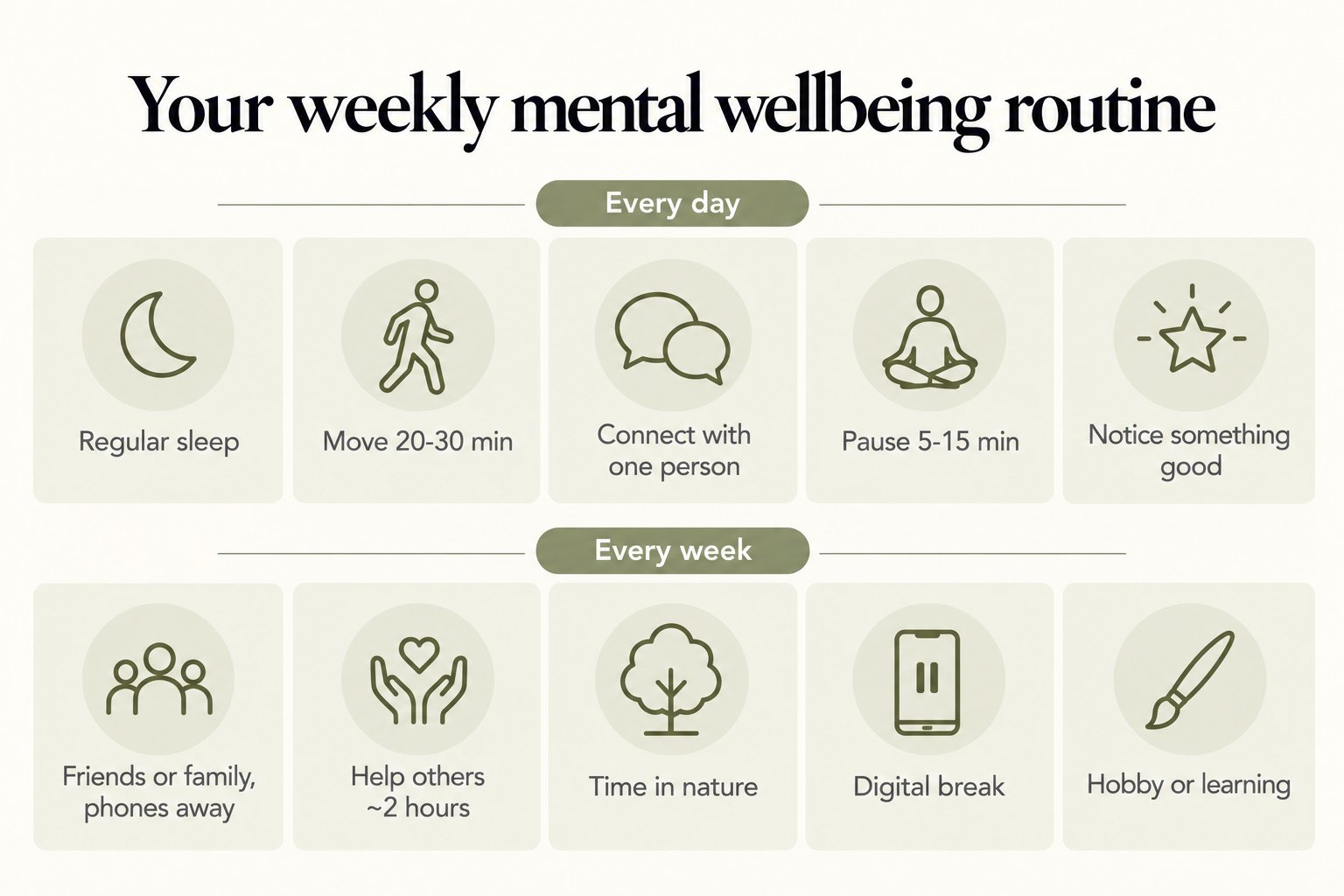
A simple weekly routine
Every day.
- Sleep at regular times, aiming for at least seven hours for adults.
- Move for at least 20-30 minutes, ideally outdoors.
- Connect with at least one person in a meaningful way: a conversation, a call, a shared meal.
- Pause for 5-15 minutes of meditation, prayer, slow breathing or quiet reflection.
- Notice something good: a moment of gratitude, or one thing that went well.
Every week.
- Spend time with friends or family, with phones put away.
- Do something meaningful for others: volunteering, helping a neighbour or a religious or community activity, ideally about two hours a week.
- Get out into nature, such as a park, garden, beach or walk.
- Take a digital break for a few hours or a day.
- Do something you enjoy or are learning, such as a hobby, a course or a creative project.
Every year.
- Check in on your mental wellbeing with your doctor as part of a regular health review, especially at major life changes.
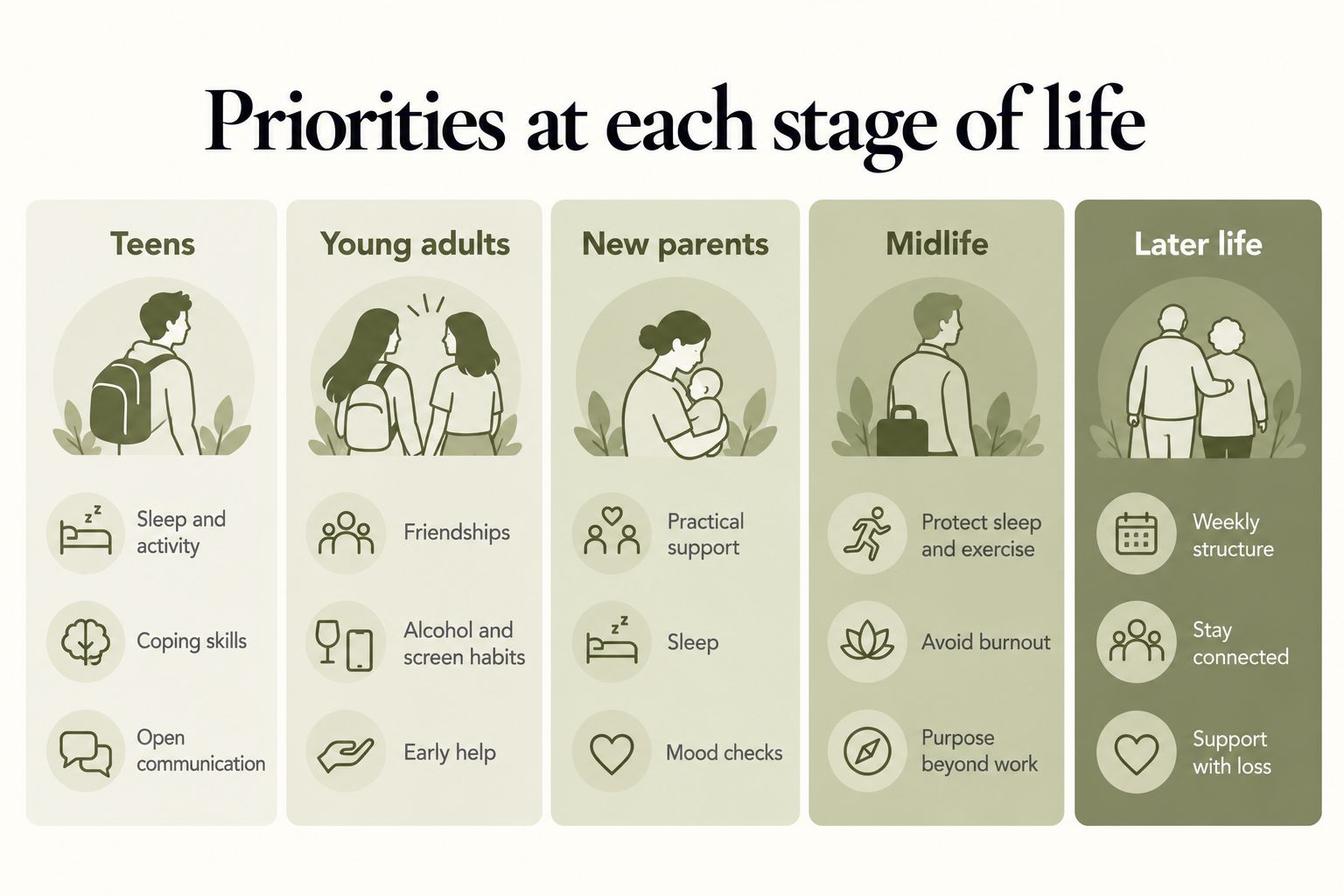
Priorities at each life stage
Childhood and the teenage years. The WHO estimates that about 1 in 7 young people aged 10-19 experience a mental health condition, and that most remain unrecognised and untreated. It recommends building regular sleep and physical activity, skills for coping, problem-solving and managing emotions, and supportive environments at home, school and in the community.
- Protect sleep and limit devices at night.
- Encourage sport, play and time outdoors.
- Talk openly about feelings, and keep communication open about online life and exam pressure.
- Watch for withdrawal, irritability, falling grades or changes in eating and sleep.
Young adulthood. A time of major transitions: study, work, relationships and often moving away from home.
- Build friendships through regular shared activities.
- Develop healthy habits around alcohol, sleep and social media.
- Seek help early for anxiety or depression, which often first appear at this age.
Pregnancy and new parenthood. According to the WHO, about 10% of pregnant women and 13% of women who've just given birth experience a mental disorder, mostly depression; rates are higher in low- and middle-income countries. Fathers can be affected too.
- Ask for and accept practical help.
- Protect sleep where possible, for example by sharing night feeds.
- Ask about mood at antenatal and postnatal visits, and speak up if you feel persistently low, anxious or unable to cope.
Midlife. Often the busiest stage, combining work, raising children, caring for ageing parents and, for women, perimenopause.
- Protect time for sleep, exercise and relationships, which are often the first things squeezed out.
- Watch for burnout (see Burnout).
- Reconnect with purpose and values, and start building interests beyond work before retirement.
Retirement and later life. A time of new freedom, but also of losses: work roles, health, friends and partners. About 5.4% of adults aged 70 and over have depression, and social isolation affects many older adults.
- Plan a weekly structure with social, physical and meaningful activities (see Finding Purpose at Every Age).
- Stay connected, especially if family live far away (see Loneliness and Social Isolation).
- Treat hearing and vision problems, which can cut people off from others.
- Allow time to grieve losses, and seek help if grief becomes overwhelming (see Grief and Bereavement).
Recommendations by scenario
| Scenario | What to prioritise |
|---|---|
| Teenager under exam pressure | Sleep, exercise, limits on night-time devices, open conversation |
| Young adult who has moved for study or work | Join regular activities; healthy alcohol and screen habits |
| Pregnant or recently had a baby | Practical support, sleep, and mood checks at every visit |
| Busy midlife professional | Protect sleep, exercise and one weekly social commitment; watch for burnout |
| Caring for children and ageing parents | Share responsibilities; keep time for yourself; ask for help |
| Recently retired | Weekly structure, volunteering, learning and social groups |
| Older adult living alone or with family abroad | Daily contact, community activities, video calls, treat hearing loss |
| Recently bereaved | Lean on community and rituals; seek help if grief stays overwhelming |
| Anyone with persistent low mood, anxiety or thoughts of self-harm | Seek help early: your doctor, 1926 or 1333 |
Why this matters for longevity
Mental wellbeing is a central part of healthy ageing, not an optional extra. Purpose, optimism, strong relationships and spiritual or reflective practice are linked to longer lives, while depression, anxiety and loneliness raise the risk of heart disease, stroke, dementia and early death. The good news is that the foundations are simple, low-cost and available to everyone, and that when problems do arise, effective treatments exist. Looking after your mind is one of the most important investments you can make in a long, healthy life.
Practical notes
Start with one habit from the daily list and one from the weekly list, and keep them going for a month before adding more. Notice how you feel, not just what you do. Share this routine with your family, adapting it to each person's stage of life. If you or someone you love is struggling, don't wait: early help works best. Save the key Sri Lankan helpline numbers in your phone: 1990 for emergencies, 1926 for the National Mental Health Helpline and 1333 for CCCline. Our Longevity Doctors include mental wellbeing alongside physical health in every assessment, starting with the free longevity assessment.
- World Health Organization. Mental health of adolescents: fact sheet. Geneva: WHO.
- World Health Organization. Maternal mental health. Geneva: WHO.
- World Health Organization. Depression: fact sheet. Geneva: WHO.
- Holt-Lunstad J, Smith TB, Layton JB. Social relationships and mortality risk: a meta-analytic review. PLOS Medicine, 2010;7(7):e1000316.
- Cohen R, Bavishi C, Rozanski A. Purpose in life and its relationship to all-cause mortality and cardiovascular events: a meta-analysis. Psychosomatic Medicine, 2016;78(2):122-133.
- Noetel M, et al. Effect of exercise for depression: systematic review and network meta-analysis of randomised controlled trials. BMJ, 2024;384:e075847.
- World Health Organization. Social connection linked to improved health and reduced risk of early death (WHO Commission on Social Connection). News release, 30 June 2025.
Free longevity assessment
Ready to build your
wellbeing routine?
Take the free Aevum Protocol assessment to see how your stress & mental wellbeing and 6 other longevity domains are performing — and get a personalised 90-day plan.
Take the free assessment