Stress & Mental Wellbeing
Grief and Bereavement:
How Loss Affects Health, and How People Recover
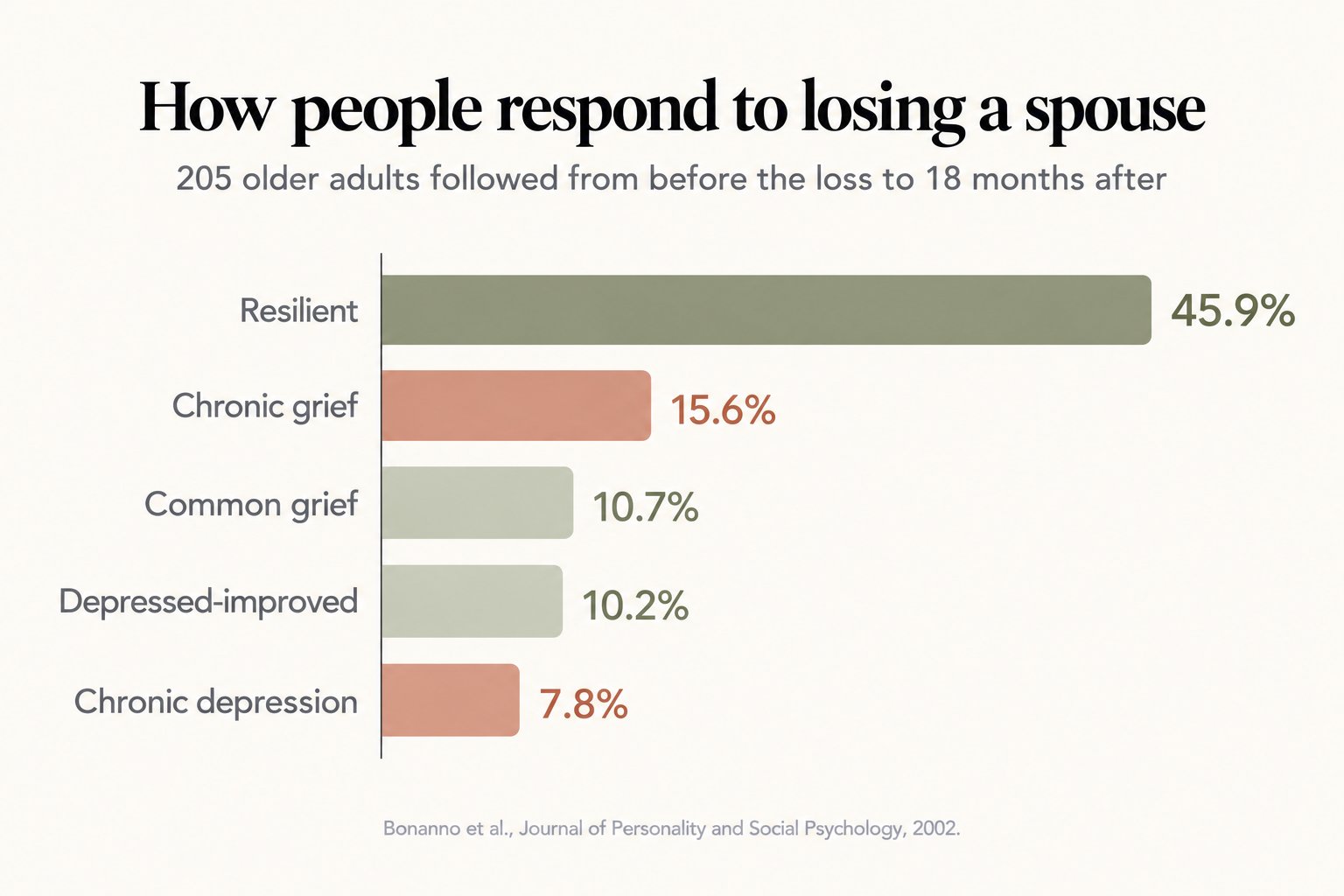
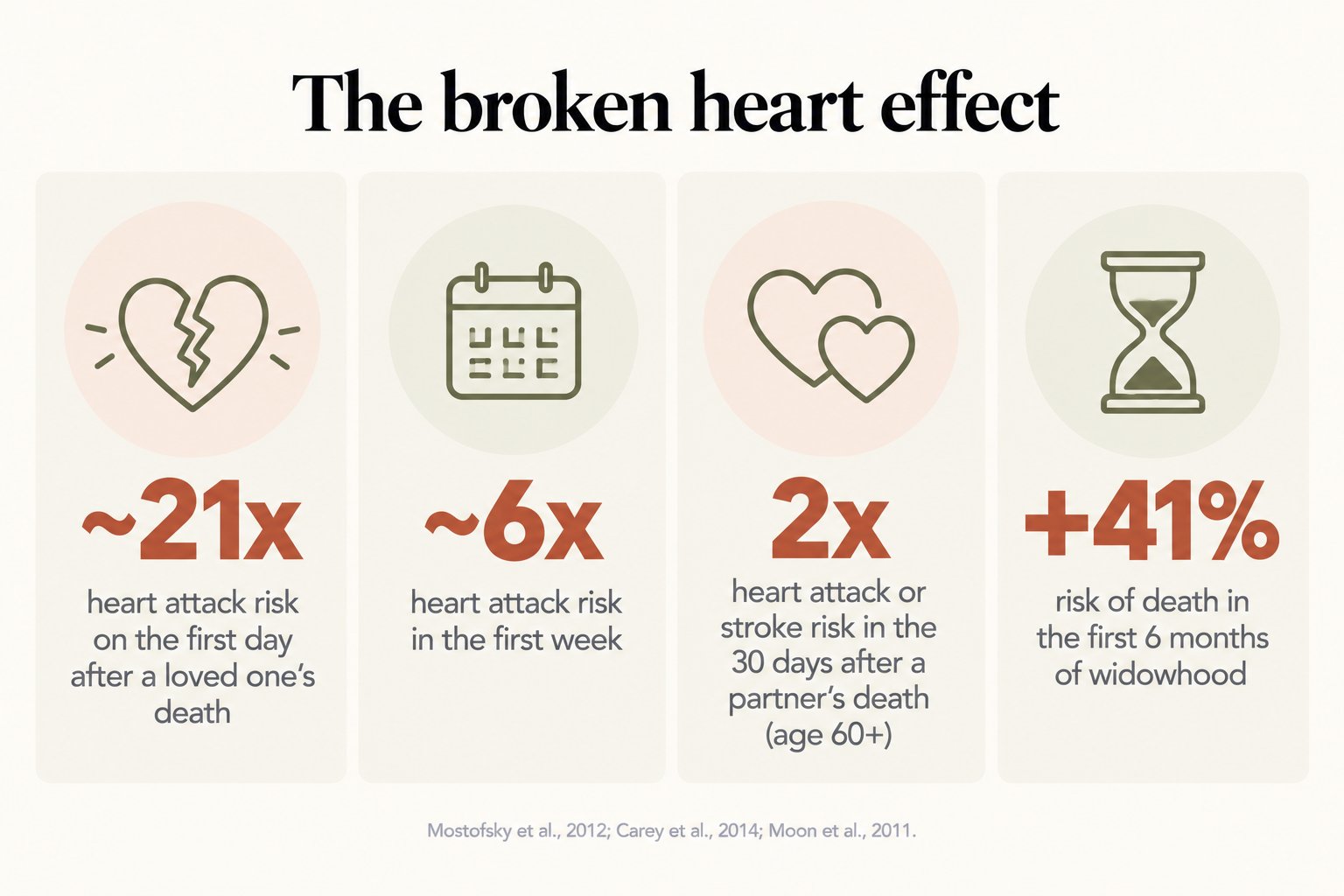
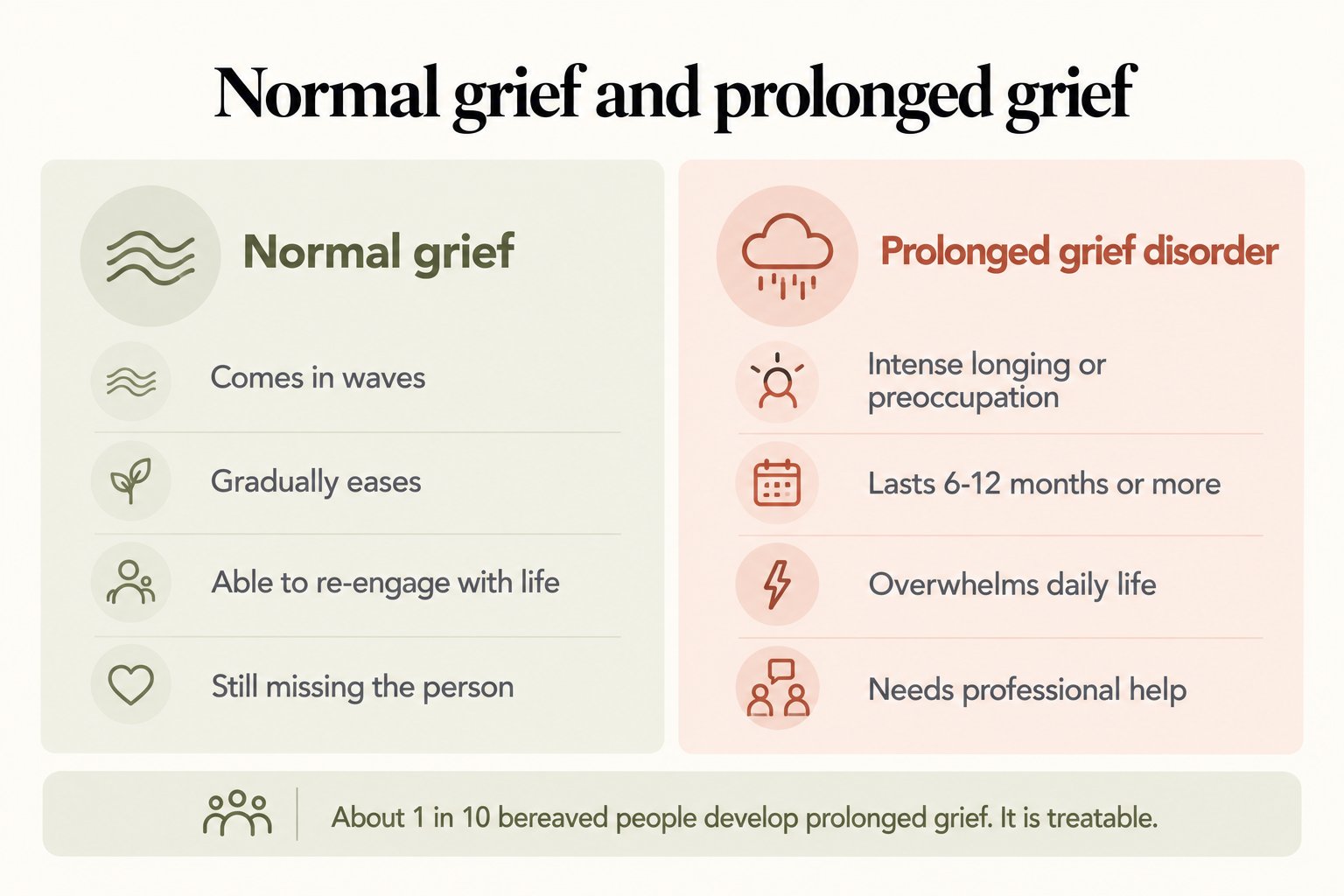
Losing someone we love is one of the hardest experiences in life, and almost everyone faces it. Grief is a natural response to loss, not an illness, and most people gradually adapt with the support of family, friends, faith and community. In a study of older adults who lost a spouse, the most common pattern, seen in 45.9%, was resilience: sadness and longing, but relatively stable functioning. But bereavement also affects the body. Research on the "broken heart" effect shows that in the first day after the death of someone close, the risk of a heart attack is about 21 times higher than usual, and almost six times higher during the first week. Among people aged 60 and over, the risk of heart attack or stroke doubled in the 30 days after a partner's death. A meta-analysis of 15 studies with more than 2.2 million people found that the risk of death was 41% higher in the first six months after losing a spouse, with the effect stronger in men than in women. For a minority, about 1 in 10 bereaved people, grief becomes stuck and overwhelming. This is now recognised as prolonged grief disorder, diagnosed when intense longing or preoccupation with the person who died persists for at least six months (ICD-11) or 12 months (DSM-5-TR) and seriously affects daily life. It's treatable with specialised therapy. This article explains how grief affects health, the difference between normal and prolonged grief, and how to support yourself and others through loss.
Key numbers
| Finding | Detail |
|---|---|
| Resilience after losing a spouse (205 older adults) | 45.9% showed a resilient pattern; 15.6% chronic grief |
| Heart attack after a death (1,985 heart attack survivors) | About 21 times higher risk on the first day; almost 6 times in the first week |
| Partner's death in people aged 60+ | Risk of heart attack or stroke doubled in the first 30 days |
| Widowhood and mortality (15 studies, 2.26 million people) | 41% higher risk in the first 6 months; 14% after; men 23% vs women 4% |
| Prolonged grief disorder | About 1 in 10 bereaved people; diagnosed at 6 months (ICD-11) or 12 months (DSM-5-TR) |
What grief is
Grief is the emotional, physical and social response to loss. It can include sadness, longing, disbelief, anger, guilt, anxiety and numbness, as well as physical symptoms such as tiredness, poor sleep, loss of appetite, aches and difficulty concentrating. It often comes in waves, triggered by anniversaries, festivals, places or songs.
There's no single "right" way to grieve, and the old idea that everyone passes through fixed stages in order isn't supported by research. Grief is shaped by the relationship, the circumstances of the death, personality, culture and faith.
In Sri Lanka, mourning is deeply rooted in religious and community traditions: funerals that bring extended families and neighbours together, Buddhist almsgivings (dana) on the seventh day, after three months and on anniversaries, and remembrance rites in Hindu, Muslim and Christian traditions. These rituals give structure to grief and keep the bereaved connected to their community, which may be one of the most protective things in the weeks and months after a loss (see Spirituality, Religion and Health).
How people respond: most are resilient
In a well-known study led by George Bonanno, 205 older adults from the Changing Lives of Older Couples study were assessed before their spouse died and again 6 and 18 months afterwards. Because the researchers had measured people before the loss, they could identify distinct patterns:
- Resilient (45.9%): sadness and longing, but relatively stable mood and functioning.
- Chronic grief (15.6%): high distress that started after the loss and persisted.
- Common grief (10.7%): high distress after the loss that gradually improved.
- Depressed-improved (10.2%): people who were depressed before the loss and improved afterwards, often after a period of caregiving.
- Chronic depression (7.8%): depression before the loss that continued afterwards.
Resilience doesn't mean people don't care or don't feel pain; it means they're able to keep functioning while they grieve. Equally, people who struggle more aren't weak; the nature of the relationship, the circumstances of the death and the support available all matter.
How bereavement affects the body
The "broken heart" effect. Intense grief triggers a powerful stress response, with surges of stress hormones, a faster heart rate, higher blood pressure and increased blood clotting. Sleep loss, missed meals and forgetting to take medicines add to the strain.
In a 2012 study published in Circulation, Elizabeth Mostofsky and colleagues interviewed 1,985 people after a heart attack. In the first day after the death of someone significant to them, the risk of a heart attack was about 21 times higher than usual; in the first week it was almost six times higher, and it declined steadily over the following month. The researchers stressed that "caretakers, healthcare providers, and the bereaved themselves need to recognize they are in a period of heightened risk."
A 2014 UK study by Iain Carey and colleagues found that among people aged 60 and over, the risk of heart attack or stroke doubled in the 30 days after a partner's death, from 8 to 16 per 10,000, before starting to fall.
The widowhood effect. In a 2011 meta-analysis of 15 studies with 2,263,888 participants, Moon and colleagues found that losing a spouse was associated with a 41% higher risk of death in the first six months, falling to 14% after that. The effect was much stronger in men (23% higher overall) than in women (4%, not statistically significant), perhaps because many men rely more heavily on their wives for social contact, practical support and encouragement to look after their health.
When grief becomes prolonged grief disorder
For most people, the intensity of grief eases over time, even though they never stop missing the person. For a minority, grief remains overwhelming and stops them living their lives. A 2017 meta-analysis by Lundorff and colleagues suggested that about 1 in 10 bereaved adults develop this pattern, more often after the loss of a child or partner, or after a sudden or violent death.
It's now recognised as prolonged grief disorder:
- ICD-11 (World Health Organization): persistent and pervasive longing for, or preoccupation with, the person who died, together with intense emotional pain, lasting at least six months after the loss and clearly exceeding cultural and religious norms.
- DSM-5-TR (American Psychiatric Association): at least 12 months after the death, intense yearning or preoccupation nearly every day, plus at least three other symptoms such as feeling that part of yourself has died, disbelief, avoiding reminders, intense emotional pain, difficulty re-engaging with life, numbness, feeling that life is meaningless, or intense loneliness.
In both systems, symptoms must cause significant distress or difficulty functioning. Prolonged grief is different from depression, although the two can occur together, and it's linked to sleep problems, substance misuse and thoughts of suicide. Specialised grief-focused therapies are available and effective.
Risk factors
| Risk factor | How it contributes | Who is most affected | What helps |
|---|---|---|---|
| Losing a child or partner | Loss of a central relationship and role | Parents, spouses | Close support, bereavement groups |
| Sudden or violent death | Shock, trauma and unanswered questions | Families after accidents, suicide or violence | Early, trauma-informed support |
| Social isolation | Fewer people to share the loss with | Older adults, people living alone, men | Regular contact, community and faith groups |
| Previous depression or anxiety | Greater vulnerability to prolonged distress | People with a mental health history | Early check-ins with a doctor |
| Caregiving strain before the death | Exhaustion, neglected health | Family carers | Rest, health checks, support |
| Existing heart disease | Higher risk from stress surges | Older adults with heart conditions | Continue medicines, report symptoms promptly |
What you can actually change
- 1. Lean on rituals and community. Funerals, almsgivings, prayers and remembrance ceremonies help people share grief and receive support. Let others help with practical tasks.
- 2. Protect your physical health in the first weeks. Keep taking regular medicines, try to eat and sleep, and seek urgent help for chest pain, breathlessness or stroke symptoms. Family members should keep a close eye on bereaved older relatives, especially those with heart disease.
- 3. Stay connected. Isolation is one of the strongest risks after loss, particularly for widowed men. Regular visits, calls and invitations matter long after the funeral (see Loneliness and Social Isolation).
- 4. Allow grief, and allow life. It's healthy to alternate between grieving and taking breaks from grief: spending time with others, returning to routines, and doing things you enjoy, without guilt.
- 5. Find continuing bonds. Many people find comfort in keeping a connection with the person who died, through memories, rituals, prayers or carrying on their values.
- 6. Watch for warning signs. Seek professional help if grief remains overwhelming after six months, if you can't function at home or work, if you're using alcohol or medicines to cope, or if you have thoughts of wanting to die.
- 7. Rebuild purpose over time. New roles, volunteering, learning or helping others who've experienced loss can bring meaning back into life (see Purpose in Life and Longevity).
Getting help in Sri Lanka
Your doctor can check how you're coping, look after your physical health and refer you for counselling. You can also contact the National Institute of Mental Health helpline on 1926 or the CCCline on 1333. If you or someone you know is in immediate danger, call the Suwa Seriya ambulance on 1990 or go to the nearest hospital.
Why this matters for longevity
Bereavement is one of the most stressful events a person can experience, and the weeks and months after a loss are a period of measurably higher risk for heart attack, stroke and death, especially for widowed older men. Most people are resilient, and community, faith, routines and support help them through. Recognising the physical risks, looking after health during this time, and getting help for prolonged grief can protect both wellbeing and lifespan.
Practical notes
If you're supporting someone who's bereaved, practical help (meals, transport, paperwork, company) is often more valuable than words. Keep in touch after the funeral and around anniversaries, when others have moved on. Encourage older relatives to keep taking their medicines and attending check-ups. If you're grieving yourself, be patient with yourself: there's no timetable, but if grief is still overwhelming after six months, or is stopping you from living your life, talk to a doctor. Our Longevity Doctors can support you through difficult times as part of an overall health plan, starting with the free longevity assessment.
- Bonanno GA, et al. Resilience to loss and chronic grief: a prospective study from preloss to 18-months postloss. Journal of Personality and Social Psychology, 2002;83(5):1150-1164.
- Mostofsky E, et al. Risk of acute myocardial infarction after the death of a significant person in one's life: the Determinants of Myocardial Infarction Onset Study. Circulation, 2012;125(3):491-496.
- Carey IM, et al. Increased risk of acute cardiovascular events after partner bereavement: a matched cohort study. JAMA Internal Medicine, 2014;174(4):598-605.
- Moon JR, et al. Widowhood and mortality: a meta-analysis. PLOS ONE, 2011;6(8):e23465.
- Lundorff M, et al. Prevalence of prolonged grief disorder in adult bereavement: a systematic review and meta-analysis. Journal of Affective Disorders, 2017;212:138-149.
- Prolonged grief disorder in ICD-11 and DSM-5-TR: differences in prevalence and diagnostic criteria. 2024. PubMed Central PMC10881750.
- World Health Organization. ICD-11: 6B42 Prolonged grief disorder.
Free longevity assessment
Need support through
a difficult time?
Take the free Aevum Protocol assessment to see how your stress & mental wellbeing and 6 other longevity domains are performing — and get a personalised 90-day plan.
Take the free assessmentKeep reading