Stress & Mental Wellbeing
Depression and Physical Health:
Effects on the Heart, Body and Lifespan
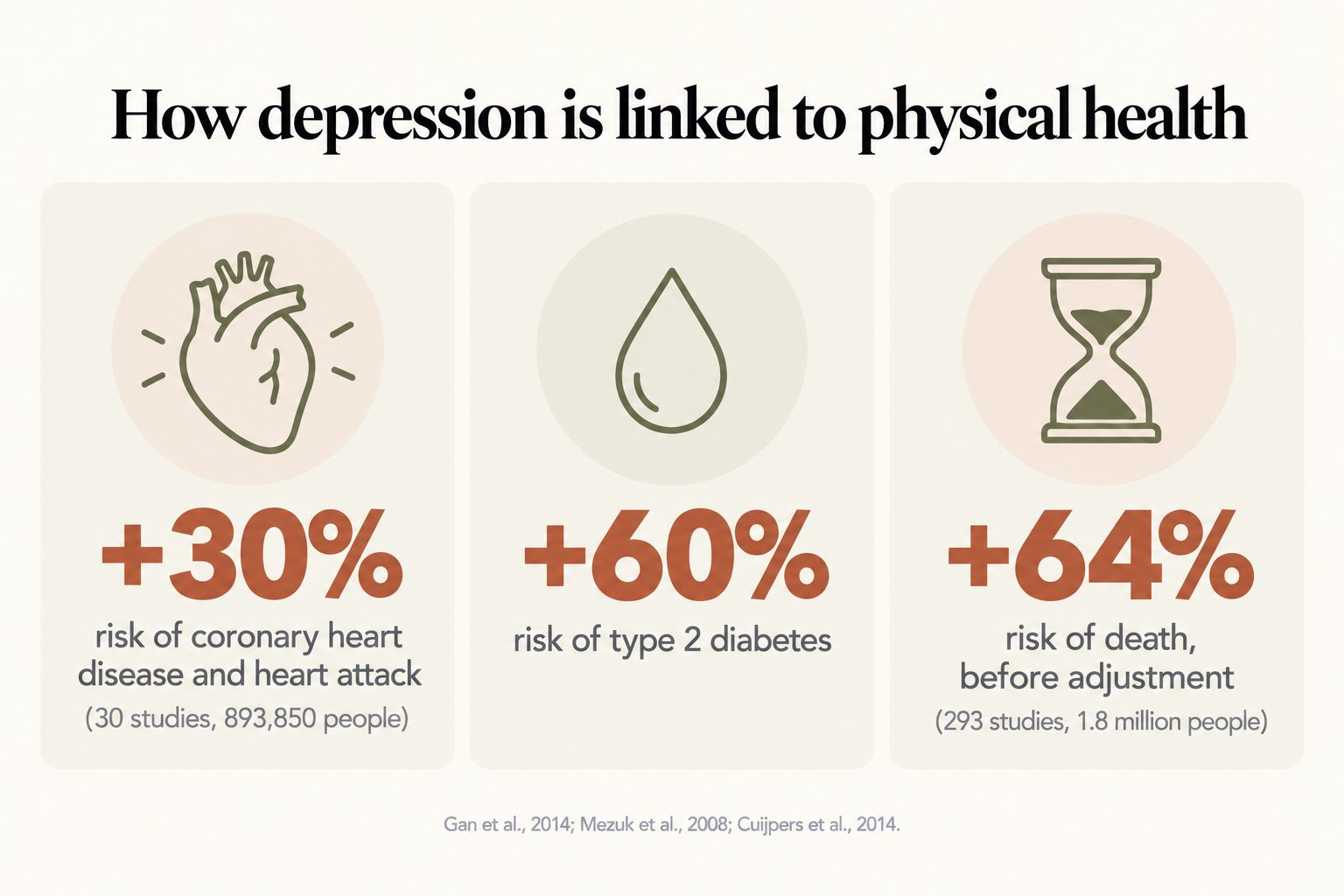
Depression is far more than feeling sad. It's a common medical condition that affects mood, thinking, sleep, appetite and energy, and it also affects the body. The World Health Organization estimates that about 322 million people worldwide have depression, including 5.2% of adults, and women are about 1.5 times more likely to be affected than men. Depression is diagnosed when low mood or loss of interest lasts most of the day, nearly every day, for at least two weeks. The links with physical health run in both directions. A meta-analysis of 30 studies with 893,850 people found that depression was associated with 30% higher risk of coronary heart disease and heart attack. Depression is linked to 60% higher risk of developing type 2 diabetes, and in 2014 an American Heart Association panel recommended that depression be recognised as a risk factor for poor outcomes after a heart attack. Across 293 studies with more than 1.8 million people, people with depression had a 64% higher risk of death before adjustment. At the same time, chronic illnesses such as heart disease, diabetes and chronic pain increase the risk of becoming depressed. The good news is that depression is treatable. Psychological therapy and, for moderate or severe depression, antidepressants work, and a 2024 analysis of 218 trials found that walking, running, strength training and yoga were about as effective as cognitive behavioural therapy. Yet in high-income countries only about a third of people with depression receive treatment. Recognising it early, in yourself or others, and seeking help is one of the most important things you can do for both your mind and your long-term health.
Key numbers
| Finding | Detail |
|---|---|
| Global burden (WHO) | About 322 million people; 5.2% of adults; women about 1.5 times more often than men |
| Coronary heart disease (30 studies, 893,850 people) | Depression linked to 30% higher risk of heart disease and heart attack |
| Type 2 diabetes (13 studies) | Depression linked to 60% higher risk |
| Mortality (293 studies, 1.8 million people) | 64% higher risk of death before adjustment |
| Exercise as treatment (218 trials, 14,170 people) | Walking, running, strength training and yoga about as effective as CBT |
| Treatment gap (WHO) | Only about 1 in 3 people with depression in high-income countries receive treatment |
What depression is
The WHO describes depression as a depressed mood (feeling sad, irritable or empty) or a loss of pleasure or interest in activities, lasting most of the day, nearly every day, for at least two weeks. Other common symptoms include:
- Poor concentration
- Excessive guilt or low self-worth
- Hopelessness about the future
- Thoughts about death or suicide
- Disrupted sleep (too little or too much)
- Changes in appetite or weight
- Feeling very tired or low in energy
Depression can be mild, moderate or severe. In older adults and in people with physical illnesses, it often shows up as tiredness, poor sleep, aches and pains, or loss of interest rather than obvious sadness, so it's easily missed or put down to "just getting older". Depression isn't a sign of weakness, and it isn't something people can simply "snap out of".
The two-way link between mind and body
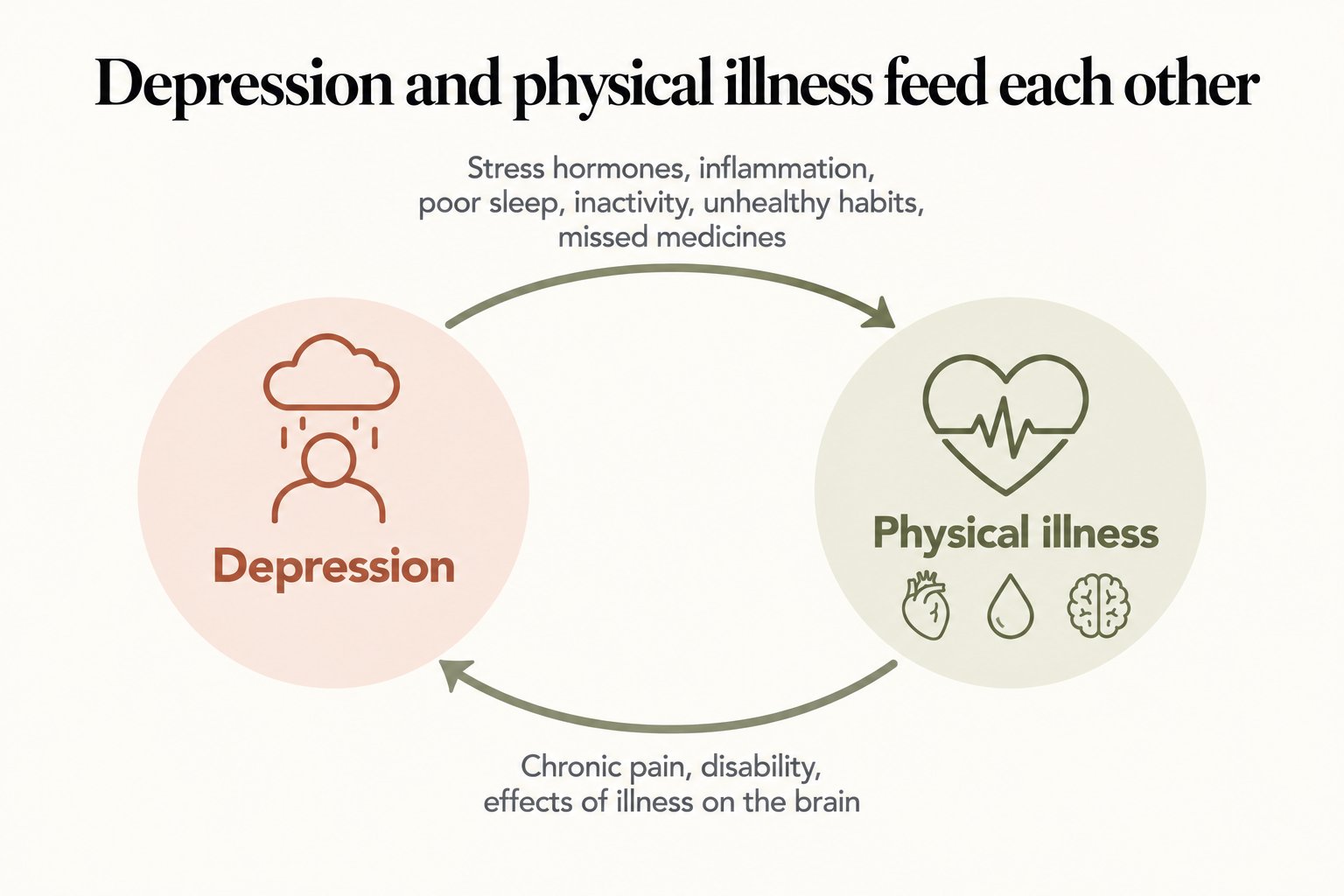
Depression and physical illness feed each other.
Depression raises the risk of physical illness through biology and behaviour. It's associated with higher levels of stress hormones and inflammation, poorer sleep, less physical activity, unhealthy eating, smoking and alcohol use, and difficulty taking medicines or attending appointments.
Physical illness raises the risk of depression. Living with heart disease, stroke, diabetes, cancer, chronic pain or disability is hard, and some conditions affect the brain directly. The WHO notes that people living with chronic conditions are more likely to develop depression, and that shared risk factors such as physical inactivity and harmful alcohol use contribute to both.
What the research shows
Heart disease. In a 2014 meta-analysis of 30 prospective studies with 893,850 people followed for between 2 and 37 years, Yan Gan and colleagues found that depression was associated with a 30% higher risk of coronary heart disease and a 30% higher risk of heart attack. The same year, an American Heart Association panel reviewed the evidence and recommended that depression be recognised as a risk factor for poor outcomes in people with acute coronary syndromes, such as heart attack and unstable angina. As panel member Robert Carney put it, "depression is a risk factor for mortality in people who have heart disease" (see Chronic Stress and Heart Disease).
Diabetes. In a 2008 meta-analysis, Briana Mezuk and colleagues found that depression was associated with 60% higher risk of developing type 2 diabetes, while type 2 diabetes was associated with 15% higher risk of developing depression. Depression can make diabetes harder to manage, as low energy and motivation affect diet, activity and medicine use (see Insulin Resistance).
Lifespan. In a 2014 meta-analysis of 293 studies with 1,813,733 participants in 35 countries, Pim Cuijpers and colleagues found that people with depression had a 64% higher risk of death than those without, before adjusting for differences in study quality. The excess risk was similar in community samples and in people with heart disease, cancer and other illnesses, suggesting that general biological and lifestyle factors drive much of it. Depression also increases the risk of suicide; the WHO reports that about 727,000 people died by suicide in 2021.
The brain. Depression, especially in midlife, is linked to a higher risk of dementia later in life, and is one of the 14 modifiable dementia risk factors identified by the 2024 Lancet Commission (see Depression and Cognitive Decline).
Risk factors
| Risk factor | How it contributes | Who is most affected | What helps |
|---|---|---|---|
| Chronic illness and pain | Ongoing stress, disability, effects on the brain | People with heart disease, diabetes, stroke, cancer | Screening for depression during routine care |
| Loss and life events | Bereavement, divorce, job loss, financial stress | All ages | Support, time, and help if low mood persists |
| Loneliness and isolation | Lack of support and connection | Older adults, people living alone | Regular contact, community activities |
| Women's life stages | Hormonal changes, caring roles, pregnancy and after birth | Women, especially after childbirth and around menopause | Antenatal and postnatal mood checks |
| Alcohol and substance use | Worsens mood and sleep | Men more often | Cutting down, specialist support |
| Family history | Inherited vulnerability | Relatives of people with depression | Awareness and early help |
| Poor sleep | Disrupts mood regulation | Shift workers, people with insomnia or sleep apnoea | Treating sleep problems |
What you can actually change
- 1. Recognise it early. Two simple questions can screen for depression: over the past two weeks, have you often felt down, depressed or hopeless? And have you had little interest or pleasure in doing things? If the answer to either is yes, talk to a doctor.
- 2. Seek treatment: it works. The WHO recommends psychological treatments, such as cognitive behavioural therapy and problem-solving therapy, as first-line care. For moderate and severe depression, antidepressants can be added. They aren't needed for mild depression. Therapy and counselling options are covered in Therapy and Counselling.
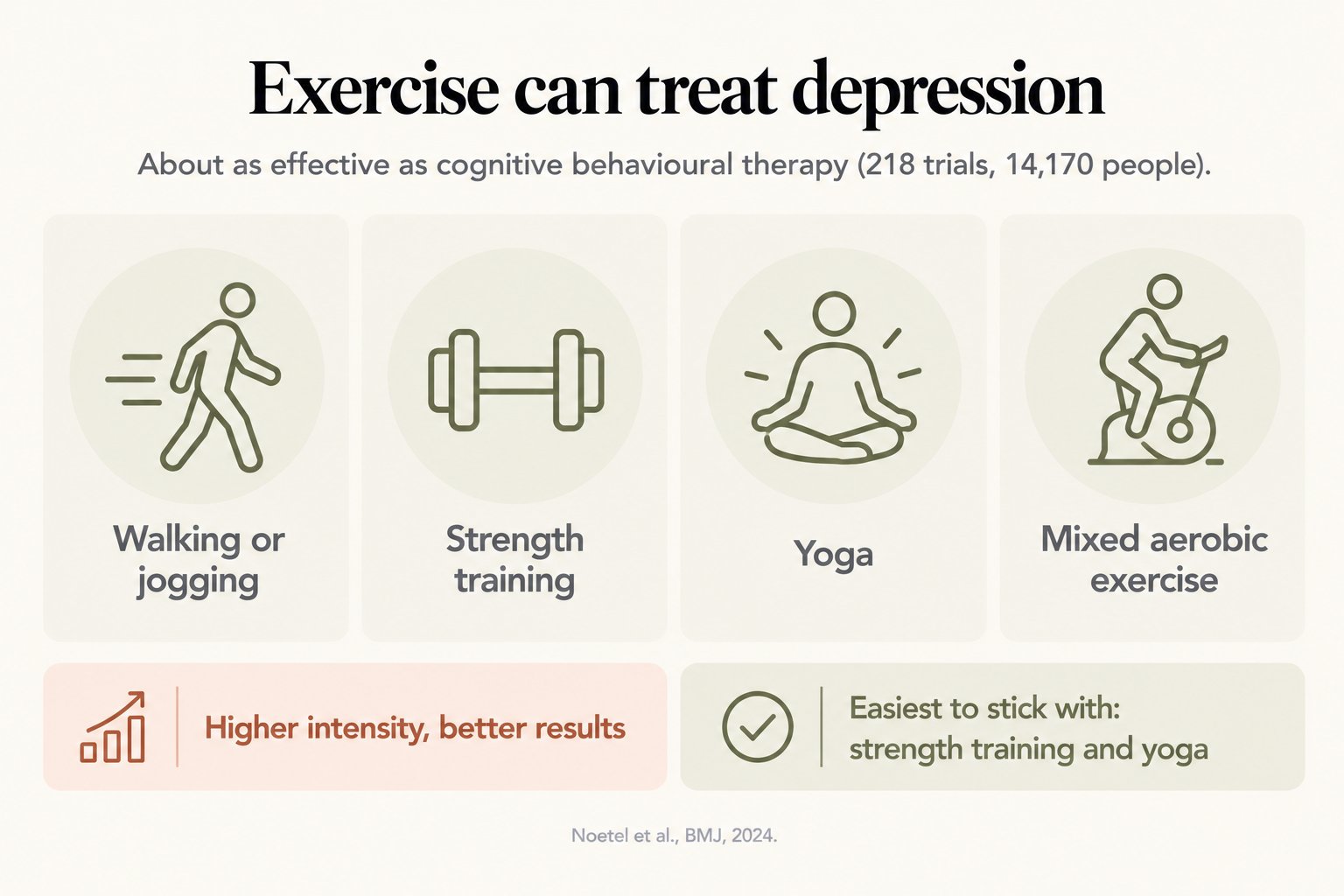
- 3. Move, and push the intensity a little. In a 2024 network meta-analysis of 218 trials with 14,170 participants, Michael Noetel and colleagues found that walking, running, strength training, yoga and mixed aerobic exercise were about as effective as cognitive behavioural therapy. Higher intensity gave better results, structured programmes worked better than unstructured ones, and people were most likely to stick with strength training and yoga. As Noetel concluded, "Exercise should be considered alongside therapy and antidepressants."
- 4. Protect sleep. Poor sleep both causes and worsens depression. Regular sleep times and treating insomnia or sleep apnoea help.
- 5. Stay connected. Isolation deepens depression. Even brief contact with supportive people helps (see Loneliness and Social Isolation).
- 6. Cut down on alcohol. Alcohol may seem to help in the short term but worsens mood and sleep.
- 7. Look after heart and metabolic health. If you have heart disease or diabetes, ask to be checked for depression; if you have depression, make sure your blood pressure, blood sugar and cholesterol are checked too.
Getting help in Sri Lanka
If you or someone you know is struggling, help is available:
- National Institute of Mental Health helpline: 1926. Provides mental health guidance and connects callers to services, including urgent support for people having thoughts of suicide.
- CCCline: 1333. A free counselling helpline run by the CCC Foundation.
- Sumithrayo offers confidential emotional support for people in distress.
- Your doctor can assess you, start treatment and refer you to a psychiatrist, psychologist or counsellor.
If someone is in immediate danger, call the Suwa Seriya ambulance on 1990 or go to the nearest hospital emergency department. Talking about suicide doesn't make it more likely; asking someone directly and listening without judgement can help them seek support.
Why this matters for longevity
Depression shortens lives, not only through suicide but by raising the risk of heart disease, diabetes and dementia, and by making it harder to look after your health. Treating depression improves quality of life, and it makes every other part of a longevity plan, from exercise to medicines, easier to follow. Mental health is not separate from physical health; it's part of it.
Practical notes
If you've felt low, empty or uninterested in things you used to enjoy for more than two weeks, or if low mood is affecting your work, relationships or self-care, see a doctor. Depression is common and treatable, and early help leads to better outcomes. If you're supporting someone else, encourage them to get help, offer practical support, and keep in touch even if they withdraw. Our Longevity Doctors screen for mood as part of every assessment, because mental and physical health are closely linked, and can help you access treatment, starting with the free longevity assessment.
- World Health Organization. Depression: fact sheet. Geneva: WHO.
- Gan Y, et al. Depression and the risk of coronary heart disease: a meta-analysis of prospective cohort studies. BMC Psychiatry, 2014;14:371.
- Lichtman JH, et al. Depression as a risk factor for poor prognosis among patients with acute coronary syndrome: systematic review and recommendations. A scientific statement from the American Heart Association. Circulation, 2014;129(12):1350-1369.
- Mezuk B, et al. Depression and type 2 diabetes over the lifespan: a meta-analysis. Diabetes Care, 2008;31(12):2383-2390.
- Cuijpers P, et al. Comprehensive meta-analysis of excess mortality in depression in the general community versus patients with specific illnesses. American Journal of Psychiatry, 2014;171(4):453-462.
- Noetel M, et al. Effect of exercise for depression: systematic review and network meta-analysis of randomised controlled trials. BMJ, 2024;384:e075847.
- Livingston G, et al. Dementia prevention, intervention, and care: 2024 report of the Lancet standing Commission. The Lancet, 2024;404(10452):572-628.
- Sri Lanka Medical Association. Mental health services available in Sri Lanka.
Free longevity assessment
Could low mood be
affecting your health?
Take the free Aevum Protocol assessment to see how your stress & mental wellbeing and 6 other longevity domains are performing — and get a personalised 90-day plan.
Take the free assessment