Longevity Science
How to Read Longevity Research:
Seven Questions to Ask Before You Believe a Headline
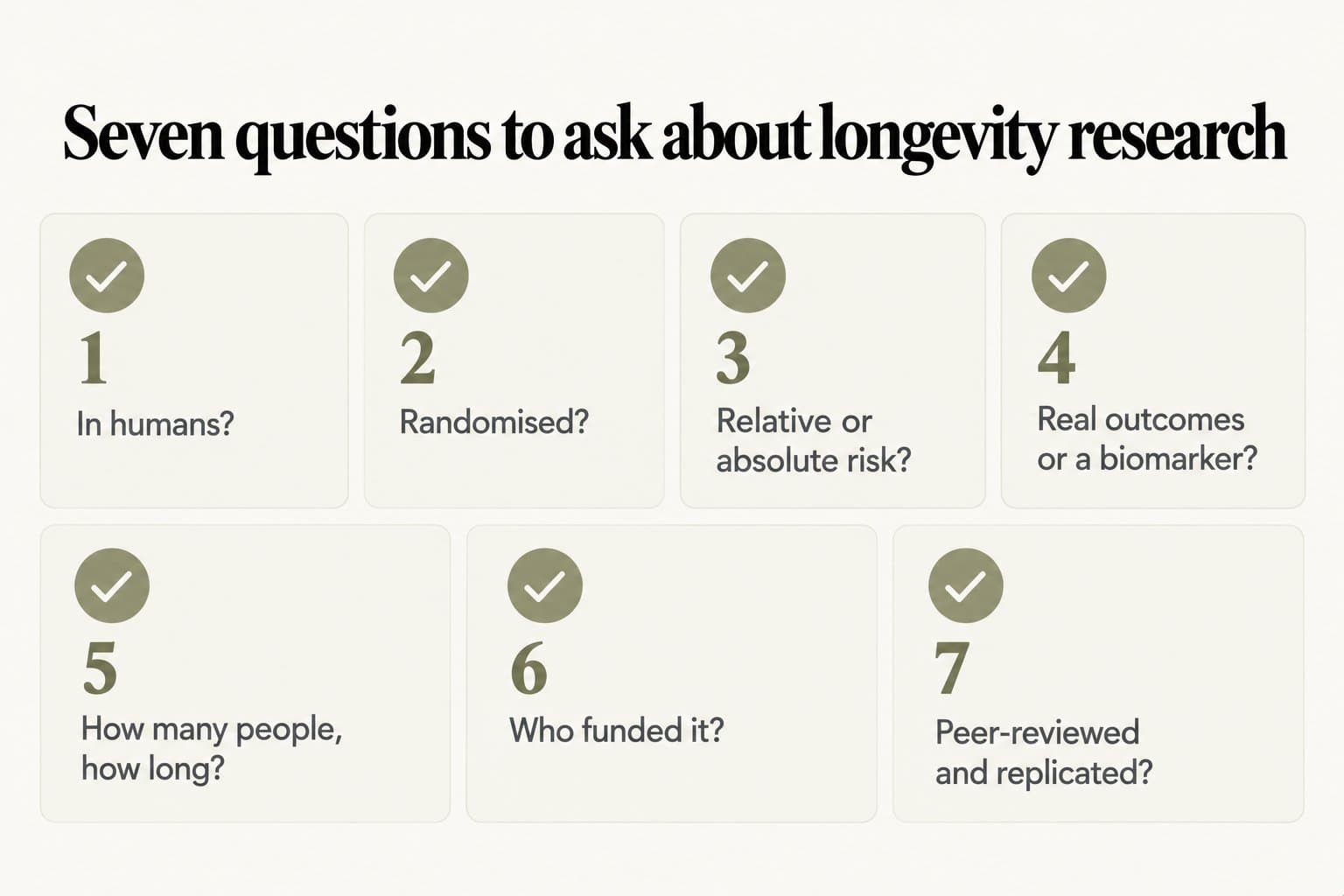
"Scientists reverse ageing." "This supplement adds years to your life." Longevity headlines appear almost daily, and many are based on early, small or misinterpreted studies. Knowing how to read research protects your health and your wallet. A few simple questions go a long way. Was the study in humans or in mice? About 90% of drug candidates that enter human trials fail, often because what works in animals doesn't work in people. Was it a randomised trial or an observational study? For years, observational studies suggested that menopausal hormone therapy protected the heart, until a randomised trial of more than 16,000 women found increased risks. Is the risk relative or absolute? A "17% higher risk" of bowel cancer with processed meat sounds alarming, but it means about 66 cases per 1,000 heavy eaters compared with 56 per 1,000 light eaters. Did the study measure a biomarker or real health outcomes? How many people took part, and for how long? Who funded it? And has it been replicated? This guide, drawing on examples from across this section, explains how to apply these seven questions to longevity news.
Key numbers
| Finding | Detail |
|---|---|
| Drug candidates entering clinical trials | About 90% fail; lack of efficacy explains 40-50% of failures |
| Hormone therapy (Women's Health Initiative, 2002) | Randomised trial of 16,000+ women contradicted observational studies; increased risks of heart disease, stroke and breast cancer |
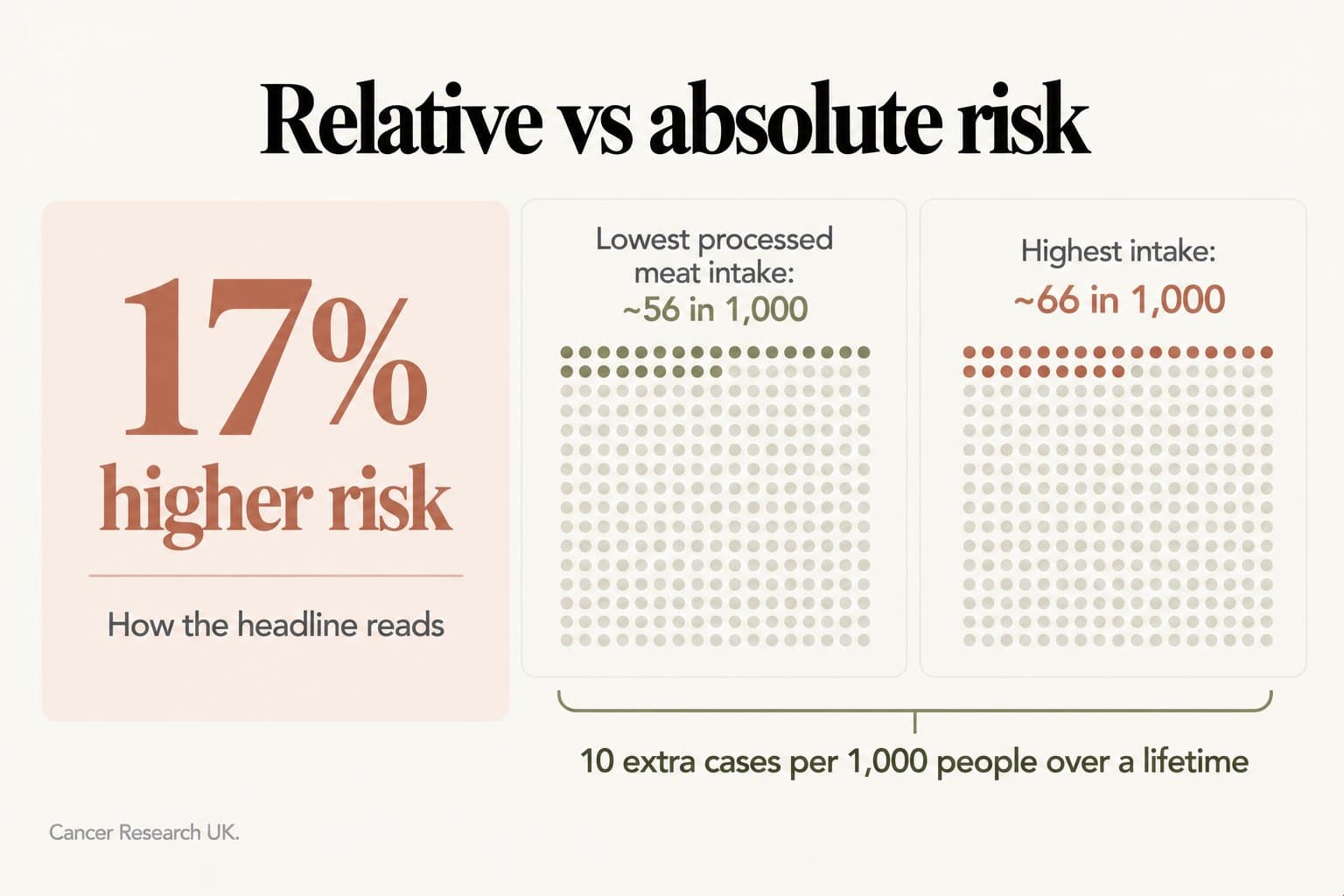
| Processed meat and bowel cancer (Cancer Research UK) | "17% higher risk" = about 66 vs 56 cases per 1,000 people over a lifetime |
| Antioxidant supplements (Cochrane, 78 trials) | No benefit in randomised trials despite promising observational and laboratory findings |
The hierarchy of evidence
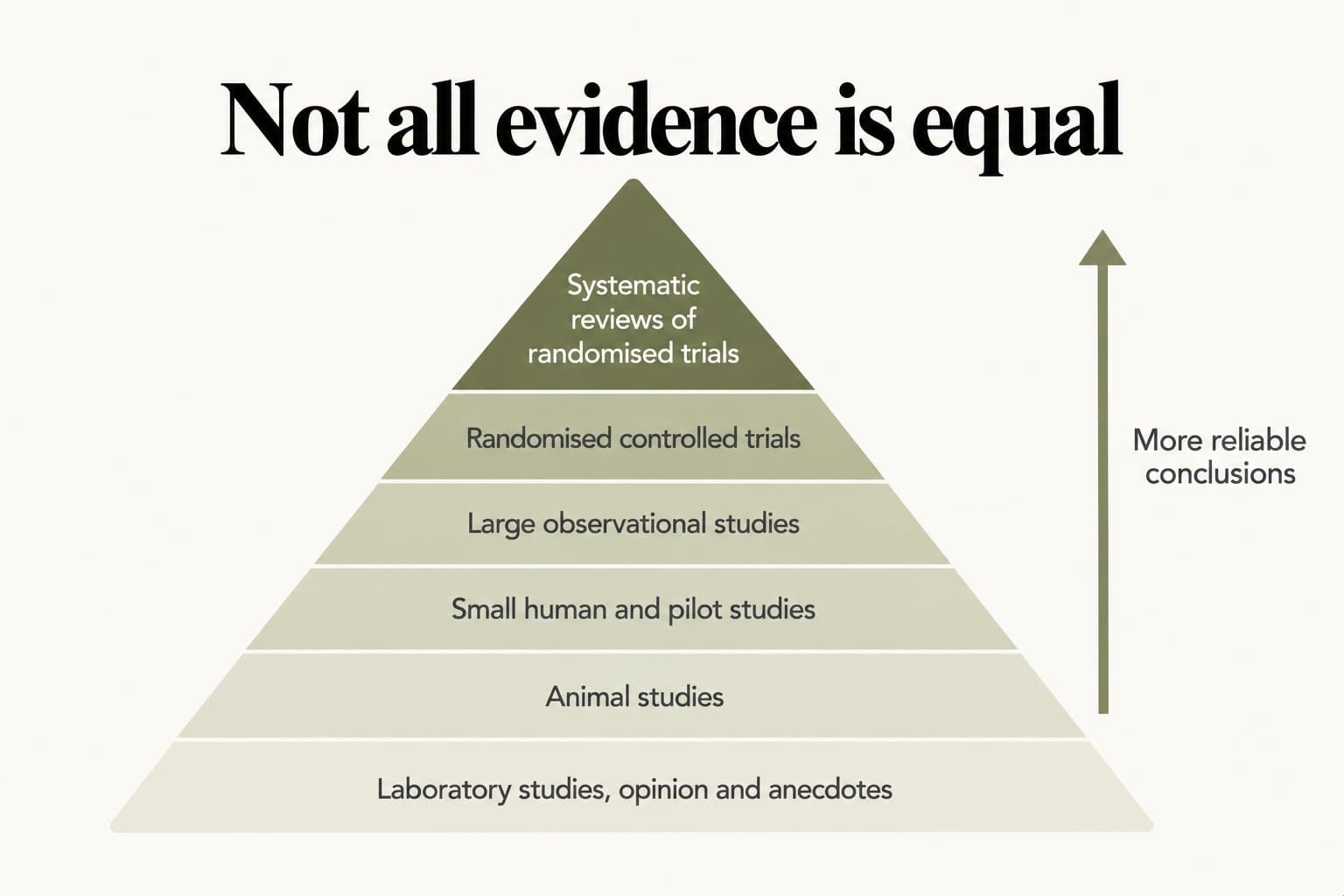
Not all studies are equal. In general, from strongest to weakest:
- 1. Systematic reviews and meta-analyses of randomised controlled trials.
- 2. Randomised controlled trials (RCTs).
- 3. Large observational studies (cohort and case-control studies).
- 4. Small human studies, case series and pilot studies.
- 5. Animal studies.
- 6. Laboratory (cell) studies, expert opinion and anecdotes.
Each level has value, but conclusions about what you should do are most reliable when they come from the top levels.
What the evidence shows: seven questions
1. Was it done in humans? Many longevity breakthroughs come from mice, worms or cells. They're essential for discovery, but they often don't translate. About 90% of drug candidates that enter human trials fail, most often because they don't work as expected in people. In this section, for example, clearing senescent cells extended life in mice, but a senolytic injection failed to relieve knee arthritis pain in a human trial (see Senolytics).
2. Was it a randomised trial? Observational studies can show associations, but people who choose a behaviour often differ in other ways. Before 2002, observational studies suggested that menopausal hormone therapy protected the heart. The Women's Health Initiative, a randomised trial of more than 16,000 healthy postmenopausal women aged 50-79, instead found increased risks of heart disease, breast cancer, blood clots and stroke, and was stopped early. Women who had chosen hormone therapy in earlier studies tended to be healthier to begin with, a problem known as "healthy user bias". Later analyses have refined this picture, suggesting that effects depend on age and timing. Similarly, antioxidants looked promising in observational studies, but randomised trials found no benefit (see Mitochondria and Ageing).
3. Is the risk relative or absolute? Relative risk compares two groups ("17% higher"); absolute risk tells you how many people are actually affected. Cancer Research UK explains that the "17% higher risk" of bowel cancer among the highest processed meat eaters translates to about 66 cases per 1,000 people over a lifetime, compared with 56 per 1,000 among the lowest eaters: 10 extra cases per 1,000 (see Meat, Fish and Eggs). Both numbers matter, but absolute risk is usually more useful for personal decisions.
4. Did it measure real outcomes or a biomarker? Many longevity studies report changes in biomarkers, such as epigenetic clocks, rather than outcomes people care about, such as disease, disability or death. A lower clock score is interesting, but it hasn't yet been shown to mean a longer or healthier life (see Can You Reverse Your Biological Age?).
5. How many people, and for how long? Small, short studies are prone to chance findings. In this section, a pilot trial claiming more than three years of epigenetic age reversal analysed only 18 men in its treatment group, and the study behind headlines about "ageing bursts at 44 and 60" followed its 108 participants for a median of about 1.7 years (see Ageing Is Not Linear).
6. Who funded it? Industry funding doesn't automatically make a study wrong, but it's worth noting. Several trials in this section, such as the urolithin A trial and the plasma exchange biological age trial, were funded by companies selling the products being tested (see Young Blood and Plasma Exchange).
7. Has it been peer-reviewed and replicated? Preprints are posted before peer review and may change. Even published findings may not hold up: the PREDIMED diet trial was retracted and republished after problems with randomisation (see Eating Patterns for Longevity), the "information theory of ageing" mouse study was challenged by other scientists (see Epigenetics and Ageing), and studies of extreme old age have reached opposite conclusions about a limit to lifespan. Findings confirmed by independent teams deserve more confidence.
Recommendations by scenario
| Scenario | What to do |
|---|---|
| Headline says "scientists reverse ageing" | Check whether it was in animals or humans, and what was measured |
| New supplement backed by "clinical studies" | Look for independent randomised trials with health outcomes |
| Study reports a large percentage change in risk | Ask for the absolute numbers |
| Exciting result from a single small study | Wait for larger, independent replication |
| Influencer or clinic cites research | Check the original study and who funded it |
| Results conflict between studies | Look for systematic reviews that weigh all the evidence |
Practical notes
Longevity research is moving fast, and many exciting discoveries are real. But the gap between a promising mouse study and a proven human treatment is large, and marketing often fills it with hype. Asking seven simple questions about who was studied, how, what was measured, how many and for how long, who paid and whether it's been replicated will help you separate genuine progress from premature claims. When in doubt, the interventions with the strongest evidence, such as exercise, a healthy diet, good sleep, not smoking and managing blood pressure, cholesterol and blood sugar, remain the safest bet (see The Hallmarks of Ageing). Our Longevity Doctors can help you make sense of new research and what it means for you, starting with the free longevity assessment.
- Sun D, et al. Why 90% of clinical drug development fails and how to improve it? Acta Pharmaceutica Sinica B, 2022;12(7):3049-3062.
- Writing Group for the Women's Health Initiative Investigators. Risks and benefits of estrogen plus progestin in healthy postmenopausal women. JAMA, 2002;288(3):321-333.
- Cancer Research UK. Processed meat and cancer: what you need to know. 2015.
- Bjelakovic G, et al. Antioxidant supplements for prevention of mortality in healthy participants and patients with various diseases. Cochrane Database of Systematic Reviews, 2012;(3):CD007176.
- American Medical Association Journal of Ethics. After the Women's Health Initiative: menopausal women and hormone therapy. 2005.
Free longevity assessment
Which longevity headline
did you last believe?
Take the free Aevum Protocol assessment to see how your longevity science and 6 other longevity domains are performing — and get a personalised 90-day plan.
Take the free assessmentKeep reading