Nutrition & Metabolism
Soya Meat:
Common Myths, the Real Evidence and How to Eat It Well
Soya meat is one of the cheapest and most protein-rich foods in Sri Lankan shops, yet many people avoid it because of stories they've heard: that it causes breast cancer, makes men feminine, raises uric acid, damages the thyroid or is "full of chemicals". Most of these fears don't stand up to the evidence. Soya meat, also called textured vegetable protein (TVP) or textured soy protein, is made from soybeans that have had their oil removed, then cooked and shaped into chunks or mince. Dry soya meat is about half protein, with plenty of fibre, iron, magnesium and potassium, and almost no fat. In a study of over 5,000 Chinese women with breast cancer, those who ate the most soy had a 29% lower risk of death and a 32% lower risk of recurrence. A meta-analysis of 41 studies found that soy doesn't affect testosterone or oestrogen in men. Reviews of soy and gout found no link between soy foods and gout, and a meta-analysis of 18 studies found soy had no effect on thyroid hormones. Soy protein also modestly lowers LDL cholesterol. The real issues with soya meat are more ordinary: flavour sachets add salt and additives, deep-fried devilled dishes add a lot of oil, and some people get gas. People with soy allergy, kidney disease or those taking thyroid tablets need a little extra care. This article explains each myth, what the evidence shows, the main Sri Lankan brands and how to cook soya meat in a healthy way.
Key numbers
| Finding | Detail |
|---|---|
| Protein in dry soya meat (defatted soy flour, per 100 g) | About 50 g, with about 17 g fibre and about 1 g fat |
| A typical 90 g packet | About 45 g protein; about Rs 120 to 160 in 2026 |
| Soy intake after breast cancer (5,033 Chinese women) | Highest vs lowest intake: 29% lower death, 32% lower recurrence |
| Soy and male hormones (41 studies) | No effect on testosterone or oestrogen |
| Soy and thyroid hormones (18 studies) | No change in T4 or T3; very small rise in TSH |
| Soy and gout (6 population studies) | No link between soy foods and uric acid or gout |
| Soy protein and cholesterol (43 trials) | LDL cholesterol about 3 to 4% lower |
| Soy foods and prostate cancer (observational studies) | About 30% lower risk with the highest intake |
What is soya meat?
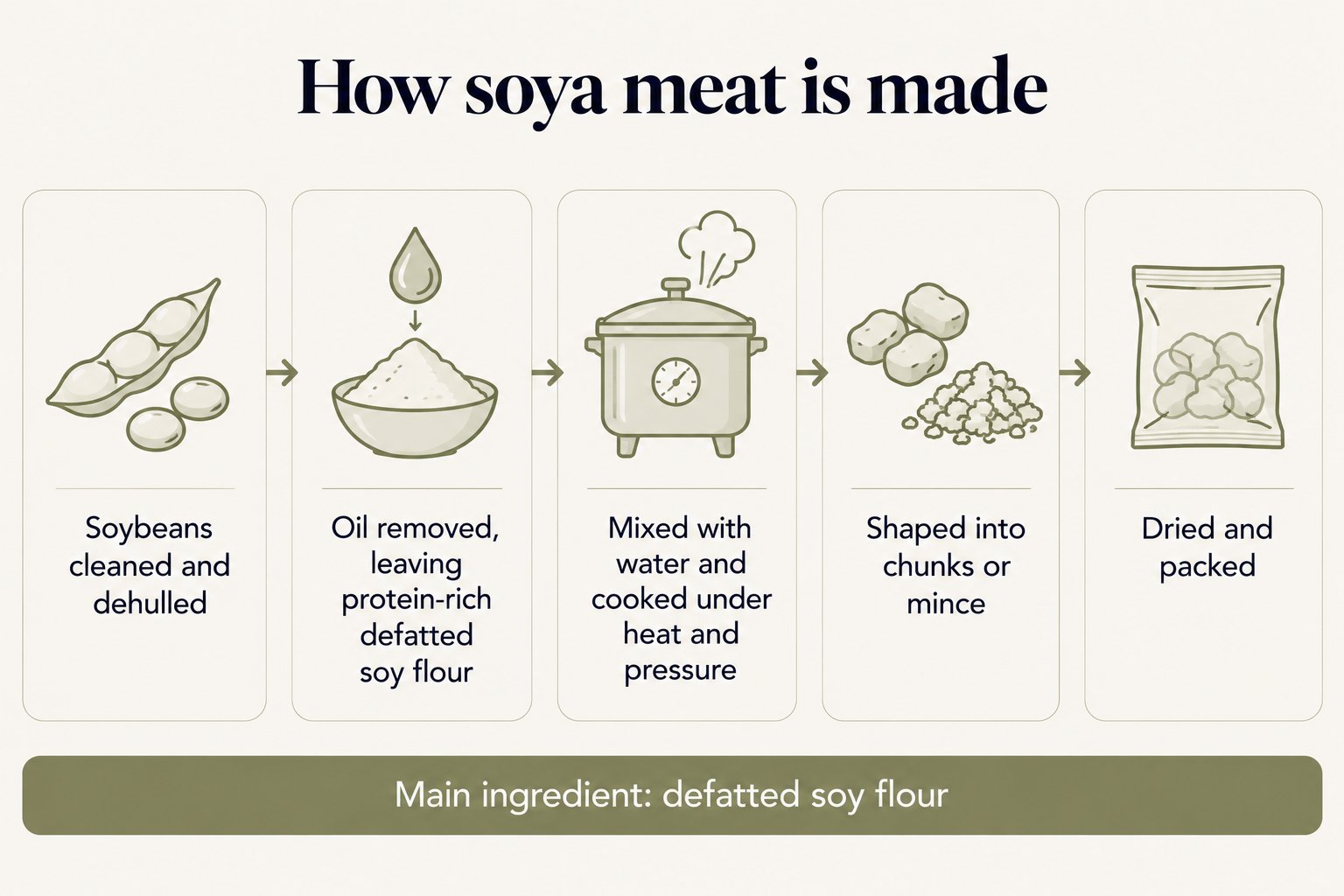
Soya meat is made in a few simple steps:
- Soybeans are cleaned, dehulled and flaked.
- The oil is extracted, usually with a food-grade solvent that is then removed, leaving defatted soy flour that is rich in protein.
- The flour is mixed with water and cooked under heat and pressure in a machine called an extruder, which forces it through a shaped opening.
- The puffed, fibrous pieces are cut and dried into chunks, granules or mince.
The result is a dry, shelf-stable food that soaks up water and flavours, with a chewy, meat-like texture. The main ingredient listed on plain soya meat packets is simply defatted soy flour. Flavoured packets come with a separate seasoning sachet.
What's in soya meat?
Values for dry defatted soy flour, which is what soya meat is made from:
| Nutrient | Per 100 g dry | Per 90 g packet |
|---|---|---|
| Energy | About 330 kcal | About 295 kcal |
| Protein | About 51 g | About 46 g |
| Fat | About 1 g | About 1 g |
| Carbohydrate | About 34 g | About 31 g |
| Fibre | About 17 g | About 16 g |
| Iron | About 9 mg | About 8 mg |
| Magnesium | About 290 mg | About 260 mg |
| Potassium | About 2,400 mg | About 2,150 mg |
| Folate | About 300 µg | About 275 µg |
| Sodium (before seasoning) | About 20 mg | About 18 mg |
Soya meat absorbs about two to three times its weight in water, so a 90 g packet makes enough for a family meal. A sensible portion is about 20 to 30 g dry per person, giving roughly 10 to 15 g of protein. Soy protein is a complete protein containing all the essential amino acids, and soy protein isolate scores 0.90 on the DIAAS protein quality scale, the highest of the common plant proteins (see Protein Powders).
Myth 1: "Soya meat causes breast cancer"
Where it comes from: soy contains isoflavones, plant compounds with a structure similar to oestrogen. Early animal studies found that very high doses of isoflavones made oestrogen-sensitive breast tumours grow in mice.
What the evidence shows:
- In humans, soy foods don't raise breast cancer risk. The American Institute for Cancer Research (AICR) states that "soy foods are safe to eat and do not cause cancer", and that some East Asian studies link one to two servings a day with lower breast cancer risk.
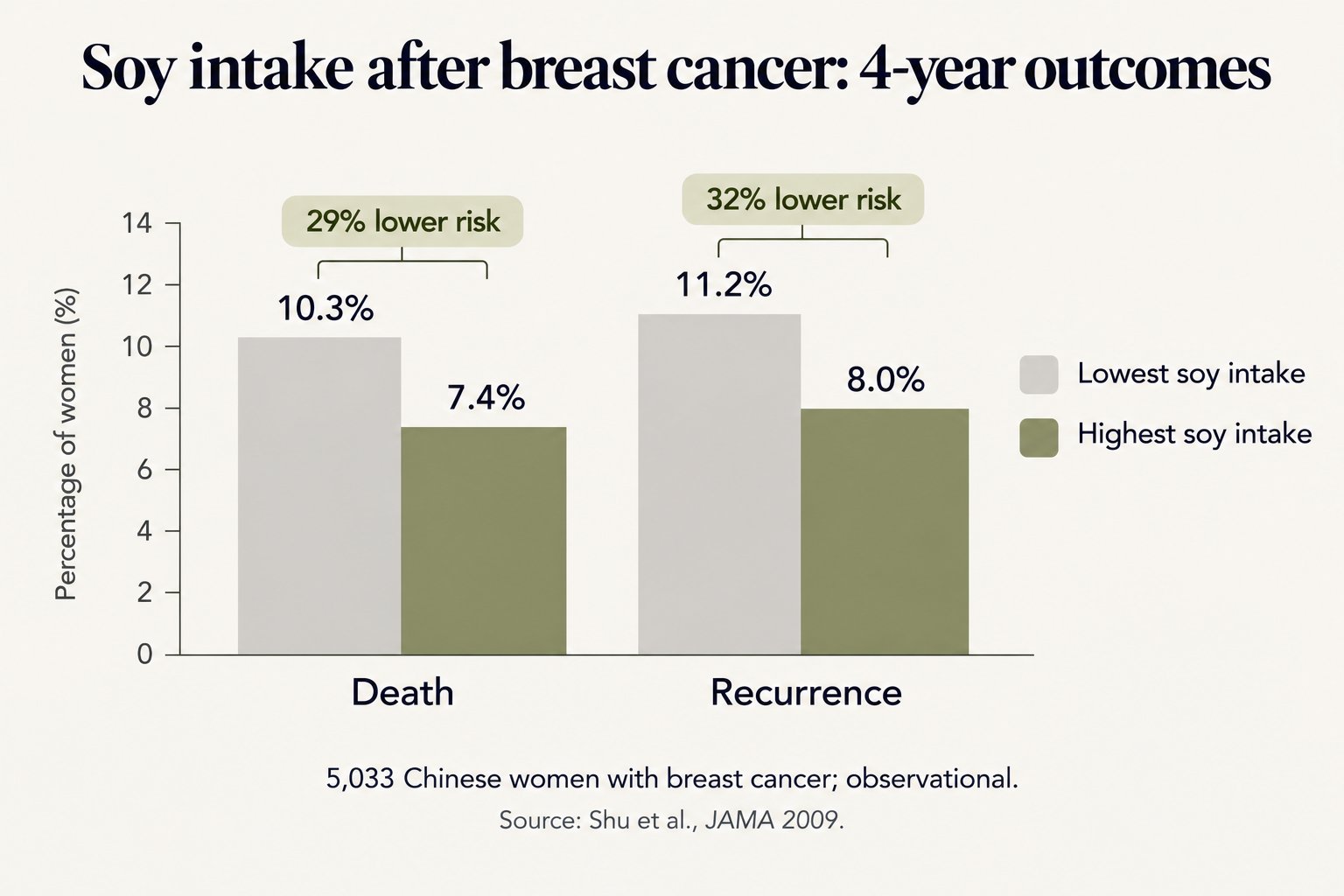
- Soy is safe after breast cancer. In the Shanghai Breast Cancer Survival Study, published in JAMA in 2009, 5,033 women aged 20 to 75 with breast cancer were followed for a median of about 4 years. Women with the highest soy protein intake had a 29% lower risk of death and a 32% lower risk of recurrence than those with the lowest. The benefit was seen in women with both oestrogen-receptor positive and negative tumours, and in those taking tamoxifen. The authors concluded that "soy food intake is safe".
- Why animals differ: the mouse studies used isoflavone levels far higher than people reach by eating soy, and rodents process isoflavones differently.
- Soya meat isn't a concentrated source: according to AICR, textured soy doesn't contain more isoflavones than an equal portion of soybeans.
Bottom line: eating soya meat as part of normal meals doesn't cause breast cancer, and is safe for breast cancer survivors. Concentrated isoflavone supplements are different, and survivors should discuss them with their doctor.
Myth 2: "Soya meat makes men feminine, lowers testosterone or causes breast growth"
Where it comes from: the same oestrogen-like isoflavones, plus a few case reports of men who drank very large amounts of soy milk every day.
What the evidence shows:
- No effect on male hormones: a 2021 meta-analysis in Reproductive Toxicology analysed 41 studies with up to 1,753 men. Neither soy protein nor isoflavones had any significant effect on total or free testosterone, oestradiol or oestrone, whatever the dose or duration. In the authors' words, "neither soy protein nor isoflavone exposure affects" these hormones.
- Muscle building: soy protein supports muscle growth as well as whey when total protein is matched (see Protein Powders).
- Prostate: a 2018 meta-analysis in Nutrients of observational studies found that men with the highest soy food intake had about a 30% lower risk of prostate cancer.
Bottom line: normal amounts of soya meat don't lower testosterone, cause breast growth in men or reduce fertility. Breast enlargement in men (gynaecomastia) has other causes, such as hormonal changes, weight gain, some medicines and liver disease, and should be checked by a doctor (see Testosterone Decline in Men).
Myth 3: "Soya meat raises uric acid and causes gout"
Where it comes from: soybeans contain purines, which the body breaks down into uric acid, and in Sri Lanka many people with high uric acid are told to avoid soya, dhal and other pulses.
What the evidence shows:
- Population studies: a review in the Asia Pacific Journal of Clinical Nutrition by researchers at Loma Linda University examined 6 population studies, mostly in Asia, and found that none linked soy intake with uric acid levels, high uric acid or gout.
- Intervention studies: 5 trials showed that soy protein can raise blood uric acid slightly, but at the amounts typically eaten in Asia, the authors judged this "almost certainly" clinically irrelevant.
- Singapore: in the Singapore Chinese Health Study, soy foods weren't linked to a higher risk of gout, while red meat and poultry were.
- What matters more for gout: alcohol, especially beer, sugary drinks, red meat, organ meats, some seafood and excess body weight.
Bottom line: people with gout or high uric acid don't need to avoid soya meat. Using it in place of red meat may even help. Moderate portions are sensible during an acute gout attack.
Myth 4: "Soya meat damages the thyroid"
Where it comes from: in animal and laboratory studies, isoflavones can interfere with an enzyme the thyroid uses to make hormones, and soy can reduce absorption of thyroid tablets.
What the evidence shows:
- Thyroid hormones: a 2019 meta-analysis in Scientific Reports of 18 studies found that soy had no effect on free T4 or free T3. TSH rose very slightly, by about 0.25 mIU/L, a change of uncertain importance. The authors concluded that "soy supplementation has no effect on the thyroid hormones".
- Iodine matters: concerns are mainly for people who are iodine deficient. Using iodised salt, which is widely available in Sri Lanka, covers this.
- Thyroid tablets: soy, like fibre, calcium and iron, can reduce absorption of levothyroxine if eaten at the same time.
Bottom line: soya meat doesn't damage a healthy thyroid. If you take levothyroxine, take it on an empty stomach as advised, keep your soy intake fairly consistent, and have your thyroid levels checked if you start eating much more soy (see Thyroid Function and Ageing).
Myth 5: "Soya meat is artificial, full of chemicals or has no nutrition"
Where it comes from: its unusual texture, the industrial process and the strong flavour sachets.
What the evidence shows:
- It's made from soybeans: plain soya meat packets list one ingredient, defatted soy flour.
- It's highly nutritious: about half its dry weight is protein, with plenty of fibre, iron, magnesium, potassium and folate.
- The solvent used to remove oil: soybean oil is usually extracted with hexane, which is evaporated off. Tests have found small residues in some soy ingredients, but the amounts are far below levels that caused harm in animal studies.
- It's not "plastic": the chewy texture comes from soy proteins being stretched and aligned under heat and pressure.
- Processed, but not like junk food: soya meat is an industrially processed food, and some classification systems group textured soy protein with ultra-processed ingredients. But plain soya meat is high in protein and fibre and very low in sugar, salt and fat, unlike most ultra-processed foods. The flavour sachet is the part that adds salt and additives (see Ultra-Processed Foods).
Bottom line: plain soya meat is a nutritious, minimally flavoured soybean product. Choose plain packets or use only part of the seasoning sachet.
Myth 6: "Soya meat must be boiled and squeezed many times to remove poisons"
Where it comes from: a common cooking habit to remove the "soya smell".
What the evidence shows:
- Raw soybeans contain trypsin inhibitors, which reduce protein digestion, but these are largely destroyed by heat. Soya meat has already been cooked during manufacture.
- Soaking and squeezing removes the beany taste and excess water, and helps the pieces absorb your curry, but it isn't removing poison.
Bottom line: soak in hot water for 5 to 10 minutes, squeeze, then cook. One change of water is enough for taste.
Myth 7: "Soya meat causes gas and bloating"
Partly true. Soybeans contain natural sugars called oligosaccharides that the body can't digest. Gut bacteria ferment them, which can cause gas, especially if you're not used to eating pulses.
What helps:
- Start with small portions and increase gradually.
- Soak, rinse and squeeze before cooking.
- Cook with traditional spices such as garlic, ginger, cumin and curry leaves.
- People with irritable bowel syndrome may need smaller portions.
Myth 8: "Soya meat is bad for the kidneys"
What the evidence shows:
- Healthy kidneys: soya meat, like other protein foods, is safe for people with normal kidney function.
- Chronic kidney disease (CKD): soya meat is high in potassium (about 2,400 mg per 100 g dry) and also contains phosphorus and protein, which may need to be limited in CKD. Soaking and draining reduces some of the potassium. Plant proteins are often encouraged in CKD diets, but portions should be agreed with your doctor or dietitian (see Kidney Health and Cardiometabolic Risk).
Myth 9: "Soya meat is 'heaty' and unhealthy"
The idea of foods being "heaty" comes from traditional medicine and has no clear scientific meaning. What does make soya meat dishes unhealthy is how they're cooked: deep-fried devilled soya, heavy coconut-oil tempering and the full seasoning sachet add a lot of fat and salt. A soya meat curry cooked with vegetables and a little oil is a healthy, high-protein dish.
The benefits of soya meat
- High-quality, cheap protein: a 90 g packet costing about Rs 120 to 160 provides about 45 g of protein, making it one of the most affordable protein sources in Sri Lanka (see Protein in the Sri Lankan Diet).
- Lower cholesterol: a 2019 meta-analysis of 43 trials by David Jenkins's group at St Michael's Hospital, Toronto, found that soy protein lowered LDL cholesterol by about 3 to 4%, "a small but significant amount". The lead author had received funding from soy industry bodies (see Lowering LDL Cholesterol).
- Replacing red and processed meat: swapping some meat for plant protein is linked to lower risk of heart disease, type 2 diabetes and bowel cancer (see Meat, Fish and Eggs).
- Fibre and minerals: soya meat provides fibre, iron, magnesium, folate and potassium.
- Ideal for vegetarians: soya meat helps vegetarians and vegans reach their protein targets (see Vegetarian Protein in the Sri Lankan Diet).
Sri Lankan soya meat brands
Many brands are sold in Sri Lankan supermarkets, mostly in 50 g, 60 g, 90 g, 100 g and 250 g packets, in plain and flavoured versions such as curry, chicken, cuttlefish, prawn, mutton, polos (jackfruit), ambul thiyal and devilled. Brands found in shops and online include:
| Brand | Notes |
|---|---|
| Lankasoy | Made by Convenience Foods Lanka PLC (CBL group), which describes itself as the pioneer of soya products in Sri Lanka; ranges include Malu Soy, Chico Soy, Vegi Soy and Minced Mix |
| Delmege | Plain (regular) and flavoured 90 g packets; plain version lists defatted soy flour as the ingredient |
| Keells Krest | Made by Keells Food Products PLC; chicken and curry flavours in 90 g packets |
| Fortune | Flavoured 90 g packets and a 250 g unflavoured pack |
| Star Gold | Flavoured 100 g packets |
| Freelan | Flavoured 60 g packets |
| Wijaya | Flavoured 90 g packets |
| Raigam | Listed among soya meat brands by online supermarkets |
| Niru | 250 g dark soya meat |
Choosing a brand.
- The soya meat itself is very similar between brands: the base ingredient is defatted soy flour, so protein and fibre content are broadly similar.
- The differences are in the flavour sachets: check the label for sodium, and remember that most of the salt comes from the sachet.
- Choose plain or unflavoured packs when you can, and season with your own spices.
- Larger unflavoured packs are usually cheaper per gram of protein.
- Look for the SLS mark and a clear expiry date, and check that the packet is sealed and dry.
- We don't recommend any particular brand.
How to cook soya meat healthily
- Soak: cover with hot water for 5 to 10 minutes, then squeeze out the water.
- Use part of the sachet, or none: season with your own curry powder, chilli, garlic, ginger and curry leaves.
- Cook it as a curry: with onions, tomatoes and vegetables such as beans, carrots, leeks or potatoes, using a little oil.
- Avoid deep frying: if you like devilled soya, stir-fry with a little oil instead.
- Combine it: add soya meat to dhal, vegetable curries, fried rice, kottu, pittu fillings or string hopper meals to boost protein.
- Balance the plate: serve with plenty of vegetables and a moderate portion of rice (see Building a Longevity Plate).
Who should be careful
- Soy allergy: avoid soya meat completely; soy is a common food allergen.
- Chronic kidney disease: ask about portion sizes because of the potassium, phosphorus and protein content.
- Levothyroxine users: take your tablet on an empty stomach, separate from soy foods, and keep intake consistent.
- Irritable bowel syndrome: start with small portions.
- High blood pressure: use little or none of the seasoning sachet.
- Infants: soya meat isn't suitable as a main food for babies; follow your doctor's advice on soy-based infant formula.
- Isoflavone supplements: these are very different from soy foods; discuss them with your doctor, particularly if you've had breast cancer.
Evidence strength
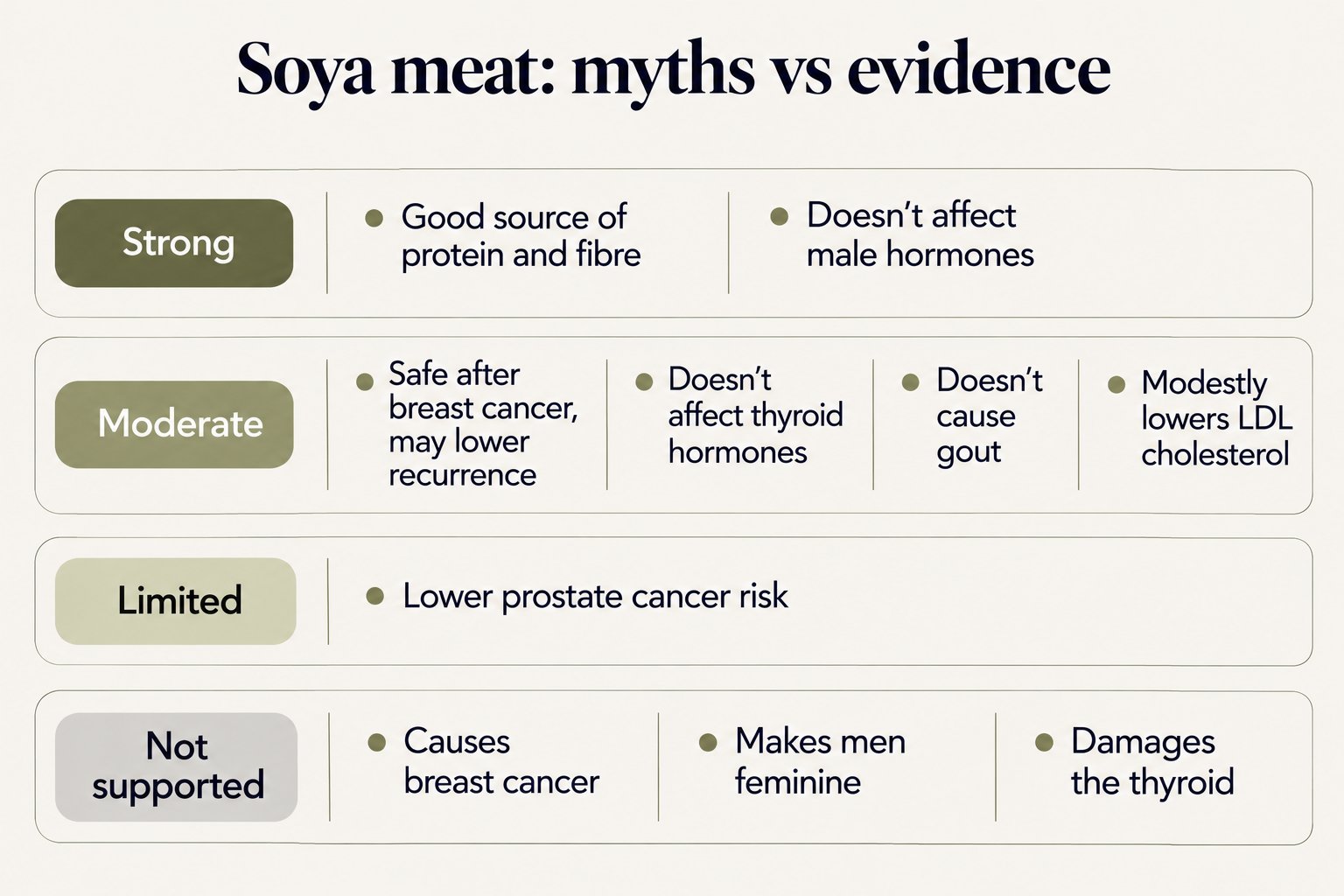
- Soya meat being a good source of protein and fibre: strong.
- Soy not affecting male hormones: strong, from a meta-analysis of 41 studies.
- Soy foods being safe after breast cancer: moderate, observational.
- Soy not affecting thyroid hormones in healthy people: moderate.
- Soy not causing gout: moderate, observational.
- Soy protein modestly lowering LDL cholesterol: moderate.
- Soy foods lowering prostate cancer risk: limited, observational.
- Soya meat causing breast cancer, feminising men or damaging the thyroid: not supported.
Why this matters for longevity
Getting enough protein supports muscle, bone and immunity as we age, and replacing some red and processed meat with plant proteins is linked to lower risk of heart disease, diabetes and some cancers. In Sri Lanka, where many families need affordable protein and many people eat little meat, soya meat is a practical, low-cost option. Fears based on myths can lead people to avoid a nutritious food for no reason. Eaten in sensible portions, cooked without deep frying and with less of the salty sachet, soya meat can be a healthy part of a longevity-focused diet.
Recommendations by situation
- Most adults: soya meat 2 to 4 times a week as part of a varied diet with dhal, other pulses, fish, eggs and dairy.
- Vegetarians and vegans: soya meat is a useful daily protein source alongside other pulses.
- People with gout or high uric acid: soya meat is fine and a better choice than red meat.
- Women with breast cancer or a family history: soy foods in normal amounts are safe; avoid isoflavone supplements unless your doctor agrees.
- People with hypothyroidism: keep eating soy if you enjoy it, and follow the advice on taking levothyroxine.
- People with kidney disease: agree portions with your doctor or dietitian.
- People watching their salt intake: choose plain packets and use your own spices.
Practical notes
Soya meat is a nutritious, affordable soybean product, not a chemical meat substitute. The evidence doesn't support fears that it causes breast cancer, lowers testosterone, causes gout or damages the thyroid. The real things to watch are the salty flavour sachets, deep-frying and portion size if you get gas. Soak and squeeze it, cook it as a curry with vegetables and your own spices, and combine it with dhal, rice and vegetables. People with soy allergy, kidney disease or on thyroid tablets should take a little extra care. Our Longevity Doctors can review your diet, protein intake, cholesterol, uric acid, thyroid and kidney health, and help you build a balanced eating plan that includes foods like soya meat, starting with the free longevity assessment.
- Shu XO, et al. Soy food intake and breast cancer survival. JAMA, 2009;302(22):2437-2443.
- American Institute for Cancer Research. Soy and cancer: myths and misconceptions. AICR, accessed November 2026.
- Reed KE, et al. Neither soy nor isoflavone intake affects male reproductive hormones: an expanded and updated meta-analysis of clinical studies. Reproductive Toxicology, 2021;100:60-67.
- Applegate CC, et al. Soy consumption and the risk of prostate cancer: an updated systematic review and meta-analysis. Nutrients, 2018;10(1):40.
- Messina M, et al. Soyfoods, hyperuricemia and gout: a review of the epidemiologic and clinical data. Asia Pacific Journal of Clinical Nutrition, 2011;20(3):347-358.
- Teng GG, et al. Food sources of protein and risk of incident gout in the Singapore Chinese Health Study. Arthritis & Rheumatology, 2015;67(7):1933-1942.
- Otun J, et al. Systematic review and meta-analysis on the effect of soy on thyroid function. Scientific Reports, 2019;9:3964.
- Blanco Mejia S, et al. A meta-analysis of 46 studies identified by the FDA demonstrates that soy protein decreases circulating LDL and total cholesterol concentrations in adults. Journal of Nutrition, 2019;149(6):968-981.
- US Department of Agriculture. FoodData Central: soy flour, defatted (SR Legacy 174275).
Free longevity assessment
Want help building a
protein-rich, balanced diet?
Take the free Aevum Protocol assessment to see how your nutrition & metabolism and 6 other longevity domains are performing — and get a personalised 90-day plan.
Take the free assessmentKeep reading
Related articles
Nutrition & Metabolism
Protein in the Sri Lankan Diet: Sources, Quality, Requirements & How to Close the Gap
Nutrition & Metabolism
Vegetarian Protein in the Sri Lankan Diet: Sources, Gaps & How to Get It Right
Nutrition & Metabolism