Skin & Longevity
Hair Loss, Blood Tests and Nutrition:
Iron, Thyroid, Vitamin D, Zinc and the Biotin Myth
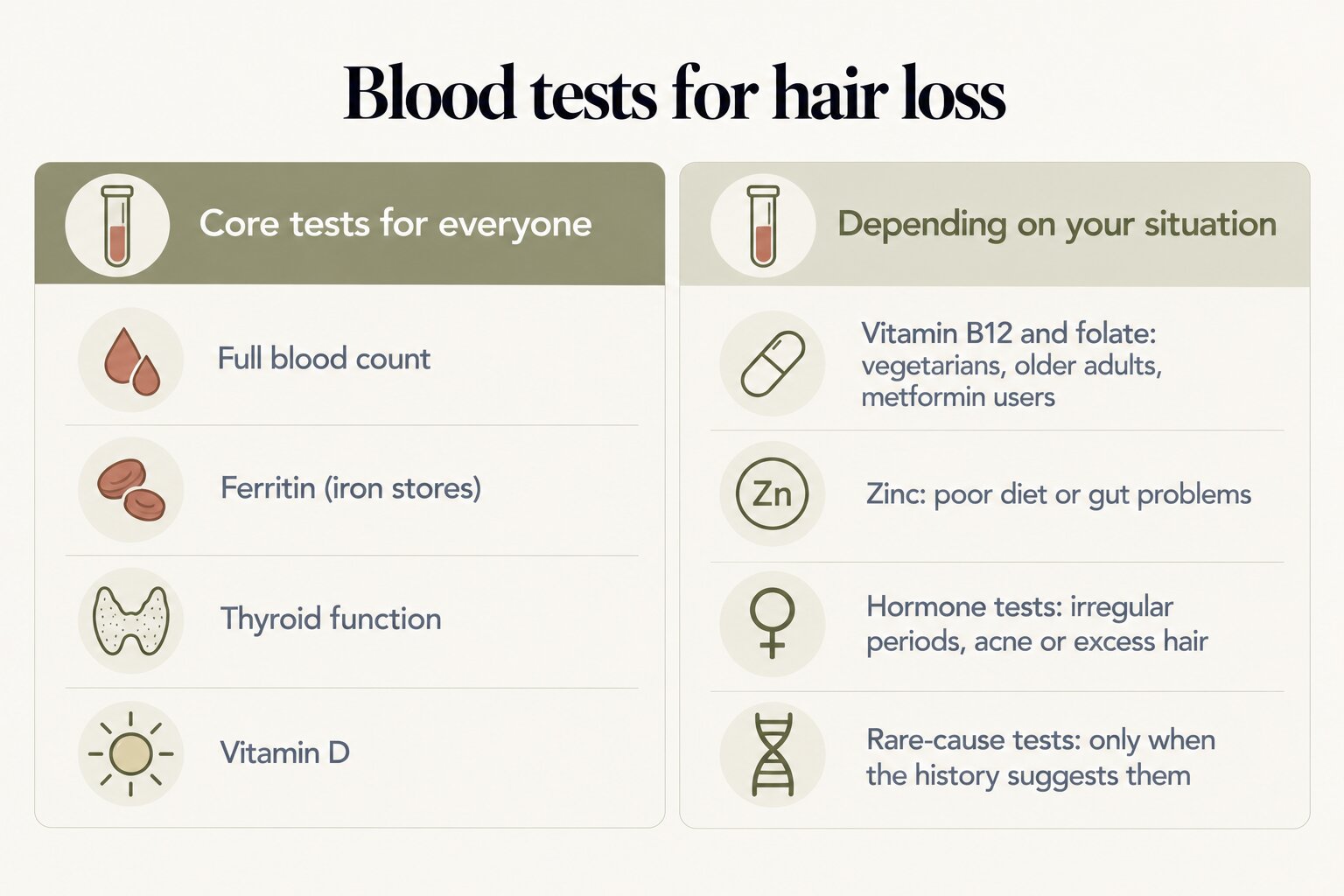
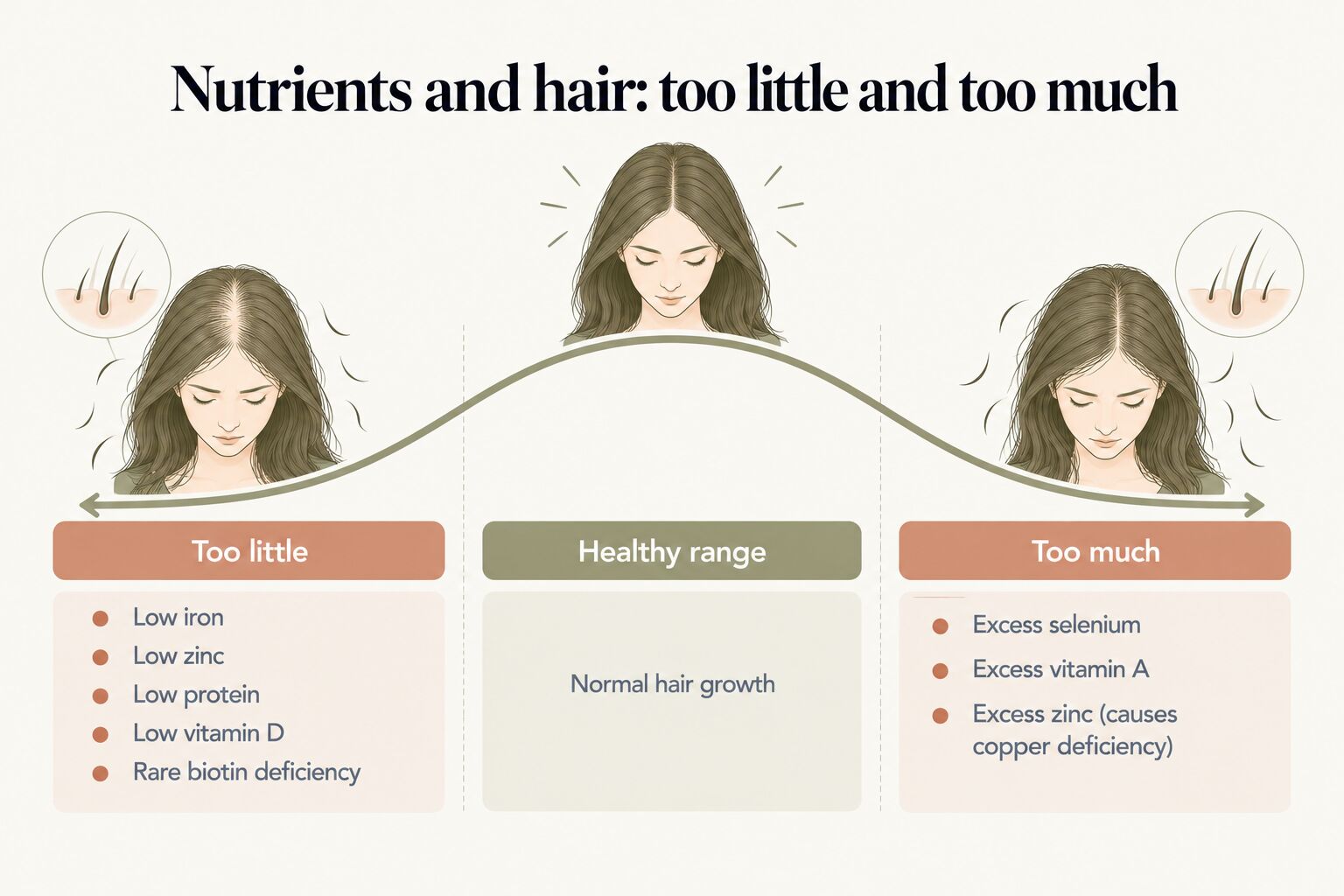
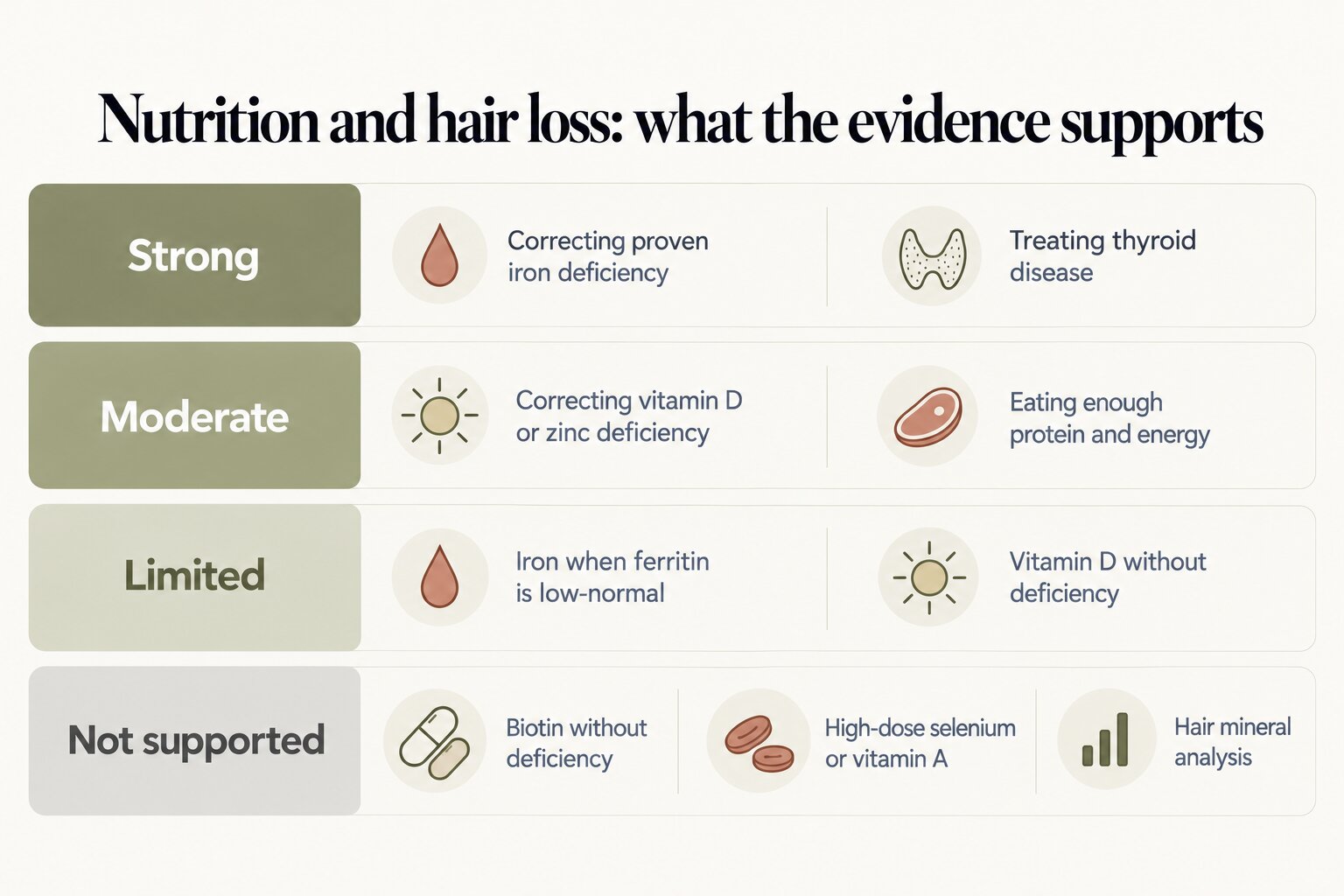
Hair follicles are among the fastest-dividing tissues in the body, so they're sensitive to shortages of energy, protein and some vitamins and minerals. A handful of blood tests can uncover treatable causes of hair loss: a full blood count and ferritin (iron stores), thyroid function, vitamin D and, depending on your diet and symptoms, vitamin B12, zinc and hormone tests. Low iron stores are common in women with hair loss, and thyroid problems can cause shedding that improves once treated. Low vitamin D is also more common in people with alopecia areata and female pattern hair loss, though it isn't yet clear whether supplements help hair. What doesn't help is taking supplements blindly. Biotin, the most heavily marketed "hair vitamin", has no good evidence of benefit in people who aren't deficient, and high doses can distort important blood tests, including tests for heart attacks and thyroid disease. Too much selenium, vitamin A or zinc can actually cause hair loss. The best approach is to test, correct any genuine deficiency, eat enough protein and energy, and treat the underlying type of hair loss. This article explains which tests are worth doing and what the evidence shows for each nutrient.
Key numbers
| Finding | Detail |
|---|---|
| Ferritin in women with non-scarring hair loss (36 studies) | Significantly lower than in women without hair loss |
| Low iron stores using a ferritin cut-off of 30 to 40 | About 59% of women with hair loss |
| Vitamin D deficiency in alopecia areata | About 52%; odds about 2.8 times higher than controls |
| Vitamin D deficiency in female pattern hair loss | About 50%; odds about 5 times higher than controls |
| Daily biotin need for adults | About 30 micrograms; hair supplements often contain 5,000 to 10,000 |
| Sri Lanka, pregnant women (2022 national survey) | 36% vitamin D deficient, 25% zinc deficient, 11% iron deficient |
How it works
Each hair follicle builds a new hair from rapidly dividing cells during the growing phase (see How Hair Grows and Ages). That requires a steady supply of protein, energy, iron, zinc and other nutrients. When supplies run short, the body prioritises vital organs, and follicles can be pushed into the resting phase early, causing shedding a few months later (see Telogen Effluvium). Hormones matter too: thyroid hormones regulate the hair cycle, and androgens drive pattern hair loss.
But nutrition isn't the cause of most hair loss. Pattern hair loss and alopecia areata have genetic and immune causes, and correcting a deficiency usually helps only the part of the shedding that the deficiency was causing. Blood tests are best seen as a way to find and remove contributing factors, alongside treating the main type of hair loss.
Which blood tests are worth doing
| Test | Why it's done | When |
|---|---|---|
| Full blood count | Detects anaemia | Everyone with hair loss |
| Ferritin | Measures iron stores, which can be low before anaemia appears | Everyone, especially women |
| Thyroid function (TSH, sometimes free T4) | Both underactive and overactive thyroid cause shedding | Everyone |
| Vitamin D | Low levels linked to some hair loss types | Most people, especially with little sun exposure |
| Vitamin B12 and folate | Deficiency affects dividing cells | Vegetarians, vegans, older adults, metformin users |
| Zinc | Low levels reported in some types of hair loss | Poor diet, gut disorders, after bariatric surgery |
| Testosterone and other hormones | Detects raised androgens, such as in PCOS | Women with irregular periods, acne or excess hair |
| Antinuclear antibodies, syphilis serology | Rare causes of hair loss | Only when the history suggests them |
Tests that aren't useful include hair mineral analysis, which doesn't reliably reflect what's in your body, and routine biotin levels (see Nutrient Blood Tests).
What the research shows
Iron. Iron is the most studied nutrient in hair loss. A 2022 meta-analysis of 36 studies found that women with non-scarring hair loss had significantly lower ferritin than women without it, particularly before menopause. Iron-deficiency anaemia wasn't more common, but low iron stores were: using a ferritin cut-off of 30 to 40 rather than the conventional 10 to 15, about 59% of women with hair loss had low stores.
What's less clear is the target. There are no large trials showing that raising ferritin in non-anaemic women regrows hair, and experts disagree on the ideal level. Many hair specialists aim for a ferritin of at least 40 in people with hair loss, recognising that the benefit of supplements is most likely when levels are well below 30. Iron supplements should be taken only when tests show they're needed, because excess iron is harmful. Find out why iron is low, too: heavy periods, pregnancy, a vegetarian diet, blood donation and, in older adults especially, blood loss from the gut.
Thyroid. Both an underactive and overactive thyroid can cause diffuse shedding, as well as dry or brittle hair. Hair usually recovers several months after thyroid levels are corrected. Autoimmune thyroid disease is also more common in people with alopecia areata (see Thyroid Function and Ageing and Alopecia Areata).
Vitamin D. Vitamin D receptors play a role in the hair cycle. A 2024 meta-analysis found vitamin D deficiency in about half of people with alopecia areata, female pattern hair loss and telogen effluvium, with significantly higher odds of deficiency than controls in alopecia areata and female pattern hair loss. The authors suggested screening in these groups, but noted that whether supplements improve hair growth hasn't been established. Correcting a genuine deficiency is worthwhile for bone, muscle and general health anyway (see Vitamin D).
Zinc. Zinc is needed for cell division and protein synthesis. Low zinc has been reported in some studies of alopecia areata and telogen effluvium, and severe deficiency (from inherited conditions, gut disorders or after bariatric surgery) clearly causes hair loss. Supplements make sense only if levels are low. Long-term high doses can cause copper deficiency, which itself can lead to anaemia and nerve problems.
Protein and energy. Crash diets, very low protein intake, eating disorders and rapid weight loss, including after bariatric surgery or with weight-loss medicines, can all cause shedding. Eating enough protein and overall energy is more important for hair than any single supplement (see Protein in the Sri Lankan Diet).
Biotin: the myth. Biotin deficiency does cause hair loss, but it's rare, usually seen in inherited conditions, long-term use of certain anticonvulsants, or very unusual diets. A 2024 review in the Journal of Clinical and Aesthetic Dermatology concluded that "the utility of biotin as a hair supplement is not supported by high-quality studies". The one placebo-controlled trial in women with diffuse hair loss found no benefit. A 2016 study reported low biotin levels in 38% of 541 women with hair loss, but serum biotin may not reliably reflect deficiency, and this hasn't been shown to mean supplements help.
The bigger concern is safety. Adults need about 30 micrograms a day, while hair, skin and nail supplements often contain 5,000 to 10,000 micrograms. At these doses, biotin can interfere with many laboratory tests that use biotin in their chemistry. It can falsely suggest an overactive thyroid in people with normal thyroid function, and it can falsely lower troponin, the main blood test for heart attacks. The US FDA issued safety warnings in 2017 and 2019 after a death was linked to a missed heart attack. If you take biotin, stop it at least two days before blood tests and always tell your doctor.
Too much of a good thing. Some supplements cause hair loss when taken in excess:
- Selenium: in 2008, a mislabelled liquid supplement in the US containing up to 200 times its stated selenium caused hair loss, painful nails, joint pain and diarrhoea in 184 people.
- Vitamin A: high doses, from supplements or retinoid medicines, are a well-known cause of shedding.
- Zinc: high doses over time can cause copper deficiency.
Why this matters for longevity
Hair loss can be the first visible sign of something that matters for your whole body: iron deficiency, thyroid disease, low vitamin D, undereating or an absorption problem. Finding these protects your energy, bones, heart and brain as well as your hair. Equally, avoiding unnecessary high-dose supplements protects you from real harms, such as misleading blood tests or toxicity, and saves money that would be better spent on treatments that work.
Recommendations
For everyone with hair loss.
- Ask for a full blood count, ferritin, thyroid function and vitamin D.
- Eat enough protein at each meal and avoid crash diets.
- Don't start high-dose supplements without testing first.
- If you take biotin, stop at least two days before any blood test and tell your doctor.
By situation.
- Women with heavy periods, recent pregnancy or a vegetarian diet: iron stores are often low, so ferritin is especially important.
- Vegetarians, vegans and older adults: check vitamin B12 as well.
- After bariatric surgery or with rapid weight loss: check iron, zinc, B12 and protein intake.
- Women with irregular periods, acne or excess facial hair: ask about hormone tests for PCOS (see Female Pattern Hair Loss).
- People with alopecia areata: check thyroid function and vitamin D.
- If all tests are normal: the cause is likely pattern hair loss, telogen effluvium from a past trigger, or another type (see Types of Hair Loss).
Practical notes
Before buying hair supplements, get tested. In Sri Lanka, deficiencies are common: the 2022 national micronutrient survey found vitamin D deficiency in 36%, zinc deficiency in 25% and iron deficiency in 11% of pregnant women. If a deficiency is found, correct it with the right dose for the right length of time, then recheck, usually after about three months. Iron tablets work best taken with vitamin C-rich foods and away from tea, coffee and calcium. Good food sources include fish, eggs, meat, lentils, dhal, green leafy vegetables such as gotukola and mukunuwenna, and seeds. Expect hair to improve slowly: shedding may settle within a few months of correcting a deficiency, but visible regrowth takes 6 to 12 months. If you've been taking biotin, tell your doctor before blood tests. Our Longevity Doctors can arrange the right blood tests, interpret them in context and build a nutrition and treatment plan for your hair and overall health, starting with the free longevity assessment.
- Treister-Goltzman Y, Yarza S, Peleg R. Iron deficiency and nonscarring alopecia in women: systematic review and meta-analysis. Skin Appendage Disorders, 2022;8(2):83-92.
- Yongpisarn T, et al. Vitamin D deficiency in non-scarring and scarring alopecias: a systematic review and meta-analysis. Frontiers in Nutrition, 2024;11:1479337.
- Yelich A, et al. Biotin for hair loss: teasing out the evidence. Journal of Clinical and Aesthetic Dermatology, 2024;17(8):56-61.
- Trüeb RM. Serum biotin levels in women complaining of hair loss. International Journal of Trichology, 2016;8(2):73-77.
- US Food and Drug Administration. Biotin (vitamin B7): safety communication, may interfere with lab tests. 2017, updated 2019.
- Almohanna HM, et al. The role of vitamins and minerals in hair loss: a review. Dermatology and Therapy, 2019;9(1):51-70.
- US Centers for Disease Control and Prevention / FDA. Selenium toxicity linked to Total Body Formula supplements, 2008.
- Micronutrient Forum. Sri Lanka country profile, citing the Sri Lanka National Nutrition and Micronutrient Survey 2022.
- Donovan J. What level of ferritin should I aim for? Donovan Medical hair clinic.
Free longevity assessment
Want to know if a deficiency
is behind your hair loss?
Take the free Aevum Protocol assessment to see how your skin & longevity and 6 other longevity domains are performing — and get a personalised 90-day plan.
Take the free assessmentKeep reading