Nutrition & Metabolism
Vitamin D:
How It Works, Why Deficiency Is Common and What It Means for Longevity
Vitamin D is unusual among vitamins: your skin makes most of it when exposed to sunlight, and the body converts it into a hormone that switches genes on and off. Its best-established job is helping you absorb calcium and keep bones strong, but vitamin D receptors are found in immune cells, muscle and many other tissues. Deficiency is common, even in sunny countries: a 2026 review of Sri Lankan studies found that 67.6% of adults in the most rigorous population-based study in Colombo had low levels, with women more affected than men. Severe deficiency softens bones and weakens muscles, and genetic studies suggest it raises the risk of death. But the evidence for taking extra vitamin D when your levels are already adequate is much weaker. Large trials such as VITAL, with 25,871 adults, found that 2,000 IU a day didn't prevent cancer, heart disease or fractures in generally healthy people, although it was linked to 22% fewer autoimmune diseases. A Cochrane review found a small reduction in deaths with vitamin D3, mainly in older women. The 2024 Endocrine Society guideline advises against routine testing in healthy adults, and recommends supplements for specific groups, including people aged 75 and over. The message for longevity: correct deficiency, avoid megadoses, and don't expect vitamin D to replace exercise, diet and sleep.
Key numbers
| Measure | Detail |
|---|---|
| Recommended intake (US Institute of Medicine) | 600 IU a day for ages 1-70; 800 IU over 70 |
| Upper limit for adults | 4,000 IU a day |
| Blood level (25-hydroxyvitamin D) | Below 12 ng/mL (30 nmol/L) deficient; 20 ng/mL (50 nmol/L) or more adequate for most people |
| Deficiency in Sri Lanka | 67.6% of adults in a population-based Colombo study (below 50 nmol/L) |
| VITAL trial (25,871 adults, 2,000 IU a day) | No reduction in cancer, heart disease or fractures; 22% fewer autoimmune diseases |
| Cochrane review (56 trials, 95,286 people) | Vitamin D3 linked to 6% lower mortality; about 150 people treated for 5 years to prevent one death |
| Toxicity | Usually only with very high doses taken for months, such as 50,000 IU a day |
How vitamin D works
From sunlight to an active hormone. Vitamin D comes from two sources: sunlight and food or supplements. When ultraviolet B (UVB) light hits the skin, it converts a cholesterol-like molecule called 7-dehydrocholesterol into pre-vitamin D3, which then becomes vitamin D3 (cholecalciferol). Vitamin D from food and supplements comes as D3, or as D2 from plant and fungal sources.
Vitamin D itself is inactive. It travels in the blood bound to a carrier protein to the liver, where it's converted to 25-hydroxyvitamin D (calcidiol). This is the main circulating form and the one measured in blood tests, because it reflects how much vitamin D you've made and eaten over recent weeks.
The kidneys then convert 25-hydroxyvitamin D into the active hormone, 1,25-dihydroxyvitamin D (calcitriol), using an enzyme called CYP27B1. This step is tightly controlled: parathyroid hormone increases it, while high calcium, phosphate and calcitriol itself switch it down. Another enzyme, CYP24A1, breaks down excess vitamin D, helping to protect against overload. Many other tissues, including immune cells, can also make calcitriol locally for their own use.
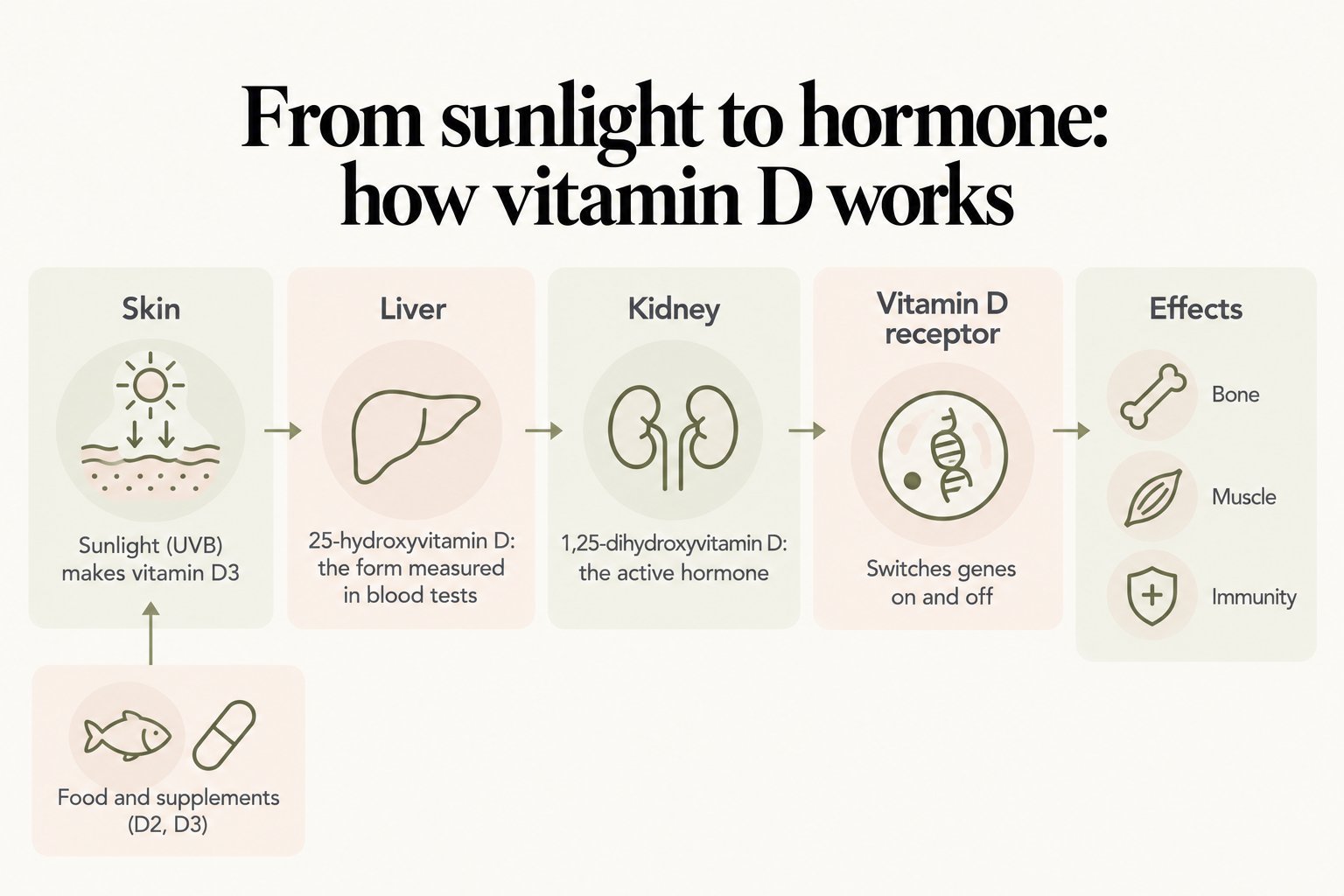
The vitamin D receptor: switching genes on and off. Calcitriol works mainly by binding the vitamin D receptor (VDR) inside cells. The receptor pairs with another receptor, called RXR, and the pair attaches to DNA to regulate the activity of genes involved in calcium handling, cell growth and immunity. In a 2010 study of immune cells, calcitriol increased the number of vitamin D receptor binding sites in the genome from 623 to 2,776 and changed the activity of 229 genes. These binding sites were concentrated near genes linked to autoimmune diseases such as multiple sclerosis, type 1 diabetes, Crohn's disease, lupus and rheumatoid arthritis, as well as some cancers. This helps explain why vitamin D has been studied for so many conditions, although being near a gene doesn't prove that supplements will prevent disease.
What vitamin D does
- Bones: vitamin D increases the absorption of calcium and phosphate from the gut, keeping blood levels in the range needed to build and maintain bone. Without enough, the body takes calcium from the skeleton.
- Muscles: vitamin D receptors are present in muscle, and severe deficiency causes muscle weakness, particularly in the hips and thighs.
- Immunity: vitamin D helps regulate both the body's first-line defences against infection and the immune responses that, when misdirected, cause autoimmune disease.
- Cell growth and inflammation: vitamin D helps control how cells grow and divide, and has anti-inflammatory effects in laboratory studies (see Inflammaging).
Vitamin D deficiency
How it's defined. Vitamin D status is measured by blood 25-hydroxyvitamin D. According to the US Institute of Medicine thresholds used by the National Institutes of Health:
- Below 12 ng/mL (30 nmol/L): deficient, with a risk of rickets in children and osteomalacia (soft bones) in adults.
- 12-20 ng/mL (30-50 nmol/L): generally inadequate for bone health.
- 20 ng/mL (50 nmol/L) or more: adequate for most healthy people.
- Above 50 ng/mL (125 nmol/L): emerging evidence of possible harm.
Many laboratories flag 20-30 ng/mL as "insufficient", but evidence doesn't show a benefit from raising levels above 30 ng/mL in the general population. To convert ng/mL to nmol/L, multiply by 2.5.
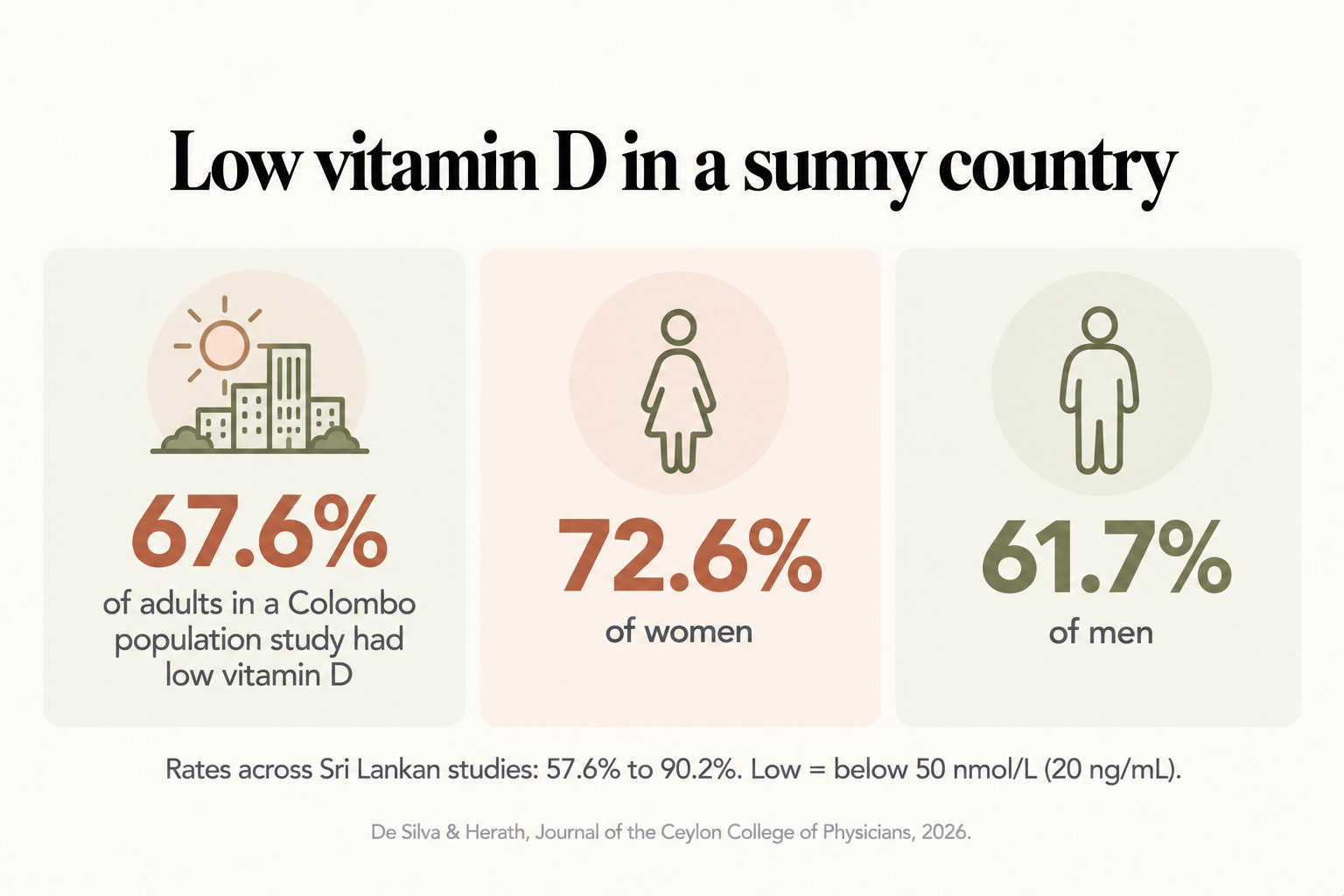
Why it's common in Sri Lanka. Despite year-round sunshine, low vitamin D is widespread in Sri Lanka. A 2026 scoping review in the Journal of the Ceylon College of Physicians found reported rates of inadequacy ranging from 57.6% in premenopausal women to 90.2% in an urban Colombo group. In the most rigorous population-based study, 67.6% of adults in Colombo had levels below 50 nmol/L, with women more affected than men (72.6% vs 61.7%). Risk was higher in urban residents, working-age adults, people with darker skin, people who avoid the sun, people with obesity and those with low dietary intake.
Who's at risk.
- People who spend most of their time indoors, cover most of their skin or use sunscreen heavily.
- People with darker skin, who need more sun exposure to make the same amount of vitamin D.
- Older adults, whose skin makes less vitamin D.
- People with obesity, because vitamin D is stored in fat tissue.
- People with conditions affecting absorption (such as coeliac disease, inflammatory bowel disease or after weight-loss surgery), or with kidney or liver disease.
- People taking some medicines, such as certain anti-epileptic drugs and long-term steroids.
- Breastfed infants, because breast milk contains little vitamin D.
Symptoms. Most people with low vitamin D have no symptoms. Severe, long-standing deficiency can cause bone pain and tenderness, muscle weakness (especially difficulty climbing stairs or rising from a chair), and in children, rickets. Tiredness and low mood are often blamed on vitamin D, but these are common and have many causes, so they aren't a reliable sign of deficiency.
Treatment and prevention
Testing. The 2024 Endocrine Society guideline recommends against routine vitamin D testing in healthy adults, because no target level has been proven to prevent disease. Testing is reasonable for people with osteoporosis or fractures, malabsorption, kidney or liver disease, symptoms suggesting deficiency, or very limited sun exposure (see Nutrient Blood Tests).
Getting enough.
- Sunlight: short, regular sun exposure of the arms and legs, without burning, helps the skin make vitamin D. People with darker skin need longer. Balance this against the risk of skin damage.
- Food: few foods are rich in vitamin D. Oily fish is the best natural source: a 3 oz (85 g) serving of cooked salmon provides about 447 IU and mackerel about 388 IU. An egg yolk has about 41 IU, and sardines about 46 IU for two. UV-exposed mushrooms and fortified foods also help (see Vitamins in the Sri Lankan Diet).
- Supplements: for most adults, 600-800 IU a day meets the recommended intake. Vitamin D3 is generally preferred.
Treating deficiency. Treatment should be guided by a doctor. In its 2011 guideline, the Endocrine Society suggested treating adults with levels below 20 ng/mL with 50,000 IU once a week for eight weeks, or 6,000 IU a day, followed by maintenance doses of 1,500-2,000 IU a day. People with obesity, malabsorption or medicines that affect vitamin D may need two to three times more. Daily or weekly doses are preferred over very large single doses: in a trial of 2,256 women aged 70 and over, a once-yearly dose of 500,000 IU led to 15% more falls and 26% more fractures, with falls highest in the first three months after each dose.
Safety. Vitamin D toxicity is rare and usually results from very high doses taken for months, such as about 50,000 IU a day in adults, typically with blood levels above 150 ng/mL. Excess vitamin D raises blood calcium, causing nausea, vomiting, thirst, frequent urination and weakness, and in severe cases kidney damage. Combining vitamin D with calcium supplements slightly increased the risk of kidney stones in the Cochrane review. The upper limit for adults is 4,000 IU a day unless a doctor advises otherwise.
Vitamin D and longevity: what the research shows
Strong: correcting deficiency protects bones and muscles. Vitamin D is essential for bone health, and treating deficiency prevents and reverses rickets and osteomalacia. Genetic evidence also suggests that deficiency itself is harmful: a 2022 Mendelian randomisation study of 307,601 UK Biobank participants followed for 14 years found that the risk of death fell as vitamin D rose, with the strongest effect in people with severe deficiency (below 25 nmol/L). Because genes are assigned at conception, this approach is less affected by the confounding that plagues observational studies.
Moderate: a small reduction in deaths, mainly in older adults. A 2014 Cochrane review of 56 trials with 95,286 participants, mostly women over 70, found that vitamin D3 reduced mortality slightly (11.0% vs 11.4%, a relative risk of 0.94): about 150 people would need to take vitamin D3 for five years to prevent one death. Vitamin D2 and the active forms alfacalcidol and calcitriol showed no benefit, and the active forms raised the risk of high calcium. A 2023 meta-analysis of 14 trials with 104,727 participants found no significant overall effect on cancer deaths, but daily dosing was linked to 12% fewer cancer deaths, while large intermittent doses showed no benefit. This was a subgroup finding and should be interpreted cautiously.
Moderate: fewer autoimmune diseases and respiratory infections. In the VITAL trial, 2,000 IU of vitamin D3 a day for about five years was linked to 22% fewer confirmed autoimmune diseases, such as rheumatoid arthritis, psoriasis and autoimmune thyroid disease (123 vs 155 cases). A 2017 BMJ meta-analysis of 25 trials found that vitamin D reduced acute respiratory infections by 12% overall and by 19% with daily or weekly dosing, with the largest benefit, 70%, in people with very low levels (below 25 nmol/L).
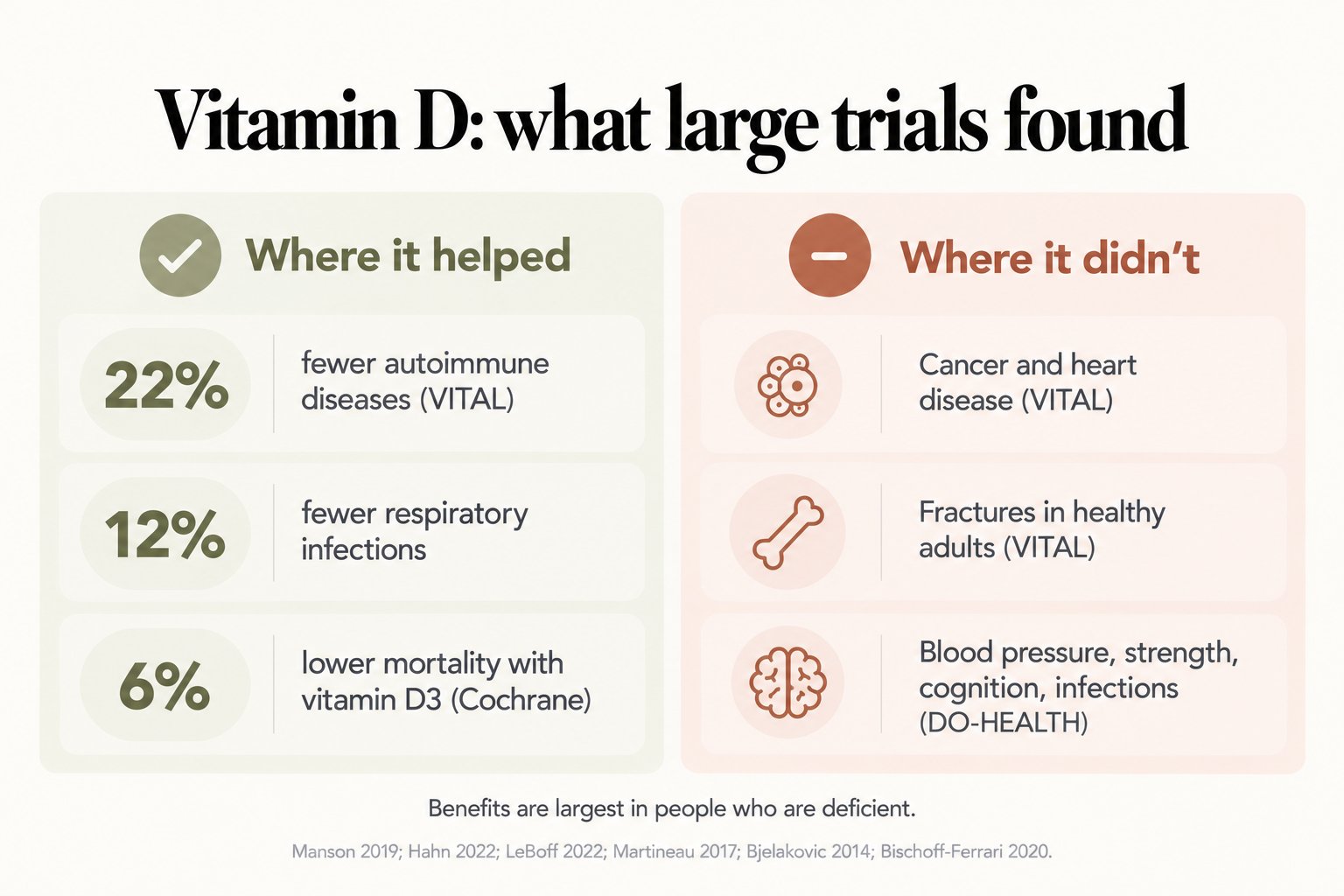
Limited: extra vitamin D in people who aren't deficient. Large trials in generally healthy people have mostly been disappointing:
- VITAL (25,871 US adults, 2,000 IU a day, 5.3 years): no reduction in cancer or major cardiovascular events, and no reduction in total, non-vertebral or osteoporotic fractures, even in people with lower starting levels.
- D-Health (21,315 older Australians with an average age of 69, 60,000 IU a month, 5.7 years): no effect on all-cause mortality, and a non-significant 15% higher risk of cancer death.
- DO-HEALTH (2,157 adults aged 70 and over in five European countries, 2,000 IU a day, 3 years): no benefit for blood pressure, physical performance, cognition, non-vertebral fractures or infections. In a later analysis of epigenetic clocks, omega-3 had the largest effect, slowing biological ageing by about three months, and combining vitamin D, omega-3 and exercise had additive effects on some clocks (see Can You Reverse Your Biological Age?).
- Falls and fractures: in a December 2024 draft recommendation, the US Preventive Services Task Force recommended against vitamin D, with or without calcium, to prevent falls or fractures in community-dwelling adults aged 60 and over without known deficiency or osteoporosis.
Important limitations.
- Most trial participants weren't deficient: in VITAL, the average starting level was 30.7 ng/mL, and only 1.5% were below 12 ng/mL. Trials can't show whether treating deficiency helps if few participants are deficient.
- Observational studies overstate benefits: low vitamin D is often a marker of poor health, indoor living and obesity rather than the cause of disease.
- Most trials were in high-income, mainly white populations: results may not apply directly to South Asians.
- Dosing matters: daily or weekly doses appear safer and more effective than large intermittent doses.
Why this matters for longevity
Vitamin D is a good example of how longevity science has matured. Early observational studies linked low vitamin D to almost every disease of ageing, raising hopes that a cheap supplement could prevent them. Large trials have since shown that, for people with adequate levels, extra vitamin D does little for cancer, heart disease, fractures or physical function. But deficiency is a different matter: it weakens bones and muscles, and genetic evidence suggests it shortens life. The practical goal isn't a high number on a lab report; it's avoiding deficiency, particularly in groups at high risk, while relying on proven foundations such as exercise, strength training, a healthy diet and not smoking for longevity (see Longevity Supplements and It's Never Too Late).
Recommendations by situation
| Situation | What the evidence supports |
|---|---|
| Healthy adult under 75, outdoors regularly | No routine testing; aim for the recommended 600-800 IU from food, sun and, if needed, supplements |
| Mostly indoors, covers skin or has darker skin | Consider a daily supplement at the recommended intake |
| Aged 75 and over | Daily supplementation is reasonable (Endocrine Society 2024) |
| Pregnant | Supplementation recommended; follow antenatal advice |
| Osteoporosis, fractures, malabsorption, kidney or liver disease | Test and treat deficiency under medical supervision |
| Confirmed deficiency | Doctor-guided treatment course, then a maintenance dose; recheck after a few months |
| Taking high-dose supplements without testing | Stay below 4,000 IU a day unless advised; avoid large annual or monthly doses |
Practical notes
Vitamin D matters, but more isn't better. If you spend most of your day indoors, have darker skin, are older or have a condition that affects absorption, you're more likely to be low, and a daily supplement at the recommended dose is a safe, inexpensive step. If you've been told you're deficient, a short treatment course followed by a maintenance dose usually corrects it. Avoid very large doses unless prescribed, and tell your doctor about all supplements you take, including those combined with calcium. Our Longevity Doctors can assess whether you need testing or treatment as part of a full review of your bone, muscle and metabolic health, starting with the free longevity assessment.
- Demay MB, et al. Vitamin D for the prevention of disease: an Endocrine Society clinical practice guideline. Journal of Clinical Endocrinology & Metabolism, 2024;109(8):1907-1947.
- Institute of Medicine. Dietary Reference Intakes for Calcium and Vitamin D. Washington, DC: National Academies Press, 2011.
- De Silva ST, Herath NJ. Vitamin D deficiency in Sri Lankan adults: a scoping review. Journal of the Ceylon College of Physicians, 2026;57(1):50-56.
- Ramagopalan SV, et al. A ChIP-seq defined genome-wide map of vitamin D receptor binding: associations with disease and evolution. Genome Research, 2010;20(10):1352-1360.
- Manson JE, et al. Vitamin D supplements and prevention of cancer and cardiovascular disease. New England Journal of Medicine, 2019;380(1):33-44.
- LeBoff MS, et al. Supplemental vitamin D and incident fractures in midlife and older adults. New England Journal of Medicine, 2022;387(4):299-309.
- Hahn J, et al. Vitamin D and marine omega 3 fatty acid supplementation and incident autoimmune disease: VITAL randomized controlled trial. BMJ, 2022;376:e066452.
- Bjelakovic G, et al. Vitamin D supplementation for prevention of mortality in adults. Cochrane Database of Systematic Reviews, 2014;(1):CD007470.
- Kuznia S, et al. Efficacy of vitamin D3 supplementation on cancer mortality: systematic review and individual patient data meta-analysis of randomised controlled trials. Ageing Research Reviews, 2023;87:101923.
- Martineau AR, et al. Vitamin D supplementation to prevent acute respiratory tract infections: systematic review and meta-analysis of individual participant data. BMJ, 2017;356:i6583.
- Sutherland JP, et al. Vitamin D deficiency increases mortality risk in the UK Biobank: a nonlinear Mendelian randomization study. Annals of Internal Medicine, 2022;175(11):1552-1559.
- Neale RE, et al. The D-Health Trial: a randomised controlled trial of the effect of vitamin D on mortality. Lancet Diabetes & Endocrinology, 2022;10(2):120-128.
- Bischoff-Ferrari HA, et al. Effect of vitamin D supplementation, omega-3 fatty acid supplementation, or a strength-training exercise program on clinical outcomes in older adults: the DO-HEALTH randomized clinical trial. JAMA, 2020;324(18):1855-1868.
- Bischoff-Ferrari HA, et al. Individual and additive effects of vitamin D, omega-3 and exercise on DNA methylation clocks of biological aging in older adults from the DO-HEALTH trial. Nature Aging, 2025;5(3):376-385.
- Sanders KM, et al. Annual high-dose oral vitamin D and falls and fractures in older women: a randomized controlled trial. JAMA, 2010;303(18):1815-1822.
- Holick MF, et al. Evaluation, treatment, and prevention of vitamin D deficiency: an Endocrine Society clinical practice guideline. Journal of Clinical Endocrinology & Metabolism, 2011;96(7):1911-1930.
- US Preventive Services Task Force. Vitamin D, calcium, or combined supplementation for the primary prevention of falls and fractures in community-dwelling adults: draft recommendation statement. 2024.
- MSD Manual Professional Version. Vitamin D toxicity.
Free longevity assessment
Not sure whether you need
vitamin D?
Take the free Aevum Protocol assessment to see how your nutrition & metabolism and 6 other longevity domains are performing — and get a personalised 90-day plan.
Take the free assessmentKeep reading