Longevity 101
It's Never Too Late:
The Evidence for Starting Healthy Habits at 50, 60, 70 and Beyond
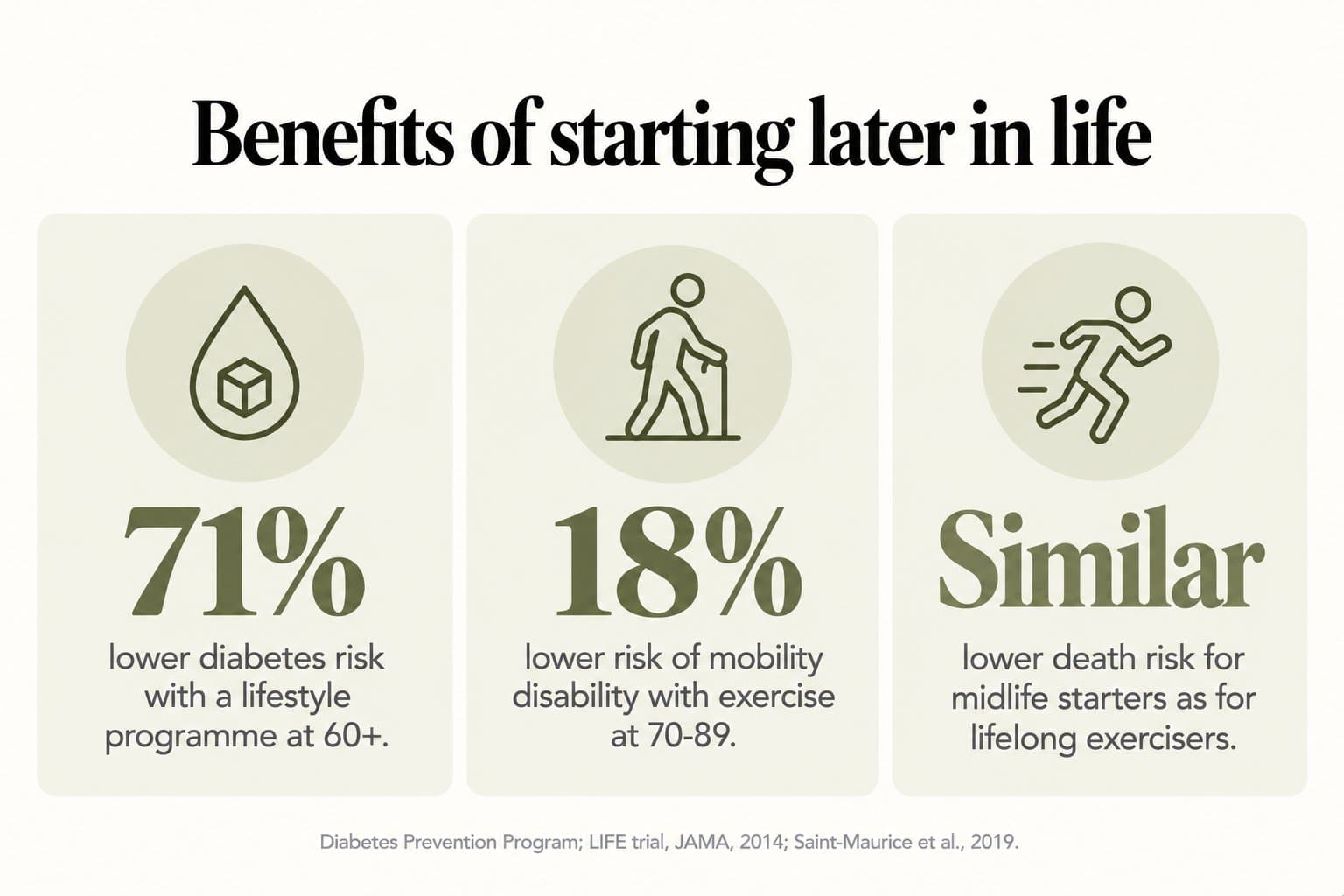
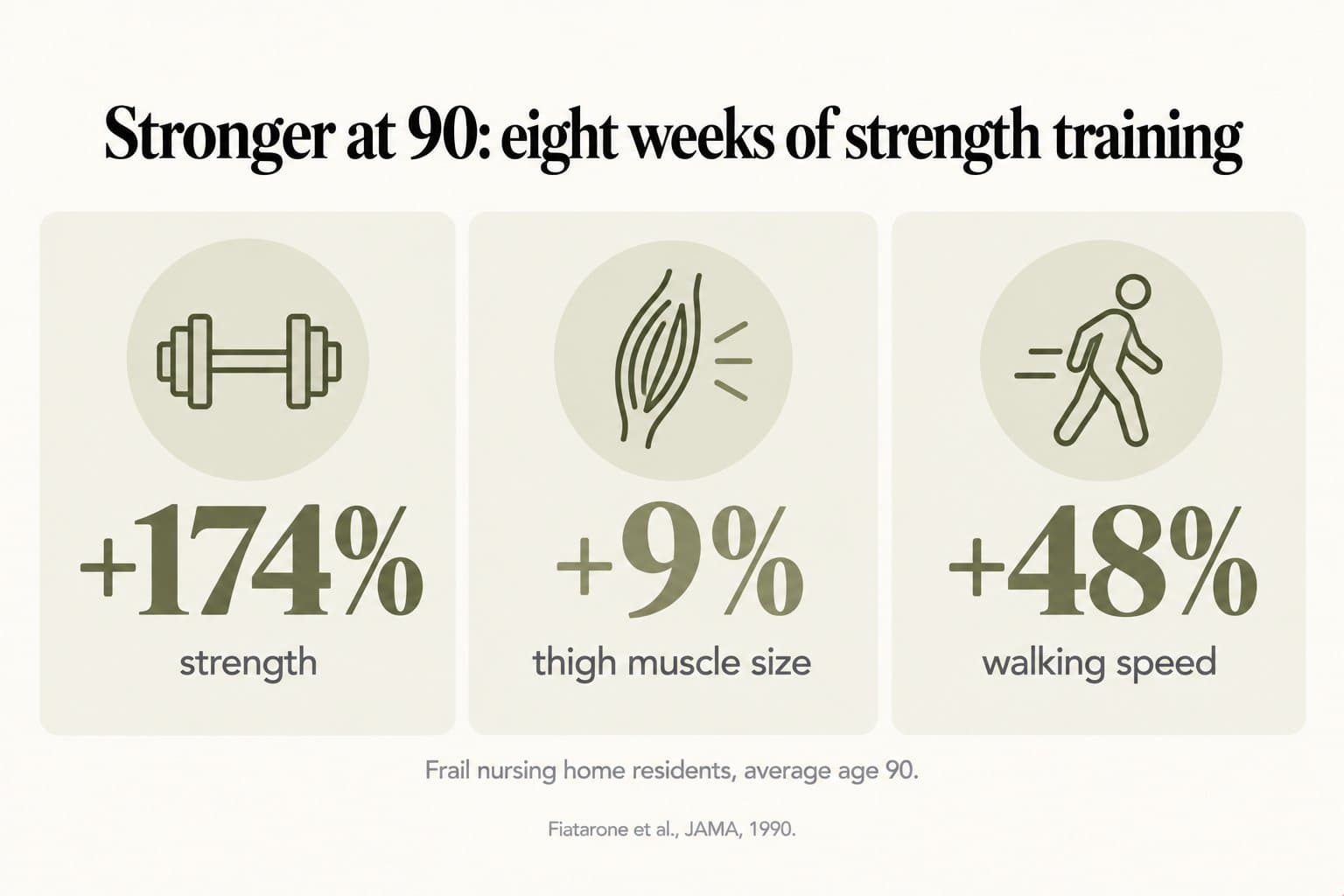
Many people assume that if they haven't looked after their health by middle age, there's little point in starting. The evidence says otherwise. Quitting smoking at 45-54 adds about six years of life expectancy compared with continuing to smoke. People who were inactive for most of their adult lives but became active in their 40s to 60s had reductions in risk of death similar to those who had been active all along. In the Diabetes Prevention Program, the lifestyle programme cut the risk of type 2 diabetes by 58% overall, and by 71% in people aged 60 and over. In a randomised trial of 1,635 adults aged 70-89, a structured activity programme reduced major mobility disability by 18%. Even frail nursing home residents with an average age of 90 increased their strength by an average of 174% after just eight weeks of strength training. Earlier is better, but at every age, healthy changes can add years, preserve independence and improve how you feel. This article reviews the evidence and explains where to start.
Key numbers
| Finding | Detail |
|---|---|
| Quitting smoking (Jha et al., 2013) | About 10 years gained if quitting at 25-34, 9 years at 35-44 and 6 years at 45-54 |
| Becoming active in midlife (300,000+ adults aged 50-71) | Similar lower risk of death to lifelong exercisers |
| Diabetes prevention by age (Diabetes Prevention Program) | Lifestyle programme cut risk by 58% overall and 71% in those aged 60+ |
| Structured activity at 70-89 (LIFE trial, 1,635 adults) | 18% lower risk of major mobility disability |
| Strength training at 90 (Fiatarone et al., 1990) | Strength up 174% and walking speed up 48% in 8 weeks |
Why it's not too late
The body keeps responding to how it's treated throughout life. Muscles grow stronger with training at any age, blood pressure and blood sugar improve when habits change, and the lungs and blood vessels begin to recover after quitting smoking. Even biological age measures can change in response to lifestyle (see Biological Age vs Chronological Age). Starting later means the gains may be smaller than starting young, but they're still substantial.
Evidence strength
Strong: quitting smoking adds years at any age. In a 2013 study in the New England Journal of Medicine, Prabhat Jha and colleagues found that smokers lost more than 10 years of life expectancy compared with people who had never smoked. Quitting at ages 25-34 gained about 10 years, at 35-44 about 9 years and at 45-54 about 6 years. Quitting before 40 reduced the excess risk of death from continued smoking by about 90%.

Strong: lifestyle change prevents diabetes, especially in older adults. In the Diabetes Prevention Program, a lifestyle programme with modest weight loss and 150 minutes a week of physical activity reduced the risk of type 2 diabetes by 58% compared with placebo, and by 71% in participants aged 60 and over (see The Major Diseases of Ageing).
Strong: exercise protects independence in later life. The LIFE trial randomly assigned 1,635 adults aged 70-89 (average age 79) who were at risk of disability to a structured, moderate-intensity programme of walking, strength, flexibility and balance exercises, or to health education. Over about 2.6 years, the activity group had an 18% lower risk of major mobility disability, defined as losing the ability to walk 400 metres.
Moderate: starting in midlife brings similar benefits to lifelong activity. A 2019 US National Cancer Institute study of more than 300,000 adults aged 50-71 found that people who had been inactive in early adulthood but increased their activity in middle age had similar reductions in risk of death from all causes, heart disease and cancer to those who had been active throughout life. As the researchers put it: "Midlife is not too late to start being active."
Limited but striking: strength training at 90. In a small 1990 study in JAMA, 10 frail nursing home residents with an average age of 90 (up to 96) did eight weeks of high-intensity strength training. Their strength increased by an average of 174%, thigh muscle size by 9% and walking speed by 48%. The study was small, but later research has confirmed that older adults can build muscle and strength (see Mitochondria and Ageing for a study showing larger mitochondrial gains in older than younger adults).
Important limitations.
- Earlier is better: the benefits of quitting smoking, for example, are largest when people quit young.
- Some observational findings may partly reflect healthier people being more likely to change habits.
- Safety matters: older adults and people with health conditions should start new exercise gradually and seek advice if needed.
Recommendations by situation
| Situation | What the evidence supports |
|---|---|
| Smoker of any age | Quit now; seek support and medicines if needed |
| Inactive in your 40s, 50s or 60s | Start with walking and build up to 150 minutes a week plus strength training |
| Prediabetes after 60 | A lifestyle programme can cut diabetes risk by more than two-thirds |
| Aged 70+ and less mobile | Structured walking, strength and balance exercise, ideally supervised |
| Frail or recovering from illness | Gentle, progressive strength training with professional guidance |
| Long-standing high blood pressure or cholesterol | Treatment still reduces the risk of heart attack and stroke |
Practical notes
It's never too late to benefit from healthier habits. Start with one change that matters most for you, such as stopping smoking, walking daily or adding strength exercises twice a week, and build from there. Track simple measures such as blood pressure, weight, waist size and how far you can walk, and expect improvements within weeks to months (see Your Key Longevity Numbers). Older relatives can benefit too, and family support makes change easier. Our Longevity Doctors can help you start safely at any age, starting with the free longevity assessment.
- Jha P, et al. 21st-century hazards of smoking and benefits of cessation in the United States. New England Journal of Medicine, 2013;368(4):341-350.
- Saint-Maurice PF, et al. Association of leisure-time physical activity across the adult life course with all-cause and cause-specific mortality. JAMA Network Open, 2019;2(3):e190355.
- Centers for Disease Control and Prevention. National Diabetes Prevention Program: lifestyle change program.
- Pahor M, et al. Effect of structured physical activity on prevention of major mobility disability in older adults: the LIFE Study randomized clinical trial. JAMA, 2014;311(23):2387-2396.
- Fiatarone MA, et al. High-intensity strength training in nonagenarians: effects on skeletal muscle. JAMA, 1990;263(22):3029-3034.
Free longevity assessment
Ready to start, whatever
your age?
Take the free Aevum Protocol assessment to see how your longevity 101 and 6 other longevity domains are performing — and get a personalised 90-day plan.
Take the free assessment