Longevity Science
Organ Ageing Clocks:
Can a Blood Test Show Which of Your Organs Is Ageing Fastest?
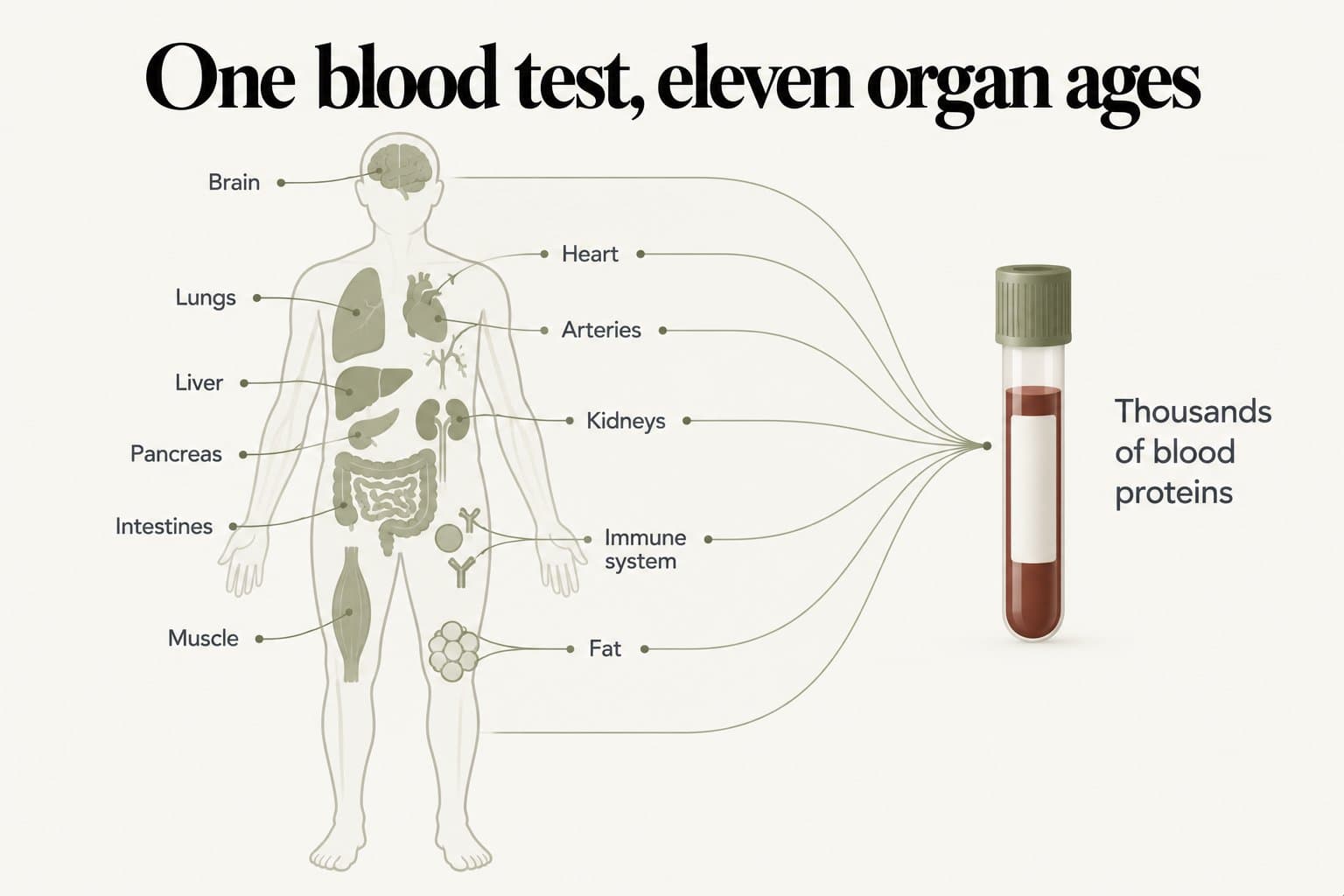
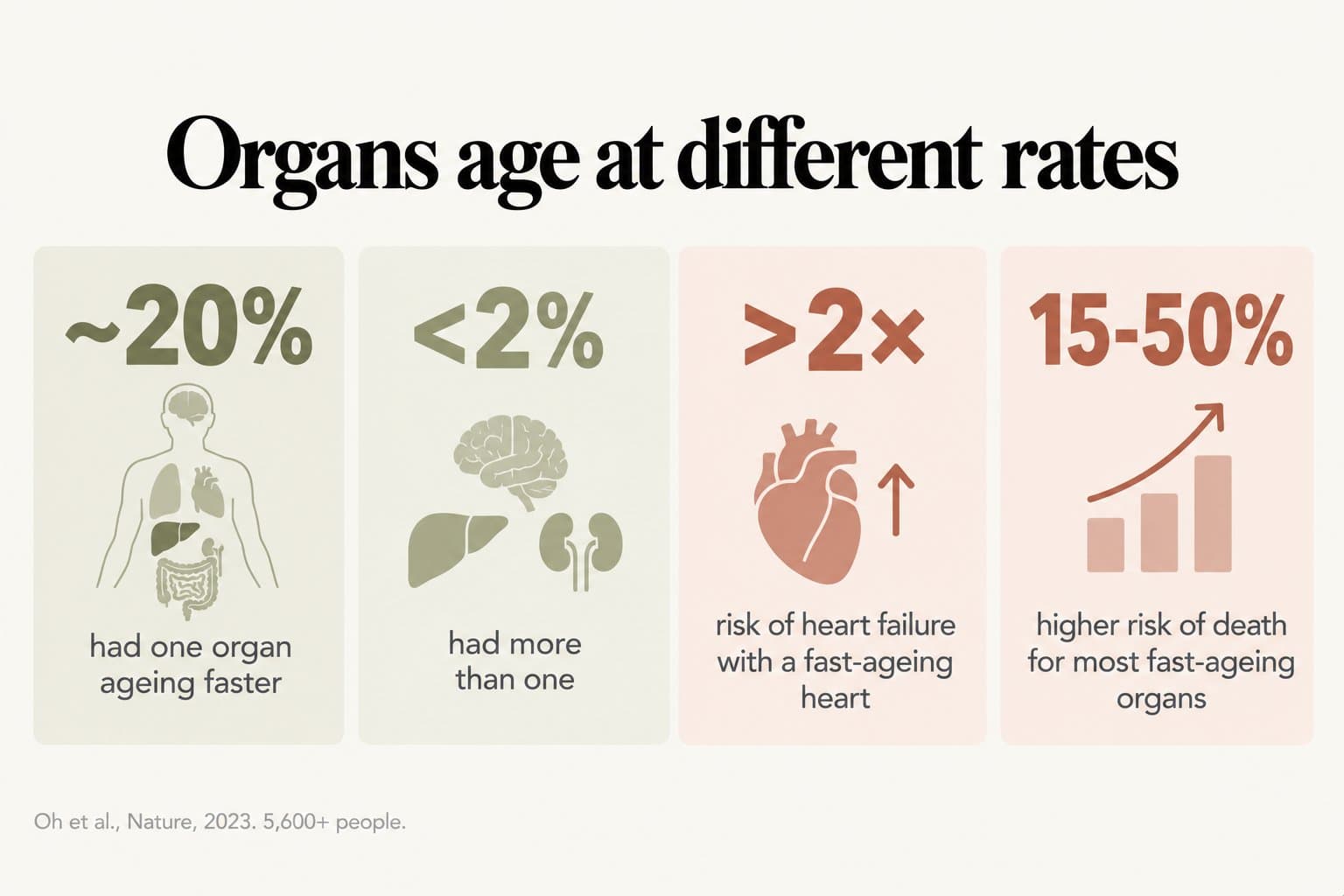
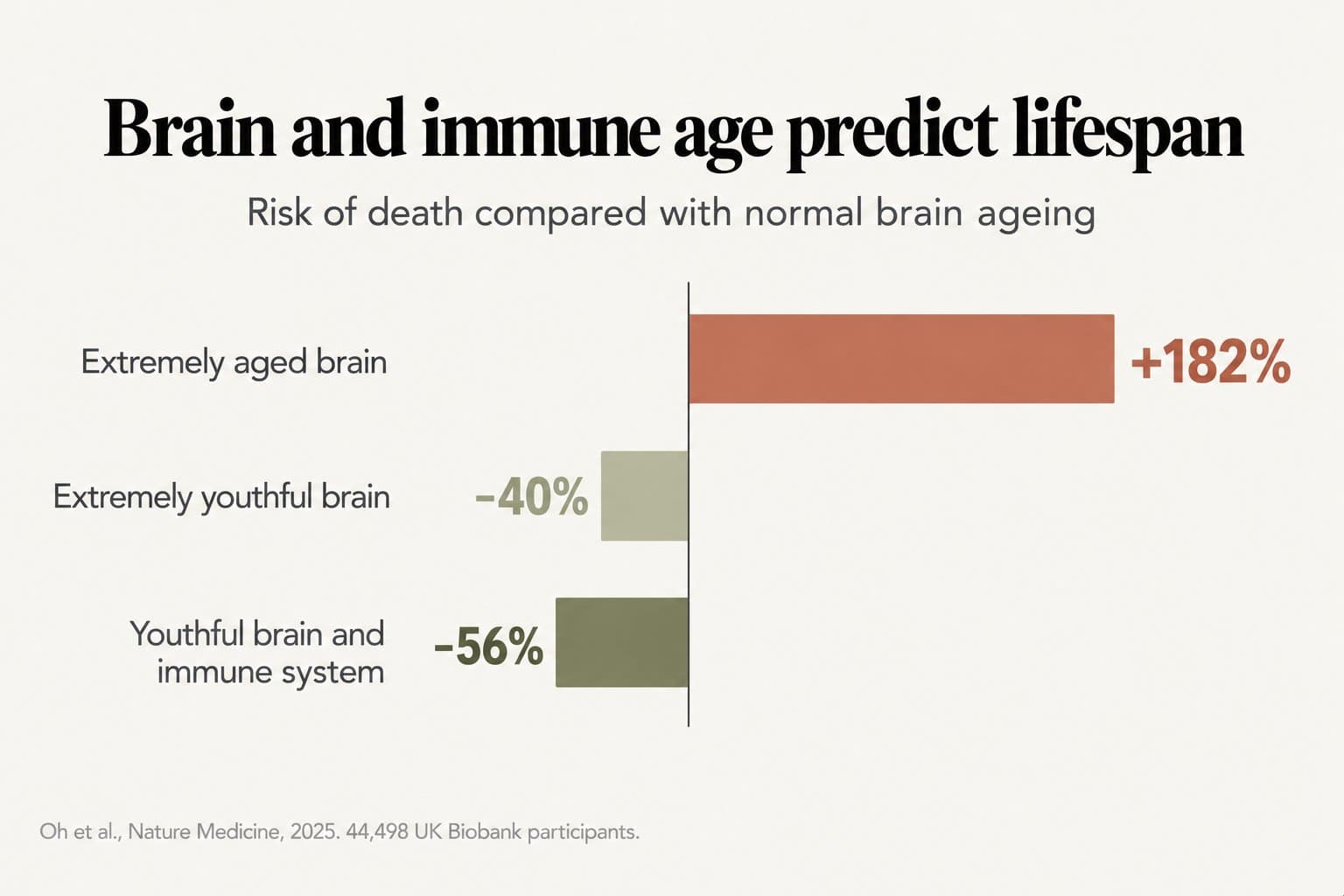
Your organs don't necessarily age at the same rate. A new generation of tests uses thousands of proteins in a blood sample to estimate the biological age of individual organs, such as the brain, heart, kidneys and immune system. In a landmark 2023 study in Nature, Stanford researchers measured almost 5,000 blood proteins in more than 5,600 people and found that almost 20% had one organ ageing noticeably faster than expected. People with fast-ageing hearts had more than double the risk of heart failure over 15 years, and for most organs, accelerated ageing carried a 15-50% higher risk of death. A 2025 follow-up in about 44,500 UK Biobank participants found that brain age was the strongest single predictor of death: an "extremely aged" brain was linked to 182% higher mortality, while a youthful brain and immune system together were linked to 56% lower mortality. Smoking, regular alcohol and processed meat were linked to faster organ ageing; exercise and oily fish to slower ageing. These tests aren't yet available for routine clinical use, and they need testing in more diverse populations. This article explains how organ clocks work and what they might mean for you.
Key numbers
| Finding | Detail |
|---|---|
| Organ ageing in 5,600+ people (Oh et al., 2023) | Almost 20% had one organ ageing faster; fewer than 2% had more than one |
| Fast-ageing heart | More than double the risk of heart failure over 15 years |
| Accelerated organ ageing and death | 15-50% higher risk for most organs |
| Brain age in 44,498 UK Biobank participants (2025) | Extremely aged brain: 182% higher mortality; youthful brain: 40% lower; youthful brain plus immune system: 56% lower |
| Proteomic ageing clock (Argentieri et al., 2024) | 204 proteins; developed in 45,441 people; linked to 18 major chronic diseases |
The discovery
Earlier biological age tests, such as epigenetic clocks, give one age for the whole body (see Epigenetic Clocks Explained). But ageing isn't uniform: one person's kidneys might be ageing quickly while their heart is in good shape. Proteins in the blood offer a window into individual organs, because many proteins are made mainly by one organ and leak into the bloodstream.
How organ clocks work
- 1. Measure thousands of proteins in a blood sample using high-throughput technology.
- 2. Identify organ-specific proteins: in the 2023 Stanford study, almost 900 of nearly 5,000 proteins were enriched in a single organ.
- 3. Train a model to predict age from each organ's proteins.
- 4. Compare predicted with actual age: an organ whose proteins look older than expected is "ageing faster", and the size of the gap is called the age gap.
What the research shows
2023: one in five people has a fast-ageing organ. Hamilton Oh, Tony Wyss-Coray and colleagues at Stanford measured nearly 5,000 plasma proteins in more than 5,600 adults and built ageing models for 11 organs: fat, arteries, brain, heart, immune tissue, intestines, kidneys, liver, lungs, muscle and pancreas. Almost 20% of people showed accelerated ageing in a single organ, and fewer than 2% in more than one. People with accelerated heart ageing had more than double the risk of heart failure over the next 15 years, brain and artery ageing predicted progression of Alzheimer's disease and cognitive impairment, and for most organs, accelerated ageing carried a 15-50% higher risk of death from any cause.
2024: a proteomic ageing clock across populations. A study led by Austin Argentieri at Massachusetts General Hospital, published in Nature Medicine, built a whole-body proteomic clock from 204 proteins in 45,441 UK Biobank participants and validated it in people from China and Finland. Faster proteomic ageing was associated with 18 major chronic diseases, including heart, liver, kidney and lung disease, diabetes, Alzheimer's disease and cancer, as well as frailty and death.
2025: brain and immune age predict lifespan. In a 2025 Nature Medicine study of 44,498 UK Biobank participants aged 40-70, followed for up to 17 years, the Stanford team measured about 3,000 proteins. Brain age was the strongest single predictor of death. Compared with people whose brains were ageing normally, those with an "extremely aged" brain had a 182% higher risk of death over about 15 years and were three times more likely to develop Alzheimer's disease, while those with an extremely youthful brain had a 40% lower risk of death. A youthful brain and immune system together were linked to a 56% lower risk. Frequent smoking, regular alcohol consumption and processed meat were associated with faster organ ageing; regular exercise and oily fish with slower ageing.
Where it stands: promise vs risks
| Development | What it showed | Stage | Evidence strength |
|---|---|---|---|
| Organ-specific protein clocks | Organs age at different rates; fast-ageing organs predict organ-specific disease | Large observational studies | Moderate |
| Brain and immune age | Strong predictors of mortality and Alzheimer's disease | Large observational study (UK Biobank) | Moderate |
| Whole-body proteomic clock | Predicts 18 chronic diseases and death across three countries | Large observational studies | Moderate |
| Use to guide treatment | Not yet shown to improve outcomes | Research only | None yet |
| Use in diverse populations | Mostly developed in people of European ancestry | Needs further validation | Limited |
As Caleb Finch of the University of Southern California noted, organ age estimates "might need adjustments for different ethnic, economic and environmental backgrounds". The researchers have said a commercial test could become available within a few years, but it hasn't yet been shown that knowing your organ ages, or changing them, improves health.
Why this matters for longevity
Organ clocks could make ageing more personal and actionable: rather than a single "biological age", they might show that your kidneys or blood vessels need attention while the rest of your body is ageing normally. They could also help researchers test whether treatments slow ageing in specific organs. The links between organ age and lifestyle, such as smoking, alcohol, processed meat, exercise and oily fish, echo what's known from decades of research on healthy ageing. The lead researcher suggested that youthful organs may reflect "better control of chronic inflammation" (see Inflammaging).
Practical notes
Organ ageing clocks are research tools for now. Be cautious about direct-to-consumer tests making similar claims before they've been independently validated. In the meantime, proven tests already give useful information about individual organs: blood pressure and cholesterol for arteries and heart, kidney function tests, liver tests, blood sugar and HbA1c, lung function and cognitive screening. The same habits linked to younger organ ages in the research, such as not smoking, limiting alcohol (see Alcohol and Longevity), avoiding processed meat, eating oily fish (see Meat, Fish and Eggs) and exercising regularly, are worthwhile regardless. Our Longevity Doctors can help you choose the right health checks for each organ system, starting with the free longevity assessment.
- Oh HSH, et al. Organ aging signatures in the plasma proteome track health and disease. Nature, 2023;624(7990):164-172.
- Argentieri MA, et al. Proteomic aging clock predicts mortality and risk of common age-related diseases in diverse populations. Nature Medicine, 2024;30(9):2450-2460.
- Oh HSH, et al. Plasma proteomics links brain and immune system aging with healthspan and longevity. Nature Medicine, 2025.
- National Institutes of Health. Tracking organ aging and disease. NIH Research Matters, 2023.
Free longevity assessment
Which of your organs
needs attention first?
Take the free Aevum Protocol assessment to see how your longevity science and 6 other longevity domains are performing — and get a personalised 90-day plan.
Take the free assessmentKeep reading