Nutrition & Metabolism
The Ketogenic Diet:
How Keto Works, Who It Helps and the Risks
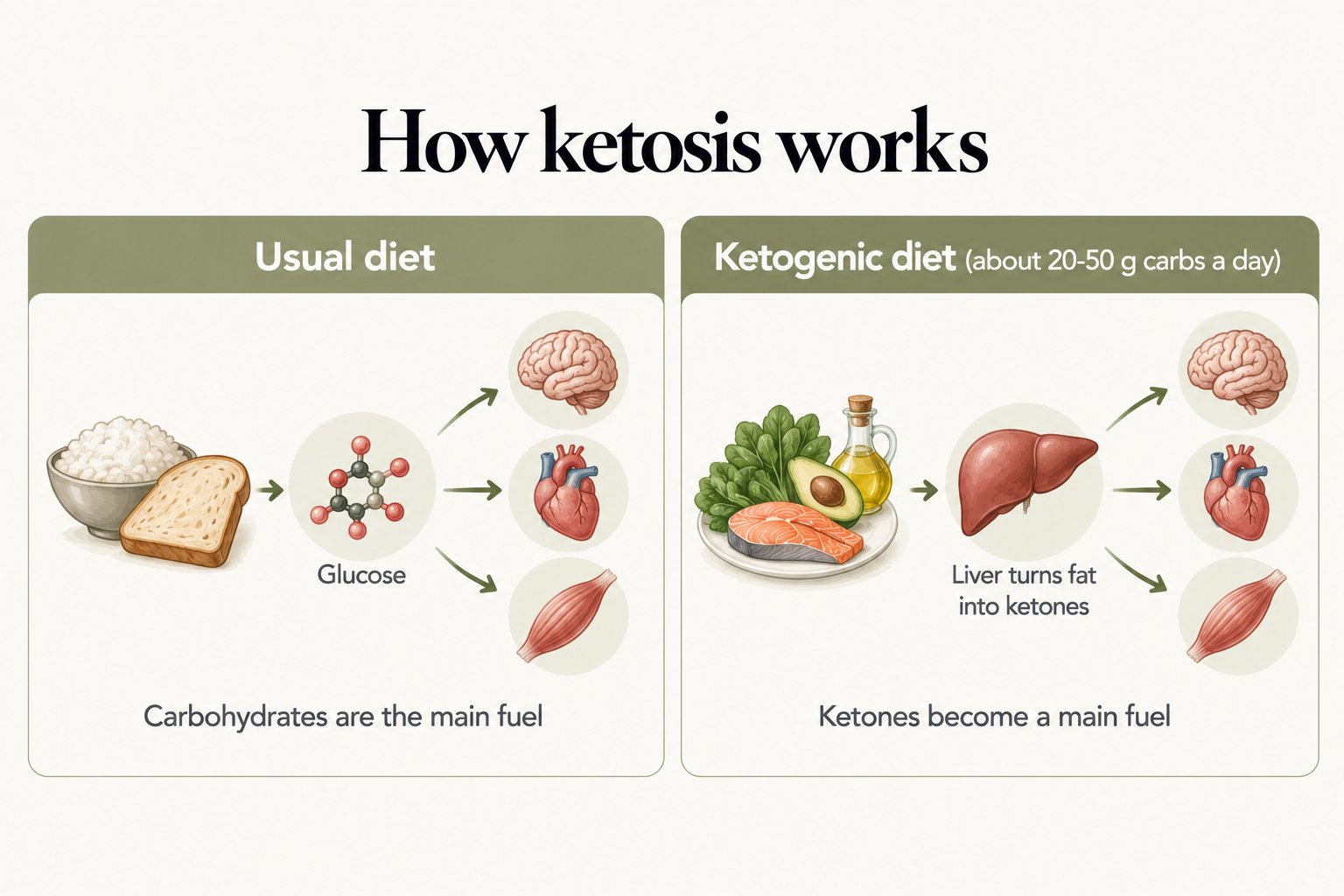
The ketogenic, or "keto", diet is a very low-carbohydrate, high-fat diet. By cutting carbohydrates to around 20-50 g a day, less than a single cup of cooked rice, it forces the body to switch from burning glucose to burning fat and producing ketones, a state called ketosis. Keto was developed in the 1920s as a treatment for epilepsy, and it still works for that: in a 2008 trial of 145 children with drug-resistant epilepsy, 38% of those on the diet had their seizures cut by more than half, compared with 6% of controls. It has since become one of the world's most popular weight-loss diets. The evidence for weight loss is real but modest: in a meta-analysis of 13 trials, people on very-low-carbohydrate ketogenic diets lost about 0.9 kg more than those on low-fat diets after a year or more. For type 2 diabetes, keto can lower blood sugar and reduce the need for medication substantially, but similar benefits can be achieved with a Mediterranean diet. The downsides matter: keto often raises LDL cholesterol, sometimes dramatically; it's low in fibre, fruit, legumes and whole grains; it's hard to sustain; and long-term studies link low-carbohydrate diets based on animal foods with higher mortality. Keto can also be dangerous with some diabetes medicines. It can be a useful short-term tool for some people under medical supervision, but it isn't the best long-term diet for longevity for most people. This article explains how it works, what the evidence shows, the risks, and how to approach it safely.
Key numbers
| Finding | Detail |
|---|---|
| Carbohydrate intake on keto | Usually 20-50 g a day |
| Children with drug-resistant epilepsy (145, 3 months) | 38% had seizures more than halved vs 6% of controls |
| Weight loss (13 trials, 1,415 people, 12+ months) | 0.9 kg more than low-fat diets |
| Type 2 diabetes programme (262 adults, 1 year) | HbA1c 7.6% → 6.3%; 40% of insulin users stopped insulin; LDL up 10% |
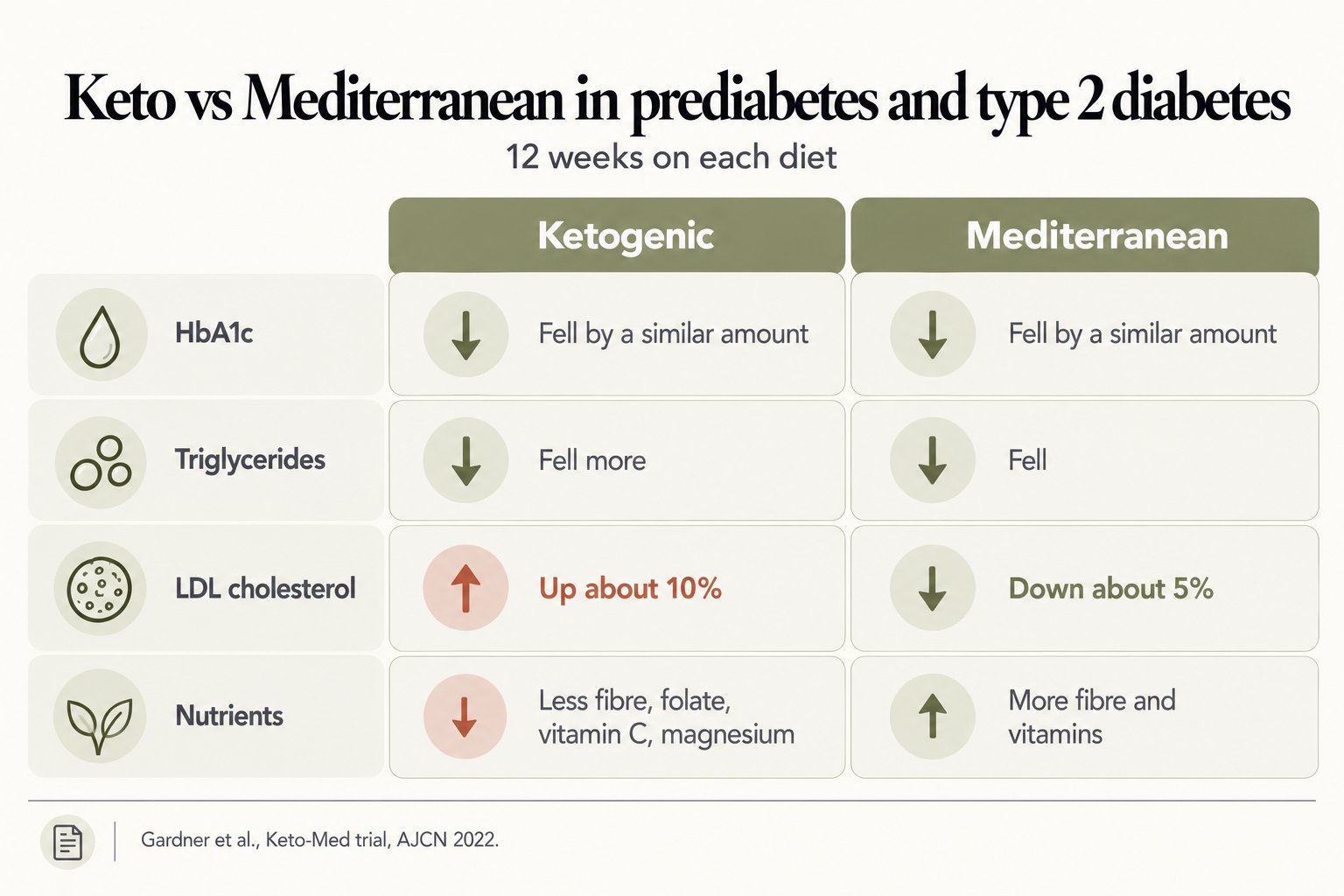
| Keto vs Mediterranean (prediabetes and type 2 diabetes, 12 weeks each) | Similar HbA1c fall; LDL up about 10% on keto, down 5% on Mediterranean |
| "Keto-like" diet (305 vs 1,220 UK adults, ~12 years) | Cardiovascular events 9.8% vs 4.3% (observational) |
What it is
Ketosis. Normally, the body runs mainly on glucose from carbohydrates. When carbohydrate intake is very low, glucose and insulin levels fall, and the liver breaks down fat into ketones, mainly beta-hydroxybutyrate and acetoacetate, which the brain, heart and muscles can use for fuel. This "nutritional ketosis" usually begins within a few days of cutting carbohydrates to below about 50 g a day. It's different from diabetic ketoacidosis, a dangerous condition in which very high ketone and glucose levels make the blood acidic, which mainly happens in type 1 diabetes.
Types of keto.
- Standard ketogenic diet: about 70-80% of calories from fat, 10-20% from protein and 5-10% from carbohydrates.
- Classic medical ketogenic diet: used for epilepsy, even stricter, carefully supervised by a dietitian.
- Modified Atkins and low-glycaemic index treatments: less strict versions used for epilepsy.
- "Lazy" or "dirty" keto: keeping carbohydrates low without regard to food quality, often relying on processed meats and ultra-processed "keto" products.
- Well-formulated or whole-food keto: based on non-starchy vegetables, fish, eggs, nuts, seeds, olive oil and avocado.
Keto differs from broader low-carbohydrate diets, which allow more carbohydrates and don't necessarily aim for ketosis. Those are compared with other popular diets in Popular Diets Compared.
What you eat
| Eat | Limit | Avoid |
|---|---|---|
| Non-starchy vegetables (leafy greens, cabbage, beans, gourds, cauliflower) | Nuts and seeds (small portions) | Rice, bread, roti, string hoppers, noodles |
| Fish, eggs, poultry, meat | Cheese, cream, butter, coconut | Sugar, sweets, soft drinks, fruit juice |
| Olive oil, avocado | Berries | Most fruit, including bananas and mangoes |
| Water, plain tea and coffee | Full-fat yoghurt | Legumes such as dhal and chickpeas |
| Potatoes, yams, manioc, sweet potato |
How it works
Keto may help some people because it:
- Reduces appetite: many people feel less hungry in ketosis, possibly because of ketones, higher protein and fat, and fewer blood sugar swings.
- Cuts out many processed foods: sugary drinks, sweets, refined carbohydrates and many snacks are eliminated.
- Lowers blood sugar and insulin: with very few carbohydrates, blood glucose rises less after meals.
- Causes early water loss: the first few kilograms lost are largely water and stored glycogen, which can make early weight loss look faster than fat loss.
- Changes brain metabolism: ketones and other changes reduce seizures in epilepsy, though the exact mechanism is still being studied.
Keto doesn't break the basic rule of energy balance. In a 2021 study in Nature Medicine, 20 adults lived in a metabolic ward for four weeks and ate as much as they liked of an animal-based keto diet for two weeks and a plant-based low-fat diet for two weeks. On the low-fat diet, they ate about 689 calories a day less. As lead researcher Kevin Hall put it, "It's not that one diet won over the other."
What the evidence shows
Epilepsy. The ketogenic diet was first used for epilepsy in the 1920s. In a 2008 randomised trial in The Lancet Neurology, 145 children aged 2-16 with epilepsy that hadn't responded to at least two medicines were assigned to a ketogenic diet or usual care for three months. Among those on the diet, 38% had more than a 50% reduction in seizures, compared with 6% of controls. Side effects included constipation, vomiting, diarrhoea and drowsiness, and some families stopped because of the restrictions. The ketogenic diet remains a recognised treatment for drug-resistant epilepsy, under specialist supervision.
Weight loss. In a 2013 meta-analysis in the British Journal of Nutrition of 13 randomised trials and 1,415 people, very-low-carbohydrate ketogenic diets led to 0.91 kg more weight loss than low-fat diets after 12 months or more. Triglycerides and diastolic blood pressure fell slightly more and HDL ("good") cholesterol rose, but LDL cholesterol also rose. Keto often produces faster weight loss in the first few months, but over time, most diets that reduce calories lead to similar results, and the best diet is the one a person can stick to.
Type 2 diabetes. Keto lowers blood sugar quickly because it removes most carbohydrates. In a non-randomised US programme published in 2018, 262 adults with type 2 diabetes followed a ketogenic diet with intensive remote support from doctors and health coaches. After a year, 83% were still in the programme; average HbA1c fell from 7.6% to 6.3%, weight fell by about 12%, sulfonylurea use fell from 23.7% to 0%, and 40% of insulin users stopped insulin. LDL cholesterol rose by 10%, while triglycerides fell by 24% and HDL rose by 18%.
In the 2022 Keto-Med trial at Stanford, 33 adults with prediabetes or type 2 diabetes followed a whole-food ketogenic diet and a Mediterranean-style diet for 12 weeks each, in random order. HbA1c fell similarly on both. LDL cholesterol rose by about 10% on keto but fell by about 5% on the Mediterranean diet, while triglycerides fell more on keto. The keto diet was lower in fibre, folate, vitamin C and magnesium. When participants were free to choose afterwards, most ate more like the Mediterranean diet, suggesting it was easier to keep up (see The Mediterranean Diet).
Heart health and cholesterol. Keto's effects on blood fats are mixed: triglycerides usually fall and HDL rises, but LDL cholesterol and apolipoprotein B (apoB) often rise, sometimes dramatically in lean, active people. Raised LDL and apoB are among the best-established causes of heart disease (see LDL, ApoB and Lipoprotein(a)).
In an observational study presented in 2023 at the American College of Cardiology, researchers compared 305 UK Biobank participants on a "keto-like" diet, with no more than 25% of calories from carbohydrates and over 45% from fat, with 1,220 people on standard diets. Over about 12 years, 9.8% of the keto-like group had a major cardiovascular event, compared with 4.3% of the standard group, and their LDL and apoB were higher. This was based on a single diet questionnaire and can't prove cause and effect.
Longevity. There are no long-term trials of keto and lifespan. In a 2018 study in The Lancet Public Health, Sara Seidelmann and colleagues followed 15,428 US adults for a median of 25 years and combined the results with other studies totalling more than 432,000 people. The lowest risk of death was seen with carbohydrates making up about 50-55% of calories. Both low- and high-carbohydrate diets were linked to higher mortality. Crucially, replacing carbohydrates with animal fats and proteins was linked to 18% higher mortality, while replacing them with plant fats and proteins was linked to 18% lower mortality. What replaces carbohydrates matters.
Evidence strength
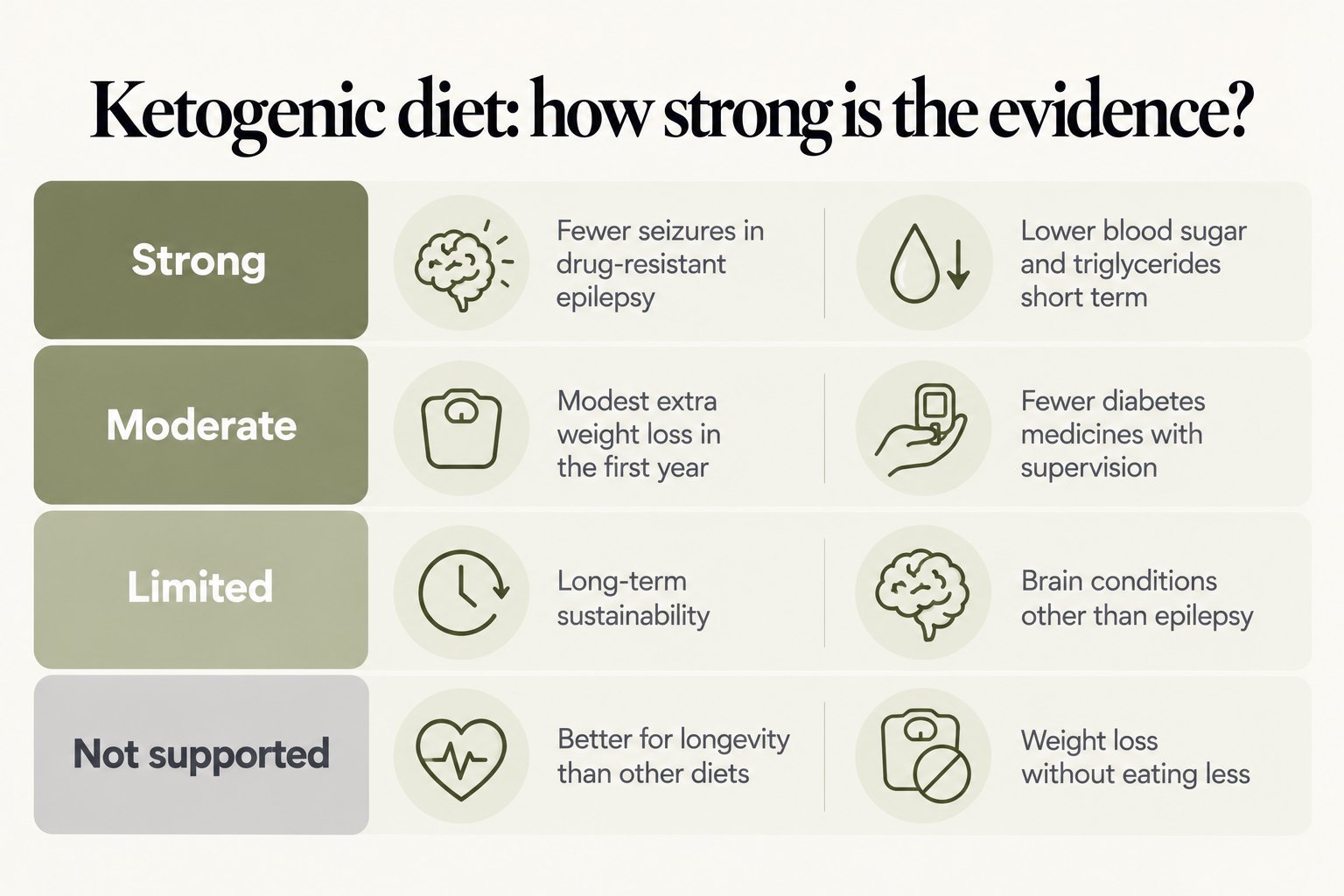
Strong.
- Reduces seizures in drug-resistant epilepsy, especially in children.
- Lowers blood sugar and triglycerides in the short term.
Moderate.
- Weight loss: modestly more than low-fat diets in the first year, with similar results long term.
- Reduces diabetes medication needs, with close medical supervision.
Limited.
- Long-term sustainability: many people find keto hard to maintain.
- Brain conditions other than epilepsy, such as Alzheimer's disease, migraine or mental health conditions: early research only.
Not supported.
- Better for longevity than other diets: long-term studies suggest low-carbohydrate diets based on animal foods are linked to higher mortality.
- Weight loss without a calorie deficit.
- Keto snacks and supplements as health foods.
Important limitations.
- Most trials are short, small or not randomised.
- Long-term effects of years of ketosis on the heart are unknown.
- Few studies have been done in South Asian populations.
Risks and who should be careful
Common side effects.
- "Keto flu": headache, tiredness, dizziness, nausea and irritability in the first week or two, often from fluid and salt losses.
- Constipation: from low fibre.
- Bad breath, muscle cramps and poorer exercise performance at first.
- Raised LDL cholesterol.
- Nutrient gaps: fibre, folate, vitamin C, magnesium and potassium.
Serious risks.
- Low blood sugar: dangerous with insulin or sulfonylureas (such as gliclazide or glibenclamide). Doses often need to be reduced before starting.
- Ketoacidosis: a risk with SGLT2 inhibitor diabetes medicines (such as empagliflozin and dapagliflozin), even with normal blood sugar, and in type 1 diabetes.
- Kidney stones, gout flare-ups and gallstones in some people.
- Disordered eating: strict rules can worsen an unhealthy relationship with food.
Who should avoid keto or only try it under medical supervision.
- People with type 1 diabetes, or type 2 diabetes on insulin, sulfonylureas or SGLT2 inhibitors.
- Pregnant or breastfeeding women.
- People with kidney disease, liver disease, pancreatitis or gallbladder disease.
- People with very high LDL cholesterol, familial hypercholesterolaemia or heart disease.
- People with a history of eating disorders.
- Children, except for medically supervised epilepsy treatment.
A Sri Lankan version
Keto is particularly hard to follow in Sri Lanka, where most meals are built around rice, and staples such as roti, hoppers, string hoppers, bread, dhal and fruit are all high in carbohydrates. A typical plate of rice alone contains far more carbohydrate than a whole day's keto allowance (see Know Your Rice). If you choose to try keto:
- Replace rice with extra vegetable curries, cauliflower "rice" or salads.
- Build meals around fish, eggs and non-starchy vegetables such as gotukola, mukunuwenna, cabbage, beans, brinjal, snake gourd and okra.
- Use fats wisely: prefer olive oil, sesame oil, nuts and fish over large amounts of butter, ghee and coconut cream.
- Avoid processed meats such as sausages, bacon and processed chicken products (see Meat, Fish and Eggs).
- Get your cholesterol checked before you start and after two to three months.
- Talk to your doctor first if you have diabetes or take any regular medicine.
For many Sri Lankans, a moderate reduction in carbohydrates, such as smaller rice portions, more vegetables and protein, and fewer sweets and refined carbohydrates, may be more practical and sustainable than strict keto (see Sugar and Refined Carbohydrates).
Why this matters for longevity
Keto can be a powerful short-term tool: it reduces seizures in epilepsy, can bring down blood sugar quickly and helps some people lose weight. But the best long-term diets for longevity are rich in vegetables, fruit, legumes, whole grains and nuts, and keto restricts most of these. It often raises LDL cholesterol, a major cause of heart disease, and long-term studies link low-carbohydrate diets built on animal foods to higher mortality. If you use keto, it's best done for a defined period, built on whole foods, with your cholesterol, kidney function and medicines monitored, and with a plan for what comes next.
Recommendations by situation
| Situation | What to consider |
|---|---|
| Drug-resistant epilepsy | Ketogenic diet is an established treatment under specialist supervision |
| Type 2 diabetes wanting to reduce medication | Can be effective, but only with your doctor adjusting medicines; Mediterranean diet works similarly |
| Taking insulin, sulfonylureas or SGLT2 inhibitors | Don't start keto without medical supervision |
| Wanting to lose weight | Can work short term; choose the diet you can sustain |
| High LDL cholesterol or heart disease | Generally not recommended; if tried, monitor LDL and apoB closely |
| Healthy adult interested in longevity | A Mediterranean-style diet has stronger evidence |
| Pregnant or breastfeeding | Avoid |
| Kidney, liver, gallbladder or pancreatic disease | Avoid unless supervised by a specialist |
Practical notes
If you're considering keto, talk to your doctor first, especially if you have diabetes, heart disease or take regular medicines. Have your cholesterol, kidney function and blood sugar checked before starting and again after a few months. Build your meals around vegetables, fish, eggs, nuts and olive oil rather than processed meats and keto snacks, drink plenty of water, and plan how you'll transition to a more sustainable pattern afterwards. For most people, a moderate reduction in refined carbohydrates within a Mediterranean-style diet offers many of keto's benefits with fewer risks. Our Longevity Doctors can help you decide whether keto is right for you and monitor your health safely, starting with the free longevity assessment.
- Neal EG, et al. The ketogenic diet for the treatment of childhood epilepsy: a randomised controlled trial. The Lancet Neurology, 2008;7(6):500-506.
- Bueno NB, et al. Very-low-carbohydrate ketogenic diet v. low-fat diet for long-term weight loss: a meta-analysis of randomised controlled trials. British Journal of Nutrition, 2013;110(7):1178-1187.
- Hall KD, et al. Effect of a plant-based, low-fat diet versus an animal-based, ketogenic diet on ad libitum energy intake. Nature Medicine, 2021;27(2):344-353.
- Hallberg SJ, et al. Effectiveness and safety of a novel care model for the management of type 2 diabetes at 1 year: an open-label, non-randomized, controlled study. Diabetes Therapy, 2018;9(2):583-612.
- Gardner CD, et al. Effect of a ketogenic diet versus Mediterranean diet on glycated hemoglobin in individuals with prediabetes and type 2 diabetes mellitus: the interventional Keto-Med randomized crossover trial. American Journal of Clinical Nutrition, 2022;116(3):640-652.
- Iatan I, et al. Association of a low-carbohydrate high-fat diet with plasma lipid levels and cardiovascular risk. Presented at the American College of Cardiology Scientific Session, 2023.
- Seidelmann SB, et al. Dietary carbohydrate intake and mortality: a prospective cohort study and meta-analysis. The Lancet Public Health, 2018;3(9):e419-e428.
Free longevity assessment
Thinking about trying keto
safely?
Take the free Aevum Protocol assessment to see how your nutrition & metabolism and 6 other longevity domains are performing — and get a personalised 90-day plan.
Take the free assessmentKeep reading
Related articles
Nutrition & Metabolism
The Mediterranean Diet: What It Is, What You Eat and Why It Leads the Evidence
Nutrition & Metabolism
Sugar and Refined Carbohydrates: What They Do to Your Metabolism and How to Cut Back
Cardiovascular & Metabolic Health