Stress & Mental Wellbeing
Gratitude, Kindness and Positive Psychology:
Do Wellbeing Exercises Work?
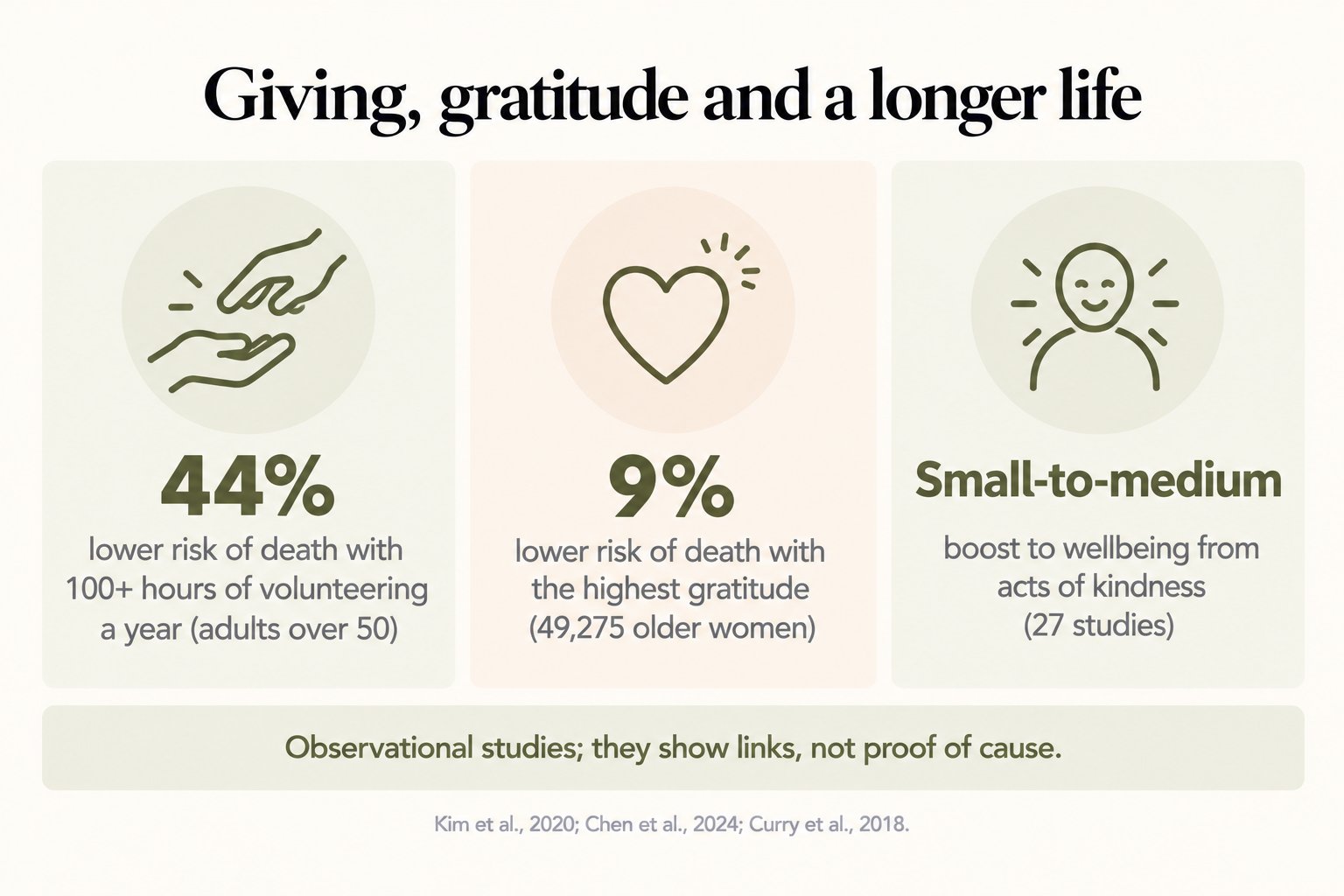
Positive psychology is the science of what helps people flourish, not just what goes wrong. It has produced popular exercises such as gratitude journals, "three good things", acts of kindness and imagining your best possible self. Do they work? The answer is "yes, modestly, but they're not a cure". The largest review, of 347 studies with more than 72,000 people in 41 countries, found that positive psychology programmes produced small-to-moderate improvements in wellbeing and quality of life, and reductions in depression, anxiety and stress, with benefits still present three months later. Acts of kindness have a small-to-medium effect on the giver's wellbeing across 27 studies. Volunteering is linked to longer life: among about 13,000 US adults over 50, those who volunteered at least 100 hours a year had a 44% lower risk of death over four years. In 49,275 older women, those with the highest levels of gratitude had a 9% lower risk of death. But gratitude exercises alone did little for depression or anxiety: a review of 27 studies found only a small difference compared with neutral activities, and the researchers concluded they shouldn't be recommended as a treatment. And forced positivity, "good vibes only", can backfire. The best evidence supports positive practices as one part of a full life, alongside relationships, purpose, physical health and, when needed, proper treatment.
Key numbers
| Finding | Detail |
|---|---|
| Positive psychology programmes (347 studies, 72,000+ people) | Small-to-moderate gains in wellbeing; reduced depression, anxiety and stress; lasting at least 3 months |
| Acts of kindness (27 studies, 4,045 people) | Small-to-medium boost to the giver's wellbeing |
| Volunteering 100+ hours a year (about 13,000 adults over 50) | 44% lower risk of death over 4 years |
| Gratitude and mortality (49,275 older women) | Highest gratitude: 9% lower risk of death |
| Gratitude exercises for depression and anxiety (27 studies) | Only a small difference vs neutral activities; not a treatment |
What positive psychology is
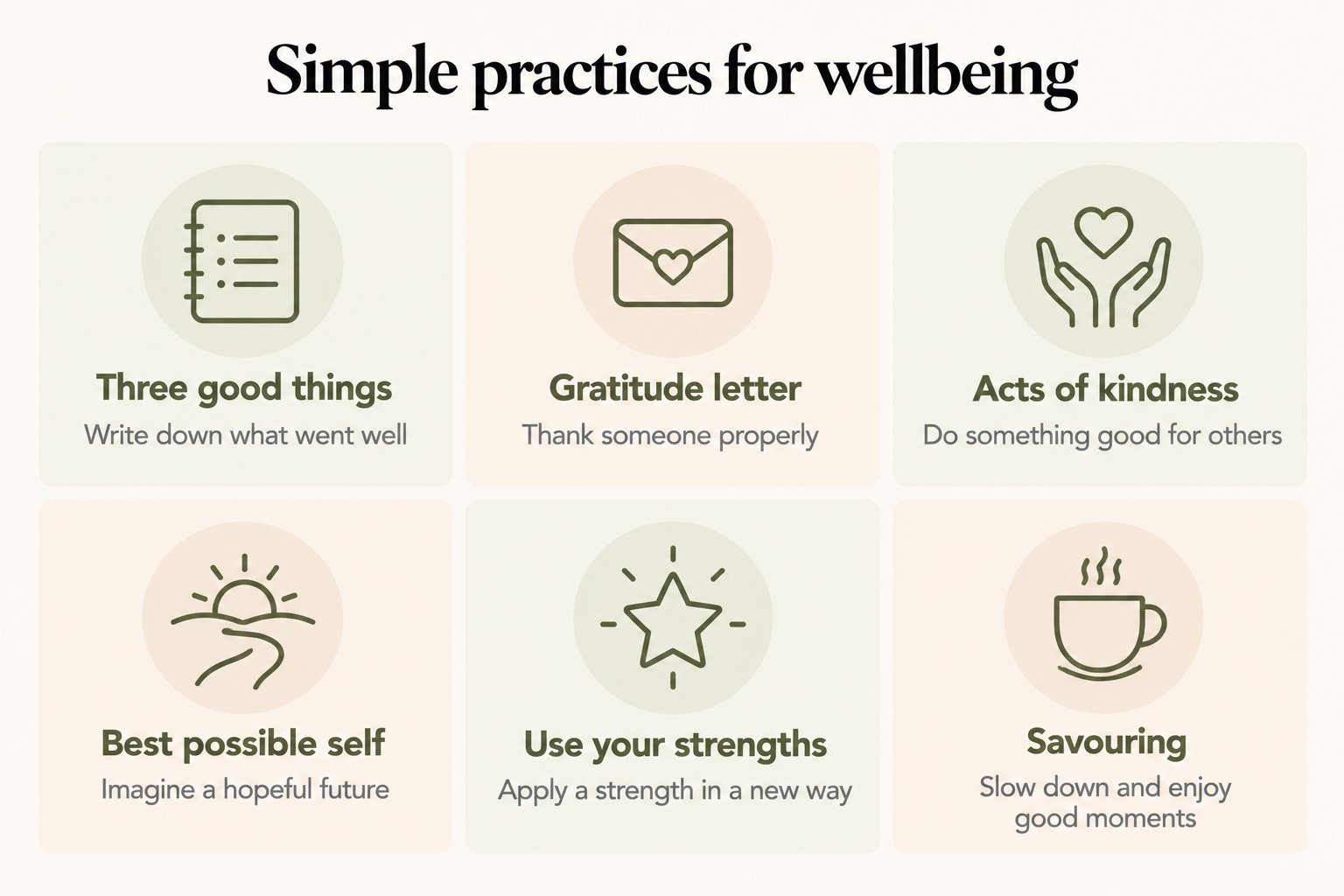
Positive psychology studies the strengths, emotions and practices that help people live well: gratitude, kindness, hope, meaning, relationships and using personal strengths. Researchers have turned these into short exercises, known as positive psychology interventions. Common examples include:
- Three good things: each evening, write down three things that went well and why.
- Gratitude letter or visit: write to, and ideally read aloud to, someone you've never properly thanked.
- Acts of kindness: deliberately do several kind things for others in a day or week.
- Best possible self: imagine and write about your future if things go as well as they could (see Optimism and Healthy Ageing).
- Using your strengths: identify your personal strengths and use one in a new way each day.
- Savouring: slow down to notice and appreciate good experiences.
Many of these echo long-standing practices in Sri Lankan religious and cultural life, such as giving (dana), loving-kindness (metta), thanksgiving prayers and helping neighbours.
Evidence strength
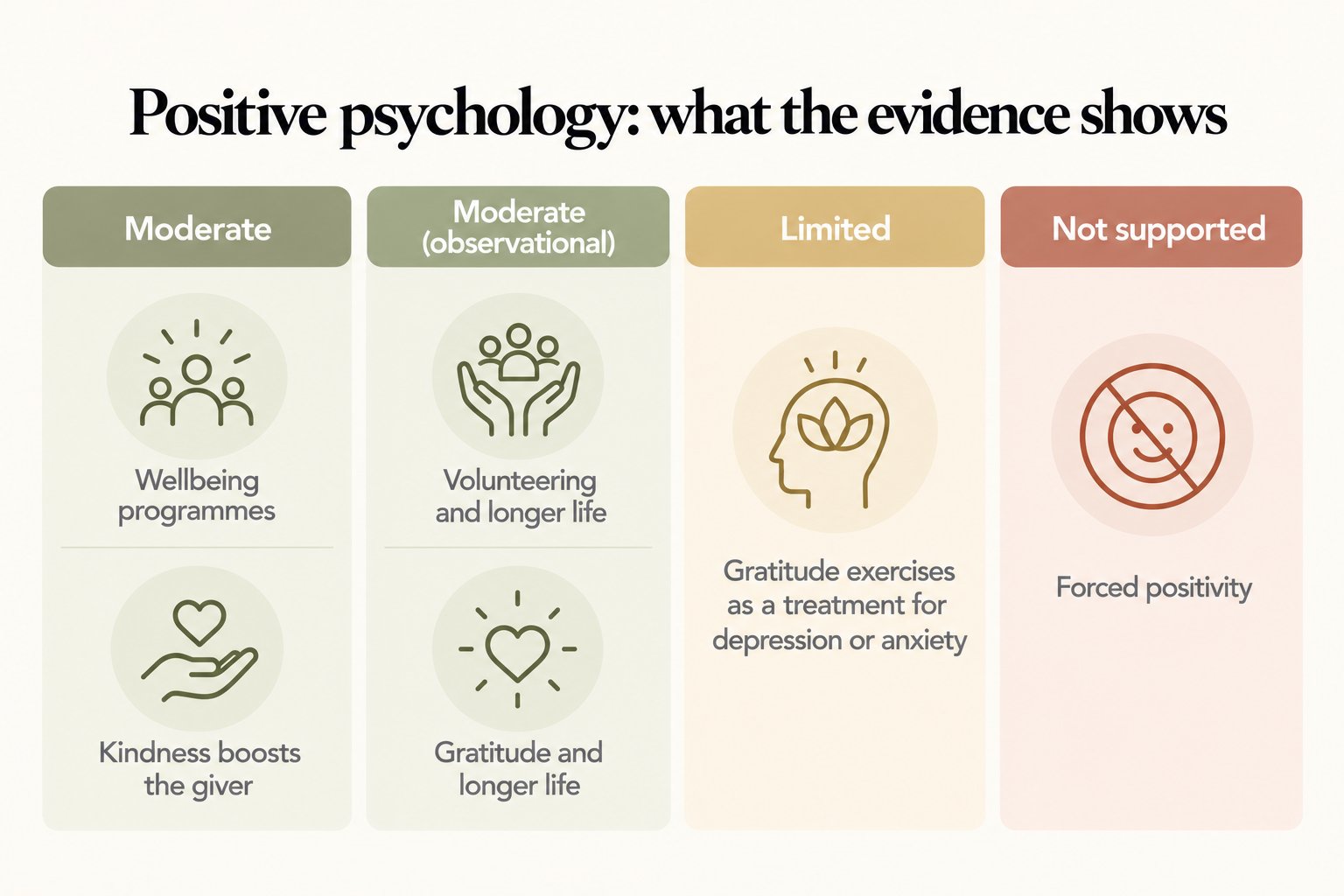
Moderate: positive psychology programmes improve wellbeing. In a 2021 meta-analysis in the Journal of Positive Psychology, Alan Carr and colleagues combined 347 studies with more than 72,000 children and adults in 41 countries. Programmes typically involved about 10 sessions over six weeks. They produced small-to-moderate improvements in wellbeing, strengths and quality of life, and reductions in depression, anxiety and stress, with benefits still present at three months. The largest effects were in longer programmes that combined several exercises, and in people with clinical problems in non-Western countries. An earlier 2013 meta-analysis of 39 randomised trials reached similar conclusions, with smaller effects.
Moderate: kindness benefits the giver. In a 2018 meta-analysis of 27 studies with 4,045 participants, Oliver Scott Curry and colleagues at Oxford found that performing acts of kindness had a small-to-medium positive effect on the giver's own wellbeing. The effect was similar across ages, sexes and types of kindness, with no sign of publication bias.
Moderate (observational): volunteering and longer life. In a 2020 study in the American Journal of Preventive Medicine, Eric Kim and colleagues followed about 13,000 US adults aged 50 and over for four years. Compared with people who didn't volunteer, those who volunteered at least 100 hours a year, about two hours a week, had a 44% lower risk of death and a 17% lower risk of developing physical limitations. They also had more positive emotions, optimism and purpose, and less depression, hopelessness and loneliness. Because this was observational, healthier people may simply be more able to volunteer, but the findings fit with research on purpose and social connection (see Purpose in Life and Longevity).
Moderate (observational): gratitude and longevity. In a 2024 study in JAMA Psychiatry, Ying Chen and colleagues at Harvard assessed gratitude in 49,275 women in the Nurses' Health Study, average age 79, and followed them for about four years. Women in the top third for gratitude had a 9% lower risk of death than those in the bottom third, with the strongest link for cardiovascular disease. The results held after accounting for health, lifestyle, social participation, religious involvement and optimism. The authors noted that writing down or discussing what you're grateful for a few times a week is one way to build gratitude.
Limited: gratitude exercises as treatment for depression and anxiety. In a 2021 meta-analysis in the Journal of Happiness Studies, David Cregg and Jennifer Cheavens at Ohio State University analysed 27 studies with 3,675 participants. Gratitude exercises such as "three good things" and gratitude visits produced only a small improvement in depression and anxiety compared with neutral activities, such as writing about a class schedule. As Cheavens put it: "It would not be something you would recommend as a treatment." Gratitude still has value for relationships and general wellbeing, but people with depression or anxiety need evidence-based treatment (see Depression and Physical Health).
Not supported: forced positivity. There's no evidence that suppressing negative feelings or insisting on staying positive improves health. Telling people who are ill, grieving or struggling to "just think positive" can make them feel blamed and isolated. Positive psychology at its best accepts difficult emotions while building strengths alongside them (see Grief and Bereavement).
Important limitations.
- Self-reported outcomes: participants usually know what the exercise is meant to do, which may influence how they report feeling.
- Small average effects: benefits are real but modest for most people.
- Fading effects: benefits often decline unless practices are continued.
- Observational links to longevity: the volunteering and gratitude studies can't prove cause and effect.
- Fit matters: exercises work better when people choose ones that suit them and practise them genuinely, rather than as a chore.
Recommendations by situation
| Situation | What the evidence supports |
|---|---|
| Generally well, want more wellbeing | Try a few exercises, such as three good things, kindness or savouring, and keep the ones you enjoy |
| Retired or seeking purpose | Regular volunteering, around 2 hours a week or more |
| Feeling low but functioning | Positive practices can help, alongside exercise, sleep and connection |
| Diagnosed depression or anxiety | Seek proper treatment; use gratitude and kindness practices as add-ons, not replacements |
| Grieving or going through hardship | Allow difficult emotions; small acts of kindness and gratitude may help later, without pressure |
| Caring for others and feeling drained | Protect your own rest; giving helps most when it doesn't lead to burnout |
Why this matters for longevity
Positive psychology isn't about pretending life is always good. The evidence suggests that small, regular practices of gratitude, kindness and generosity modestly improve wellbeing, and that people who give their time to others and feel grateful tend to live longer, healthier lives. These practices are free, low-risk and compatible with every faith and culture, which makes them a sensible part of a longevity plan, as long as they complement, rather than replace, medical and psychological care when it's needed (see Burnout).
Practical notes
Start with one practice that appeals to you and do it for three to four weeks. A simple combination: write down three good things two or three times a week, and do one deliberate act of kindness each week, such as helping a neighbour, visiting an older relative or giving time to a temple, church, mosque, kovil or charity. If you have more time, regular volunteering of around two hours a week has the strongest links with longer life. Be genuine rather than forced: it's fine to have bad days, and practices work best when they feel meaningful. If low mood persists for more than two weeks, speak to a doctor. Our Longevity Doctors look at wellbeing alongside physical health, starting with the free longevity assessment.
- Carr A, et al. Effectiveness of positive psychology interventions: a systematic review and meta-analysis. Journal of Positive Psychology, 2021;16(6):749-769.
- Bolier L, et al. Positive psychology interventions: a meta-analysis of randomized controlled studies. BMC Public Health, 2013;13:119.
- Curry OS, et al. Happy to help? A systematic review and meta-analysis of the effects of performing acts of kindness on the well-being of the actor. Journal of Experimental Social Psychology, 2018;76:320-329.
- Kim ES, et al. Volunteering and subsequent health and well-being in older adults: an outcome-wide longitudinal approach. American Journal of Preventive Medicine, 2020;59(2):176-186.
- Chen Y, et al. Gratitude and mortality among older US female nurses. JAMA Psychiatry, 2024;81(10):1030-1038.
- Cregg DR, Cheavens JS. Gratitude interventions: effective self-help? A meta-analysis of the impact on symptoms of depression and anxiety. Journal of Happiness Studies, 2021;22(1):413-445.
Free longevity assessment
Want to build wellbeing
into your plan?
Take the free Aevum Protocol assessment to see how your stress & mental wellbeing and 6 other longevity domains are performing — and get a personalised 90-day plan.
Take the free assessmentKeep reading
Related articles
Stress & Mental Wellbeing
Optimism and Healthy Ageing: What the Research Shows About a Hopeful Outlook
Stress & Mental Wellbeing
Purpose in Life and Longevity: How Having a Reason to Get Up Protects Your Health
Stress & Mental Wellbeing