Reproductive & Sexual Health
Sexual Wellbeing in Midlife and Beyond:
Practical Solutions for Common Changes
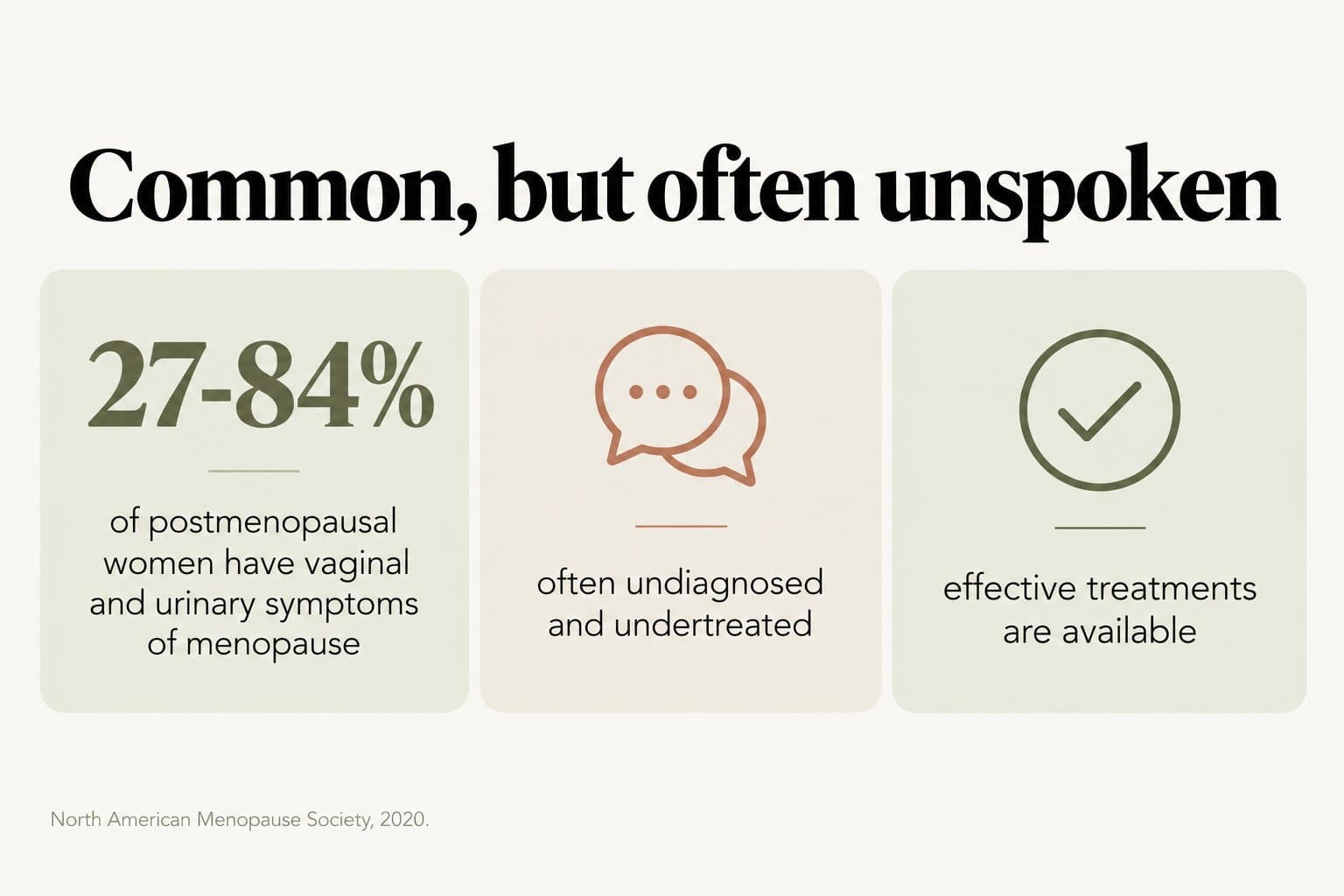
Sexual wellbeing remains important to many people through midlife and later life, but the body changes, and so can sex. For women, falling oestrogen after menopause often causes vaginal dryness, pain during sex and urinary symptoms, together known as the genitourinary syndrome of menopause (GSM). The North American Menopause Society estimates that it affects 27-84% of postmenopausal women and remains "underdiagnosed and undertreated, leaving many women to suffer silently". Unlike hot flushes, it doesn't improve with time, but effective treatments are available, from lubricants and moisturisers to low-dose vaginal oestrogen. For postmenopausal women with distressing low desire, an international consensus found that testosterone is the only hormone treatment with evidence, adding about one extra satisfying sexual event a month. For men, erection problems become more common with age and are both an early health warning and highly treatable. Relationship communication, health, medicines and mood all matter too. This practical guide covers what changes, what helps and when to seek advice.
Key numbers
| Finding | Detail |
|---|---|
| Genitourinary syndrome of menopause (NAMS, 2020) | Affects 27-84% of postmenopausal women; often undiagnosed and undertreated |
| First-line treatment for mild symptoms (NAMS) | Non-hormonal lubricants and regular long-acting vaginal moisturisers |
| Testosterone for postmenopausal women with low desire (global consensus) | About one extra satisfying sexual event a month vs placebo |
| Other uses of testosterone in women | Insufficient evidence for any other symptom or condition |
| Sexual activity in later life (US study, 3,005 adults) | 73% at 57-64; 53% at 65-74; 26% at 75-85 |
What changes with age
In women. After menopause, lower oestrogen thins and dries the tissues of the vagina, vulva and urinary tract. Symptoms include dryness, burning, irritation, pain during sex, reduced arousal, urgency and repeated urinary infections. These symptoms tend to get worse over time without treatment. Desire may also change, influenced by hormones, sleep, mood, relationship factors and health (see Menopause and Long-Term Health).
In men. Erections may take longer, need more direct stimulation and be less firm, and the recovery time between erections lengthens. Erectile dysfunction becomes more common and is often a sign of blood vessel disease (see Erectile Dysfunction and Heart Health). Testosterone declines gradually, but low testosterone is only one of many causes of low desire (see Testosterone Decline in Men).
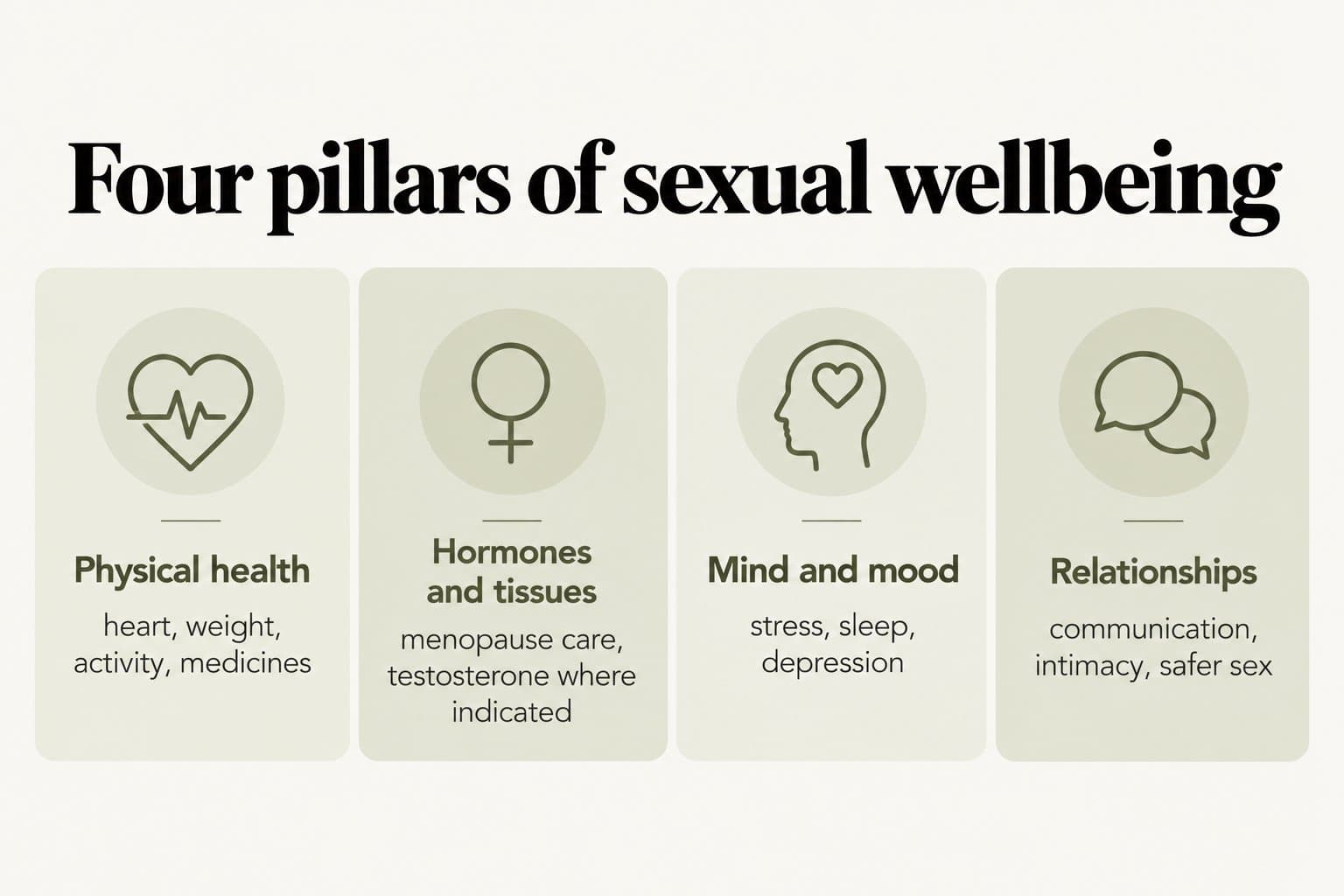
For both. Long-term conditions, medicines (especially some antidepressants and blood pressure medicines), pelvic floor problems, poor sleep, stress, body image and relationship changes all affect sexual wellbeing. In a US study of 3,005 adults aged 57-85, sexual activity declined with age but remained common, and poor health was linked to more sexual problems (see Sexual Health and Longevity).
What the evidence shows
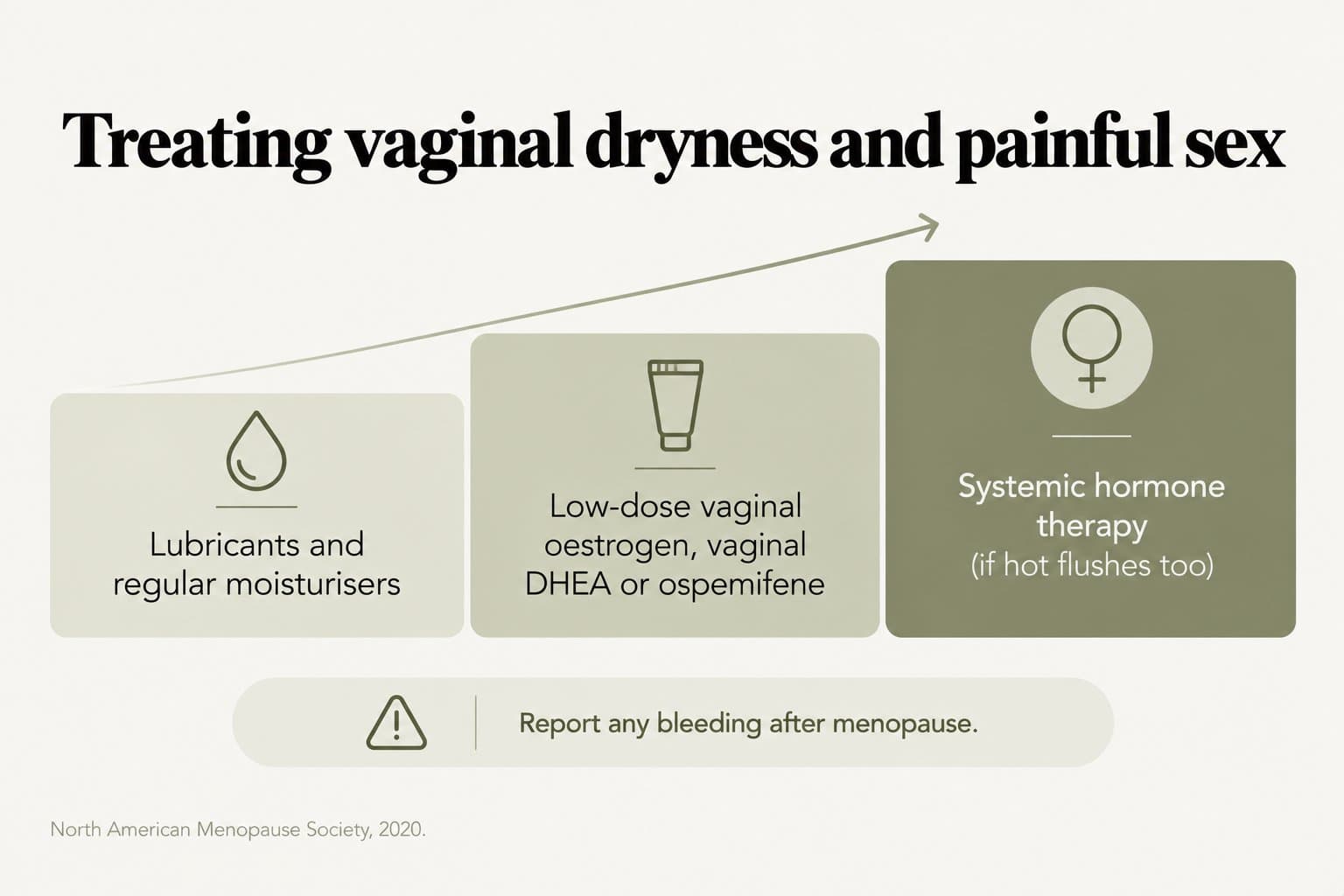
Vaginal dryness and pain: treatable at every age. The 2020 North American Menopause Society (NAMS) position statement recommends:
- First line for mild symptoms: non-hormonal lubricants during sex and long-acting vaginal moisturisers used regularly, several times a week.
- For moderate or persistent symptoms: low-dose vaginal oestrogen, vaginal DHEA or the tablet ospemifene.
- When hot flushes are also present: systemic hormone therapy can help both.
Low-dose vaginal oestrogen acts locally with very little absorbed into the bloodstream. NAMS notes that long-term studies of endometrial safety are still lacking, so any vaginal bleeding after menopause should be reported. Women who have had breast cancer should discuss options with their oncology team. NAMS found insufficient evidence to recommend vaginal laser treatments.
Low desire in women: testosterone for selected women only. The 2019 Global Consensus Position Statement, endorsed by international menopause and endocrine societies, concluded that "the only evidence-based indication for the use of testosterone in women is for the treatment of postmenopausal women who have been diagnosed as having HSDD" (hypoactive sexual desire disorder, meaning low desire causing distress). At doses restoring premenopausal levels, testosterone increased satisfying sexual events by about one a month above placebo and improved desire, arousal and orgasm. Non-oral forms are preferred, and compounded products aren't recommended. There's "insufficient evidence" to use testosterone for any other symptom, including mood, energy, cognition or bone health.
Erection problems in men. PDE5 inhibitors such as sildenafil and tadalafil are effective for most men and generally safe, but must never be combined with nitrate medicines. Lifestyle change helps too: in an Italian trial, about a third of obese men with erectile dysfunction regained normal function after weight loss and more exercise. New erection problems are a reason for a heart health check.
The role of the pelvic floor. Pelvic floor muscle training can improve sexual function and continence in women and help erectile function in some men (see Pelvic Floor Health and Incontinence).
Relationships and mind. Open communication with a partner, adapting sexual activity to changing bodies, and treating depression, anxiety or stress all improve sexual wellbeing. Sex therapy or couples counselling can help when problems persist.
Safer sex at every age. New relationships later in life bring a risk of sexually transmitted infections, and condoms remain important with new partners, even when pregnancy is no longer possible.
Recommendations by scenario
| Scenario | What to do |
|---|---|
| Vaginal dryness or pain during sex after menopause | Start with lubricants and moisturisers; ask about low-dose vaginal oestrogen if symptoms persist |
| Recurrent urinary infections after menopause | Ask your doctor about vaginal oestrogen, which can help |
| Low desire causing distress (postmenopausal woman) | See a doctor to look at causes; testosterone may help selected women |
| New erection problems | See a doctor; check heart and metabolic health; effective treatments exist |
| Sexual side effects after a new medicine | Ask about alternatives; don't stop medicines without advice |
| History of breast cancer with vaginal symptoms | Use non-hormonal options first and discuss others with your oncology team |
| New partner | Use condoms and consider STI testing |
| Relationship strain or anxiety about sex | Consider sex therapy or couples counselling |
| Any bleeding after menopause | See a doctor promptly |
Practical notes
Sexual changes in midlife and later life are common, but many are treatable. For women, vaginal dryness and pain after menopause respond well to lubricants, moisturisers and low-dose vaginal oestrogen, and testosterone can help selected postmenopausal women with distressing low desire. For men, erection problems are common, treatable and worth a heart check. Looking after your overall health, reviewing medicines, keeping the pelvic floor strong, talking openly with your partner and practising safer sex all support a satisfying sex life at any age.
- The North American Menopause Society. The 2020 genitourinary syndrome of menopause position statement. Menopause, 2020;27(9):976-992.
- Davis SR, et al. Global Consensus Position Statement on the use of testosterone therapy for women. Journal of Clinical Endocrinology & Metabolism, 2019;104(10):4660-4666.
- Lindau ST, et al. A study of sexuality and health among older adults in the United States. New England Journal of Medicine, 2007;357(8):762-774.
- Esposito K, et al. Effect of lifestyle changes on erectile dysfunction in obese men: a randomized controlled trial. JAMA, 2004;291(24):2978-2984.
Free longevity assessment
Have midlife changes affected
your sexual wellbeing?
Take the free Aevum Protocol assessment to see how your reproductive & sexual health and 6 other longevity domains are performing — and get a personalised 90-day plan.
Take the free assessmentKeep reading