Reproductive & Sexual Health
Sexual Health and Longevity:
Why Sexual Wellbeing Matters at Every Age
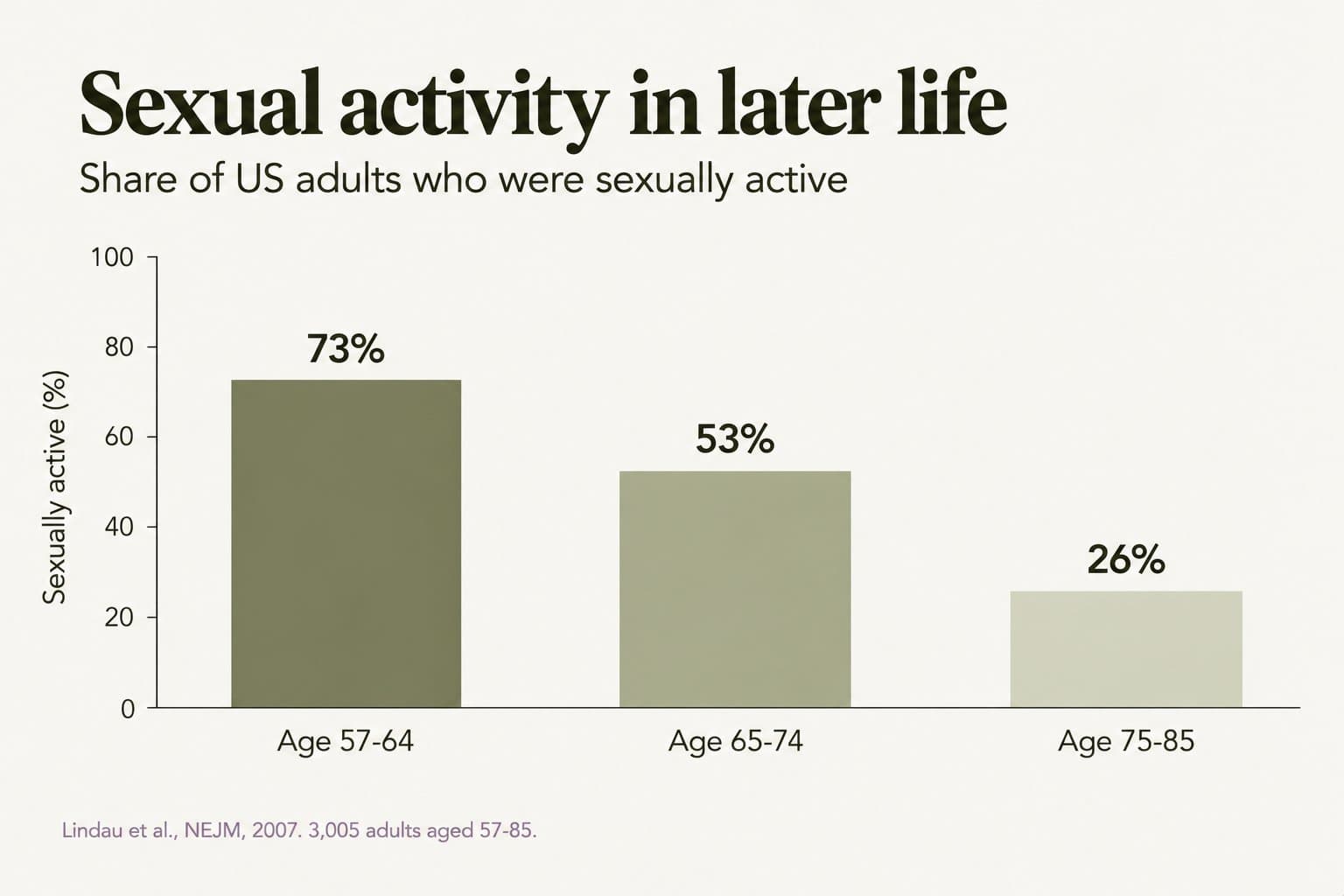
Sexual health is part of overall health, not separate from it. The World Health Organization defines it as "a state of physical, emotional, mental and social well-being in relation to sexuality", not just the absence of disease. Sexual activity and interest continue well into later life: in a national US study of 3,005 adults aged 57 to 85, 73% of those aged 57-64 and 26% of those aged 75-85 were sexually active. Sexual problems are common, but often go undiscussed: only 38% of men and 22% of women in the same study had talked about sex with a doctor since age 50. Sexual function is also a window into general health. Poor health was linked to less sexual activity and more problems, and erectile dysfunction is linked to a 48% higher risk of future cardiovascular disease. Many sexual problems have treatable causes, from diabetes and blood pressure medicines to menopause and depression. This article explains how sexual health changes with age, what it can reveal, and how to look after it.
Key numbers
| Finding | Detail |
|---|---|
| Sexually active, by age (3,005 US adults aged 57-85) | 73% at 57-64; 53% at 65-74; 26% at 75-85 |
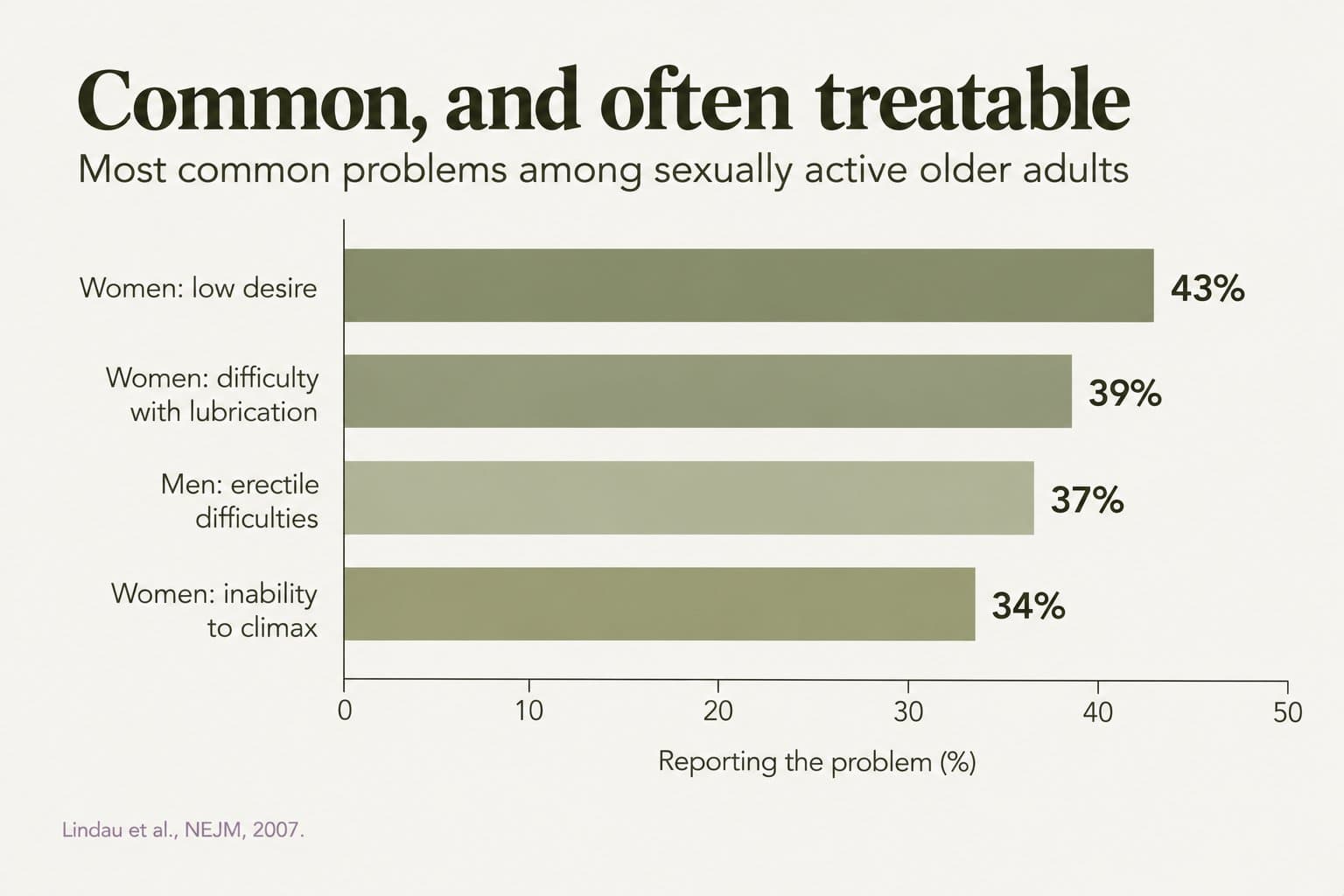
| Most common problems in women (same study) | Low desire 43%; difficulty with lubrication 39%; inability to climax 34% |
| Most common problem in men (same study) | Erectile difficulties 37% |
| Discussed sex with a doctor since 50 (same study) | 38% of men and 22% of women |
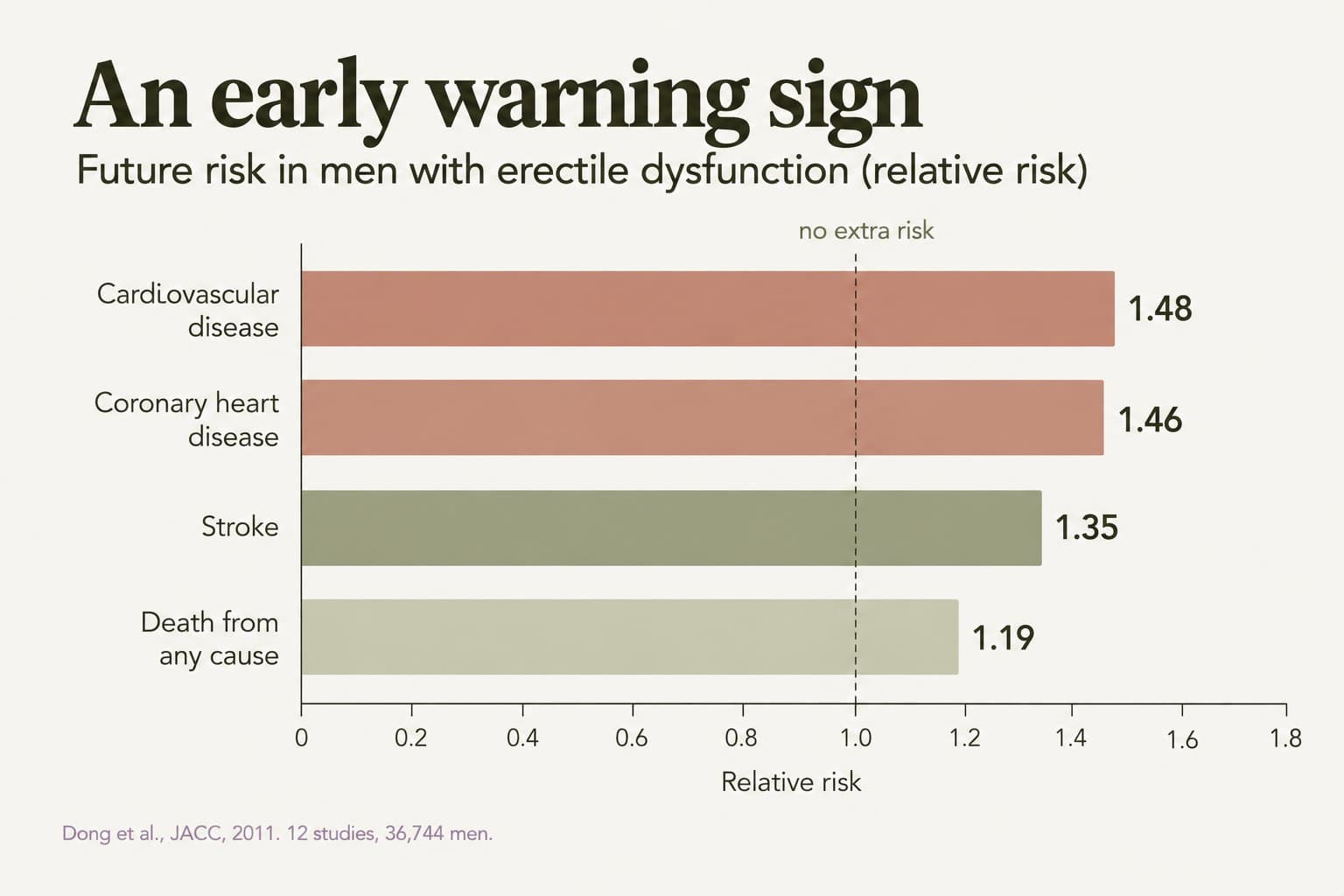
| Erectile dysfunction and later cardiovascular disease (12 studies, 36,744 men) | 48% higher risk of cardiovascular disease and 19% higher risk of death |
What sexual health means
The WHO definition goes beyond avoiding infections and unwanted pregnancy. Sexual health includes physical function, emotional and relationship wellbeing, and the ability to have safe, consensual and satisfying experiences. It involves the circulation, nerves, hormones, muscles, brain and mental health, which is why it reflects and affects health more broadly.
Sexual activity across the lifespan
The National Social Life, Health and Aging Project interviewed a nationally representative sample of 3,005 US adults aged 57 to 85. Sexual activity declined with age but remained common: 73% of those aged 57-64 were sexually active, 53% of those aged 65-74 and 26% of those aged 75-85. Women were less likely than men to be sexually active at older ages, often because of the loss of a partner. Among those who were active, about half of both men and women reported at least one bothersome sexual problem.
Common sexual problems
In the same study, the most common problems among sexually active women were low desire (43%), difficulty with vaginal lubrication (39%) and inability to climax (34%). Among men, the most common problem was erectile difficulties (37%).
Many of these problems have identifiable and treatable causes:
- Health conditions: diabetes, heart disease, high blood pressure, obesity, depression and anxiety, and pelvic floor problems.
- Medicines: some antidepressants, blood pressure medicines and other drugs can reduce desire, arousal or orgasm.
- Hormonal changes: menopause can cause vaginal dryness and discomfort, and low testosterone can reduce desire (see Menopause and Long-Term Health and Testosterone Decline in Men).
- Lifestyle: smoking, heavy alcohol use, physical inactivity and poor sleep.
- Relationships and stress: communication, conflict, fatigue and stress all play a part (see Burnout).
Sexual health as a window into overall health
In the US study, people who rated their health as poor were less likely to be sexually active and, if active, more likely to report problems. The clearest example of sexual function reflecting general health is erectile dysfunction. Erections depend on healthy blood vessels, and the small arteries of the penis often show damage before the larger arteries of the heart. A meta-analysis of 12 prospective studies with 36,744 men found that erectile dysfunction was linked to a 48% higher risk of cardiovascular disease, a 46% higher risk of coronary heart disease, a 35% higher risk of stroke and a 19% higher risk of death from any cause, independent of conventional risk factors (see Erectile Dysfunction and Heart Health).
In women, sexual difficulties are also more common with diabetes, heart disease and depression, although the links have been less studied.
Why this matters for longevity
Sexual health matters for quality of life, relationships and mental wellbeing at every age. It's also an early warning system: a new sexual problem can be the first sign of diabetes, cardiovascular disease, depression or a medicine side effect. And many of the steps that protect the heart and metabolism, such as regular exercise, a healthy weight, not smoking, limiting alcohol and managing stress, also protect sexual function.
Practical notes
- Raise sexual concerns with your doctor. They're common, often treatable and may point to other health issues worth checking.
- New erectile difficulties, especially in men under 60 or with risk factors, are a reason to check blood pressure, cholesterol and blood sugar.
- Review your medicines if sexual problems started after a new prescription; alternatives are often available. Don't stop medicines without advice.
- For vaginal dryness or pain after menopause, effective treatments, including vaginal moisturisers and low-dose vaginal oestrogen, are available.
- Stay active, don't smoke, limit alcohol and look after your mental health: these support sexual function too.
- Practise safe sex at every age. Sexually transmitted infections affect older adults as well, and condoms remain important with new partners.
- Sexual wellbeing in midlife and beyond is covered in more practical detail in Sexual Wellbeing in Midlife and Beyond.
- World Health Organization. Sexual health: working definition.
- Lindau ST, et al. A study of sexuality and health among older adults in the United States. New England Journal of Medicine, 2007;357(8):762-774.
- Dong JY, Zhang YH, Qin LQ. Erectile dysfunction and risk of cardiovascular disease: meta-analysis of prospective cohort studies. Journal of the American College of Cardiology, 2011;58(13):1378-1385.
Free longevity assessment
Have you ever raised a sexual
health concern with your doctor?
Take the free Aevum Protocol assessment to see how your reproductive & sexual health and 6 other longevity domains are performing — and get a personalised 90-day plan.
Take the free assessmentKeep reading