Reproductive & Sexual Health
Erectile Dysfunction and Heart Health:
An Early Warning Sign Worth Acting On
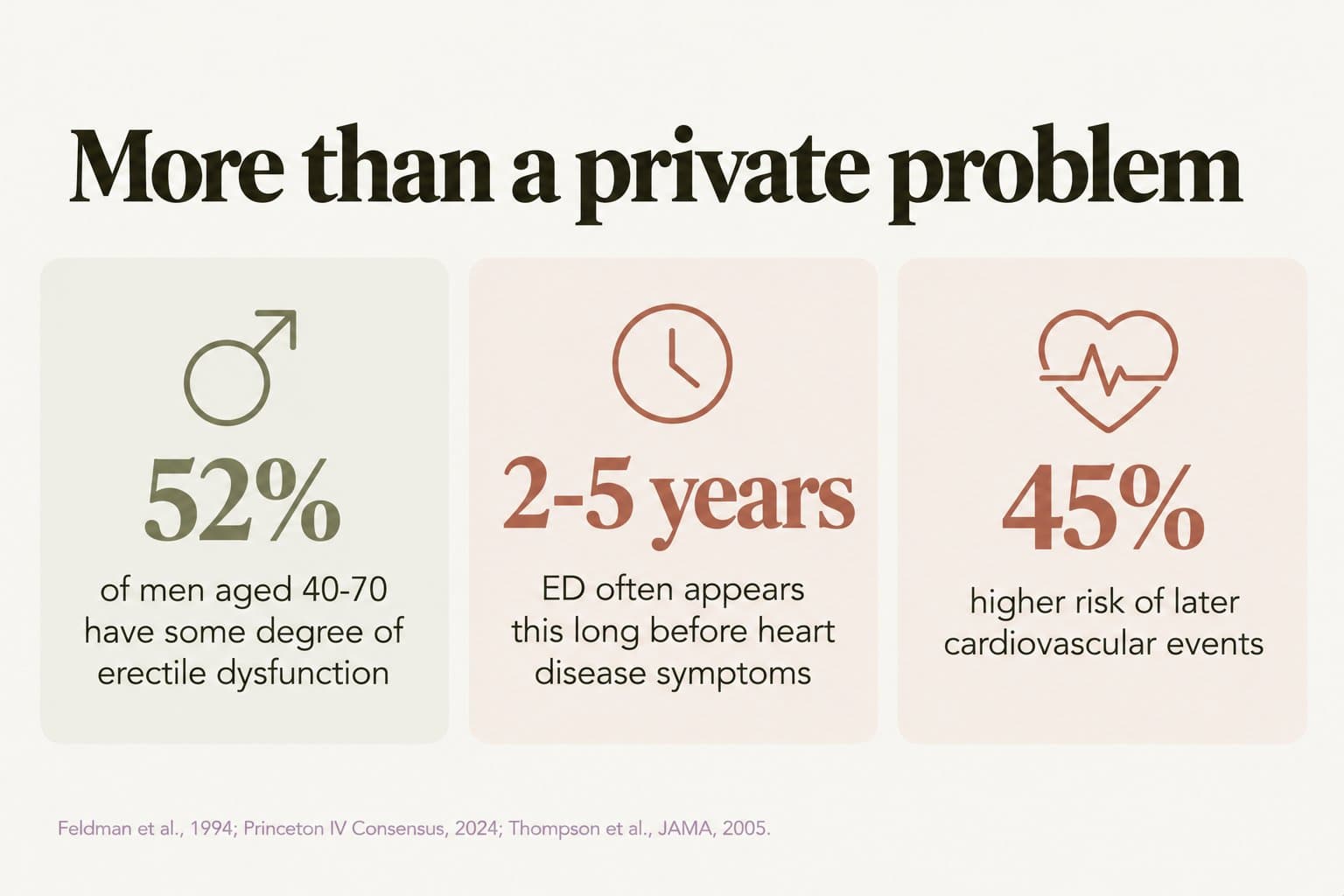
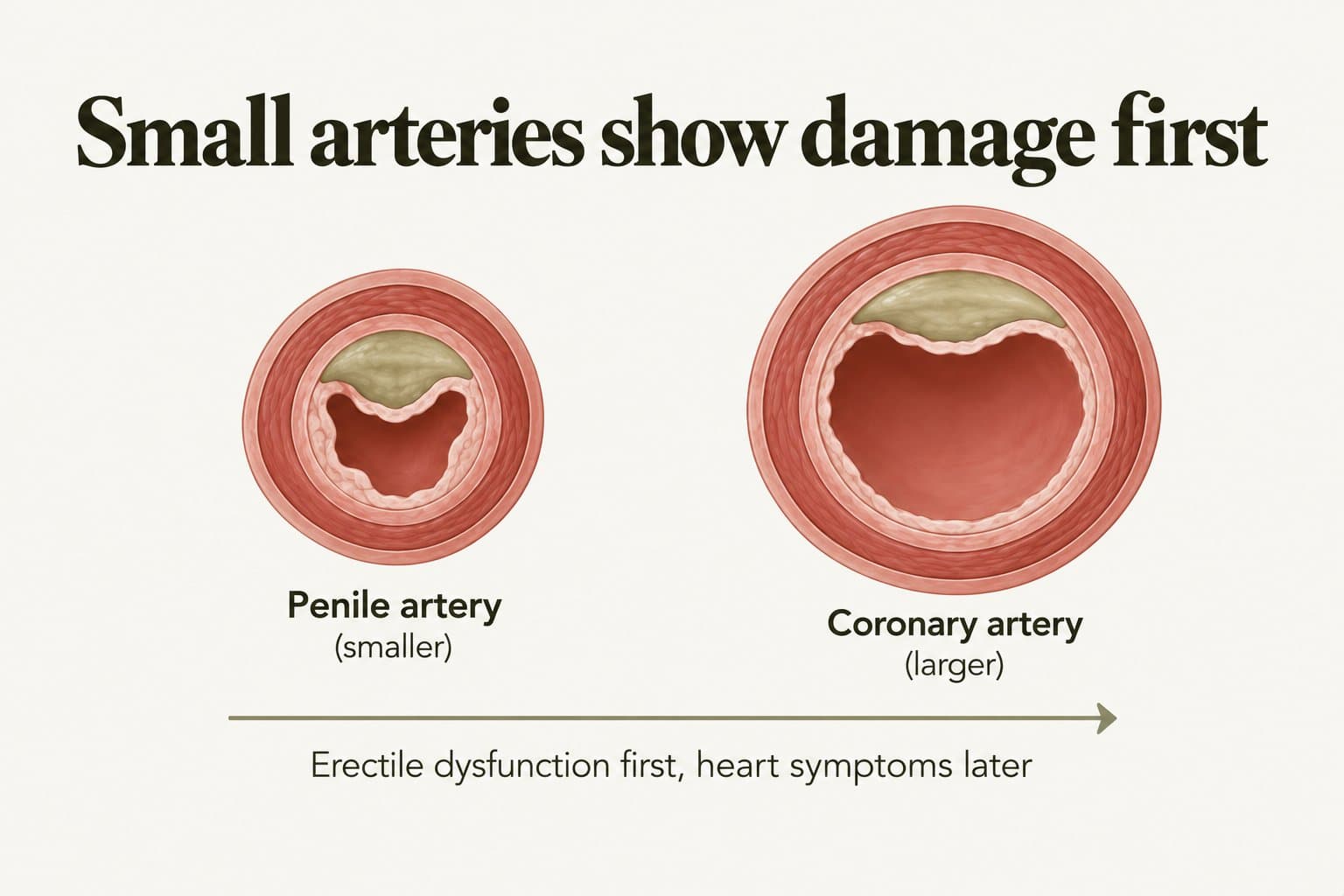
Erectile dysfunction (ED), difficulty getting or keeping an erection firm enough for sex, is very common: in the Massachusetts Male Aging Study, 52% of men aged 40 to 70 had some degree of it. Many men see it as an embarrassing private problem or an inevitable part of ageing, but it's often an early sign of disease in the blood vessels. The arteries of the penis are smaller than those of the heart, so they tend to show damage first, and the 2024 Princeton IV expert consensus notes that ED can appear 2 to 5 years before symptoms of heart disease. In a US trial of over 8,000 men without heart disease, those with ED had a 45% higher risk of later cardiovascular events. The good news is that the same steps that protect the heart can improve erections: in an Italian trial, about a third of obese men with ED who lost weight and exercised more regained normal erectile function. This article explains the link between ED and heart health, what tests are worth doing and how ED is treated.
Key numbers
| Finding | Detail |
|---|---|
| ED in men aged 40-70 (Massachusetts Male Aging Study) | 52% had some degree; complete ED rose from 5% at 40 to 15% at 70 |
| How early ED appears (Princeton IV consensus) | Often 2-5 years before symptoms of heart disease |
| ED and later cardiovascular events (8,063 men, US trial) | 45% higher risk (HR 1.45) |
| ED and cardiovascular disease (12 studies, 36,744 men) | 48% higher risk (RR 1.48) |
| Lifestyle change in obese men with ED (110 men, 2 years) | 31% regained normal function vs 5% in the control group |
What causes erectile dysfunction
An erection depends on healthy nerves, hormones, mental state and, above all, blood flow. When a man is aroused, the lining of the penile arteries (the endothelium) releases nitric oxide, which relaxes the vessels and lets blood fill the erectile tissue. Anything that damages the endothelium, such as high blood pressure, high cholesterol, diabetes or smoking, also impairs erections.
The main causes are:
- Vascular: the most common cause in men over 40, sharing the same risk factors as heart disease.
- Diabetes: affecting both blood vessels and nerves.
- Hormonal: low testosterone, thyroid problems or a raised prolactin level (see Testosterone Decline in Men).
- Medicines: some blood pressure medicines, antidepressants and others.
- Psychological: stress, anxiety, depression and relationship difficulties, more common causes in younger men.
- Nerve damage: after prostate or pelvic surgery, or from spinal problems.
- Lifestyle: smoking, heavy alcohol use, inactivity and obesity.
The Massachusetts Male Aging Study found that ED was more common with heart disease, high blood pressure, diabetes and their medicines, and with depression and anger, and less common with higher HDL ("good") cholesterol.
Why ED is a warning sign for the heart
Smaller arteries show damage first. The arteries supplying the penis are much narrower than the coronary arteries of the heart. The same build-up of plaque and loss of healthy endothelial function that eventually causes angina or a heart attack can reduce blood flow to the penis earlier. This makes ED a potential early window to find and treat cardiovascular risk.
The evidence. In the Prostate Cancer Prevention Trial, researchers followed 8,063 men aged 55 and over without cardiovascular disease. Nearly half had ED at the start, and 57% of the rest developed it within five years. Men with ED had a 45% higher risk of later cardiovascular events (HR 1.45), and men who newly developed ED during the study had a 25% higher risk (HR 1.25). The authors concluded that ED "should prompt investigation and intervention for cardiovascular risk factors".
A meta-analysis of 12 studies with 36,744 men found that ED was linked to a 48% higher risk of cardiovascular disease, a 46% higher risk of coronary heart disease, a 35% higher risk of stroke and a 19% higher risk of death from any cause (see Sexual Health and Longevity).
The 2024 Princeton IV consensus, from cardiologists and urologists, recommends that ED be considered a "risk-enhancing factor" when deciding how intensively to treat cardiovascular risk, and that doctors ask every man about sexual function. For men with ED caused by blood-vessel disease who otherwise appear low risk, it suggests a coronary artery calcium scan to clarify their risk (see Coronary Calcium Scoring). The link is strongest in younger men, in whom ED is less expected.
What raises the risk of ED
| Factor | Effect | Modifiable? | Evidence strength |
|---|---|---|---|
| Age | Prevalence and severity rise with age | No | Strong |
| Diabetes | Damages blood vessels and nerves | Yes, with good control | Strong |
| High blood pressure and high cholesterol | Damage the endothelium | Yes | Strong |
| Smoking | Damages blood vessels; worse with existing heart disease | Yes | Strong |
| Obesity and inactivity | Linked to ED; improve with weight loss and exercise | Yes | Strong |
| Depression and anxiety | Increase risk | Yes, with treatment | Moderate |
| Some medicines | Can cause or worsen ED | Often, with alternatives | Moderate |
| Heavy alcohol use | Impairs erections | Yes | Moderate |
| Prostate or pelvic surgery | Can damage nerves | No | Strong |
What you can actually change
1. Treat ED as a reason for a heart health check. New or worsening ED is a reason to have blood pressure, cholesterol, blood sugar or HbA1c, weight and waist measured, and your overall cardiovascular risk assessed.
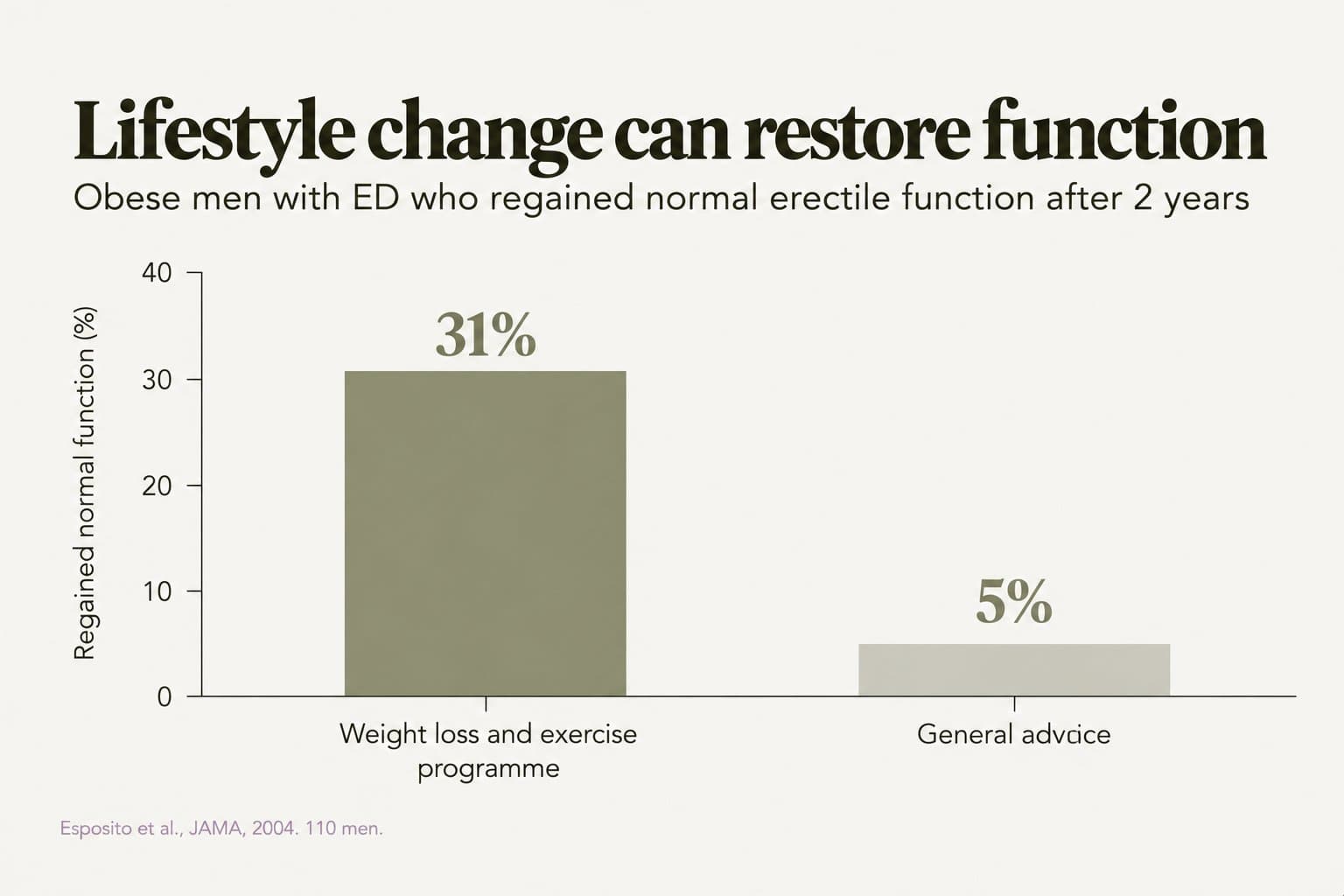
2. Lose weight and move more. In an Italian randomised trial, 110 obese men with ED were assigned to an intensive programme to lose 10% or more of body weight through diet and exercise, or to general advice. After two years, BMI in the intervention group fell from an average of 36.9 to 31.2, and 31% of men regained normal erectile function, compared with 5% in the control group.
3. Stop smoking and limit alcohol. Both harm blood vessels and erections.
4. Control diabetes, blood pressure and cholesterol. Good control protects the small blood vessels as well as the heart.
5. Review your medicines. If ED started after a new medicine, ask whether an alternative is available. Don't stop any medicine without advice.
6. Use effective treatment. PDE5 inhibitors, such as sildenafil and tadalafil, are effective for most men, and the Princeton IV consensus considers them generally safe for men with heart conditions. They must never be taken with nitrate medicines, such as glyceryl trinitrate (GTN) for angina, because the combination can cause a dangerous fall in blood pressure. Other options include vacuum devices, injections and, for some men, surgery. Counselling helps when stress, anxiety or relationship issues play a part.
Recommendations
- Don't ignore ED, especially if you're under 60 or have risk factors such as diabetes, high blood pressure or smoking.
- Ask for a cardiovascular risk assessment when ED is diagnosed, including blood pressure, cholesterol and blood sugar.
- Consider a coronary calcium scan if your risk is otherwise low or uncertain, after discussing it with your doctor.
- Never combine ED medicines with nitrates, and buy them only on prescription.
- See a doctor promptly for chest pain, breathlessness or dizziness during sex.
Practical notes
Erectile dysfunction is common, and in men over 40 it's often caused by the same blood-vessel disease that leads to heart attacks and strokes, appearing years earlier. That makes it an opportunity: a reason to check and treat cardiovascular risk factors before heart disease develops. Losing weight, exercising, stopping smoking and controlling diabetes, blood pressure and cholesterol can improve erections and protect the heart at the same time, and effective, safe treatments are available.
- Feldman HA, et al. Impotence and its medical and psychosocial correlates: results of the Massachusetts Male Aging Study. Journal of Urology, 1994;151(1):54-61.
- Thompson IM, et al. Erectile dysfunction and subsequent cardiovascular disease. JAMA, 2005;294(23):2996-3002.
- Dong JY, Zhang YH, Qin LQ. Erectile dysfunction and risk of cardiovascular disease: meta-analysis of prospective cohort studies. Journal of the American College of Cardiology, 2011;58(13):1378-1385.
- Kloner RA, et al. The Princeton IV Consensus Recommendations for the Management of Erectile Dysfunction and Cardiovascular Disease. Mayo Clinic Proceedings, 2024.
- Esposito K, et al. Effect of lifestyle changes on erectile dysfunction in obese men: a randomized controlled trial. JAMA, 2004;291(24):2978-2984.
Free longevity assessment
Has erectile dysfunction prompted
a check of your heart health?
Take the free Aevum Protocol assessment to see how your reproductive & sexual health and 6 other longevity domains are performing — and get a personalised 90-day plan.
Take the free assessmentKeep reading