Reproductive & Sexual Health
Pelvic Floor Health and Incontinence:
Common, Treatable and Worth Talking About
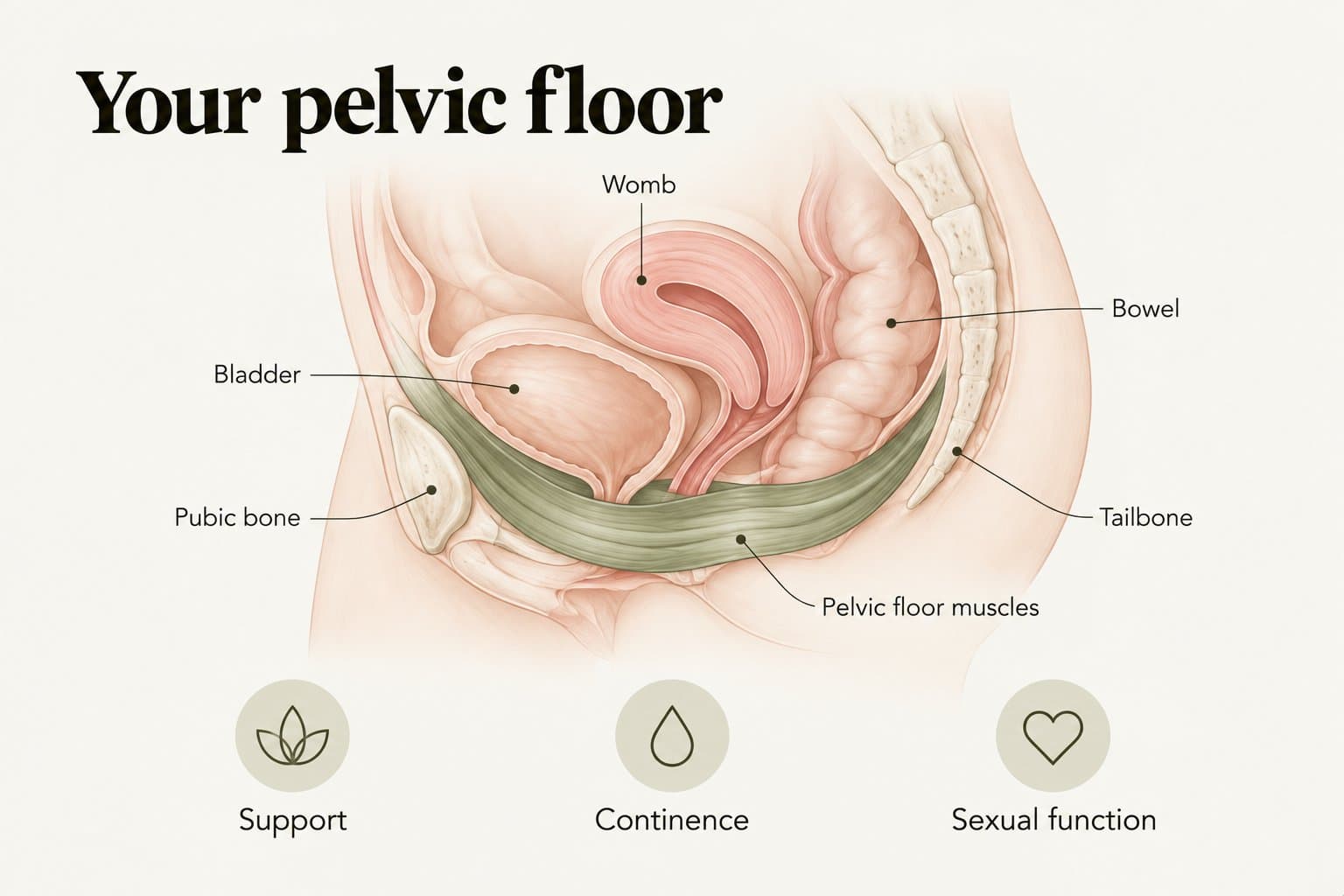
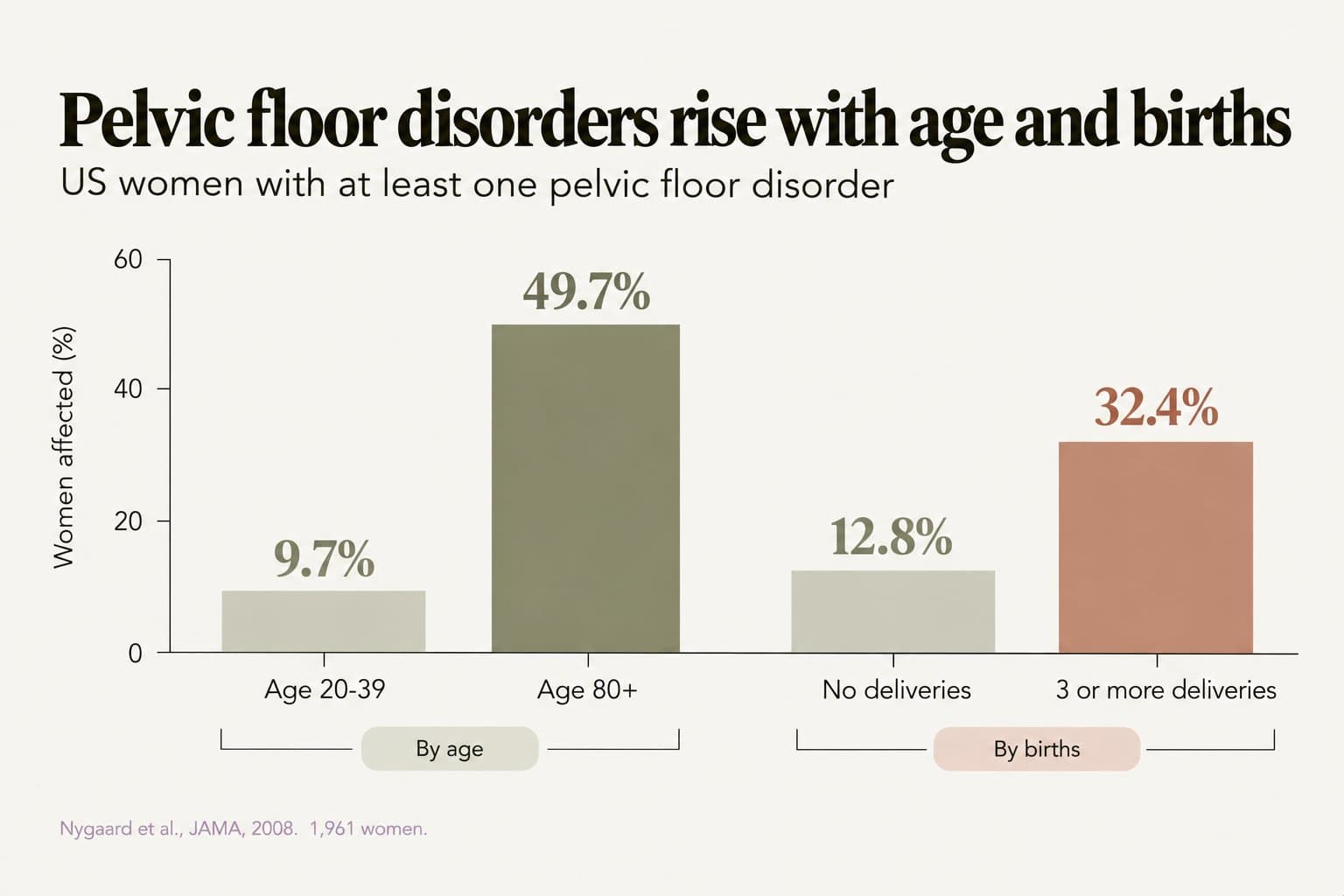
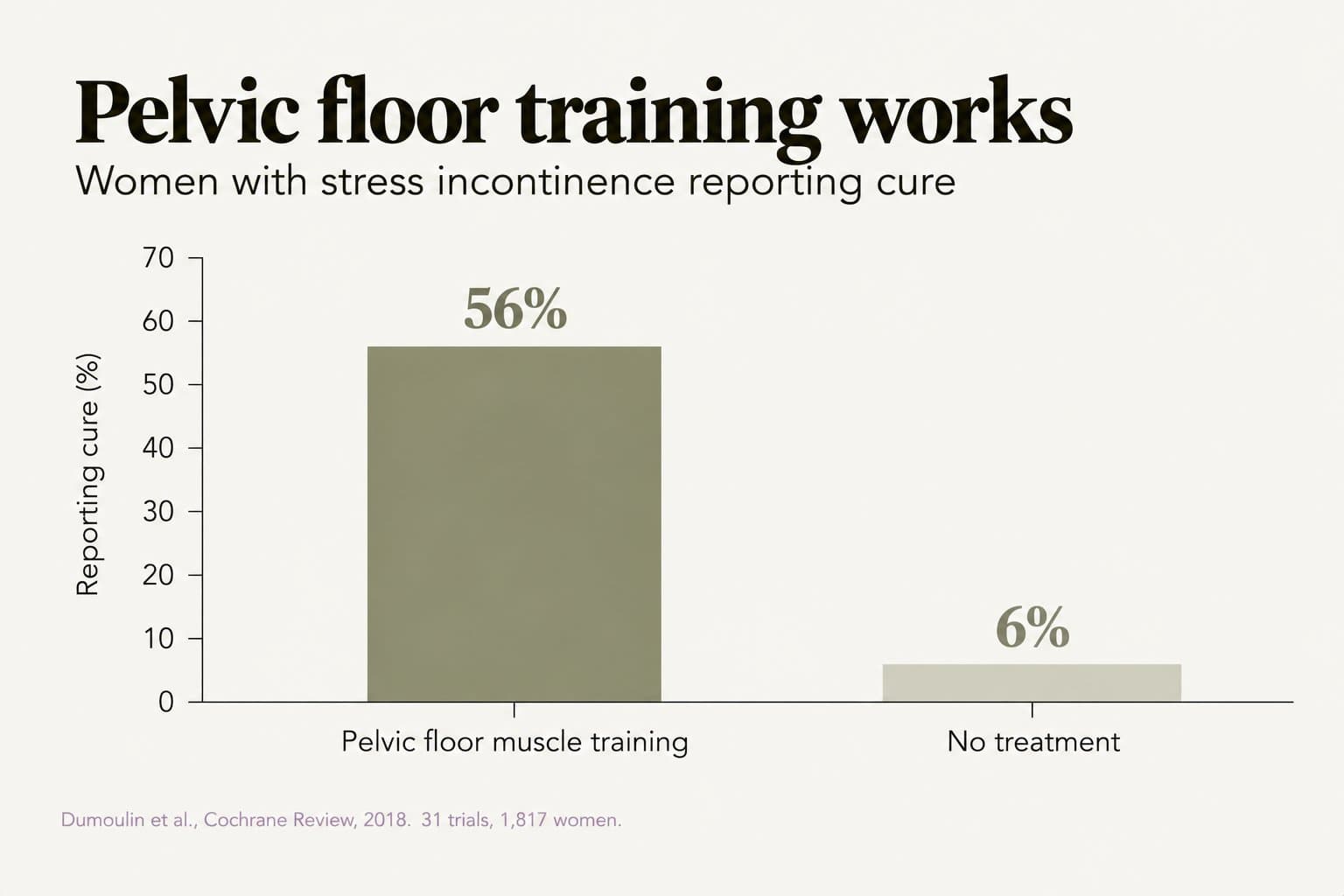
The pelvic floor is a hammock of muscles that supports the bladder, bowel and, in women, the womb, and controls the passing of urine and stools. When these muscles weaken or are damaged, problems such as urinary incontinence, bowel leakage and pelvic organ prolapse can follow. These conditions are very common but rarely discussed. In a US national survey, 23.7% of women had at least one pelvic floor disorder, rising from 9.7% of women aged 20-39 to 49.7% of women aged 80 and over. Childbirth, ageing, menopause and excess weight all increase the risk, and men are affected too, particularly after prostate surgery. Many people assume leakage is a normal part of ageing, but it's highly treatable. In a Cochrane review of 31 trials, women with stress incontinence who did pelvic floor muscle training were eight times more likely to report cure than those who didn't (56% vs 6%). Losing weight helps too: in a US trial, women in a weight-loss programme had 47% fewer leakage episodes. This article explains how the pelvic floor works, why it matters for healthy ageing and what you can do.
Key numbers
| Finding | Detail |
|---|---|
| Women with at least one pelvic floor disorder (1,961 US women) | 23.7%: urinary incontinence 15.7%, bowel leakage 9.0%, prolapse 2.9% |
| By age (same survey) | 9.7% at 20-39; 49.7% at 80 and over |
| By number of births (same survey) | 12.8% with no deliveries; 32.4% with 3 or more |
| Pelvic floor training for stress incontinence (Cochrane, 31 trials, 1,817 women) | Cure in 56% vs 6%, eight times more likely |
| Weight loss for incontinence (338 overweight and obese women, 6 months) | 47% fewer weekly leakage episodes vs 28% with information only |
How the pelvic floor works
The pelvic floor muscles stretch from the pubic bone at the front to the tailbone at the back. They:
- Support the pelvic organs: the bladder, bowel and womb.
- Control continence: tightening around the urethra and back passage to hold in urine, stools and wind, and relaxing to let them out.
- Contribute to sexual function: including arousal, sensation and orgasm in women and erections and ejaculation in men.
- Stabilise the trunk: working with the deep abdominal and back muscles.
Like any muscles, they can be weakened by injury, strain and disuse, and strengthened by training.
Common pelvic floor problems
Urinary incontinence.
- Stress incontinence: leakage when coughing, sneezing, laughing, lifting or exercising, caused by weak support around the urethra.
- Urge incontinence (overactive bladder): a sudden, strong need to pass urine and leaking before reaching the toilet.
- Mixed incontinence: both types together.
Bowel leakage. Difficulty controlling wind or stools, often after a difficult birth with a tear, or with ageing, diarrhoea or constipation.
Pelvic organ prolapse. The bladder, womb or bowel drops and bulges into the vagina, causing a heavy, dragging feeling or a visible bulge, especially at the end of the day.
In men. Men can develop incontinence after prostate surgery or radiotherapy, with an enlarged prostate, or with nerve conditions. Pelvic floor training helps men too, particularly after prostate surgery (see Prostate Enlargement (BPH)).
Who is at risk
A national US survey of 1,961 women found that pelvic floor disorders became much more common with age, from 9.7% of women aged 20-39 to 49.7% of those aged 80 and over. They were also more common in women who had given birth, rising from 12.8% in women with no deliveries to 32.4% in those with three or more, and in overweight (26.3%) and obese (30.4%) women compared with women of normal weight (15.1%). There were no significant differences between racial and ethnic groups.
Why pelvic floor health matters for longevity
Incontinence is far more than an inconvenience. People who leak often avoid exercise, travel and social activities, which can lead to inactivity, isolation and low mood. Urge incontinence and night-time trips to the toilet are linked to falls in older adults. Pelvic floor problems also affect sexual health and relationships (see Sexual Health and Longevity). Keeping the pelvic floor strong supports staying active, independent and confident into later life.
What affects pelvic floor health
| Factor | Effect | Modifiable? | Evidence strength |
|---|---|---|---|
| Pregnancy and vaginal birth, especially difficult deliveries | Stretch and damage muscles and nerves | Partly | Strong |
| Number of births | More births, higher risk | No | Strong |
| Ageing and menopause | Weaker muscles and thinner tissues | Partly, with treatment | Strong |
| Excess weight | Increases pressure on the pelvic floor | Yes | Strong |
| Chronic cough and smoking | Repeated strain | Yes | Moderate |
| Constipation and straining | Weaken the pelvic floor over time | Yes | Moderate |
| Heavy lifting or repeated high-impact strain | Can worsen symptoms in susceptible people | Partly | Moderate |
| Prostate surgery or radiotherapy (men) | Can cause incontinence | No | Strong |
| Caffeine and alcohol | Can worsen urgency and frequency | Yes | Moderate |
What you can actually change
1. Train your pelvic floor. Pelvic floor muscle training (often called Kegel exercises) involves repeatedly squeezing and lifting the muscles as if stopping the flow of urine and holding in wind, with both long holds and quick squeezes. A Cochrane review of 31 trials with 1,817 women found that, for stress incontinence, women who did the training were eight times more likely to report cure (56% vs 6%) and six times more likely to report cure or improvement (74% vs 11%). For all types of incontinence, they were five times more likely to report cure (35% vs 6%). The authors concluded that training should be included in first-line treatment. Working with a pelvic health physiotherapist helps you do the exercises correctly; results usually take at least three months of regular training.
2. Lose weight if you're overweight. In the US PRIDE trial, 338 overweight and obese women with incontinence were assigned to an intensive weight-loss programme or information only. After six months, the intensive group lost about 17 pounds (around 8 kg) on average, compared with 3 pounds in the control group, and had 47% fewer leakage episodes per week, compared with 28%. The lead researcher recommended weight loss as a first-line treatment for overweight and obese women.
3. Protect your pelvic floor during and after pregnancy. Pelvic floor training during and after pregnancy helps prevent and treat incontinence. How pregnancy affects long-term health is covered in Pregnancy Complications and Long-Term Health.
4. Avoid straining. Treat constipation with fibre, fluids and activity, and don't strain on the toilet. Stop smoking and get a chronic cough treated.
5. Manage your bladder. Cut down on caffeine and alcohol, drink normal amounts of fluid, and use bladder training to gradually lengthen the time between toilet visits if you have urgency.
6. Use effective treatments when needed. Vaginal oestrogen can help after menopause (see Menopause and Long-Term Health). Medicines can treat an overactive bladder, and pessaries and surgery are effective options for prolapse and stress incontinence that don't respond to other treatment.
Recommendations
- Don't accept leakage as normal at any age; it's common but treatable.
- Start pelvic floor training, ideally guided by a pelvic health physiotherapist, as a first step for stress or mixed incontinence.
- See a doctor for incontinence that affects your life, a bulge or dragging feeling in the vagina, or bowel leakage.
- Seek prompt advice for blood in the urine, pain, recurrent infections or sudden changes.
- Men having prostate surgery should ask about pelvic floor training before and after.
Practical notes
Pelvic floor disorders affect about one in four women and half of women over 80, and men too, especially after prostate surgery. They're linked to childbirth, ageing, menopause and excess weight, and they can limit activity, confidence and independence. Pelvic floor muscle training is effective first-line treatment, weight loss helps, and medicines, devices and surgery are available when needed. A few minutes of exercises a day is an investment in staying active and independent with age.
- Nygaard I, et al. Prevalence of symptomatic pelvic floor disorders in US women. JAMA, 2008;300(11):1311-1316.
- Dumoulin C, Cacciari LP, Hay-Smith EJC. Pelvic floor muscle training versus no treatment, or inactive control treatments, for urinary incontinence in women. Cochrane Database of Systematic Reviews, 2018;10:CD005654.
- Subak LL, et al. Weight loss to treat urinary incontinence in overweight and obese women. New England Journal of Medicine, 2009;360(5):481-490.
Free longevity assessment
Is leakage holding you back
from staying active?
Take the free Aevum Protocol assessment to see how your reproductive & sexual health and 6 other longevity domains are performing — and get a personalised 90-day plan.
Take the free assessmentKeep reading