Reproductive & Sexual Health
Prostate Enlargement (BPH):
Urinary Symptoms, Metabolic Health and Treatment
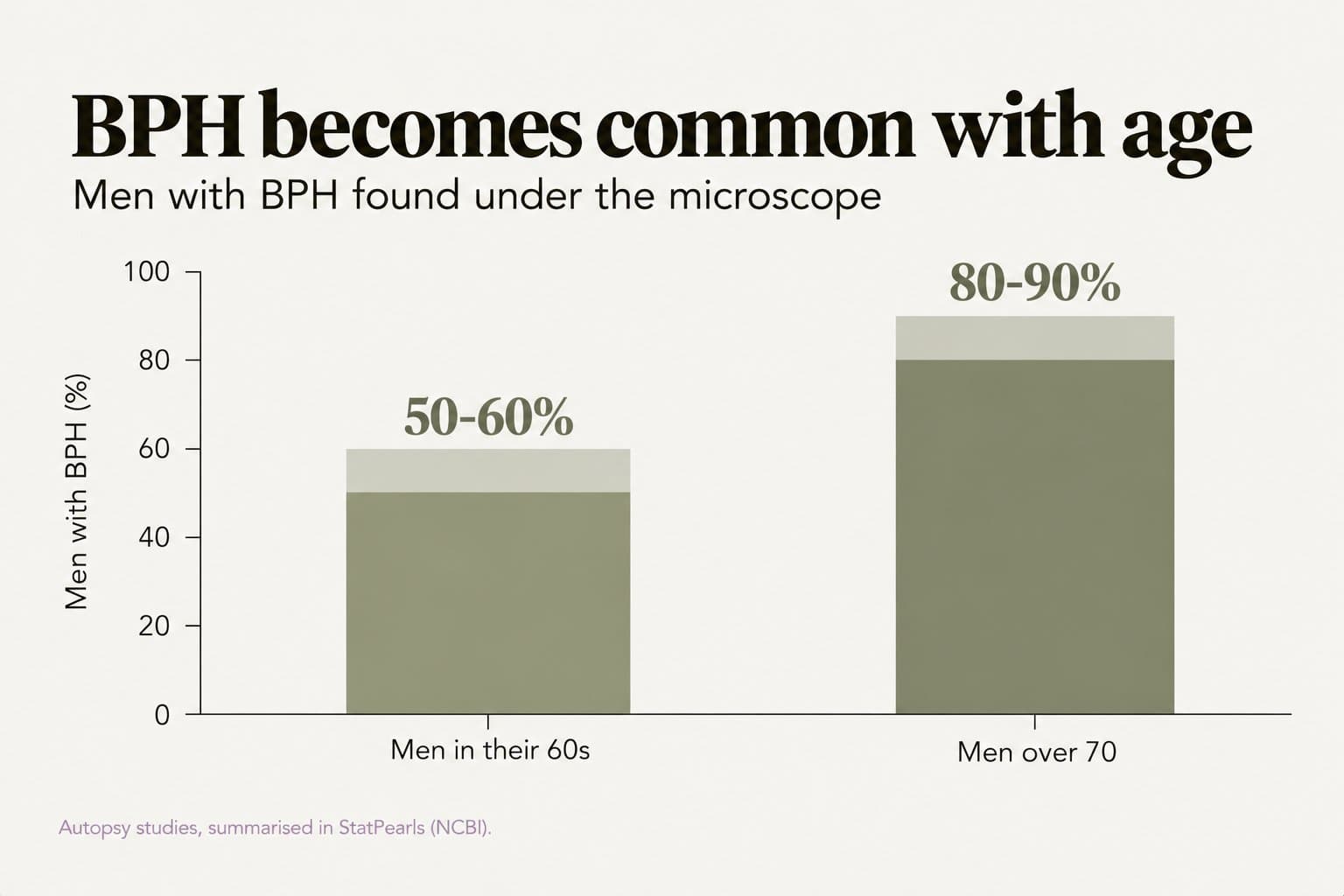
Benign prostatic hyperplasia (BPH), a non-cancerous enlargement of the prostate, is one of the most common conditions of ageing men. In 2019, an estimated 94 million men worldwide had BPH, a 70% increase since 2000, driven by ageing populations. Under the microscope, BPH is found in 50-60% of men in their 60s and 80-90% of men over 70. As the prostate grows, it can squeeze the urethra and cause bothersome urinary symptoms: a weak stream, hesitancy, urgency and getting up at night to pass urine (nocturia). These symptoms matter for more than comfort: in a meta-analysis of 11 studies, nocturia was linked to about a 27% higher risk of death, probably reflecting the conditions behind it and broken sleep. BPH is also linked to metabolic health, with larger prostates in men with metabolic syndrome. BPH doesn't cause prostate cancer, and effective treatments are available: in a large trial, combining two medicines cut the risk of the condition getting worse by 66%. This article explains BPH, its links to wider health and the treatment options.
Key numbers
| Finding | Detail |
|---|---|
| Men with BPH worldwide (Global Burden of Disease, 2019) | 94 million, up about 70% since 2000 |
| BPH under the microscope (autopsy studies) | 50-60% of men in their 60s; 80-90% over 70 |
| Nocturia and death (11 studies) | About 27% higher risk (RR 1.27) |
| Metabolic syndrome and prostate size (8 studies, 5,403 men) | Prostate about 1.8 mL larger |
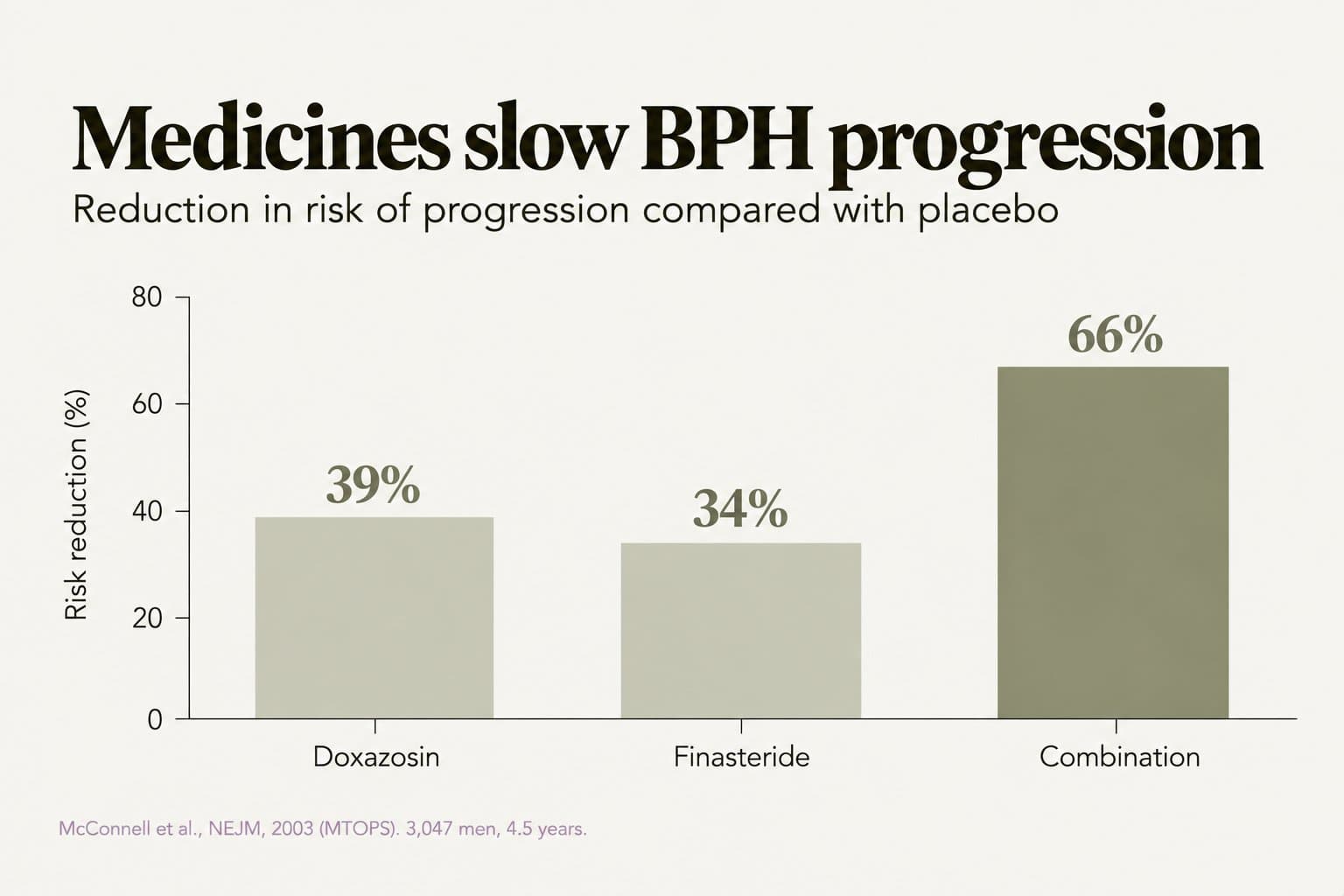
| Combination medicine (3,047 men, 4.5 years) | 66% lower risk of BPH progressing |
What BPH is
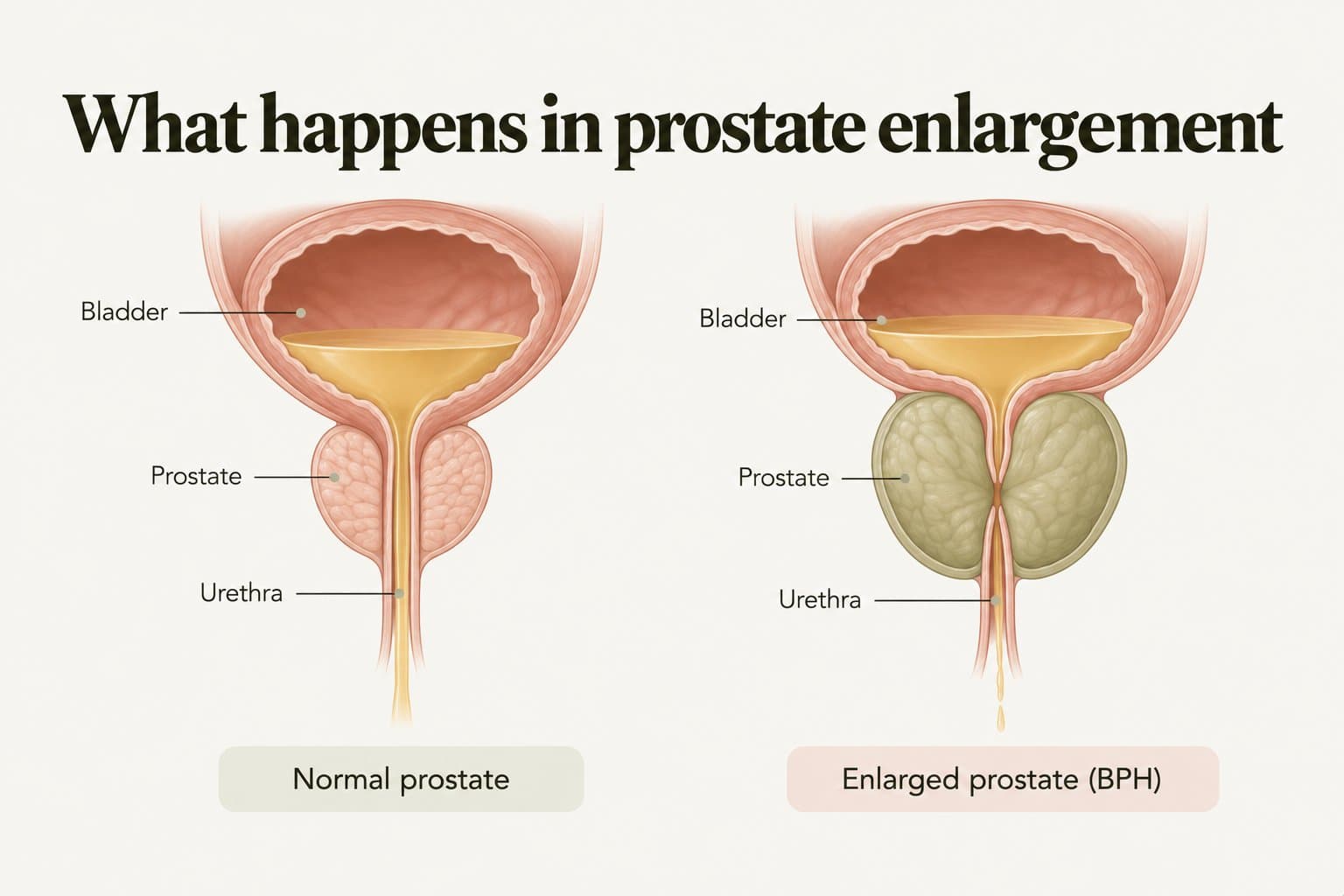
The prostate is a walnut-sized gland below the bladder that surrounds the urethra, the tube that carries urine out of the body. It makes part of the fluid in semen. From middle age, the prostate tends to grow, driven by the hormone dihydrotestosterone (DHT), made from testosterone. Because BPH develops in the central part of the prostate around the urethra, it can narrow the channel and make the bladder work harder.
Size doesn't always predict symptoms: some men with large prostates have few problems, while others with modest enlargement have significant symptoms.
Symptoms
BPH causes lower urinary tract symptoms (LUTS) of two kinds:
- Voiding symptoms: a weak or interrupted stream, difficulty starting, straining, dribbling at the end and a feeling of not emptying fully.
- Storage symptoms: passing urine often, urgency and getting up at night to pass urine.
Complications are less common but important: sudden inability to pass urine (acute urinary retention), urinary infections, bladder stones, blood in the urine and, rarely, kidney damage.
Similar symptoms can be caused by an overactive bladder, diabetes, heart failure, some medicines, drinking a lot in the evening, sleep apnoea or, uncommonly, prostate or bladder cancer, so they're worth checking.
How common BPH is
The Global Burden of Disease study estimated that 94 million men had BPH in 2019, up from about 51 million in 2000, with the fastest rise in low- and middle-income countries as populations age. Autopsy studies show that BPH is present in 50-60% of men in their 60s and 80-90% of men over 70, although not all of them have symptoms.
Why BPH matters beyond the bladder
Nocturia, sleep and long-term health. Getting up two or more times a night to pass urine disrupts sleep. A meta-analysis of 11 observational studies found that people with nocturia had about a 27% higher risk of death (RR 1.27). The authors concluded that nocturia is "probably associated with an approximately 1.3-fold increased risk of death", but they rated the evidence that nocturia itself causes death as very low. The link is likely explained by the conditions that cause nocturia, such as heart disease, diabetes and sleep apnoea, and by poor sleep and night-time falls. Nocturia is therefore worth investigating, not just tolerating.
Metabolic health. BPH is linked to the same metabolic problems that drive heart disease. A meta-analysis of eight studies with 5,403 men found that those with metabolic syndrome had larger prostates, by an average of 1.8 mL, with the biggest differences in older and obese men and those with low HDL ("good") cholesterol. Obesity, diabetes and insulin resistance are thought to promote prostate growth through inflammation and hormonal changes (see Insulin Resistance).
Sexual health. Urinary symptoms and erectile dysfunction often occur together and share risk factors, and some BPH medicines affect ejaculation or sexual function (see Erectile Dysfunction and Heart Health).
BPH and prostate cancer. BPH isn't a cancer and doesn't turn into cancer. It develops in a different part of the prostate from where most cancers arise. However, the two are common at the same ages and can occur together, so new symptoms deserve assessment. PSA testing for prostate cancer is covered in PSA Screening for Prostate Cancer.
What's linked to BPH and its symptoms
| Factor | Effect | Modifiable? | Evidence strength |
|---|---|---|---|
| Age | Main risk factor; prevalence rises steadily | No | Strong |
| Family history | Higher risk in men with affected first-degree relatives | No | Moderate |
| Obesity and metabolic syndrome | Linked to larger prostate | Yes | Moderate |
| Diabetes | Linked to BPH and worse urinary symptoms | Yes, with good control | Moderate |
| Physical inactivity | Linked to more symptoms | Yes | Moderate |
| Caffeine, alcohol and evening fluids | Worsen frequency, urgency and nocturia | Yes | Moderate |
| Some medicines (decongestants, antihistamines, diuretics) | Can worsen symptoms or cause retention | Yes, with review | Moderate |
What you can actually change
1. Adjust drinks and timing. Reduce caffeine and alcohol, and drink less in the two hours before bed, while keeping total daily fluids adequate.
2. Train your bladder. Double voiding (passing urine, waiting, then trying again), bladder training to gradually lengthen the time between visits, and pelvic floor exercises can all help (see Pelvic Floor Health and Incontinence).
3. Look after your metabolic health. Stay active, keep a healthy weight and control blood sugar, blood pressure and cholesterol. These protect the heart and may limit prostate growth.
4. Review your medicines. Some cold remedies, antihistamines and other medicines can worsen symptoms or trigger retention.
5. Use effective medicines when needed.
- Alpha-blockers, such as tamsulosin, relax the prostate and bladder neck and improve flow within days.
- 5-alpha reductase inhibitors, such as finasteride and dutasteride, block DHT and gradually shrink the prostate over months.
- Tadalafil can treat both urinary symptoms and erectile dysfunction.
In the MTOPS trial, 3,047 men were followed for an average of 4.5 years. Compared with placebo, the alpha-blocker doxazosin reduced the risk of BPH getting worse by 39%, finasteride by 34%, and the combination by 66%. The combination and finasteride, but not doxazosin alone, also reduced the risk of acute urinary retention and the need for surgery.
6. Consider procedures if needed. For men with severe symptoms, complications or no response to medicines, options include transurethral resection of the prostate (TURP), laser procedures and newer minimally invasive treatments.
Recommendations
- See a doctor about urinary symptoms that bother you, or about getting up two or more times a night.
- Seek urgent help if you can't pass urine, or have blood in the urine, fever or pain.
- Expect checks of your urine, kidney function and blood sugar, and a discussion about PSA testing.
- Mention nocturia when your heart, sleep and metabolic health are assessed.
- Discuss sexual side effects before starting BPH medicines.
Practical notes
BPH is very common in older men and is rising worldwide as populations age. It isn't cancer, but it can cause bothersome urinary symptoms and is linked to metabolic health. Nocturia is worth investigating, as it disrupts sleep and is linked to a higher risk of death, mainly through the conditions behind it. Simple changes to drinks and bladder habits, a healthy weight and effective medicines control symptoms for most men, and procedures are available when needed.
- GBD 2019 Benign Prostatic Hyperplasia Collaborators. The global, regional, and national burden of benign prostatic hyperplasia in 204 countries and territories from 2000 to 2019. The Lancet Healthy Longevity, 2022;3(11):e754-e776.
- Ng M, Baradhi KM. Benign prostatic hyperplasia. StatPearls. NCBI Bookshelf.
- Pesonen JS, et al. The impact of nocturia on mortality: a systematic review and meta-analysis. Journal of Urology, 2020;203(3):486-495.
- Gacci M, et al. Metabolic syndrome and benign prostatic enlargement: a systematic review and meta-analysis. BJU International, 2015;115(1):24-31.
- McConnell JD, et al. The long-term effect of doxazosin, finasteride, and combination therapy on the clinical progression of benign prostatic hyperplasia. New England Journal of Medicine, 2003;349(25):2387-2398.
Free longevity assessment
Getting up at night to pass urine?
It's worth looking into
Take the free Aevum Protocol assessment to see how your reproductive & sexual health and 6 other longevity domains are performing — and get a personalised 90-day plan.
Take the free assessmentKeep reading
Related articles
Reproductive & Sexual Health
PSA Screening for Prostate Cancer: Weighing the Benefits and Harms
Reproductive & Sexual Health
Pelvic Floor Health and Incontinence: Common, Treatable and Worth Talking About
Reproductive & Sexual Health