Reproductive & Sexual Health
PSA Screening for Prostate Cancer:
Weighing the Benefits and Harms
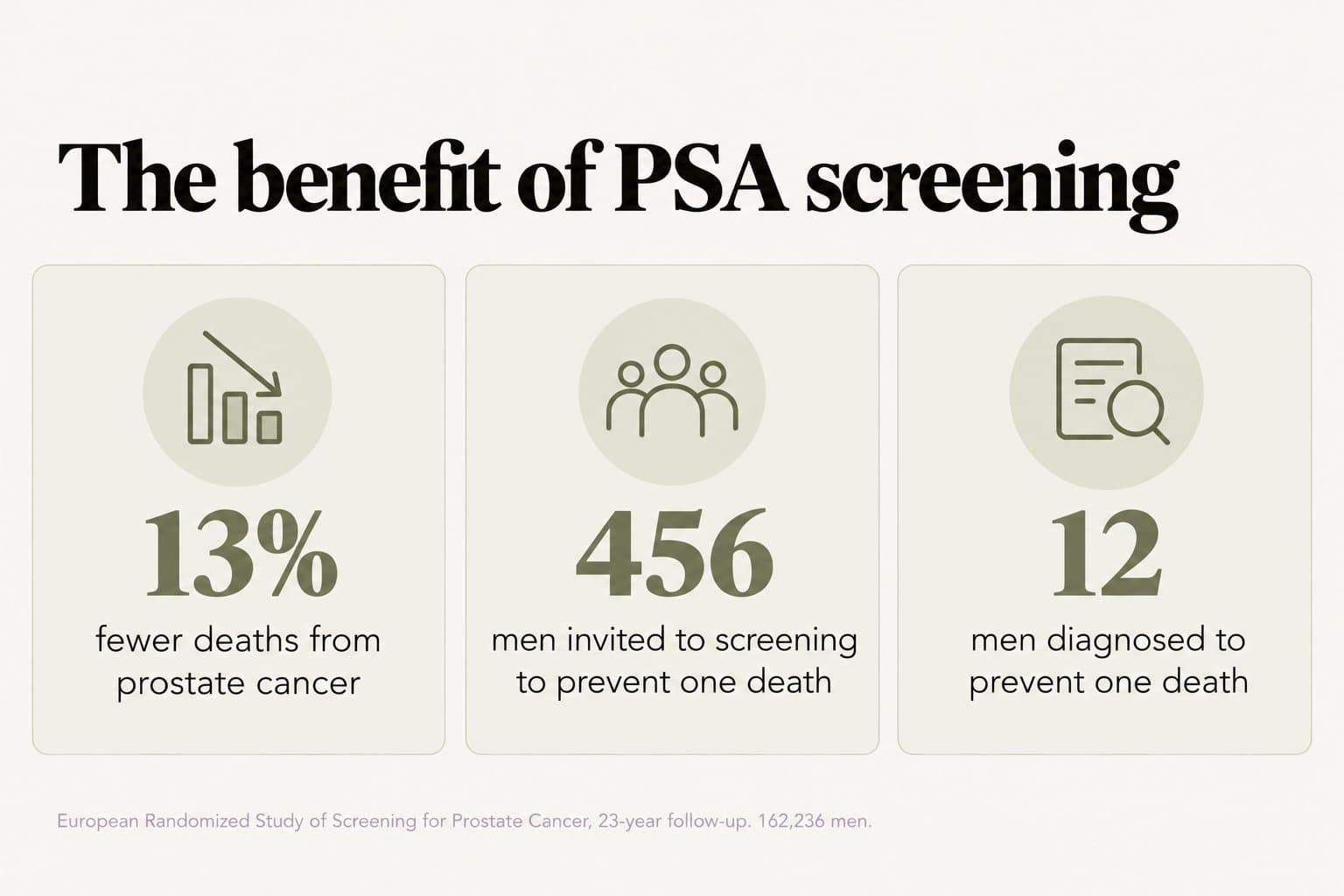
The PSA (prostate-specific antigen) blood test can detect prostate cancer before it causes symptoms, but whether healthy men should be screened has been debated for decades. The evidence now shows a real but modest benefit. The largest trial, the European Randomized Study of Screening for Prostate Cancer, followed 162,236 men aged 55-69 for 23 years and found that screening reduced deaths from prostate cancer by 13%. That meant one death prevented for every 456 men invited to screening, and for every 12 men diagnosed. The harms are also real: false alarms, biopsies and, above all, overdiagnosis, finding cancers that would never have caused problems, which can lead to treatment side effects such as erectile dysfunction and incontinence. Two developments have shifted the balance in screening's favour: MRI scans before biopsy, which halved the detection of harmless cancers in a Swedish trial, and active monitoring of low-risk cancers, which in the UK ProtecT trial was as safe as immediate treatment for prostate cancer survival over 15 years. The US Preventive Services Task Force recommends that men aged 55-69 make an individual decision with their doctor. This article explains what the evidence shows and how to decide.
Key numbers
| Finding | Detail |
|---|---|
| Reduction in prostate cancer deaths with screening (162,236 men, 23 years) | 13% (RR 0.87) |
| Men invited to screening to prevent one death (same trial) | 456 |
| Men diagnosed to prevent one death (same trial) | 12 |
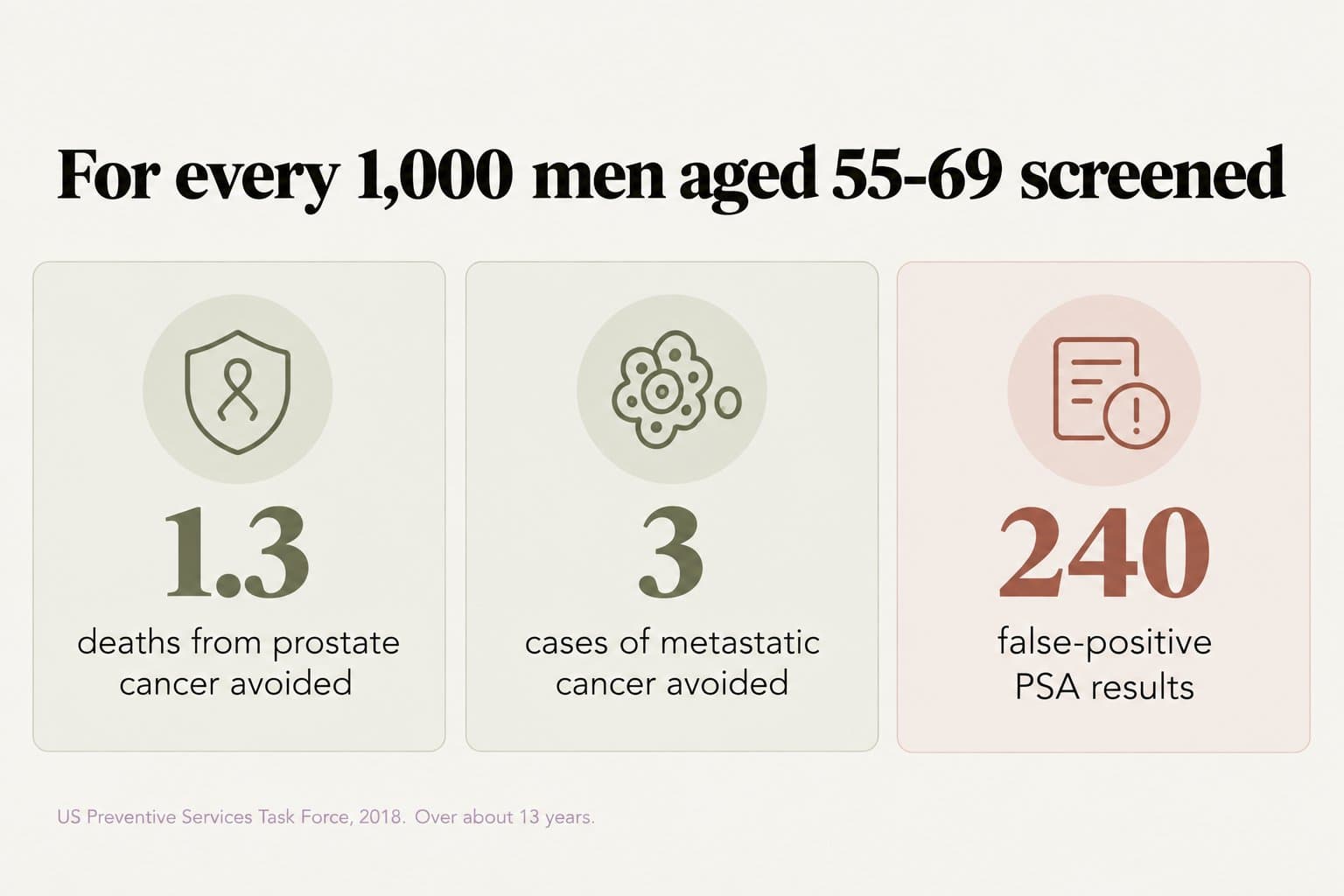
| Per 1,000 men aged 55-69 screened for about 13 years (USPSTF) | About 1.3 deaths and 3 cases of metastatic cancer avoided; about 240 false-positive results |
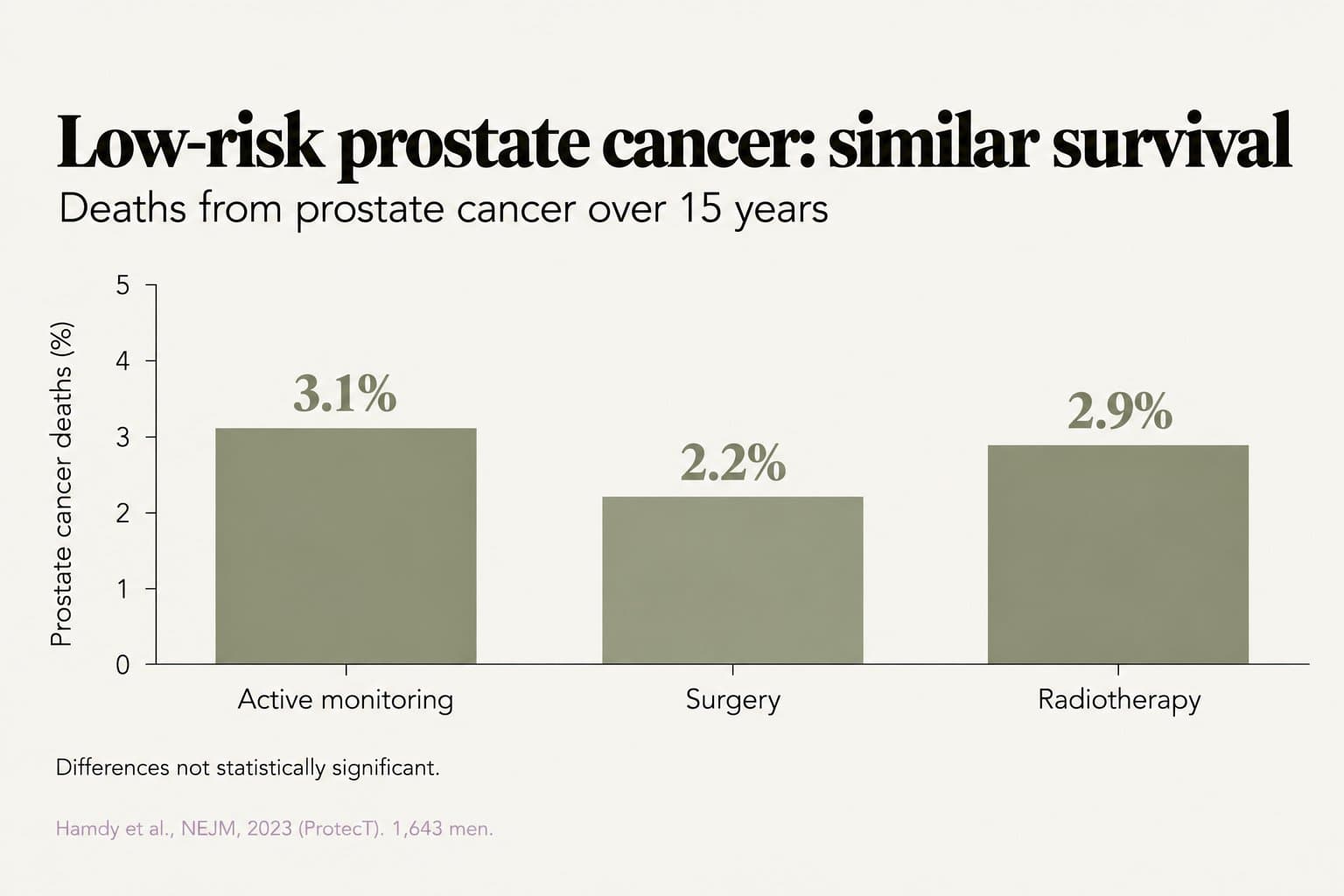
| Prostate cancer deaths over 15 years with active monitoring vs surgery vs radiotherapy (1,643 men) | 3.1% vs 2.2% vs 2.9%; no significant difference |
What the PSA test measures
PSA is a protein made by the prostate. Its level in the blood can rise with prostate cancer, but also with an enlarged prostate, infection or inflammation, recent ejaculation, vigorous cycling or a recent urinary procedure (see Prostate Enlargement (BPH)). A raised PSA is therefore a reason for further assessment, not a diagnosis. Most men with a raised PSA don't have prostate cancer, and a normal PSA doesn't rule it out completely.
Prostate cancer ranges from slow-growing tumours that never cause harm to aggressive cancers that spread and kill. The challenge of screening is to find the second kind without over-treating the first.
Evidence strength
Strong: screening reduces deaths from prostate cancer, modestly. The European Randomized Study of Screening for Prostate Cancer (ERSPC) enrolled 162,236 men aged 55-69 in eight countries between 1993 and 2003 and randomly assigned them to PSA screening or no screening. After a median of 23 years, screening reduced prostate cancer deaths by 13% (RR 0.87), an absolute reduction of 0.22%. One death was prevented for every 456 men invited to screening and for every 12 men diagnosed. The benefit grew with longer follow-up: at 16 years, the figures were one in 628 invited and one in 18 diagnosed. The US Preventive Services Task Force estimates that, for every 1,000 men aged 55-69 offered screening over about 13 years, about 1.3 deaths from prostate cancer and 3 cases of metastatic cancer are avoided.
Strong: screening causes false alarms and overdiagnosis. For every 1,000 men aged 55-69 screened over about 13 years, the US Preventive Services Task Force estimates that about 240 will have a false-positive result and about 220 will have a biopsy, with about 2 admitted to hospital for complications. It estimates that 20-50% of cancers found by screening are overdiagnosed, meaning they would never have caused symptoms or death. In the ERSPC, 28% of screened men had at least one raised PSA result, and only 24% of biopsies found cancer.
The harms of treating overdiagnosed cancers are significant. According to the Task Force, about 2 in 3 men have long-term erectile dysfunction and about 1 in 5 have long-term urinary incontinence after radical prostatectomy (see Erectile Dysfunction and Heart Health).
Strong: active monitoring is a safe option for low-risk cancer. The UK ProtecT trial randomly assigned 1,643 men with PSA-detected, localised prostate cancer to active monitoring, surgery or radiotherapy. After a median of 15 years, prostate cancer deaths were low and similar in all groups: 3.1% with active monitoring, 2.2% with surgery and 2.9% with radiotherapy, a difference that wasn't significant. Metastases were more common with active monitoring (9.4% vs 4.7% and 5.0%), and many monitored men eventually had treatment. The authors concluded that "prostate cancer-specific mortality was low regardless of treatment assigned". This means that many men with low-risk cancer found by screening can avoid or delay treatment and its side effects.
Moderate: MRI before biopsy reduces overdiagnosis. In the Swedish GÖTEBORG-2 trial, 17,980 men aged 50-60 were screened with PSA. Men with a PSA of 3 ng/mL or more had an MRI, followed by a biopsy targeted only at suspicious areas, or a standard biopsy of the whole prostate as well. The MRI-targeted approach halved the detection of clinically insignificant cancers (0.6% vs 1.2%, RR 0.46), while detecting a similar proportion of significant cancers. The authors noted that a small number of intermediate-risk cancers were found later. Many countries now use MRI before biopsy, which makes screening more selective.
Limited: benefits for specific higher-risk groups. Men of African ancestry and men with a father or brother diagnosed with prostate cancer, especially at a young age, have a higher risk of prostate cancer. The Task Force advises that they be informed of their higher risk but found inadequate evidence to recommend a different approach. Some expert groups suggest starting discussions earlier for these men.
Important limitations.
- Screening men over 70 is not recommended by the Task Force, because the harms outweigh the benefits.
- The benefit takes years to appear, so men with a life expectancy under 10-15 years are unlikely to benefit.
- Results vary over time, so a single high PSA should usually be repeated before acting.
- The US recommendation is being updated, and newer approaches using MRI and risk calculators may change the balance.
Recommendations by situation
| Situation | What the evidence supports |
|---|---|
| Aged 55-69, average risk | Discuss benefits and harms with your doctor and make an individual decision |
| Aged 45-54 with a father or brother diagnosed, or African ancestry | Discuss starting screening earlier with your doctor |
| Aged 70 or over without symptoms | Routine screening not recommended |
| Raised PSA | Repeat the test; ask about MRI before any biopsy |
| Low-risk cancer diagnosed | Active monitoring is a safe option for many men |
| Urinary symptoms, bone pain or blood in urine or semen | See a doctor; this is assessment of symptoms, not screening |
| Life expectancy under 10-15 years | Screening unlikely to help |
Practical notes
PSA screening reduces deaths from prostate cancer, but the benefit for an individual man is small and the risks of false alarms, overdiagnosis and treatment side effects are real. Modern practice, with repeat testing, MRI before biopsy and active monitoring for low-risk cancers, keeps more of the benefit while avoiding much of the harm. For men aged 55-69, screening is a personal decision best made with a doctor after weighing your values, family history and overall health.
- Hugosson J, et al. European Study of Prostate Cancer Screening: 23-year follow-up. New England Journal of Medicine, 2025. Reported in The ASCO Post, November 2025.
- US Preventive Services Task Force. Screening for prostate cancer: recommendation statement. JAMA, 2018;319(18):1901-1913.
- Hamdy FC, et al. Fifteen-year outcomes after monitoring, surgery, or radiotherapy for prostate cancer. New England Journal of Medicine, 2023;388(17):1547-1558.
- Hugosson J, et al. Prostate cancer screening with PSA and MRI followed by targeted biopsy only. New England Journal of Medicine, 2022;387(23):2126-2137.
Free longevity assessment
Have you talked through
PSA screening with your doctor?
Take the free Aevum Protocol assessment to see how your reproductive & sexual health and 6 other longevity domains are performing — and get a personalised 90-day plan.
Take the free assessmentKeep reading
Related articles
Reproductive & Sexual Health
Prostate Enlargement (BPH): Urinary Symptoms, Metabolic Health and Treatment
Reproductive & Sexual Health
Erectile Dysfunction and Heart Health: An Early Warning Sign Worth Acting On
Reproductive & Sexual Health