Cognitive Longevity
Chronic Inflammation and the Brain:
The Neuroinflammation Connection
Inflammation is the immune system's response to injury and infection, and in the short term it's essential. The problem is low-grade inflammation that never fully switches off. Over the past decade, evidence has built up that this kind of chronic inflammation, both in the body and in the brain, is part of how dementia develops rather than just a side effect of it. People with more inflammation in midlife show more cognitive decline 20 years later; genes that control the brain's immune cells affect Alzheimer's risk; and a natural experiment in Wales found that a shingles vaccine cut new dementia diagnoses by about a fifth. But the obvious fix — anti-inflammatory painkillers — failed in a large prevention trial. This article covers what's established, what's promising, and what doesn't work.
Key numbers
| Finding | Detail |
|---|---|
| Midlife inflammation, top vs. bottom quarter (ARIC, 12,336 people) | 7.8% greater cognitive decline over 20 years |
| Midlife CRP, top vs. bottom quarter | 11.6% greater cognitive decline over 20 years |
| TREM2 R47H gene variant (brain immune cells) | ~2.9-4.5x Alzheimer's risk in European studies |
| Shingles vaccination, Wales natural experiment (282,541 adults) | 20% relative reduction in new dementia diagnoses over 7 years |
| Anti-inflammatory painkillers (naproxen, celecoxib), 2,528 older adults | No clear prevention benefit; early rise in cases during treatment |
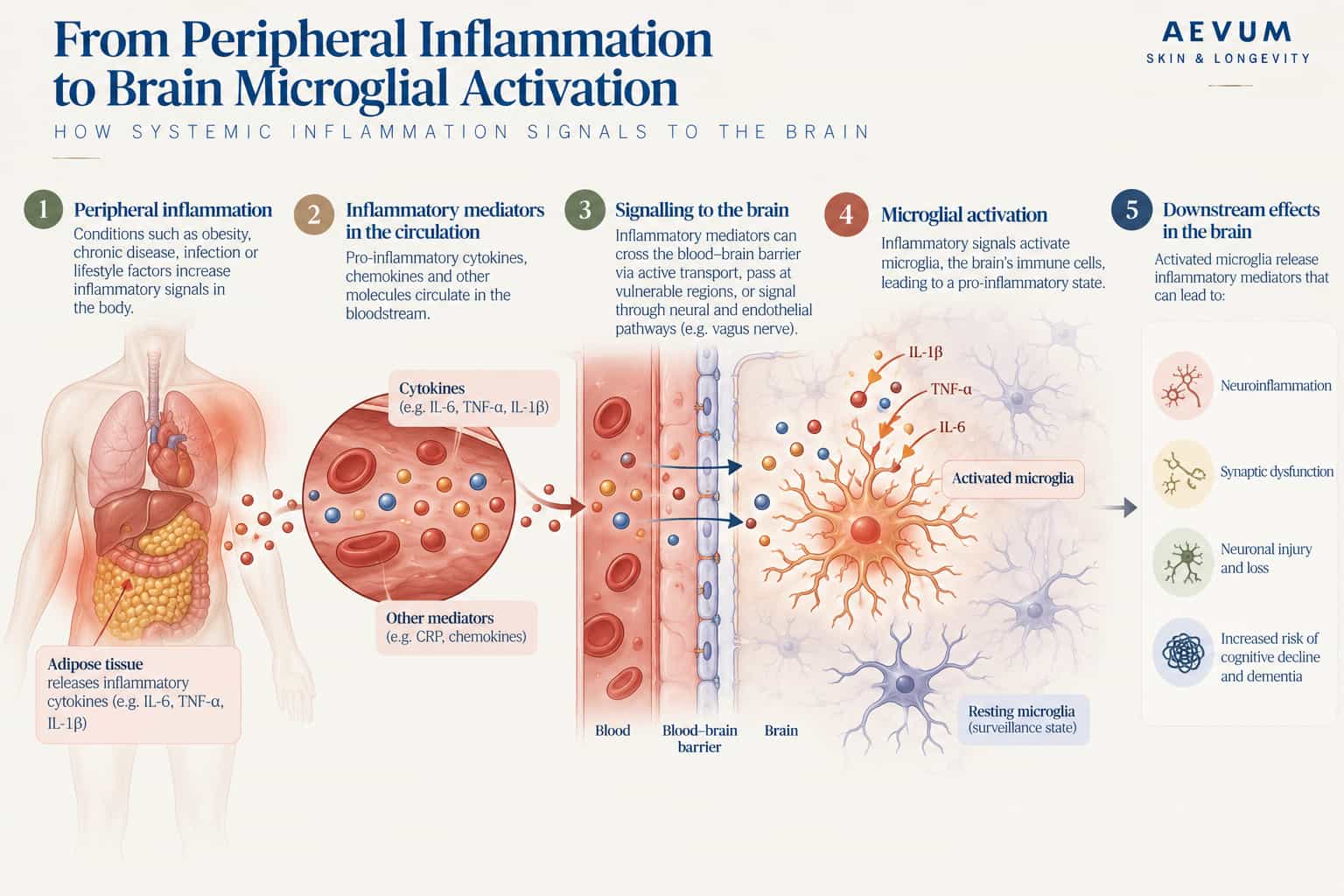
How inflammation reaches the brain
Systemic inflammation happens in the body. Common drivers of the chronic, low-grade kind include excess abdominal fat, physical inactivity, smoking, poor sleep, diabetes, gum disease and repeated infections. It shows up in blood tests as raised markers such as C-reactive protein (CRP).
Neuroinflammation happens in the brain itself, driven mainly by microglia, the brain's resident immune cells. Microglia clear debris, prune unused connections and respond to damage. In Alzheimer's disease, they react to amyloid plaques. In the short term that response may help clear amyloid. When it becomes chronic, the same response can damage neurons and synapses.
The two are linked. Inflammatory signals from the body can cross into the brain or activate the brain's blood-vessel lining, and ageing makes microglia more easily over-activated. That's one reason infections, surgery and serious illness can cause sudden confusion (delirium) in older people, and why repeated inflammatory hits over decades might add up.
Inflammation and dementia: the risk table
| Factor | Association | Modifiable? | Evidence strength |
|---|---|---|---|
| High midlife systemic inflammation | 7.8% greater 20-year cognitive decline (top vs. bottom quarter) | Partly, through its drivers | Large long-term cohort; observational |
| High midlife CRP | 11.6% greater 20-year cognitive decline (top vs. bottom quarter) | Partly | Same cohort; observational |
| TREM2 R47H variant | OR ~2.9-4.5 for Alzheimer's (European studies) | No — genetic | Strong genetic evidence that immune function matters |
| Shingles (herpes zoster) infection | Vaccination cut new dementia diagnoses by 20% | Yes — vaccination | Natural experiment; strong causal design |
| Anti-inflammatory painkillers (NSAIDs) | No clear prevention benefit | — | Randomised trial |
What the research shows
Midlife inflammation predicts later decline. The ARIC study measured five blood markers of inflammation (fibrinogen, von Willebrand factor, factor VIII, white blood cell count and CRP) in more than 12,000 adults aged 45-65 in 1987-89, then followed their thinking skills for 20 years. People in the highest quarter of the combined inflammation score had 7.8% greater cognitive decline than those in the lowest quarter. For CRP alone, the gap was 11.6%. A related analysis from the same study found that higher midlife inflammation predicted smaller brain volume and more white-matter damage later in life.
These are modest effects, and they're associations, not proof of cause. But they matter because they come from midlife — decades before symptoms — which fits the broader picture in Alzheimer's Disease: Risk Factors You Can Actually Change that most modifiable risk sits in middle age.
Genetics points to the brain's immune system. Some of the strongest evidence that inflammation is a cause, not just a consequence, comes from genetics. A rare variant of the TREM2 gene, which helps control how microglia respond to damage, raised Alzheimer's risk about 2.9-fold in an Icelandic study and about 4.5-fold in a separate European-led study published the same year — roughly comparable to carrying one copy of APOE4 (see APOE4 and Genetic Risk). Large genetic studies have since found many other Alzheimer's risk genes that act in immune cells. You can't change your genes, but this evidence shows that how the brain's immune system behaves is part of the disease process. (The TREM2 variant is rare and wasn't linked to risk in several non-European groups studied so far.)
The shingles vaccine: the most striking recent finding. In 2013, Wales introduced a shingles vaccine programme with a strict date-of-birth cutoff: people born on or after 2 September 1933 became eligible, and those born even a week earlier never did. This created a natural experiment — two groups almost identical except for eligibility. Researchers followed 282,541 adults for seven years. Getting the vaccine reduced new dementia diagnoses by 3.5 percentage points, a 20% relative reduction, and the effect was stronger in women than in men.
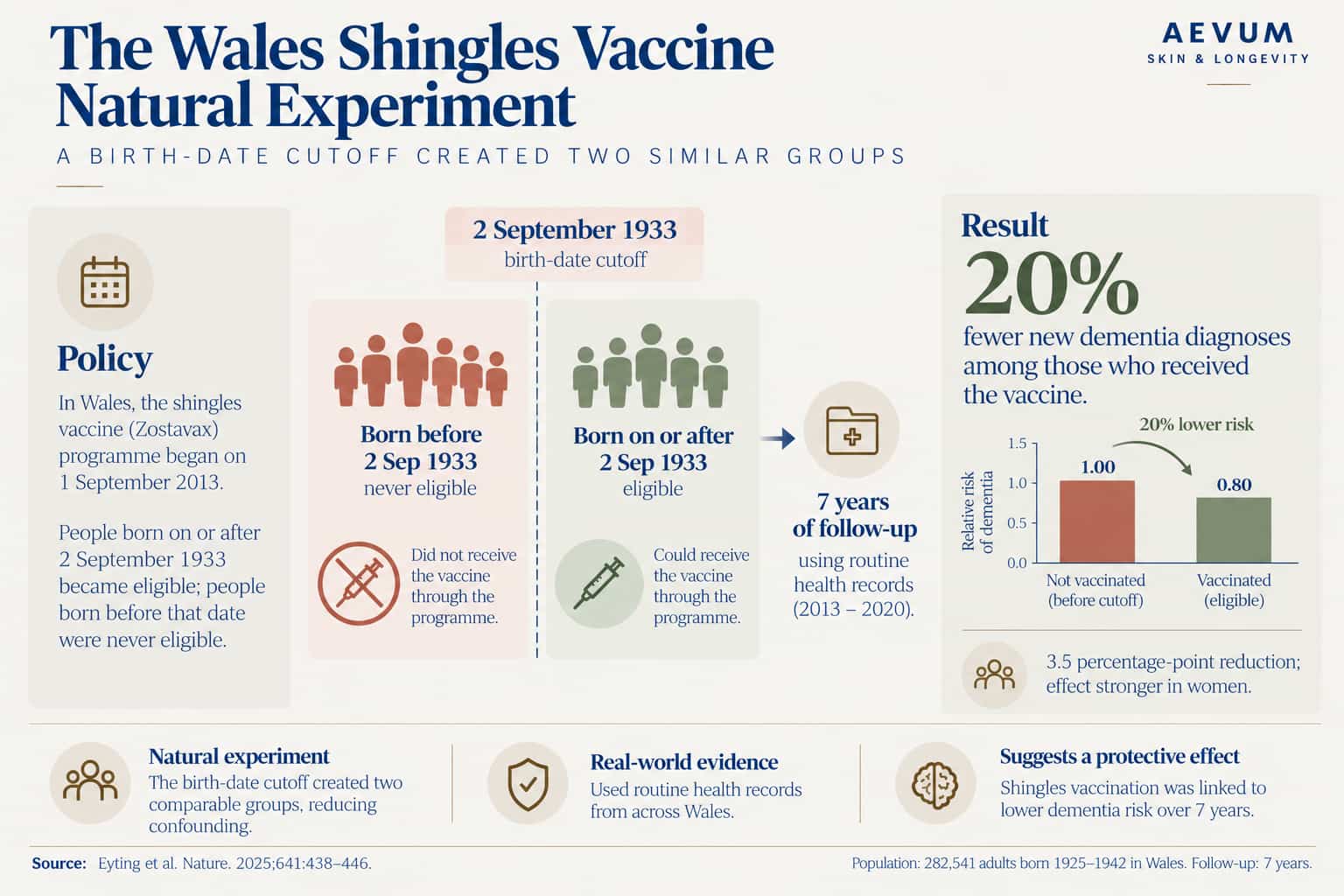
Because eligibility depended only on birth date, this design avoids the usual problem that healthier people are more likely to get vaccinated. It's the strongest causal evidence yet that a common infection plays a role in dementia, whether through the virus itself, the inflammation it triggers, or both. Two caveats: the Welsh programme used an older live-attenuated vaccine, and it isn't yet known whether the newer protein-based vaccine now more commonly used has the same effect.
Anti-inflammatory drugs didn't work as prevention. If inflammation drives dementia, blocking it with anti-inflammatory painkillers seemed a logical next step. The ADAPT trial tested this directly, randomising 2,528 older adults to naproxen, celecoxib or placebo for about two years. The drugs did not prevent Alzheimer's. During treatment, both drug groups actually had more new Alzheimer's cases than placebo — possibly in people who already had hidden early disease — and secondary analyses showed only a hint of later benefit from naproxen in people who were symptom-free when they started. The likely lessons: the timing, type and target of anti-inflammatory treatment matter, and broadly suppressing inflammation with painkillers isn't the answer.
What you can actually change
- 1Reduce the everyday drivers of chronic inflammation
The most reliable ways to lower chronic, low-grade inflammation are the same foundations this series keeps returning to: regular exercise, keeping abdominal fat down, not smoking, good sleep, and managing blood sugar and diabetes. These act on inflammation and also on the vascular pathways covered earlier in this series.
- 2Keep up with recommended vaccinations
The shingles findings add a brain-health reason to a vaccine that's already recommended for older adults to prevent shingles and its painful complications. The dementia benefit shouldn't be the main reason to get it, and the evidence is from the older vaccine, but it's a meaningful bonus.
- 3Look after your teeth and gums, and treat infections promptly
Chronic infections are a steady source of low-grade inflammation. Gum disease is one of the most common, and it's easy to prevent and treat. The direct evidence linking gum disease to dementia is still observational, but good dental care is low-cost and worthwhile regardless.
- 4Be sceptical of "anti-inflammatory" supplements for the brain
Many supplements and diets are sold as brain-protective because they're "anti-inflammatory". The ADAPT trial is a warning that lowering inflammation with a pill doesn't automatically protect the brain. Specific supplements, starting with omega-3s, are covered in the Evidence Checks section of this series.
For the vascular side of this picture, see Vascular Health and the Brain.
Recommendations
- →Treat chronic inflammation as a midlife risk factor. The strongest cohort data link inflammation in the 45-65 age range to decline decades later.
- →Target the causes, not the marker. Exercise, weight, smoking, sleep and blood sugar control are the evidence-based ways to lower inflammation.
- →Don't take anti-inflammatory painkillers to prevent dementia. A large randomised trial found no benefit and possible harm.
- →Stay up to date with the shingles vaccine where it's recommended and available. It prevents shingles, and the best natural-experiment evidence suggests it may also lower dementia risk.
- →Take infections, including gum disease, seriously. They add to the body's inflammatory load.
Practical notes
Inflammation connects many of the risk factors in this series: inactivity, excess weight, smoking, poor sleep, diabetes, stress, depression and infection all raise it. That's part of why the same lifestyle foundations keep appearing across different articles. The science is moving quickly, especially on infections and vaccines, but the practical message is already clear: lower chronic inflammation through its root causes, and don't rely on anti-inflammatory pills to protect the brain.
- Walker KA, et al. Systemic inflammation during midlife and cognitive change over 20 years: The ARIC Study. Neurology, 2019;92(11):e1256.
- Walker KA, et al. Midlife systemic inflammatory markers are associated with late-life brain volume: The ARIC study. Neurology, 2017.
- Jonsson T, et al. Variant of TREM2 Associated with the Risk of Alzheimer's Disease. New England Journal of Medicine, 2013.
- Guerreiro R, et al. TREM2 Variants in Alzheimer's Disease. New England Journal of Medicine, 2013.
- Eyting M, Xie M, et al. A natural experiment on the effect of herpes zoster vaccination on dementia. Nature, 2025;641:438-446.
- ADAPT Research Group. Extended results of the Alzheimer's disease anti-inflammatory prevention trial. Alzheimer's & Dementia, 2011;7(4):402-411.
Have you ever had your
inflammation markers checked?
Take the free Aevum Protocol assessment to see how your cognitive longevity and 6 other longevity domains are performing — and get a personalised 90-day plan.
Take the Free Assessment →