Stress & Mental Wellbeing
Anxiety and Physical Health:
When Worry Affects the Body
Everyone feels anxious sometimes; it's a normal response to threat that helps us prepare and stay safe. But when fear and worry become excessive, last for months and interfere with daily life, they become an anxiety disorder. These are the most common mental health conditions in the world: the World Health Organization estimates that 470 million people, 5.8% of the global population, had an anxiety disorder in 2023, with women more often affected than men. Anxiety lives in the body as much as the mind, causing palpitations, breathlessness, sweating, stomach upset and poor sleep, and its symptoms are often mistaken for heart or digestive problems. Over the long term, anxiety is also linked to physical disease. A meta-analysis of 46 studies with more than 2 million people found that anxiety was associated with 41% higher cardiovascular mortality, 41% higher risk of coronary heart disease, 71% higher risk of stroke and 35% higher risk of heart failure, although it's not certain these links are causal. Anxiety is very treatable. Cognitive behavioural therapy is the leading psychological treatment, SSRI antidepressants help many adults, and physical activity reduces anxiety. In a 2022 randomised trial of 276 adults with anxiety disorders, an eight-week mindfulness course was as effective as the antidepressant escitalopram. Yet only about 1 in 4 people who need treatment receive it. This article explains how anxiety affects the body, what the research shows about long-term health, and what works.
Key numbers
| Finding | Detail |
|---|---|
| Global burden (WHO, 2023) | 470 million people; 5.8% of the population; the most common mental disorders |
| Cardiovascular disease (46 studies, more than 2 million people) | Anxiety linked to 41% higher cardiovascular mortality, 41% higher coronary heart disease, 71% higher stroke and 35% higher heart failure risk |
| Mindfulness vs medication (276 adults, 8 weeks) | Mindfulness course as effective as escitalopram |
| Physical activity (more than 1,000 trials) | Moderate reduction in anxiety symptoms |
| Treatment gap (WHO) | Only about 1 in 4 people who need treatment receive it |
What anxiety disorders are
Anxiety becomes a disorder when fear or worry is excessive for the situation, usually lasts several months, and leads to avoidance or interferes with daily life. The main types listed by the WHO include:
- Generalised anxiety disorder: persistent, hard-to-control worry about many everyday things.
- Panic disorder: repeated, sudden panic attacks with intense physical symptoms, and fear of further attacks.
- Social anxiety disorder: intense fear of being judged or embarrassed in social situations.
- Agoraphobia: fear of situations where escape or help might be difficult, such as crowds or public transport.
- Specific phobias: intense fear of particular things or situations, such as heights, injections or flying.
Anxiety disorders often begin in childhood or adolescence and can continue into adulthood if untreated. Related conditions, such as post-traumatic stress disorder and obsessive-compulsive disorder, share some features.
How anxiety shows up in the body
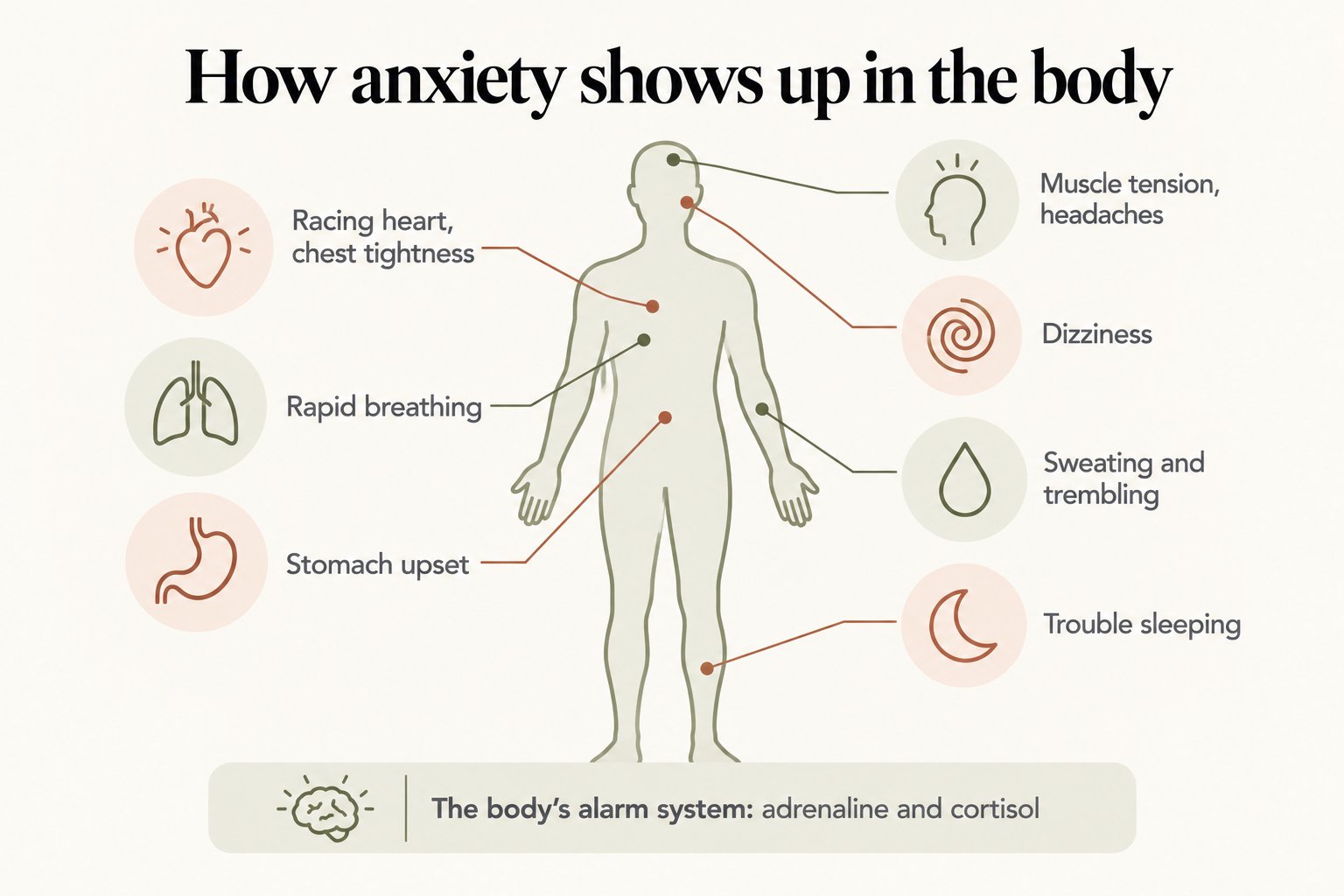
Anxiety switches on the body's alarm system, the "fight or flight" stress response, which floods the body with adrenaline and cortisol (see How the Stress Response Works). Common physical symptoms include:
- A racing or pounding heart (palpitations)
- Chest tightness or discomfort
- Shortness of breath or rapid breathing
- Sweating, trembling or shaking
- Nausea, stomach pain or diarrhoea
- Muscle tension, headaches and tiredness
- Dizziness or light-headedness
- Difficulty falling or staying asleep
Because these symptoms are so physical, many people with anxiety first see a doctor for their heart, stomach or breathing. A panic attack, in particular, can feel exactly like a heart attack. Chest pain should always be checked by a doctor, especially if you have risk factors for heart disease; once serious causes have been ruled out, recognising anxiety as the cause is an important step towards the right treatment.
What the research shows
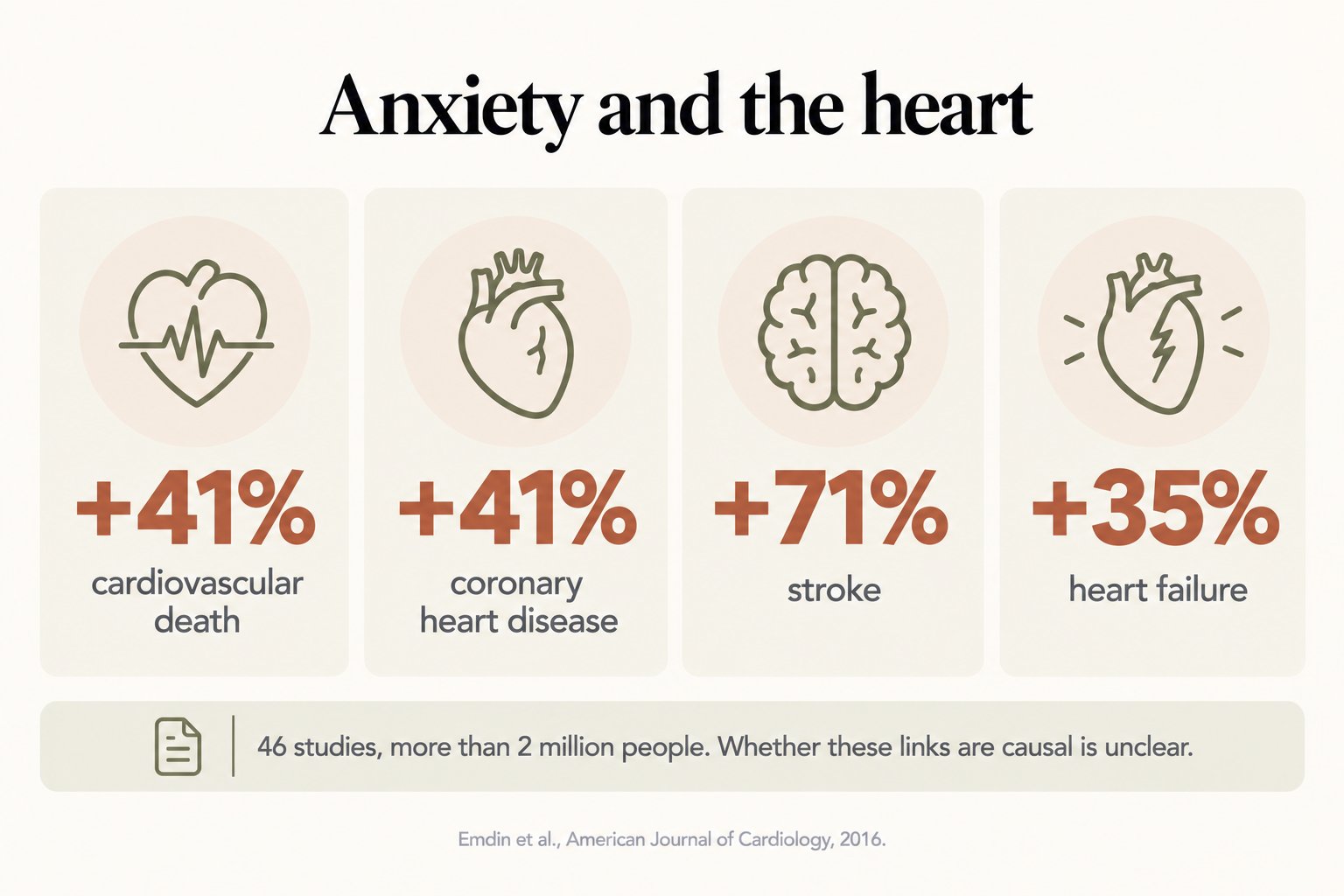
Anxiety and the heart. In a 2016 meta-analysis led by Connor Emdin at the University of Oxford, 46 cohort studies with 2,017,126 participants were combined, including 220,253 people with anxiety. Anxiety was associated with:
- 41% higher risk of cardiovascular death
- 41% higher risk of coronary heart disease
- 71% higher risk of stroke
- 35% higher risk of heart failure
There was no clear link with atrial fibrillation or overall major cardiovascular events. The authors were cautious: "Whether these associations are causal is unclear." Anxiety often occurs alongside depression, smoking, poor sleep and inactivity, which also raise heart risk.
How anxiety may harm the body. Researchers think several pathways may be involved:
- Repeated stress responses: frequent surges of adrenaline and cortisol raise heart rate and blood pressure, and over time may contribute to wear and tear on the heart and blood vessels (see Allostatic Load).
- Inflammation and blood vessel function: chronic anxiety has been linked to inflammation and poorer function of the inner lining of arteries.
- Lower heart rate variability: a sign of reduced "rest and digest" activity (see Heart Rate Variability).
- Behaviour: anxiety is linked to smoking, alcohol use, poor sleep, comfort eating and avoiding exercise or medical appointments.
- Sleep: worry keeps the mind active at night, and poor sleep in turn worsens anxiety.
Risk factors
| Risk factor | How it contributes | Who is most affected | What helps |
|---|---|---|---|
| Chronic stress | Keeps the alarm system switched on | People under work, financial or caring pressures | Stress management, problem-solving, support |
| Traumatic events | Can trigger lasting fear responses | People who have experienced violence, accidents, disasters or abuse | Trauma-focused therapy |
| Family history and temperament | Inherited and early-life vulnerability | Children of anxious parents, naturally cautious people | Early recognition and skills |
| Physical illness | Health worries and symptoms that mimic anxiety | People with heart, lung or thyroid conditions | Clear information, treating the illness |
| Caffeine, alcohol and some medicines | Stimulants and withdrawal can trigger anxiety | Heavy coffee or energy-drink users, people cutting down alcohol | Reducing stimulants, medication review |
| Poor sleep | Increases emotional reactivity | Shift workers, people with insomnia | Sleep routines and treating sleep problems |
| Being female | Higher rates in girls and women | Women | Equal access to care |
What you can actually change
- 1. Get the diagnosis right. See a doctor to rule out physical causes such as heart rhythm problems or an overactive thyroid, and to confirm whether anxiety is the cause of your symptoms.
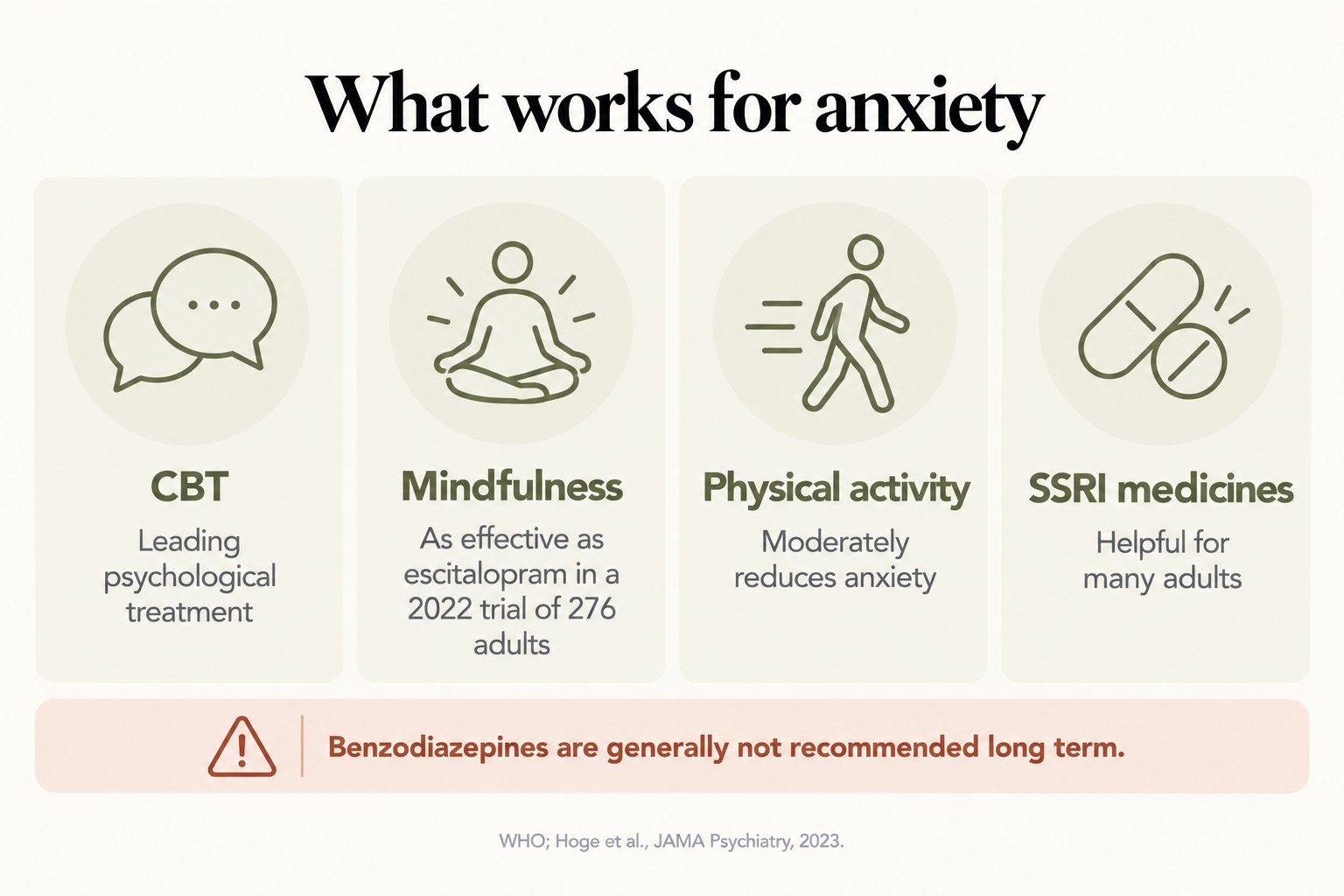
- 2. Try cognitive behavioural therapy (CBT). The WHO recommends psychological treatment, especially CBT, which teaches practical skills to manage worry and gradually face feared situations (exposure therapy). It can be delivered in person, online or through self-help materials.
- 3. Learn mindfulness and relaxation skills. In a randomised trial published in JAMA Psychiatry in 2022, Elizabeth Hoge and colleagues assigned 276 adults with generalised anxiety, social anxiety or panic disorder to either an eight-week Mindfulness-Based Stress Reduction course (a weekly class plus 45 minutes of daily practice) or the antidepressant escitalopram. After eight weeks, symptoms had improved by a similar amount in both groups, showing that mindfulness was as effective as a first-line medicine (see How Meditation Affects the Brain and Body).
- 4. Move regularly. A large 2023 review of more than 1,000 trials found that physical activity moderately reduced anxiety symptoms, as well as depression and psychological distress (see Stress-Reduction Techniques That Work).
- 5. Consider medicine when needed. SSRI antidepressants can help adults with anxiety disorders, especially when symptoms are moderate to severe. The WHO advises that benzodiazepines (sedative tranquillisers) are generally not recommended because of the risk of dependence and limited long-term benefit.
- 6. Cut down on stimulants. Large amounts of coffee, tea or energy drinks can mimic and worsen anxiety symptoms.
- 7. Protect sleep and limit alcohol. Alcohol may calm nerves briefly but worsens anxiety as it wears off, and disrupts sleep.
Getting help in Sri Lanka
If anxiety is affecting your daily life, your doctor is a good place to start. You can also contact the National Institute of Mental Health helpline on 1926 or the CCCline on 1333 for guidance and counselling. If you have chest pain, severe breathlessness or fainting, seek urgent medical care first; call the Suwa Seriya ambulance on 1990 in an emergency.
Why this matters for longevity
Anxiety is often dismissed as "just nerves", but persistent anxiety affects sleep, habits, relationships and quality of life, and it's linked to higher risk of heart disease and stroke. It's also highly treatable, with options that don't depend on long-term medication, such as CBT, mindfulness and exercise. Treating anxiety early improves how you feel now and may protect your long-term health.
Practical notes
If worry, fear or panic has been affecting your life for weeks or months, talk to a doctor; two simple screening questions are whether, over the past two weeks, you've often felt nervous, anxious or on edge, and whether you've been unable to stop or control worrying. When anxiety rises, slow breathing, with a longer breath out than in, can calm the body's alarm system within minutes. Avoidance makes anxiety grow over time, so with support, gradually face the situations you've been avoiding. Our Longevity Doctors include mental wellbeing in every assessment and can help you access the right treatment, starting with the free longevity assessment.
- World Health Organization. Anxiety disorders: fact sheet. Geneva: WHO.
- Emdin CA, et al. Meta-analysis of anxiety as a risk factor for cardiovascular disease. American Journal of Cardiology, 2016;118(4):511-519.
- Hoge EA, et al. Mindfulness-based stress reduction vs escitalopram for the treatment of adults with anxiety disorders: a randomized clinical trial. JAMA Psychiatry, 2023;80(1):13-21.
- Singh B, et al. Effectiveness of physical activity interventions for improving depression, anxiety and distress: an overview of systematic reviews. British Journal of Sports Medicine, 2023;57(18):1203-1209.
- Sri Lanka Medical Association. Mental health services available in Sri Lanka.
Free longevity assessment
Is worry affecting
your health?
Take the free Aevum Protocol assessment to see how your stress & mental wellbeing and 6 other longevity domains are performing — and get a personalised 90-day plan.
Take the free assessment