Sleep & Recovery
Sleep and Exercise: Muscle
Recovery, Performance, and Injury Risk
Our Sleep Architecture article covered growth hormone's peak release during deep sleep, and our Sleep and Metabolic Health article covered cortisol's role in sleep-deprived physiology. This article applies both directly to exercise and muscle recovery — with a genuinely striking finding that a single night of poor sleep measurably reduces muscle protein synthesis, alongside solid evidence connecting sleep to athletic performance, testosterone, and injury risk.
Quick Summary
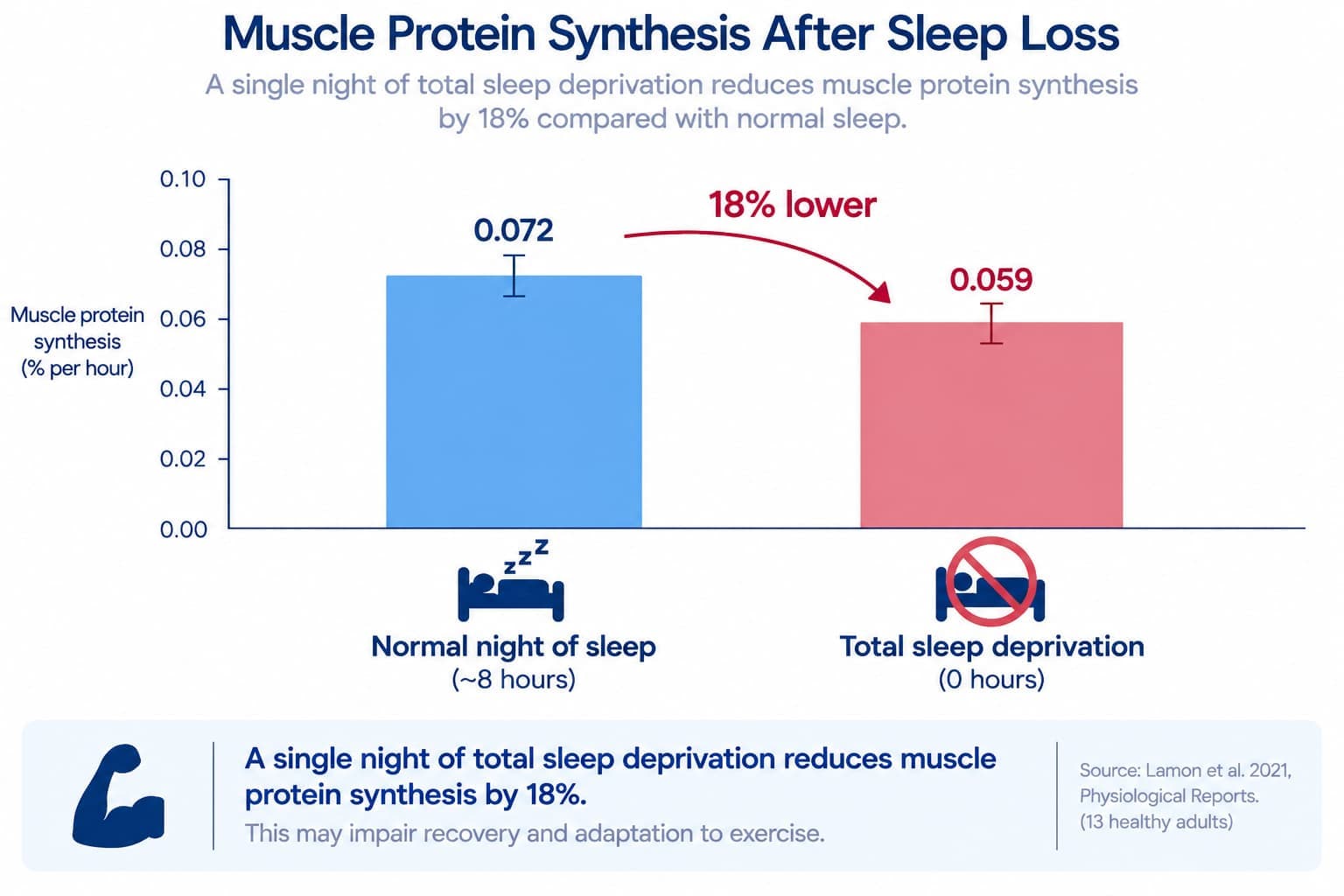
- →A single night of total sleep deprivation reduced muscle protein synthesis by 18% in a controlled study — a meaningful, same-day reduction in the body's ability to build and repair muscle tissue, not a slow, cumulative effect requiring weeks to appear
- →One week of sleep restriction to 5 hours a night reduced testosterone levels by 10-15% in young, healthy men — a substantial hormonal effect with direct relevance to muscle mass, strength, and recovery
- →A multi-week Stanford study found that extending sleep improved collegiate basketball players' sprint times, shooting accuracy, and reaction time — one of the clearer pieces of evidence that sleep is a genuine performance lever, not just a recovery afterthought
- →Chronic short sleep is associated with significantly increased sports injury risk in adolescent athletes, through mechanisms including impaired reaction time, weakened neuromuscular control, and increased inflammation
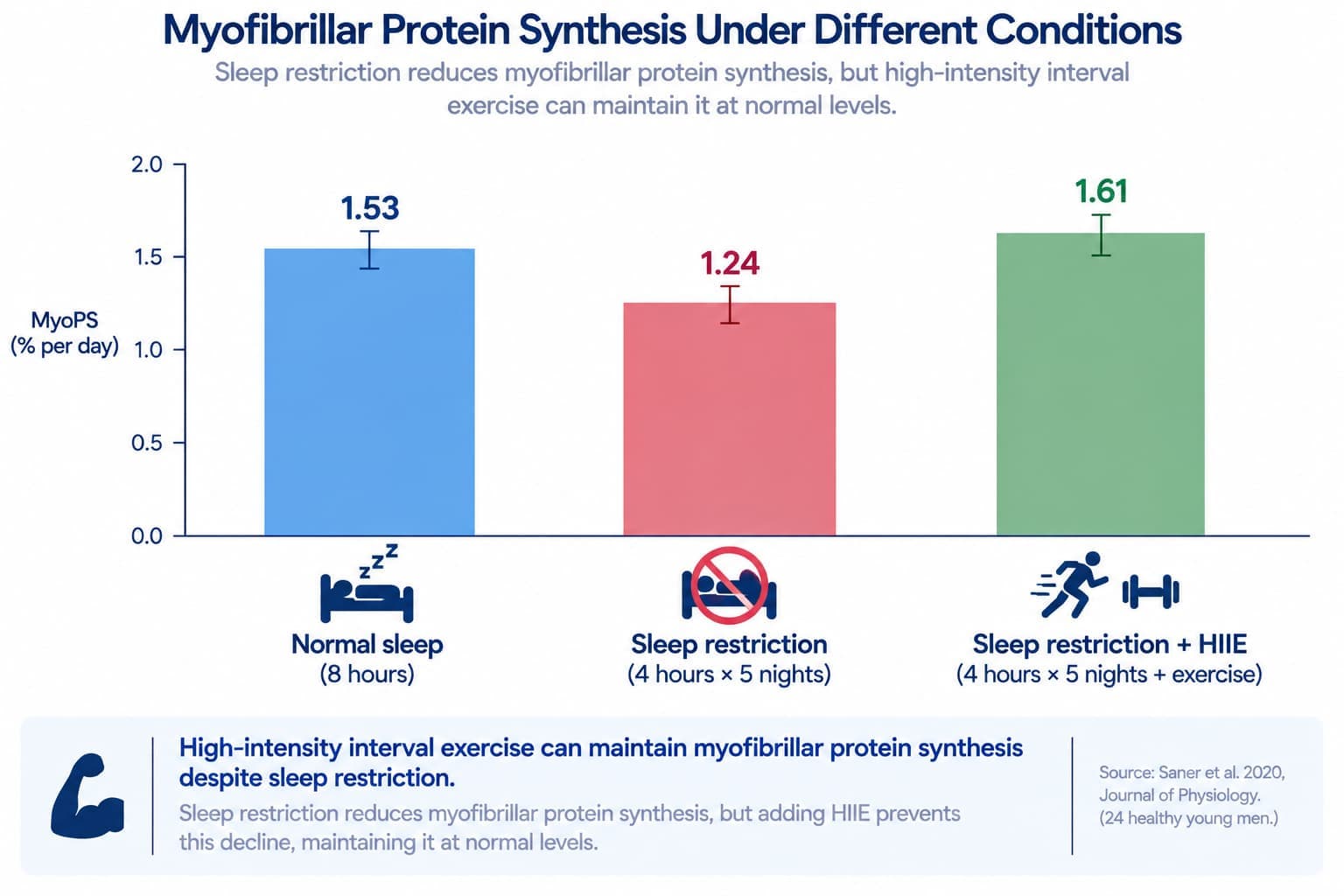
- →Exercise itself may partly offset sleep restriction's effect on muscle protein synthesis — a controlled study found that high-intensity exercise during a period of sleep restriction maintained protein synthesis at normal levels, where sleep restriction alone did not
Key numbers at a glance
| Measure | Figure |
|---|---|
| Muscle protein synthesis reduction, 1 night total sleep deprivation | ~18% |
| Testosterone reduction, 1 week at 5h sleep/night | ~10-15% |
| Sleep extension target in the Stanford basketball study | ~10 hours in bed/night |
| Nights of sleep restriction (4h) that reduced myofibrillar protein synthesis | 5 nights |
How it works: growth hormone, testosterone, and protein synthesis
As covered in our Sleep Architecture article, growth hormone secretion peaks during deep sleep (N3), directly supporting tissue repair — including the muscle repair and rebuilding process that follows resistance training. Less deep sleep means a smaller window for this hormonally-driven repair process to do its work.
Testosterone adds a second, separate hormonal pathway relevant specifically to muscle. The majority of daily testosterone release in men occurs during sleep, and this pathway is genuinely sensitive to sleep restriction — a finding covered in more detail below. Testosterone plays a well-established role in muscle protein synthesis, strength, and recovery capacity, meaning insufficient sleep affects muscle building through this hormonal route independent of growth hormone.
Layered on top of both of these, the cortisol elevation from sleep loss, covered in our Sleep and Metabolic Health article, works in the opposite direction — cortisol promotes muscle protein breakdown, meaning sleep-deprived muscle tissue faces reduced building signals and increased breakdown signals simultaneously.
What the research shows
Muscle protein synthesis drops fast — within a single night. A controlled study measured muscle protein synthesis directly (via muscle biopsy) in healthy adults after one night of total sleep deprivation, compared to a normal night of sleep. Muscle protein synthesis was 18% lower following the sleep-deprived night — a substantial, same-day reduction, not a slow-building effect requiring chronic deprivation to appear. A separate study extended this to a more realistic restriction scenario: 24 healthy young men underwent either normal sleep (8 hours), sleep restriction (4 hours for 5 nights), or sleep restriction combined with high-intensity interval exercise. Sleep restriction alone reduced myofibrillar protein synthesis, but the group performing high-intensity exercise during the restricted-sleep period maintained protein synthesis at normal levels — a genuinely useful, actionable finding suggesting that training itself may partly counteract sleep loss's effect on muscle building, though it's worth being clear this is a partial mitigation, not a substitute for adequate sleep.
Testosterone drops substantially with restricted sleep. A landmark study published in JAMA took 10 healthy young men through one week of sleep restricted to 5 hours a night in a controlled laboratory setting. Daytime testosterone levels dropped by 10-15% compared to a full night's sleep, an effect that occurred independently of cortisol changes and was accompanied by reduced vigour, energy, and general well-being. Given testosterone's direct role in muscle mass, strength, and bone density, this is a genuinely significant finding for anyone training seriously, not just a general wellness statistic.
Sleep extension measurably improves athletic performance. In a multi-week study at Stanford, collegiate basketball players extended their nightly sleep toward a goal of 10 hours in bed, following a baseline period of their normal sleep habits. Following the extension period, players showed faster sprint times, higher free-throw and three-point shooting accuracy, faster reaction time, reduced daytime sleepiness, and improved mood — a rare case of a controlled, within-subject study showing genuine, multi-domain performance improvement from sleep alone, without any change to training itself.
Insufficient sleep raises injury risk, particularly in younger athletes. A study of adolescent athletes found that chronic short sleep was significantly associated with increased sports and musculoskeletal injury risk, a finding since supported by broader systematic review evidence. The proposed mechanisms are multiple and consistent with content covered elsewhere in this series: impaired cognitive function and reaction time (covered in our Sleep and Brain Health article), weakened neuromuscular control, and increased inflammation and impaired tissue regeneration — all plausible contributors to a body less able to avoid or safely absorb the physical stresses of sport.
Recommendations by population group
- 1Anyone engaged in serious strength training or muscle-building goals
Given the direct effects on growth hormone, testosterone, and muscle protein synthesis covered above, sleep deserves to be treated as seriously as training volume and protein intake — a well-designed programme is working against a real physiological headwind if sleep is consistently insufficient.
- 2Competitive or recreational athletes focused on performance
The Stanford basketball findings suggest sleep extension is a genuine, evidence-backed performance lever — worth treating with the same intentionality as training load, particularly ahead of competition.
- 3Adolescent athletes and their parents or coaches
Given the injury-risk association, chronic short sleep in young athletes deserves to be treated as a genuine risk factor worth addressing directly, alongside more commonly discussed injury-prevention measures like proper technique and conditioning.
- 4Anyone in an intense training block with unavoidable poor sleep
The finding that exercise itself partly offsets sleep restriction's effect on muscle protein synthesis is a useful, if imperfect, piece of context — it doesn't eliminate the need for sleep, but suggests continued training is better than stopping entirely during a rough sleep patch.
- 5General / longevity-focused
Muscle mass and strength are increasingly recognised as genuine longevity markers in their own right — the hormonal pathways covered in this article make sleep a direct, mechanistic contributor to that goal, not a separate consideration from training and nutrition.
Practical notes
- →Muscle protein synthesis is measurably affected by even a single bad night — this isn't a slow, months-long process, making consistent sleep genuinely relevant night to night for anyone training seriously
- →Testosterone's sensitivity to sleep restriction is a genuinely underappreciated factor in muscle-building goals — a 10-15% drop from just one week of short sleep is a substantial hormonal cost
- →Sleep extension is a real, evidence-backed performance tool, not just recovery — the Stanford findings show measurable gains in speed, accuracy, and reaction time from more sleep alone
- →If a stretch of poor sleep is unavoidable, continuing to train (rather than stopping) may help preserve some muscle protein synthesis — though this is a partial buffer, not a reason to deprioritise sleep going forward
- →Injury prevention conversations, particularly for young athletes, should include sleep — it's a genuine, modifiable risk factor alongside training load and technique
Sleep's role in exercise and muscle recovery runs through concrete, measurable hormonal pathways — growth hormone, testosterone, and direct effects on protein synthesis rates — making it a genuine training variable, not a passive backdrop to workouts. For the underlying mechanisms behind deep sleep's restorative role and the cortisol connection, see our Sleep Architecture and Sleep and Metabolic Health articles. If you'd like a clearer picture of your own sleep and how it may be affecting your training and recovery, our Longevity Doctors offer a free longevity assessment as a starting point.
How does your sleep
score on your longevity assessment?
Take the free Aevum Protocol assessment to see how your sleep & recovery and 6 other longevity domains are performing — and get a personalised 90-day plan.
Take the Free Assessment →