Skin & Longevity
Melasma: What Actually Causes It
and Why Does It Keep Coming Back?
Our Sunscreen Labels article covered how to check for both UVB (SPF) and UVA (PA/UVA-PF) protection — but melasma exposes a genuine gap in even that more complete picture: neither rating measures protection against visible light, which turns out to be a major, specific trigger for this particular condition. This article covers what melasma actually is, why it's so notoriously prone to relapse, and what the evidence says about managing a condition that's fundamentally different from ordinary sun spots.
Quick Summary
- →Melasma is a distinct form of hyperpigmentation — typically symmetric brown or grey-brown patches on the cheeks, forehead, upper lip, and jawline — driven by melanocytes that are fundamentally more reactive than the surrounding normal skin, not just more sun-exposed
- →Visible light (400-700nm), not just UV, is a major, specific trigger — it makes up 45% of the sunlight spectrum and has been shown to directly activate pigment production through a specific light-sensing receptor (Opsin3) in melanocyte-rich skin
- →Because neither SPF nor PA ratings measure visible light protection, standard sunscreen — even a well-chosen, high-PA one — often isn't enough on its own for melasma-prone skin
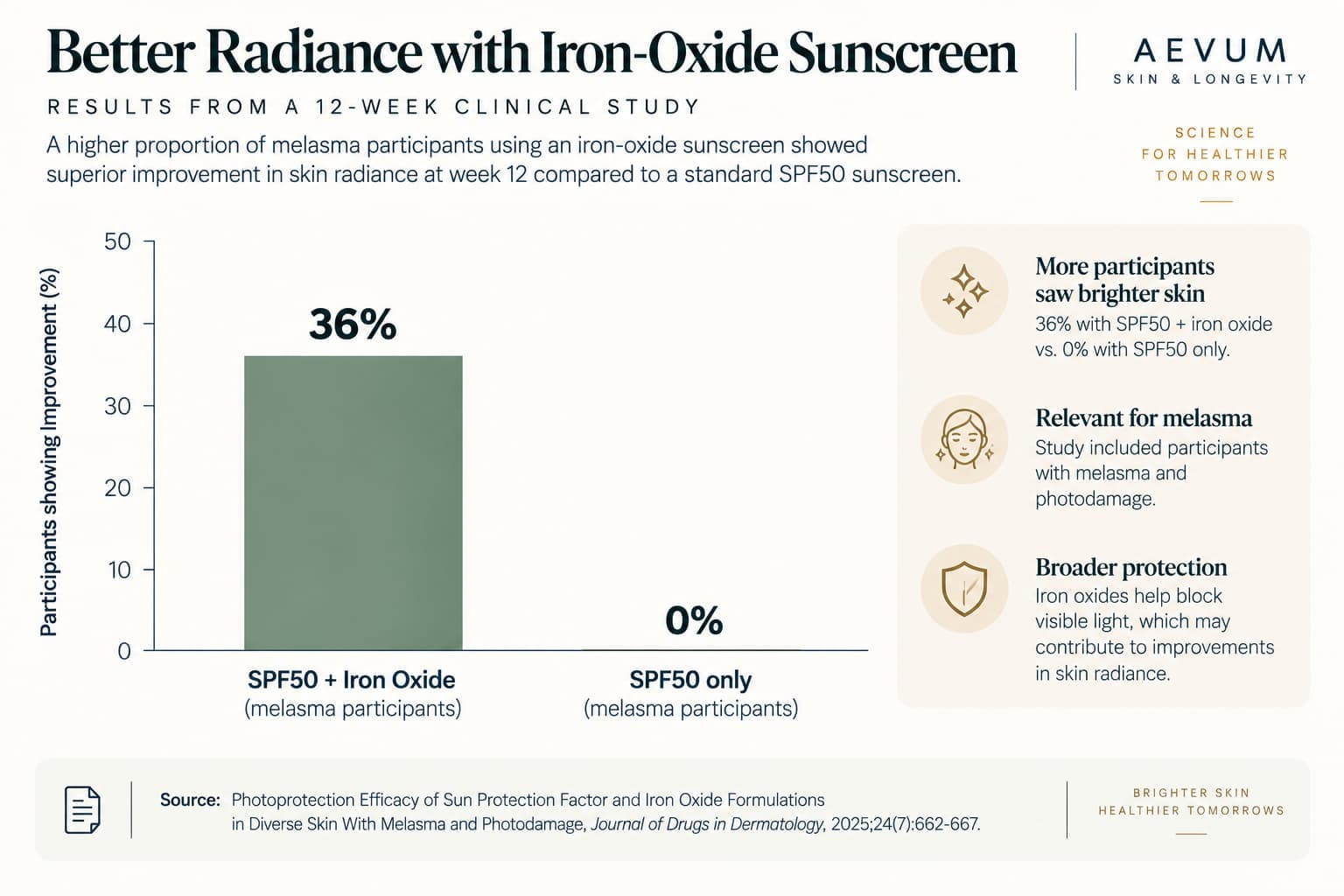
- →Multiple controlled trials have found tinted, iron-oxide-containing sunscreens meaningfully outperform UV-only sunscreens for melasma specifically — one study found 36% of patients using an iron-oxide sunscreen showed measurable improvement, compared to 0% using a standard UV-only SPF 50
- →Melasma "keeps coming back" because the underlying melanocyte hyperreactivity doesn't fully resolve even when skin looks clear — any of several triggers (sun, visible light, heat, hormonal shifts) can reactivate pigmentation in the same predisposed skin
Key numbers at a glance
| Measure | Figure |
|---|---|
| Visible light's share of the total sunlight spectrum | ~45% |
| Melasma cases occurring in women | ~90% |
| Patients showing improved skin radiance with iron-oxide sunscreen vs. UV-only (12-week study) | 36% vs. 0% |
| Fitzpatrick skin types most affected | III-V (medium to deeper tones) |
How it works: a genuinely reactive cell population, not just sun damage
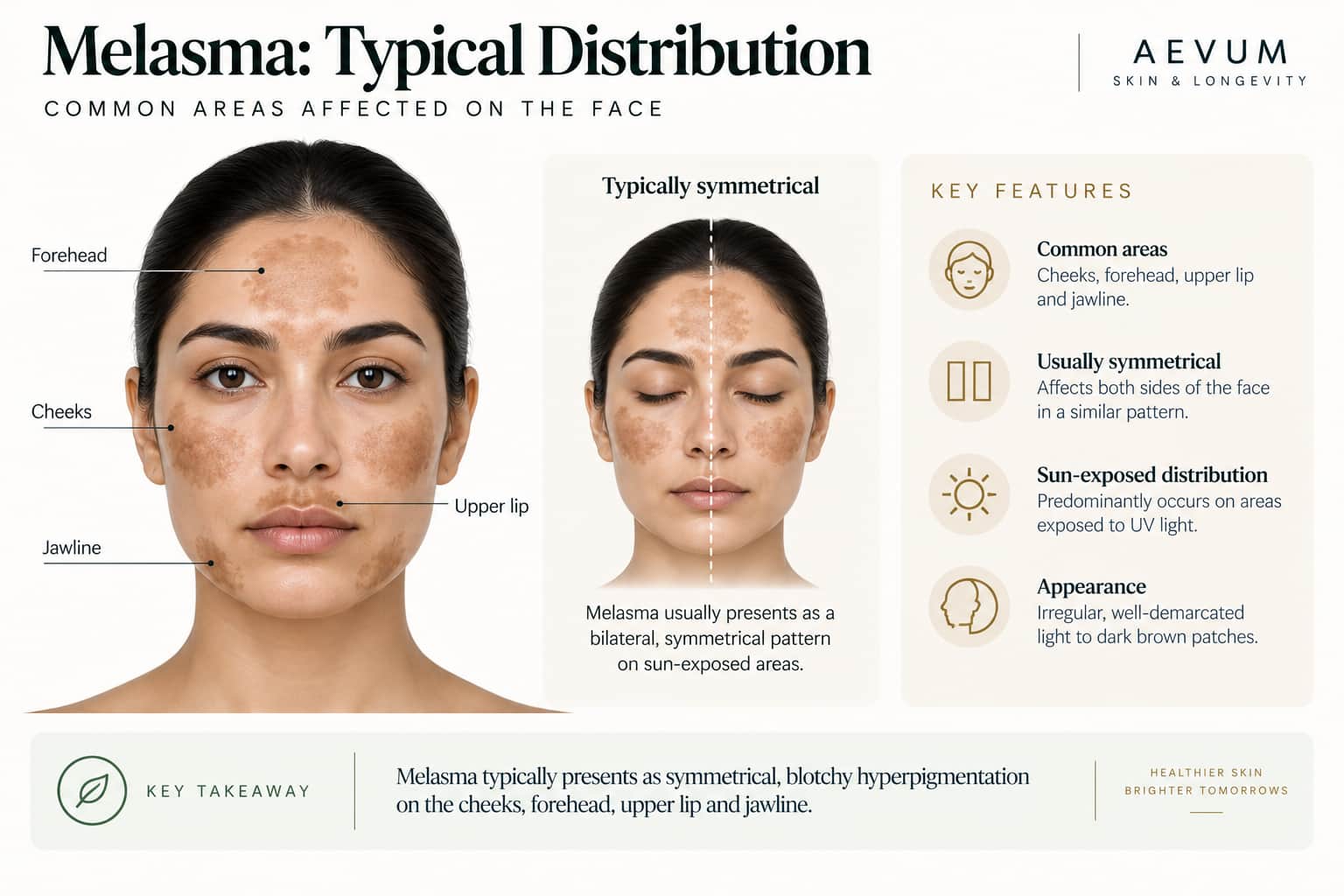
Melasma produces patches of darker pigmentation, typically symmetric, most commonly on the cheeks, forehead, upper lip, nose, and jawline. It's genuinely distinct from the sunspots (solar lentigines) covered in our Photoaging article — those result from cumulative UV exposure creating localised, permanent pigment deposits, while melasma reflects an underlying, ongoing hyperreactivity in the melanocytes themselves, present in the affected skin whether or not pigmentation is currently visible.
Melasma affects women in roughly 90% of cases, is more common in people with medium-to-deeper skin tones (Fitzpatrick types III-V), and shows a strong genetic component, with family history present in a substantial share of cases. Several distinct factors can trigger or worsen it, and understanding each is genuinely useful for management: UV radiation (particularly UVA, given its deeper penetration, covered in our UVA vs UVB article), visible light, heat (which appears to worsen inflammation and pigment activity independent of light exposure), and hormonal shifts — pregnancy (where it's classically called "chloasma," the mask of pregnancy), oral contraceptives, and hormone replacement therapy are all well-documented triggers, reflecting genuine hormone sensitivity in affected melanocytes.
What the research shows
Visible light is a genuine, specific, and somewhat underappreciated trigger. Visible light — the 400-700 nanometre range, distinct from both UVA and UVB — makes up roughly 45% of the total sunlight spectrum and has been shown to cause both immediate and persistent skin darkening, an effect that's considerably more pronounced in skin of colour. Research has identified a specific mechanism: Opsin3, a light-sensing receptor in skin cells, detects visible light directly and activates melanogenesis (pigment production) — a genuinely distinct pathway from the UV-driven DNA damage and ROS mechanisms covered in our UVA vs UVB article. This matters enormously in practice, because standard sunscreen testing (SPF and PA ratings) doesn't measure visible light protection at all — a sunscreen can be excellent by both of those measures and still offer little defence against this specific trigger.
Tinted, iron-oxide sunscreens close this gap, with real clinical trial support. Because iron oxides (along with pigmentary titanium dioxide) physically block visible light in a way standard chemical and mineral UV filters don't, researchers have directly tested whether adding them changes outcomes for melasma patients. A double-blind randomised trial giving all participants the same hydroquinone treatment, but randomising them to either a UV-only or a UV-plus-visible-light (iron oxide) sunscreen, found the iron oxide group showed significantly better depigmenting results on objective colorimetry and histological analysis. A separate 12-week study found 36% of participants using an iron-oxide-containing SPF 50 showed measurable improvement in skin radiance, compared to 0% in the standard SPF 50 group. A more recent prospective study specifically testing relapse prevention (not just treatment) found the tinted, visible-light-protective sunscreen group fared better through a full summer season than the untinted group. This is a genuinely well-supported, practical finding: for melasma specifically, the tint isn't cosmetic — it's doing real, evidence-backed protective work.
Why it keeps coming back. This is the central, most frustrating feature of melasma for many patients, and it has a genuine biological explanation. Even when melasma has been successfully treated and skin appears visibly clear, the underlying melanocyte population in previously affected areas remains more reactive than melanocytes in unaffected skin — a difference that's been demonstrated at the cellular and genetic expression level, not just inferred from clinical relapse patterns. This means melasma isn't "cured" by any current treatment so much as brought into remission — any of the triggers above (renewed sun or visible light exposure, a hot climate or sauna use, hormonal changes, sometimes even certain skincare procedures done too aggressively) can reactivate pigmentation in the same predisposed skin, which is exactly why lifelong, consistent photoprotection is considered essential for melasma management, not just a phase during active treatment.
A treatment note worth flagging early. Standard topical treatments include hydroquinone (long considered the gold standard, though regulated or restricted in some countries), azelaic acid, and topical or oral tranexamic acid, with growing evidence for the latter. It's also worth knowing that some aggressive procedures — certain lasers in particular, covered in more depth in our Laser Skin Rejuvenation article — can actually worsen melasma by triggering heat- and inflammation-driven pigment activation, making procedure selection for melasma-prone skin a genuinely important, specialist consideration rather than a default "more intense equals better results" approach.
Recommendations by skin concern
- 1Anyone with melasma, or a history of stubborn, recurring facial pigmentation
Given the visible light research above, a tinted, iron-oxide-containing sunscreen is worth specifically seeking out and using daily — not just a high-SPF, high-PA product, since neither rating covers this particular trigger.
- 2Pregnant women, or anyone using hormonal contraception or hormone therapy
Given melasma's well-documented hormonal sensitivity, awareness that these are genuine, biologically-based triggers — not something to be alarmed by as unusual — is useful context, alongside consistent photoprotection during these periods specifically.
- 3Anyone with medium-to-deeper skin tones (Fitzpatrick III-V)
Given both the higher melasma prevalence and the more pronounced visible-light sensitivity documented in this population specifically, the tinted sunscreen recommendation above is particularly relevant.
- 4Anyone considering laser or other intensive procedures with existing melasma
This is a case where seeking a practitioner experienced specifically with melasma is worth prioritising, given the genuine risk that some procedures can worsen rather than improve the condition — covered in more depth in our Laser Skin Rejuvenation article.
- 5General / longevity-focused
Melasma is a good example of a condition where "sun protection" needs to be understood more broadly than SPF alone — visible light and heat are genuine, separate triggers that a standard sunscreen routine may not fully address.
Practical notes
- →Melasma reflects an underlying melanocyte reactivity, not just accumulated sun exposure — this is why it behaves so differently from ordinary sunspots, including its tendency to relapse
- →Visible light is a real, evidence-backed trigger that standard SPF and PA ratings don't measure — tinted, iron-oxide sunscreens are a genuine, clinically-supported addition for melasma-prone skin, not a cosmetic preference
- →Heat itself can worsen melasma, independent of light exposure — worth knowing for anyone with melasma who spends time in saunas, hot yoga, or hot climates
- →Relapse is a hallmark feature of melasma, not a sign that treatment failed — the underlying skin reactivity persists even when pigmentation is successfully cleared, making ongoing prevention essential rather than optional
- →Not every skin procedure is safe for melasma-prone skin — some can worsen it; specialist guidance matters more here than for many other cosmetic skin concerns
Melasma's tendency to recur isn't a treatment failure — it reflects a genuine, persistent biological difference in the affected skin that current treatments manage rather than cure, making consistent, comprehensive photoprotection (including against visible light) the foundation of long-term management. For the underlying UV mechanisms this builds on, see our UVA vs UVB and Sunscreen Labels articles. If you'd like a clearer picture of your own pigmentation concerns and a personalised management plan, our Longevity Doctors offer a free consultation as a starting point.
How does your skin
score on your longevity assessment?
Take the free Aevum Protocol assessment to see how your skin & longevity and 6 other longevity domains are performing — and get a personalised 90-day plan.
Take the Free Assessment →