Cardiovascular & Metabolic Health
Continuous Glucose Monitors Without Diabetes:
Useful Insight or Unnecessary Worry?
Continuous glucose monitors (CGMs) are small sensors worn on the arm that measure glucose in the fluid under the skin every few minutes. They've transformed diabetes care, and they're now sold to people without diabetes as a way to "optimise" metabolic health. In 2024, the US Food and Drug Administration cleared the first CGM available without a prescription. But what's normal, and does wearing one improve health? In healthy adults without diabetes, glucose stays between 70 and 140 mg/dL (3.9-7.8 mmol/L) about 96% of the time, and short rises after meals are completely normal. Studies show that people respond very differently to the same foods, which is interesting and can motivate change. But there's no evidence yet that wearing a CGM improves long-term health in people without diabetes, the devices are less precise at normal glucose levels, and chasing a "flat line" can cause unnecessary worry. This article sets out what a CGM can and can't tell you.
Key numbers
| Finding | Detail |
|---|---|
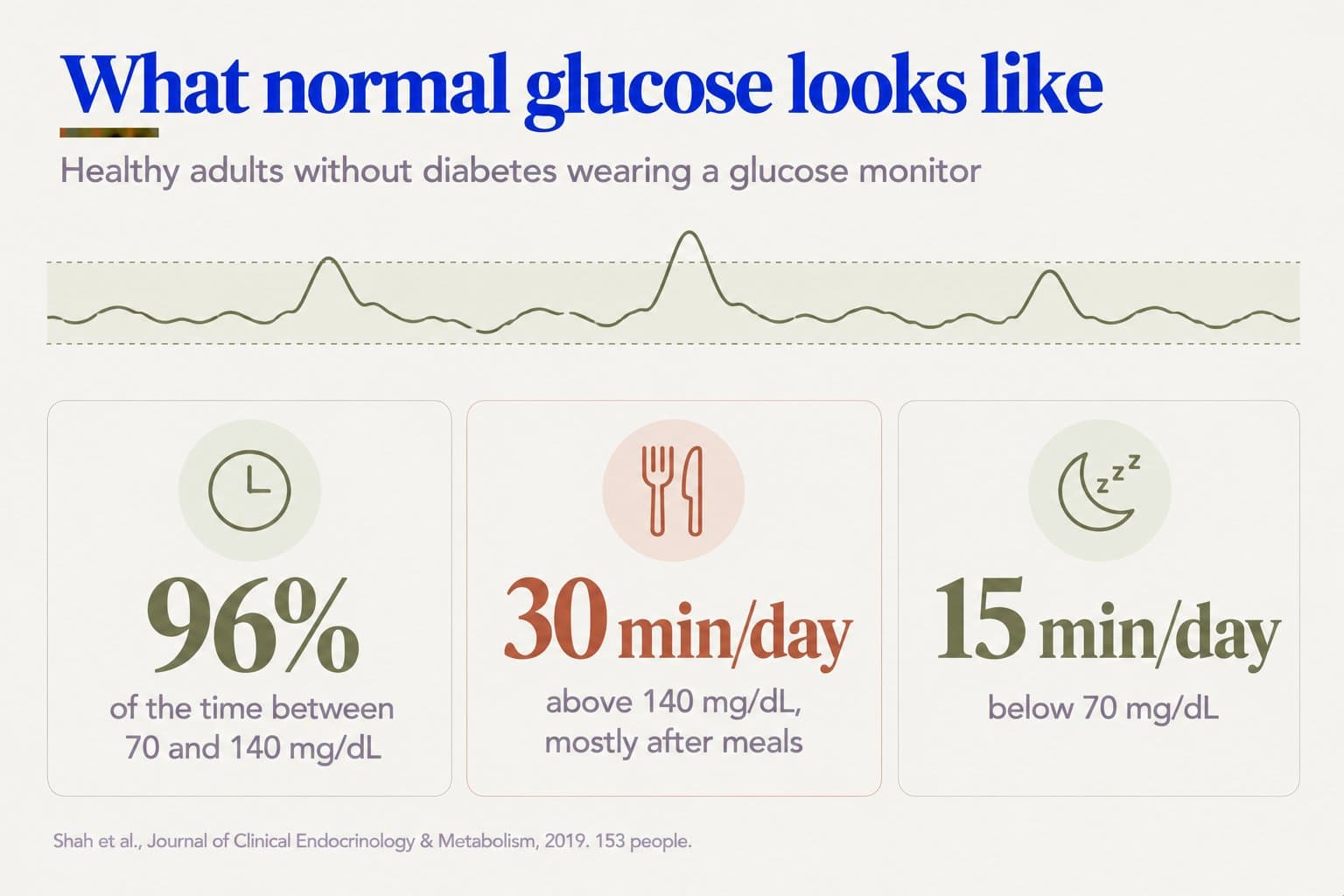
| Glucose in healthy adults without diabetes (153 people, CGM for up to 10 days) | Average about 99 mg/dL (5.5 mmol/L); 70-140 mg/dL for a median 96% of the time |
| Time above 140 mg/dL in the same group | Median 2.1%, about 30 minutes a day |
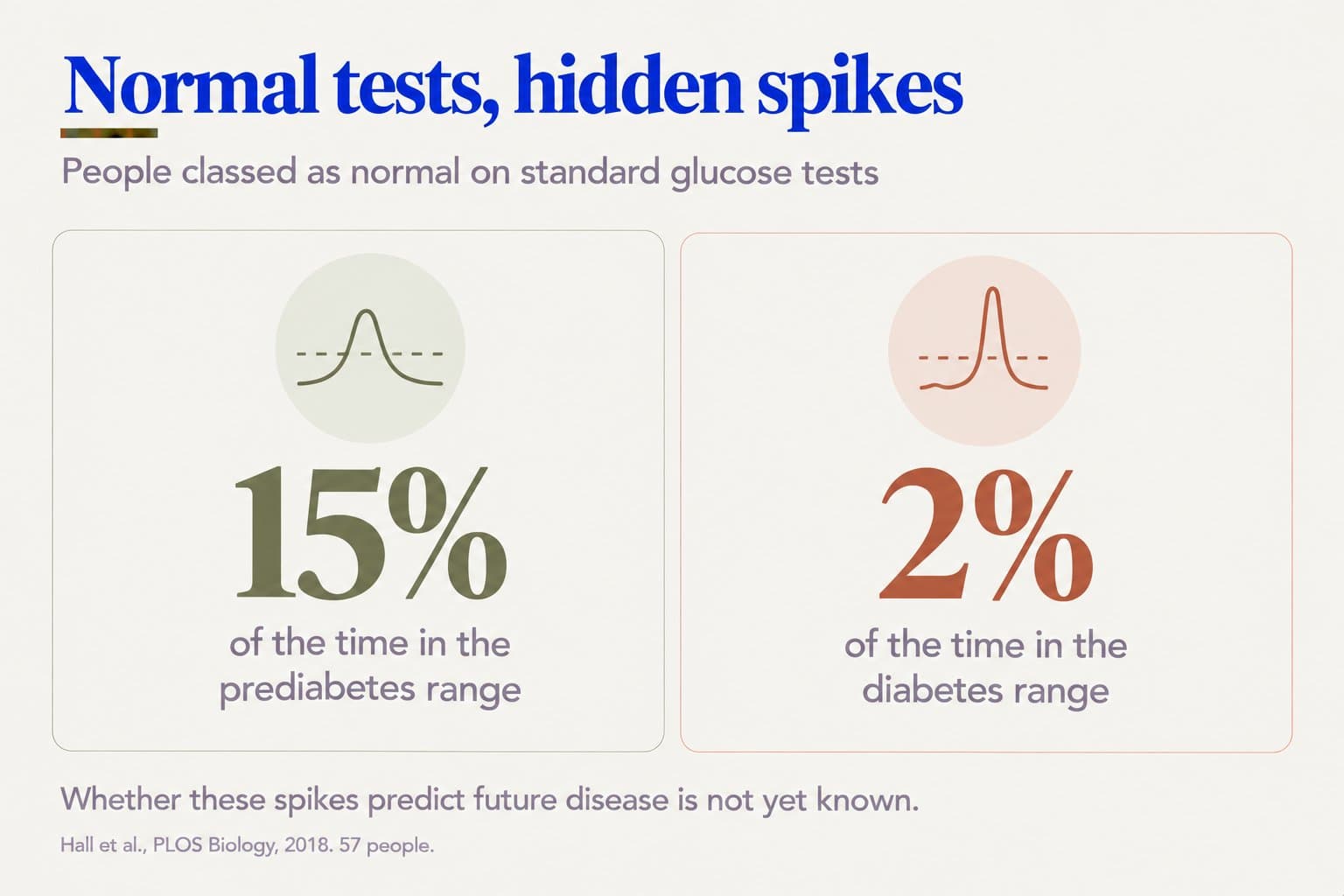
| Glucose in people considered normal by standard tests (57 people) | Reached the prediabetes range 15% of the time and the diabetes range 2% of the time |
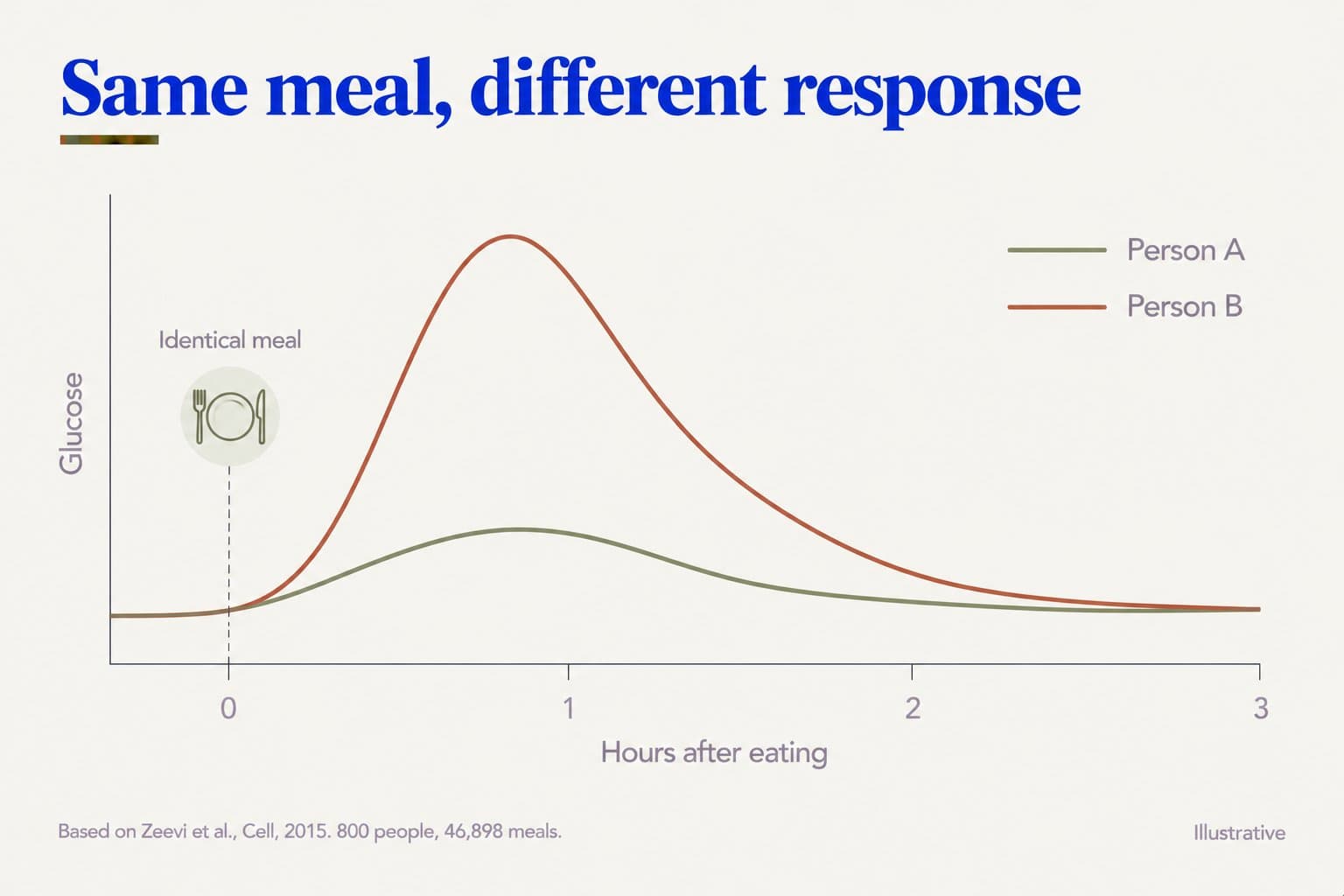
| Responses to meals (800 people, 46,898 meals) | High variability in responses to identical meals between people |
| Over-the-counter CGM (US, March 2024) | Cleared for adults 18 and over not using insulin; not for people with problematic low blood sugar |
How a CGM works
A CGM has a tiny filament inserted just under the skin, usually on the back of the upper arm, attached to a sensor that sends readings to a phone app. It measures glucose in the interstitial fluid around cells rather than in blood, so readings lag blood glucose by several minutes and can differ from a finger-prick test. Sensors typically last 10-15 days.
For people with type 1 diabetes, and type 2 diabetes treated with insulin, CGMs clearly improve glucose control and safety. The question here is whether they help people without diabetes.
Evidence strength
Strong: what normal glucose looks like. A multicentre study fitted 153 healthy people without diabetes, aged 7-80, with a CGM for up to 10 days. Average glucose was 98-99 mg/dL (about 5.5 mmol/L), rising to 104 mg/dL in people over 60. Glucose stayed between 70 and 140 mg/dL for a median of 96% of the time, was above 140 mg/dL for about 2.1% of the time (around 30 minutes a day) and below 70 mg/dL for about 1.1% (around 15 minutes a day). In other words, short rises after meals, and occasional low readings, are part of normal physiology.
Moderate: some people with "normal" tests have larger spikes. A 2018 study in 57 people found that even individuals classed as normal on standard tests showed considerable glucose variability on a CGM, with glucose in the prediabetes range 15% of the time and the diabetes range 2% of the time. The researchers grouped people into "glucotypes" by their pattern of responses and found the underlying physiology, insulin resistance or reduced insulin secretion, varied between people. Whether these patterns predict future diabetes or heart disease in people with normal standard tests isn't yet known.
Moderate: people respond differently to the same foods. In a 2015 study, 800 people wore CGMs for a week while their responses to 46,898 meals were recorded. Responses to identical meals varied widely between people, depending on factors such as the gut microbiome, body composition and activity. A small randomised trial within the study, in 26 people, found that diets personalised to each person's predicted responses lowered post-meal glucose. This supports the idea that there's no single "good" or "bad" food for everyone, and that a CGM can reveal your own patterns.
Limited: using a CGM to change behaviour. Seeing your glucose respond to a sugary drink, a large portion of white rice, a walk after dinner or a poor night's sleep can be motivating, and some people use this feedback to make lasting changes. But the evidence for health benefits in people without diabetes comes mainly from small, short studies.
Not established: CGMs improve long-term health in people without diabetes. There are no trials showing that wearing a CGM reduces diabetes, heart disease or death in people without diabetes. Reviews of CGM use in healthy adults conclude that the relevance of glucose patterns for health in this group is still largely unknown and that more research is needed.
Not supported: aiming for a "flat line". Rises after meals are normal. Avoiding all glucose spikes isn't an evidence-based goal, and restricting healthy carbohydrate foods such as fruit, pulses and whole grains to flatten the curve could make the overall diet worse.
Limitations and risks
- Less precise at normal levels: CGMs are designed and validated mainly for diabetes. At normal glucose levels, readings can differ meaningfully from blood tests, and night-time "lows" can be caused by lying on the sensor.
- Over-interpretation: a single spike tells you little on its own. The glucose response depends on meal size, what you ate with it, the time of day, sleep, stress and activity.
- Anxiety and food fear: constant monitoring can make some people anxious about eating. People with a history of disordered eating should be cautious.
- Cost: sensors need replacing every 1-2 weeks.
- Not a diagnostic test: a CGM doesn't diagnose diabetes or prediabetes. That still needs a fasting glucose, HbA1c or glucose tolerance test.
Recommendations by situation
| Situation | What the evidence supports |
|---|---|
| Curious about your metabolism, no risk factors | Optional; a short trial of 2 weeks can be informative, but it isn't necessary for health |
| Prediabetes, insulin resistance or strong family history of diabetes | A CGM can be a useful motivational tool alongside proper testing and a plan |
| Want to know if you have diabetes | Get a fasting glucose or HbA1c test instead |
| History of anxiety about food or disordered eating | Best avoided, or used only with professional support |
| Type 1 diabetes or insulin-treated type 2 diabetes | CGMs are strongly recommended; discuss with your diabetes team |
| Using a CGM | Look for patterns across several days, not single readings; test changes like a walk after meals rather than cutting out whole food groups |
If you have prediabetes or insulin resistance, see Insulin Resistance for the changes that make the biggest difference.
Practical notes
In people without diabetes, glucose stays in a narrow range most of the day, and short rises after meals are normal. A CGM can reveal how your body responds to different meals, sleep and exercise, and some people find this motivating, particularly if they have prediabetes or insulin resistance. But there's no evidence yet that wearing one improves long-term health in people without diabetes, the readings are less precise at normal levels, and chasing a flat line can backfire. The proven foundations of metabolic health, such as regular activity, a diet built around whole foods, good sleep and a healthy waist size, matter far more than any single glucose reading (see What Metabolic Health Really Means).
- Shah VN, et al. Continuous glucose monitoring profiles in healthy nondiabetic participants: a multicenter prospective study. Journal of Clinical Endocrinology & Metabolism, 2019;104(10):4356-4364.
- Hall H, et al. Glucotypes reveal new patterns of glucose dysregulation. PLOS Biology, 2018;16(7):e2005143.
- Zeevi D, et al. Personalized nutrition by prediction of glycemic responses. Cell, 2015;163(5):1079-1094.
- Continuous glucose monitoring in healthy adults: possible applications in health care, wellness, and sports. Sensors, 2022.
- US Food and Drug Administration. FDA clears first over-the-counter continuous glucose monitor. March 2024.
Free longevity assessment
Thinking of trying a glucose monitor?
Know what normal looks like first.
Take the free Aevum Protocol assessment to see how your cardiovascular & metabolic health and 6 other longevity domains are performing — and get a personalised 90-day plan.
Take the free assessmentKeep reading